Most GPs have moved past AI exploration. Their infrastructure hasn't.
Chart • September 1, 2026
In this chart
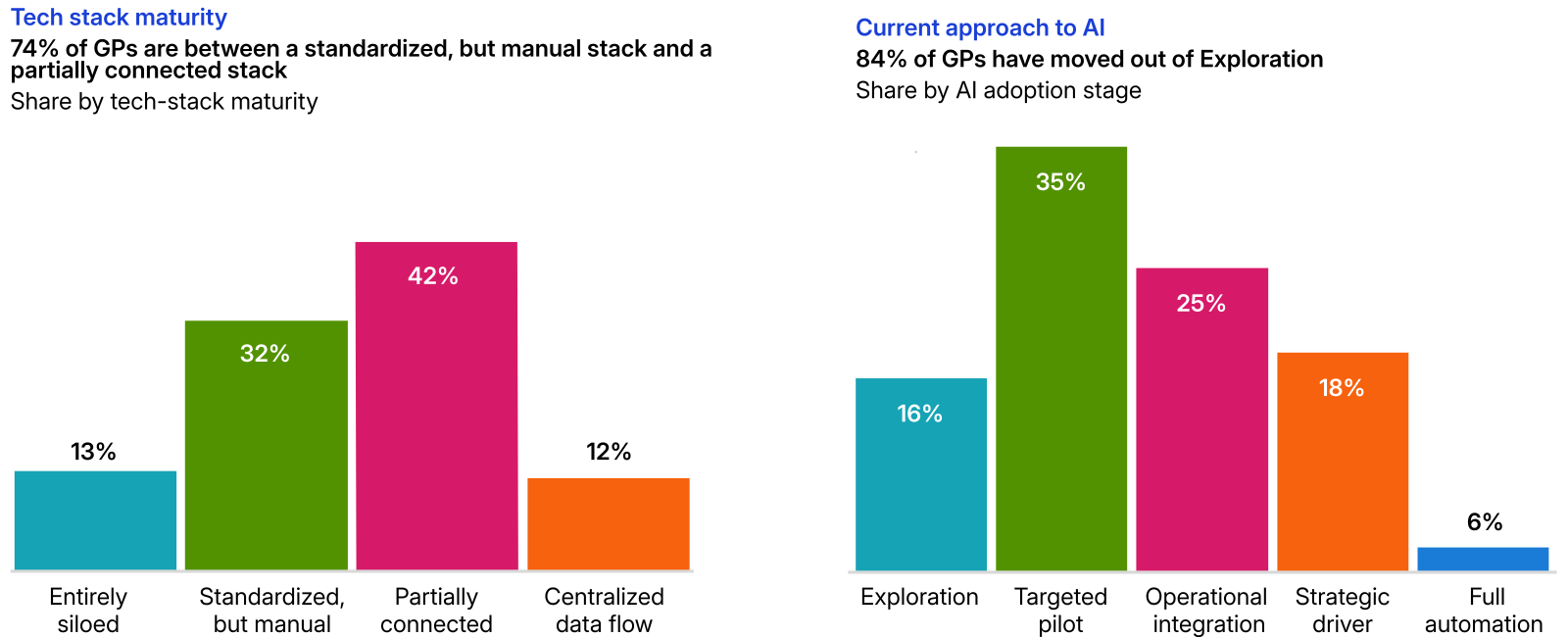
84% of GPs have advanced past the exploration phase of AI adoption, 35% are running targeted pilots, 18% consider AI a strategic driver for investment decisions and 6% have reached full automation. The direction of travel is clear. The underlying foundations, however, have not evolved at the same pace.
Despite this momentum, 42% of GPs still operate on partially connected tech stacks, and only 12% have achieved centralised data flow. Fewer than 20% report primarily or fully automated systems, leaving the majority relying on a mix of manual and automated processes that risk creating friction across the workflow.
The gap is architectural. The largest budget increases GPs anticipate are being directed toward operational infrastructure and data, drawing 49% of anticipated tech spend, the highest allocation across all functional areas. Yet ambition toward fully integrated systems cannot close a gap that the underlying infrastructure was never built to support.
The scale of the challenge sharpens as firms grow. Technology represents the biggest capability gap for 38% of small firms, climbing to 63% at mid-size firms and 54% at large ones. As organisational complexity and portfolio volume increase, the limitations of legacy infrastructure become harder to ignore and more costly to work around. Firms are outgrowing their systems and are now investing in replacing them in earnest.
When asked to name their single biggest operational challenge, more GPs pointed to AI integration than to any other issue, ahead of fundraising, exits and geopolitical uncertainty. The responses tell a consistent story: The difficulty lies less in whether to adopt AI, and more in how to make it work on infrastructure that was never designed for it.
Source: 2026 MSCI General Partner Survey. Total respondents N=130. Figures may not sum to 100 due to rounding.