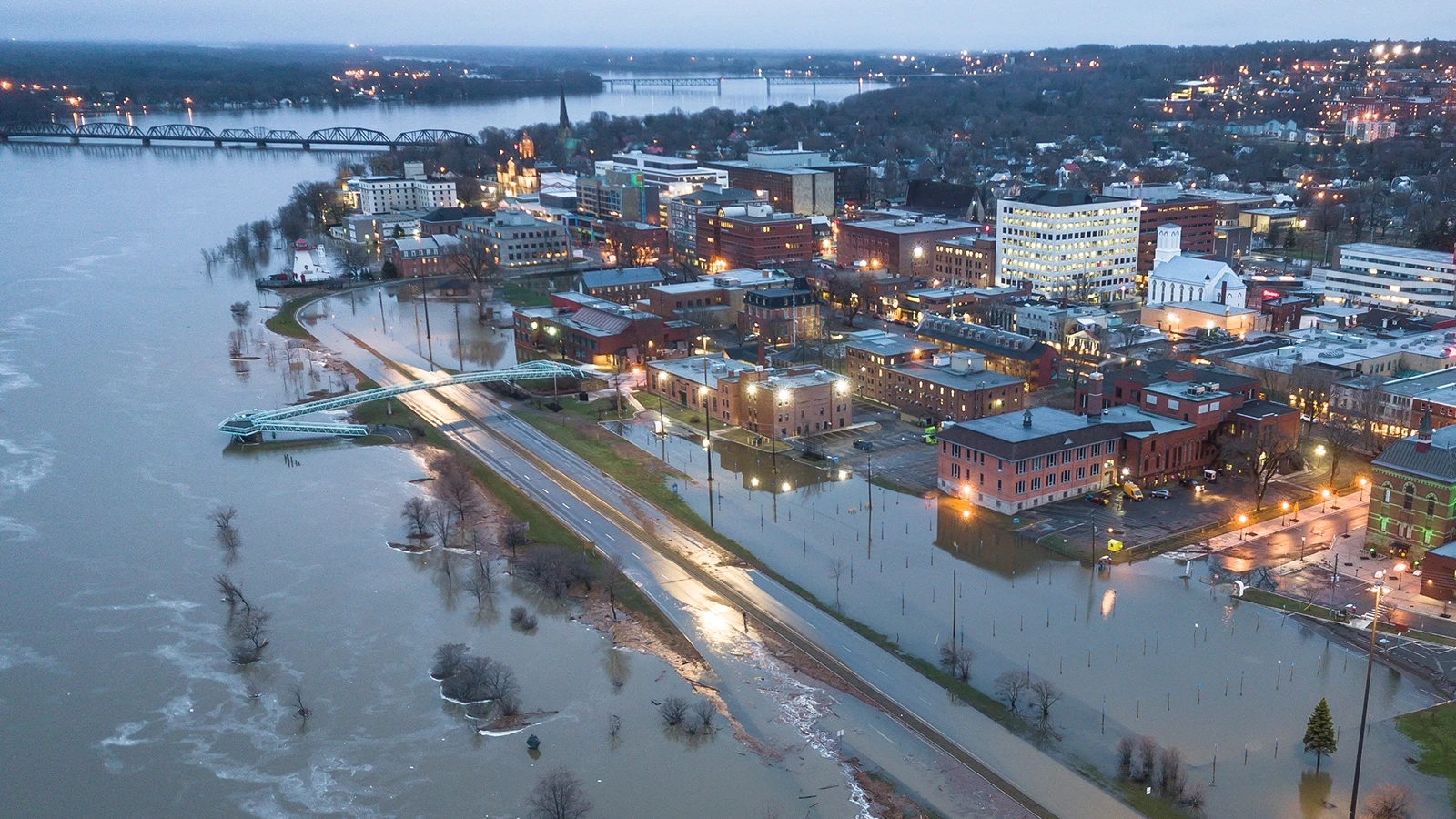

Why physical risk demands attention
Severe weather events and other physical risks are intensifying, with measurable effects on financial performance. Companies are now more than 6.5 times as likely to issue profit warnings following extreme weather events than they were two decades ago.1 MSCI’s physical risk solutions are designed to help financial institutions see physical risk where it matters, quantify exposure, and assess potential financial impact across investment portfolios, loan books and underwriting portfolios.
We support a location- and company-specific approach to physical risk analysis. Our multilayered insights sharpen your understanding of exposures and enable more informed decisions in risk management, reporting and capital allocation.
Identifying the type and severity of climate hazards (e.g., hurricane, flood, heat).
Assessing the susceptibility of assets based on infrastructure, asset type, and sector.
Evaluating the effectiveness of existing strategies to withstand physical risks.
Mapping the geographic footprint of physical assets and investments.
Estimating potential damages or disruptions.
Classifying issuer adaptation actions based on hazard materiality.1
Reinforce resilience across multiple levels
Our models are designed to help you identify vulnerabilities across your portfolio or loan book, whether equities, corporate credit, real estate infrastructure or project finance. Benchmark exposure across industries and regions and zoom into specific assets down to individual building footprints — with adaptation insights and damage estimates at the issuer level.
View exposures
Gain a clear, aggregated view of exposure to physical climate risk across your portfolio or loan book and perform materiality assessments with asset-level precision. Benchmark across sectors and regions to identify potential areas of concentration risk and financial-loss exposure.
Spot company vulnerabilities
Assess company-level exposure to physical climate hazards with metrics grounded in location-specific damage modeling across assets and operations. Our models support materiality assessments that connect physical hazards to financially material impact.
Mitigate asset-level risk
Drill down to individual asset locations using detailed geospatial data from millions of mapped sites. Analyze exposure at the level of individual structures across more than 2 billion locations worldwide — with damage estimates, business interruption analytics and site-level adaptation insights.
Assess any asset
Upload asset locations and receive hyperlocal, building-specific exposure insights, including hazard intensity metrics and annual average loss estimates. Use these insights to support due diligence, underwriting, and portfolio stress testing, and to close potential coverage gaps in public or private companies.
Physical climate risk is already hitting the bottom line
6.5x
Companies are now more than 6.5 times as likely to issue profit warnings following extreme weather events than they were two decades ago
20+ bps
Underperformance by MSCI ACWI companies with assets in hurricane paths over 30 business days following impact (99% confidence)
14x
Business-interruption losses from physical climate risk are 14 times larger than direct asset damage — the hidden cost most investors underestimate
Powered by First Street
MSCI's physical risk solutions are powered by First Street's physics-based climate risk data and analytics — delivering decision-grade climate intelligence through engineering-based, building-specific damage modeling for every structure in the world. First Street's peer-reviewed, AI-native hazard models deliver a deterministic catastrophe model that simulates thousands of physically consistent extreme events validated against observed losses, with outputs delivered through an AI-enabled platform that integrates directly into existing workflows.
Featured productsDiscover how our solutions can support your physical risk assessment.
Physical Risk Metrics – Asset Level
Analyze physical climate risk at the individual asset and portfolio level — at any address or geographic coordinate. Drill down from site-level exposure to portfolio-level aggregation across asset classes, with damage estimates, business interruption analytics and adaptation insights built in.
Physical Risk Metrics – Issuer Level
Gain a company-specific view of climate-related physical risk by mapping location-level exposures to distinct physical hazards, from flooding and extreme heat to seismic zones. Match each company's top hazard exposures with the adaptation and resilience actions it is taking, by scope, type, technology and financial relevance.
Regional Physical Hazard Metrics
Assess physical hazards across time horizons, scenarios and asset types for 173,000+ geographical boundaries worldwide — from country to postal code — to pinpoint vulnerabilities at a regional level, sharpen credit risk management, and strengthen underwriting and investment decisions.3
GeoSpatial Asset Intelligence — Identify risk where it matters
GeoSpatial Asset Intelligence is the foundation of MSCI's physical risk solutions, helping financial institutions identify and quantify location-specific exposure across 4.5 million locations, 780,000 companies and 31 hazard types. Powered by AI for data collection, mapping and on-demand coverage, it delivers drill-down insights from portfolio level to individual asset locations — supporting risk management, due diligence, regulatory compliance and engagement.2

Every Financial Decision Should Account for a Changing Climate
Physical risk is no longer a future scenario to be disclosed once a year. It is a financial input that belongs in underwriting, valuation and capital allocation today.
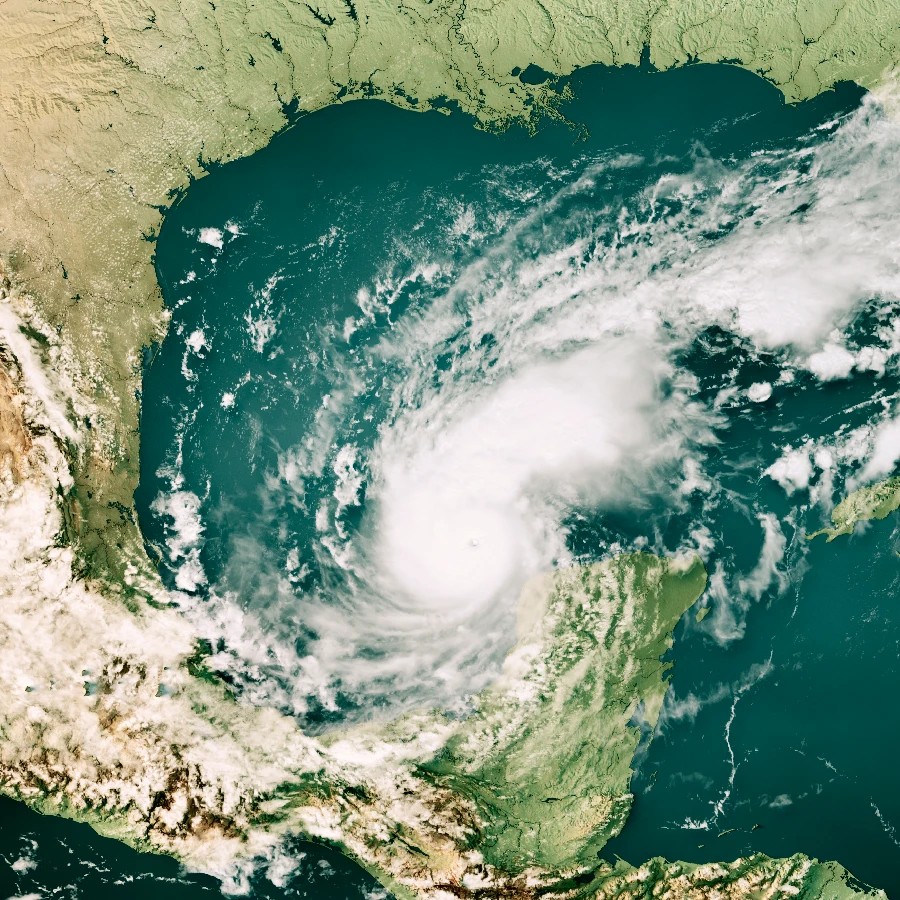
Physical Climate Risk and Corporate Bonds: Evidence from Hurricanes
Bonds of issuers most exposed to hurricanes traded at wider spreads than their least-exposed peers, with weaker profitability and bond performance following storms — underscoring the cost of overlooking concentrated physical risk.

Hidden in Plain Sight: Physical Risk in Asset Owners’ Portfolios
An MSCI and Swiss Re analysis of 18 leading asset owners found that business-interruption risk is 14 times greater than direct asset damage — yet only 30% of highly exposed companies formally disclose physical-risk management.
Know your exposure.Ask about our physical risk solutions.
Real Estate Data and Analytics
Identify performance drivers, assess risk and evaluate opportunities with data from 170+ countries for insight into transactions properties and players in the global real-estate universe.4

1 “The New Cost of Doing Business,” First Street, Feb. 11, 2026.
2 As of June 2026. MSCI assesses 30 hazards at the issuer level and 31 hazards (Ocean Acidification) at asset level.
3 As of June 2026.