Private markets holding onto assets for longer

Chart  •  July 7, 2026

In this chart

Start-up companies have been staying in private hands for longer, opting to tap into large pools of private investor capital rather than raise money via IPO. Data for venture-capital (VC) funds shows the increased time that portfolio companies stay on the books. The weighted-average holding age of active VC investments has nearly tripled, rising from around two years in 2000 to almost six years as of Q3 2025, according to MSCI Private Capital Universe data.

Buyout and private real estate have also seen holding ages hit all-time highs as of Q3 2025, though for different reasons. For limited partners, this indicates capital is returning more slowly than it used to.
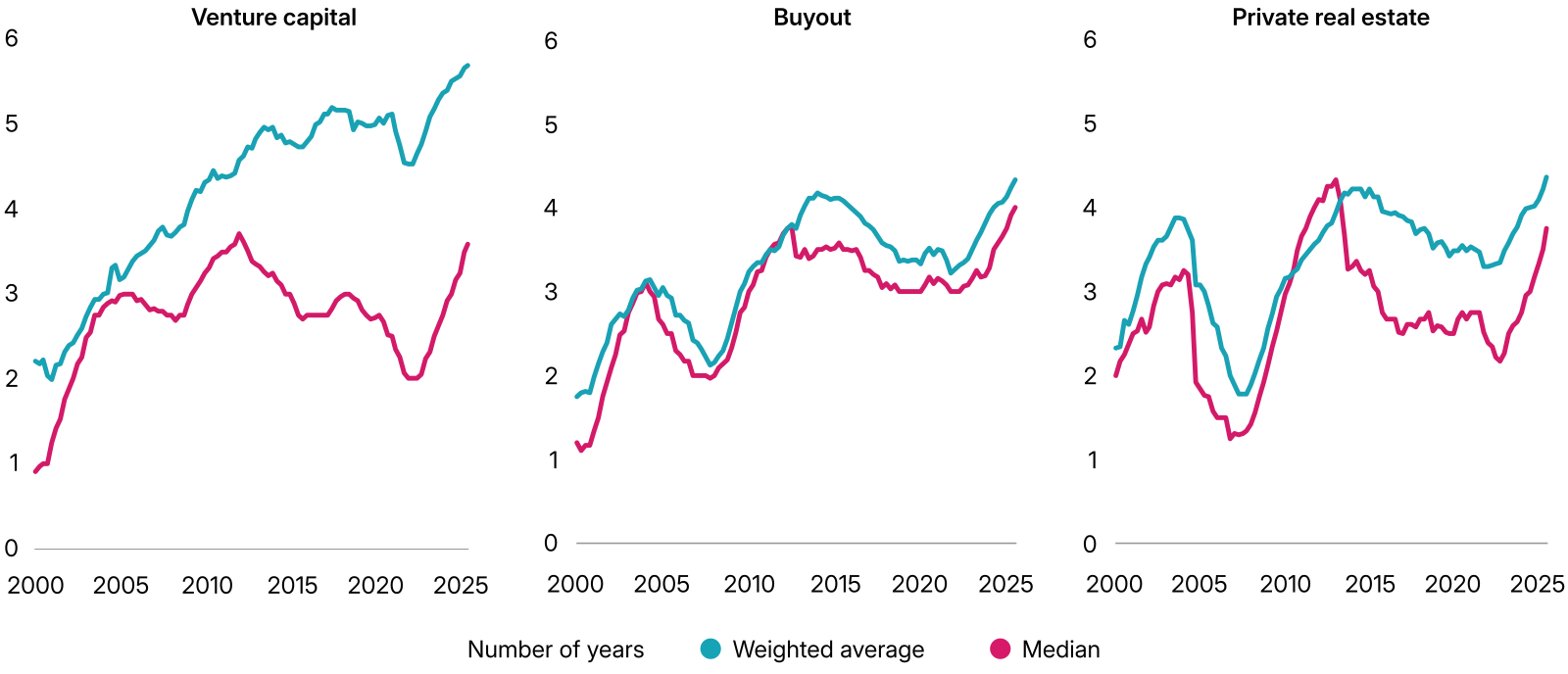
Three line charts show holding age in years from 2000 to 2025 across venture capital, buyout and private real estate, tracking weighted average and median holding periods. Across all three asset classes, holding periods have generally lengthened over the time series. In venture capital, the weighted average rises from around 2 years to approximately 6 years by 2025, while the median follows a less steady path, dipping in the mid-2010s before climbing sharply toward 4 years near the end of the period. In buyout, both measures trend upward from roughly 2 years to around 4 to 5 years, moving in closer alignment with each other throughout. In private real estate, the weighted average and median track each other more closely than in the other two asset classes, both rising from approximately 2 to 3 years to around 4 years, with more volatility visible in the median series.

MSCI Private Capital Universe data through Q3 2025, as of April 2026 analysis. 

For more on pressure to return capital to investors, explore The State of Private Markets 2026:  

Subscribe today
for insights delivered direct to your inbox.