
Risk Control IndexesMaximum Exposure and other solutions
Traditionally risk control indexes have been designed to target a specific volatility level of an underlying equity index by rebalancing among an equity index and cash on a frequent basis (e.g. daily). Within the context of structured products, such risk control indexes have been used as a reference of performance with respect to payouts to investors. MSCI can provide a wide variety of risk control indexes, from traditional mechanisms, via extended and maximum exposure algorithms to intraday rebalancing solutions.
Example MSCI offering in Traditional Risk control
MSCI offers a range of standard Risk Control indexes on flagship and custom exposures
Examples:
MSCI USA 10% Volatility Target Index
The MSCI USA 10% Volatility Target Index (Excess Return) aims to represent the performance of a portfolio that target 10% annualized volatility by dynamically adjust the exposure on MSCI USA daily.

MSCI USA Quality 8% Volatility Target Index
Applies MSCI’s Risk Control Methodology to the MSCI USA Quality Index, targeting 8% volatility. The parent index, based on the MSCI USA Index, captures quality growth stocks from large and mid-cap U.S. equities with high return on equity, stable earnings growth, and low financial leverage.

What is Maximum Exposure Risk Control Indexes?
The launch of MSCI’s Maximum Exposure Risk Control Indexes represents an alternative way to incorporate risk control by maximizing the weighted risk allocation of an equity and fixed income index. This represents an extension of our existing Risk Control methodology and emerges from an in-depth comparative review and analysis by our research team.
The MSCI Maximum Exposure Risk Control Indexes aim to replicate the performance of an investment strategy that maximizes the risk-weighted exposure to the underlying indexes and targets a specific level of risk by varying the weights of three components, determined daily based on an optimization seeking approach:
- Equity index (e.g., market-cap, thematic, ESG, Climate or factor index);
- Fixed income index (e.g., U.S. treasury index); and
- Cash.
The idea to maximize the exposure to both equity and fixed income asset is the key one in this approach: risk-adjusted returns of the two may be similar and there is no reason to treat them differently (see paper below for exact optimization formula).
Maximum Exposure Risk Control had on an average¹
- Improved risk-adjusted returns over the sample period
- Similar or higher exposure to both underlying indexes
- Realized volatility close to the target
MSCI ACWI risk control 10% performance and their realized volatility*
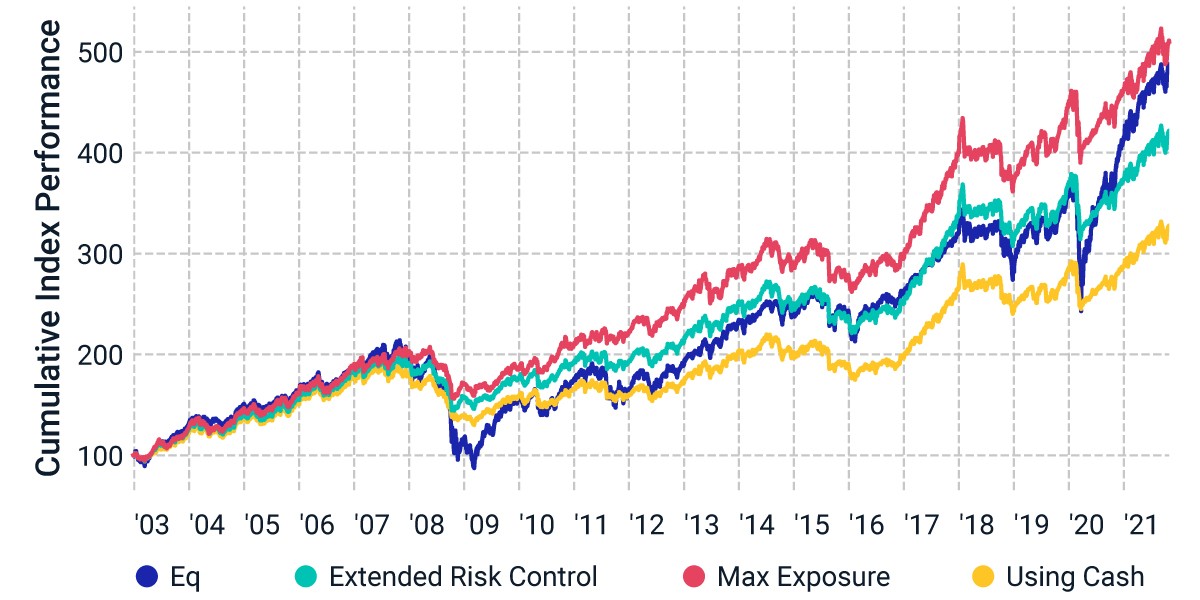
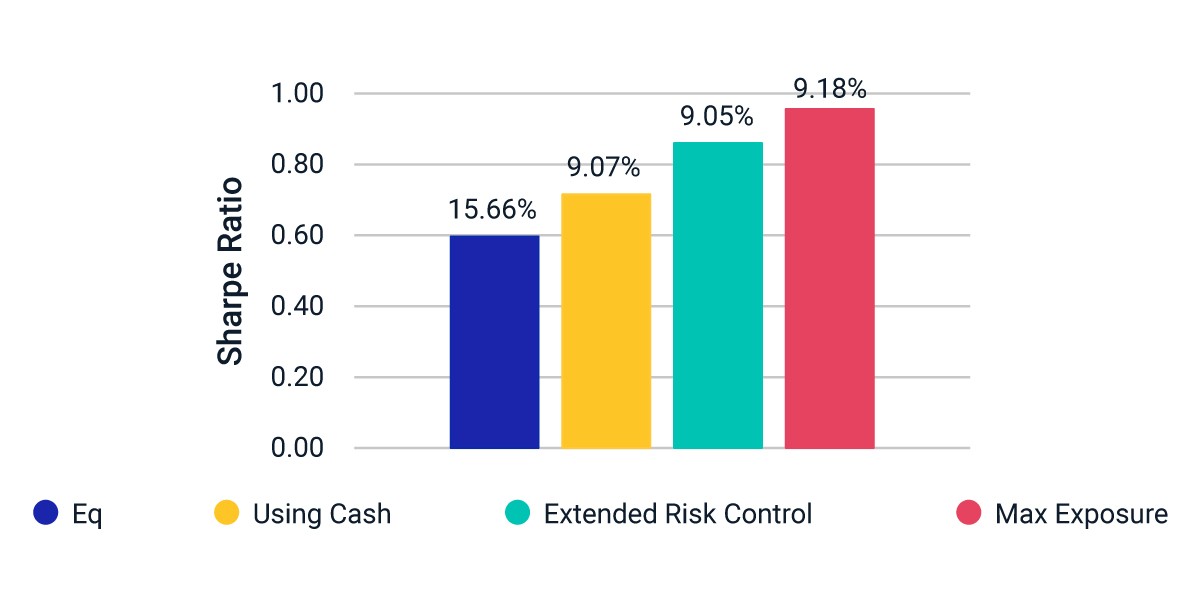
* Extended risk control mechanism allocates to the equity index based on its volatility, up to 100% leverage. Remaining weight (up to 100%) is allocated to treasuries. Second layer with cash adjustment is applied to reach closer to the risk control level with a leverage cap of 150%.
Learn more about these new indexes
We have launched five new MSCI Maximum Exposure Risk Control Indexes, that offers investors an alternative optimized approach to risk control that aims to maximize weighted risk allocation of an equity and fixed income index.


The five MSCI Maximum Exposure Risk Control Indexes available are:
What is Extended Risk Control Indexes?
The MSCI Extended Risk Control Indexes aim to replicate the performance of an investment strategy that attempts to control the level of volatility by adjusting the weights of an MSCI Equity index Component, a Treasury Component and a Cash Component.
Available indexes:
Want to learn more about Risk Control Indexes?Get in touch.
Risk Control with Maximum Exposure
In this paper, we introduce alternative approaches to risk control that aim to maximize exposure to non-cash assets, and compare them against classic risk-control approaches.

1 Sample period: Jan 1, 2002 – Oct 31,2021. VT=10% using MSCI ACWI and leverage constrained to 150%.