
Assessing Infrastructure: The Impact of Scale and Ownership on Performance
- Infrastructure allocators evaluating co-investment opportunities, direct investments or fund exposure to mega-assets may want to reassess whether larger assets deliver a performance premium.
- Neither asset size nor ownership share significantly predicted infrastructure time-weighted returns over a five-year horizon to September 2025 — but together, they did impact the dispersion of outcomes.
- While size and ownership share do influence returns, underlying asset exposure also matters, which makes analyzing market trends and attributing performance across multiple dimensions critical.
A common hypothesis among infrastructure asset investors is that larger assets are harder to access and therefore may offer a performance premium. But few investors can hold larger assets in sole ownership. This raises the question: Does accessing larger deals through reduced ownership erode returns? Or is it better to target the mid-market with larger ownership shares? Investors and managers are actively exploring these issues with strong opinions on both sides, but little quantitative analysis to guide the debate. We examined 187 individual infrastructure assets with ownership share data and five-year annualized total returns through September 2025 to start answering both questions.1
The data confirmed the structural relationship between asset size and ownership. As asset size increased across the sample, investors tended to hold smaller shares. Holdings in the smallest quartile had a mean ownership share of 76%, while those in the largest quartile averaged just 42%. This pattern reflects a basic constraint of the asset class: The largest infrastructure assets — toll roads, airports, utility networks — require more capital than any single investor can typically provide.
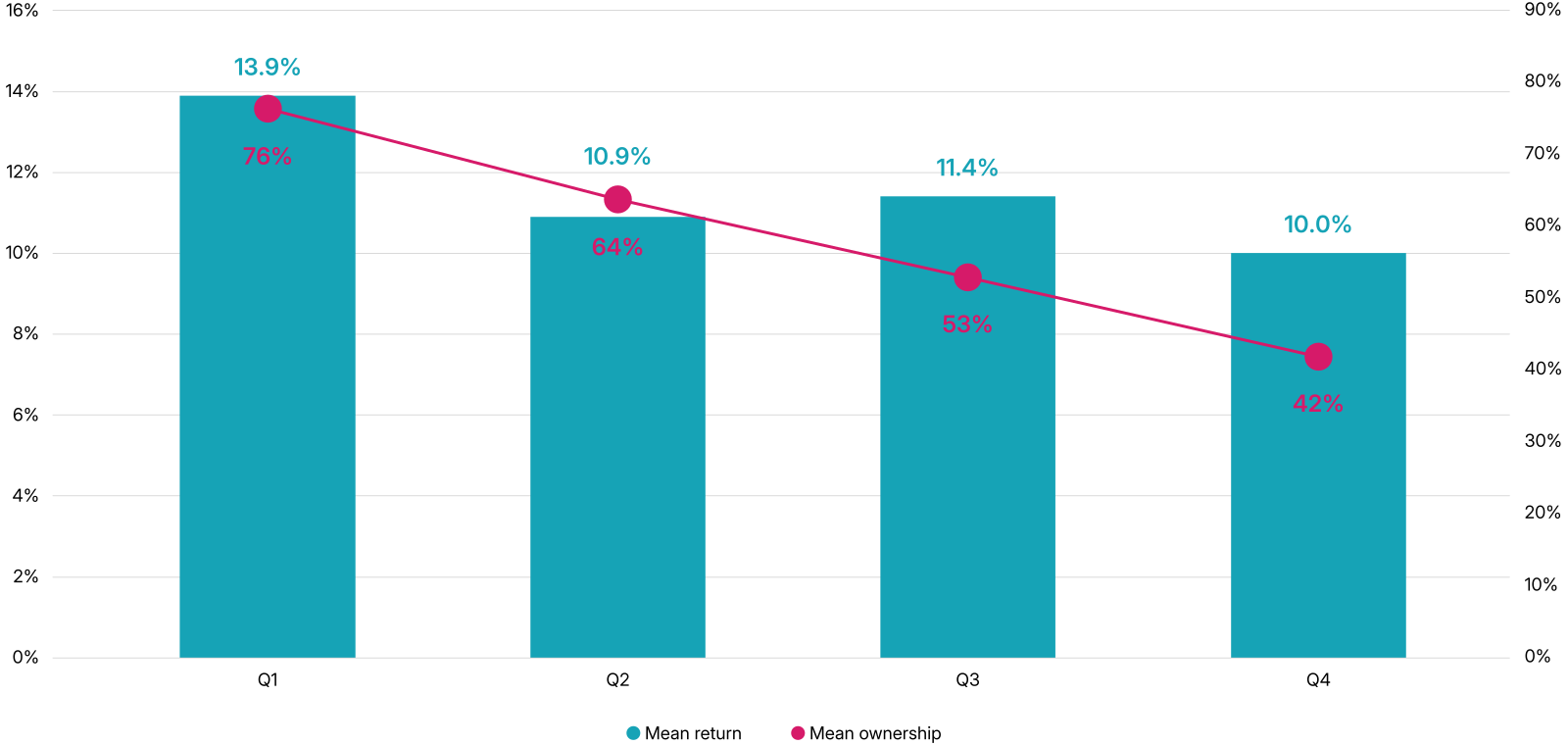
Mean annualized five-year time weighted returns declined modestly from the smallest to the largest asset-size quartiles (13.9% for the first quartile versus 10.0% for the fourth), but the differences were not statistically significant. Here, the hypothesis that harder-to-access assets reward investors with higher returns did not hold.
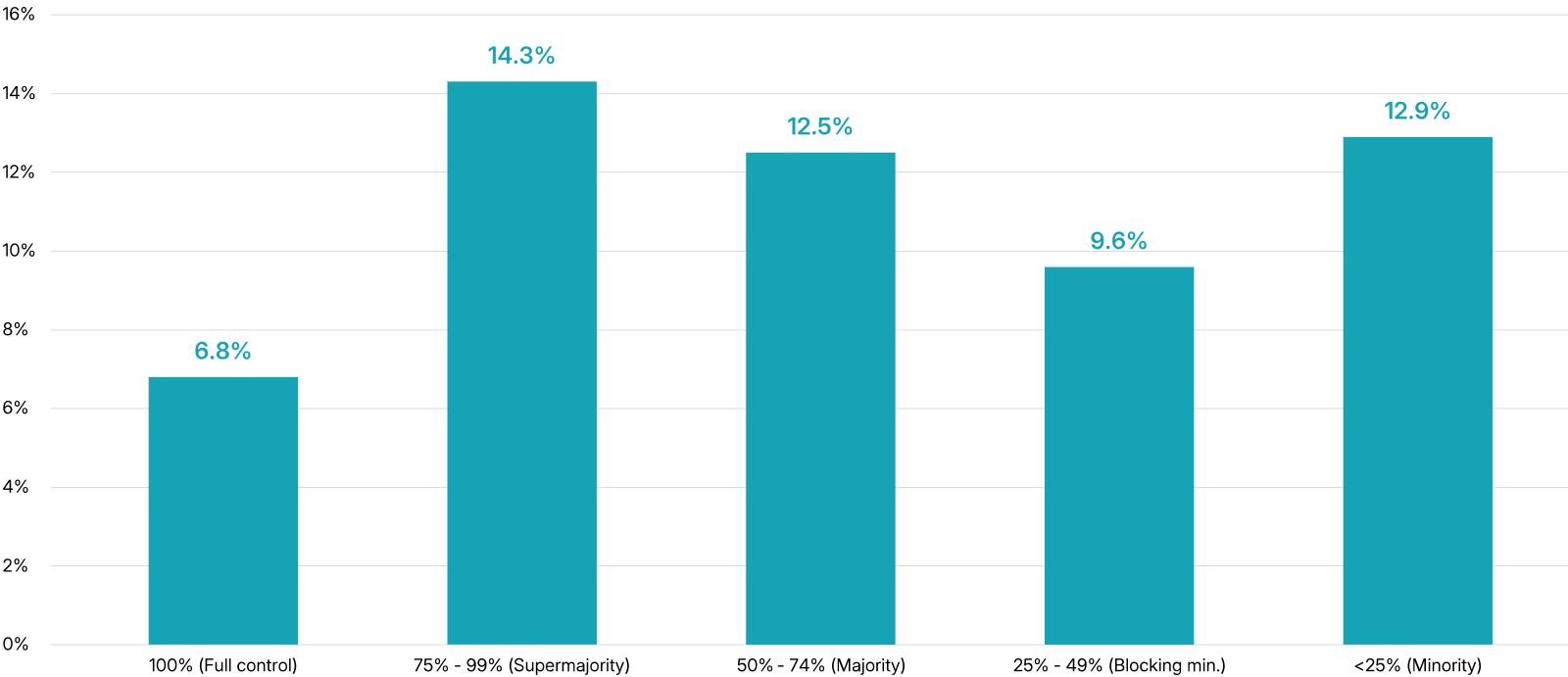
We found a similar result for ownership share. Mean returns ranged from 6.8% (100% ownership) to 14.3% (75%–99% ownership), but we found no correlation between ownership share and returns. Perhaps surprisingly, 100% ownership with full control yielded the lowest returns of all ownership categories.
While neither size nor ownership explained returns on their own, the interaction between the two was more revealing, particularly for the dispersion of returns rather than their magnitude.
The table below breaks the study sample into buckets representing combinations of asset size (measured at 100% equity) and holding ownership share. The heatmaps range from holdings with 100% ownership in the smallest quartile of assets in the top left of each grid, to minority holdings (<25% ownership) sitting in the largest quartile of assets in the bottom right of each grid.
Grid 4 shows that few investors hold minority stakes in small assets or high ownership stakes in very large assets, as economic intuition would suggest. Results from corresponding cells in the other grids must be interpreted with caution.
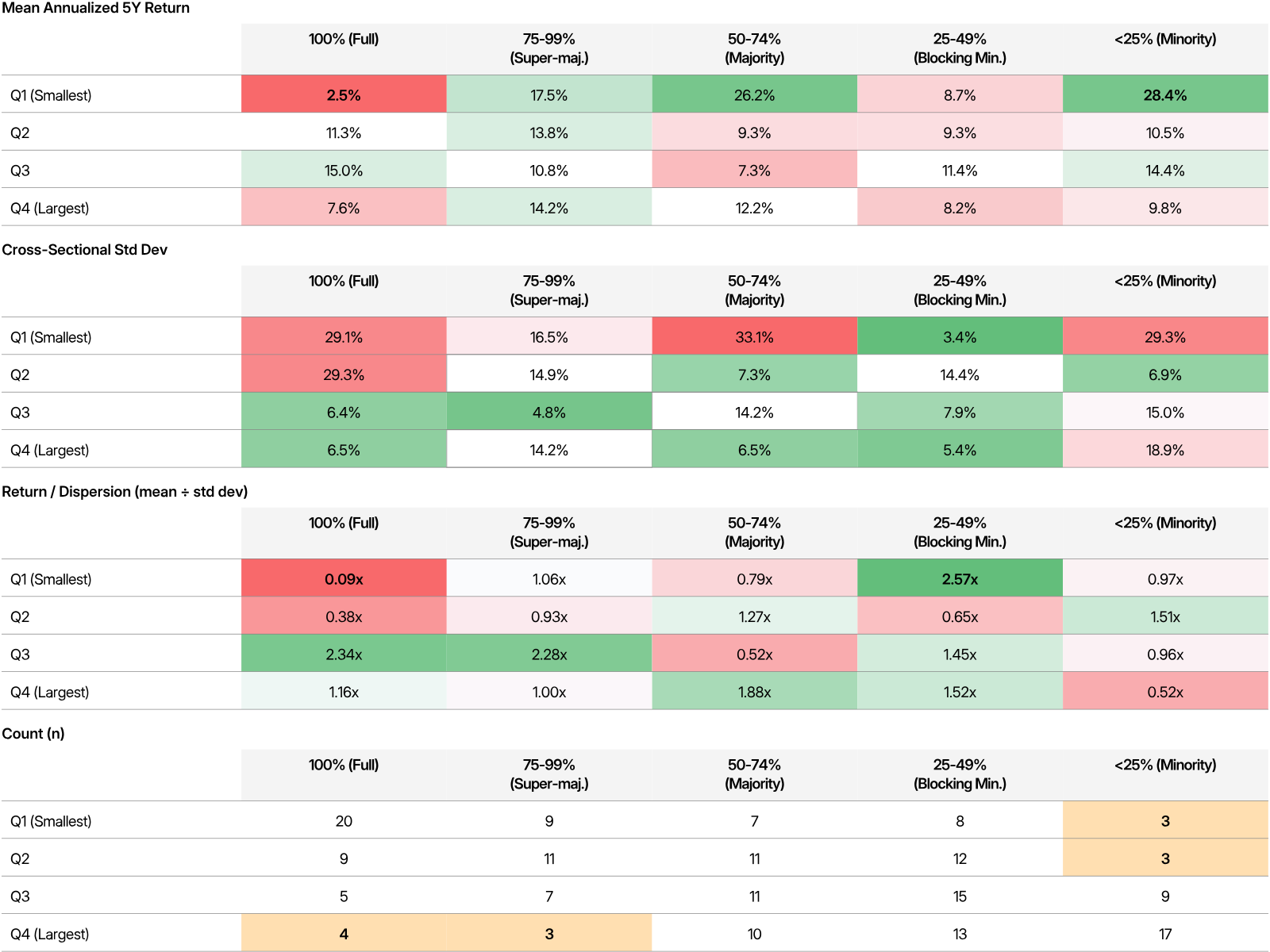
Q1: <USD 106M (Smallest), Q2: USD 106–418M, Q3: USD 418M–1.1B Q4: >USD 1.1B (Largest)
Returns alone didn’t vary consistently with size or ownership share. Only one, somewhat weak, result stands out from grid 1: Assets held with super-majority ownership share (75%-99%) had consistently robust performance across asset-size buckets. Cross-sectional dispersion does show a somewhat stronger pattern in grid 2, however. Larger assets in Q3 and Q4 do seem to show less variance in return outcomes than smaller assets across most of the ownership categories apart from the minority stakes, indicating that size might matter for predictability of outcomes if not their level.
Lower dispersion in larger assets didn’t always translate into better dispersion-adjusted performance, with mixed results across grid 3. Much of the variation in dispersion-adjusted returns may be a result of asset type rather than ownership structure. The composition of assets within each cell differs significantly and could explain return dispersion as much as ownership or size alone. For example, poor dispersion-adjusted performance of minority positions in the largest assets may partly reflect the fact that 24% of those assets (by equity value) are high asset-risk. Conversely, full ownership stakes in the smallest two quartiles yielded particularly poor dispersion-adjusted returns, despite high exposure to more established brownfield assets and relatively low-risk assets.
While size and ownership share influence dispersion of outcomes, they are only two of the many potential risk and return factors. How they interact with others such as asset style and stage as well as sector and geography may matter at least as much. Infrastructure portfolios tend to be concentrated into a relatively small number of holdings, making specific risk a further consideration. The application of multi-faceted performance data and attribution analysis can help investors understand market dynamics along many important dimensions of risk as well as understand and explain their own portfolio performance in the context of the broader market.

Subscribe todayto have insights delivered to your inbox.
Getting Granular: Swings in Private-Infrastructure Sector Returns
Global private infrastructure has posted double-digit 12-month returns on average since 2009. Performance has varied widely across industry segments such as airports and renewable energy, however.
Greater Divergence of Returns in Infrastructure than Real Estate
Sector-based allocation decisions in infrastructure could have a substantially greater impact on portfolio returns than allocation choices in real estate.
Private Asset Indexes
We enable you to assess unlisted assets with quality benchmarks for private equity, debt, real estate, infrastructure and natural resource investments.
1 Methodology Note: The analysis used annualized five-year total returns to September 2025 for 187 individual infrastructure assets. These are all assets with full 5 year returns as well as ownership share datapoints as of Sept 2020 – the start of the return measurement period. Dispersion is measured as the cross-sectional standard deviation of 5 year annualized returns within each group. The return-to-dispersion ratio is calculated by dividing the group mean return by its cross-sectional standard deviation. Ownership and size thresholds reflect sample medians or conventional governance breakpoints. The results describe historical associations over the observation period and do not imply causation.
The content of this page is for informational purposes only and is intended for institutional professionals with the analytical resources and tools necessary to interpret any performance information. Nothing herein is intended to recommend any product, tool or service. For all references to laws, rules or regulations, please note that the information is provided “as is” and does not constitute legal advice or any binding interpretation. Any approach to comply with regulatory or policy initiatives should be discussed with your own legal counsel and/or the relevant competent authority, as needed.