
Interpreting Controversial Weapons: Portfolio Construction and Performance Implications
- There is no universally accepted definition of a “controversial weapon,” leaving investors to determine their own exclusion criteria. Such decisions can result in the removal of some of the largest defense companies from portfolios.
- Using Italy's Law 220/2021 as a case study, we found that the performance impact of weapons-related exclusions varied less than expected, depending on whether an investor adopted a broader or narrower interpretation.
- The rise of lethal autonomous weapon systems, and the AI underpinning them, may further complicate the definition of controversial weapons, potentially reshaping the defense-investment debate in the years ahead.
A central question in today’s market is the role of defense in sustainable portfolios. Where it was once common for sustainability-focused investors to exclude defense stocks, such as weapons and ammunition manufacturers, some now view their inclusion as consistent with preserving peace and supporting social sustainability.1
A key point in this debate is the definition of a controversial or prohibited weapon. Such weapons have often been excluded from portfolios with a sustainable mandate, whether due to regulatory requirements or the specific investment priorities outlined in a given fund or strategy. Where the line is drawn, however, can materially affect portfolio construction, potentially resulting in the exclusion of some of the largest defense companies — a notable consideration given the significant rise in defense-sector stocks in recent years.
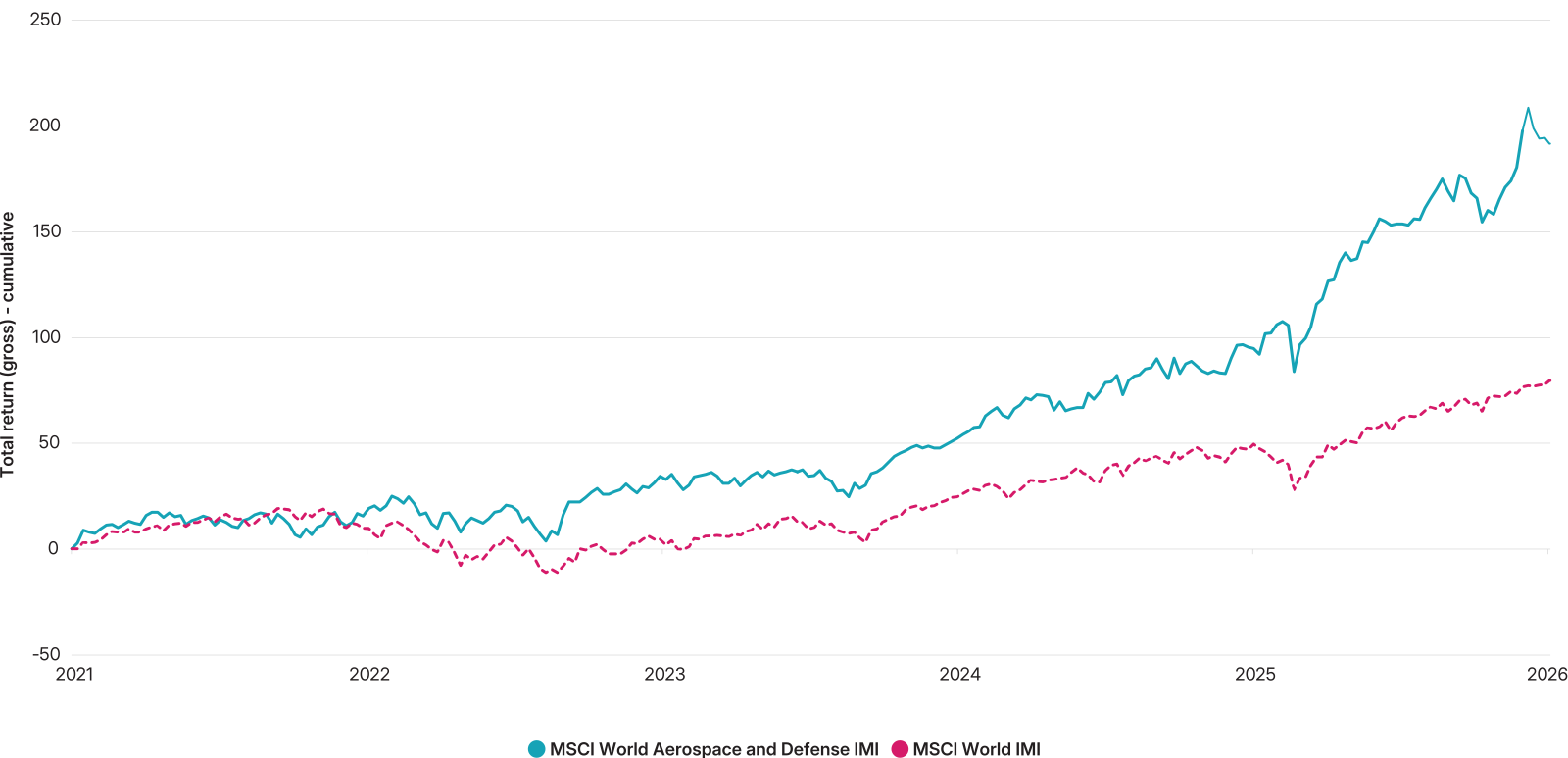
Data as of Feb. 27, 2026. Source: FactSet
There is no universal definition of a controversial weapon to serve as a market reference, leaving investors to develop and apply their own criteria, often with close attention to potential reputational risk. The term is frequently understood to refer to weapons prohibited under international treaties and conventions, such as the United Nations principles and, where applicable, national legislation.2
Interpretation can vary in practice, however. Should a company that manufactures the fuselage for an F-35A aircraft capable of deploying a missile with a controversial warhead be excluded? Or only the company responsible for the complete weapon system itself? To provide greater clarity, regulators in some jurisdictions have established rules for financial-market participants to follow.
An example is Italy’s Law 220/2021, which prohibits financial-market participants from financing companies with any involvement in antipersonnel landmines, cluster munitions and submunitions.3 The law also requires financial-market participants to establish an “exclusion list” to assist authorized intermediaries in meeting its requirements.
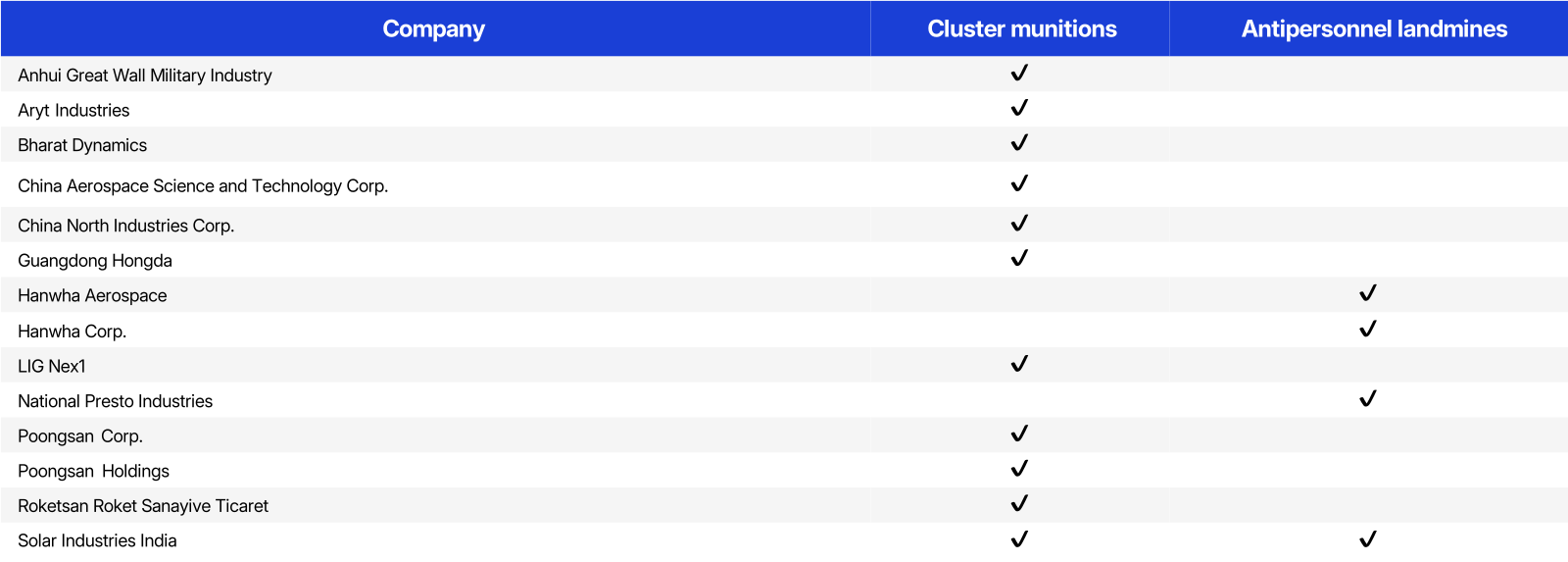
There is no official exclusion list under Law 220/2021, leaving room for interpretation by market participants. As a result, portfolio construction and returns may shift depending on how an investor defines the scope of involvement. For example, one interpretation of Law 220/2021 using the MSCI Business Involvement Screening Research weapons screens (hereafter referred to as MSCI’s “narrow screen”) would result in the following companies being excluded:
.svg)
Data as of February 2026. These interpretations are our own. We recommend consulting with your compliance and legal advisers to confirm that your specific regulatory obligations are fully met. Certain regulations may address weapons involvement beyond the scope of our screens, which could limit investors’ ability to rely solely on our screens to satisfy all regulatory requirements. Source: MSCI Sustainability & Climate. MSCI Sustainability & Climate products and services are provided by MSCI Solutions LLC in the United States and MSCI Solutions (UK) Limited in the United Kingdom and certain other related entities.
A broader interpretation of Law 220/2021, encompassing any exposure to cluster munitions and antipersonnel landmines (including delivery platforms such as a specific fighter aircraft), would identify an additional 15 companies (hereafter referred to as MSCI’s “broad screen”). Many of these are large, globally recognized names, including Boeing Co., Lockheed Martin Corp., Korea Aerospace Industries Ltd. and Larsen & Toubro Ltd.
Comparing the broad and narrow screens, we found that the performance difference was limited, though, in practice, it would vary with portfolio size. An analysis of 10-year cumulative returns for companies in the MSCI ACWI Industrials Investable Market Index (IMI) indicates that the spread between the two approaches was small but persistent. Over the full period (February 2016 to January 2026), the average spread was -0.85 percentage points, with the broader screen underperforming 71% of the time.
Even during the 2017-2019 period, when the broader screen outperformed, the cumulative effect narrowed the overall 10-year gap by only approximately 0.14 percentage points. In other words, the more encompassing interpretation of weapons exclusions under Law 220/2021 was associated with a modest performance cost relative to the narrower screen over the past decade.
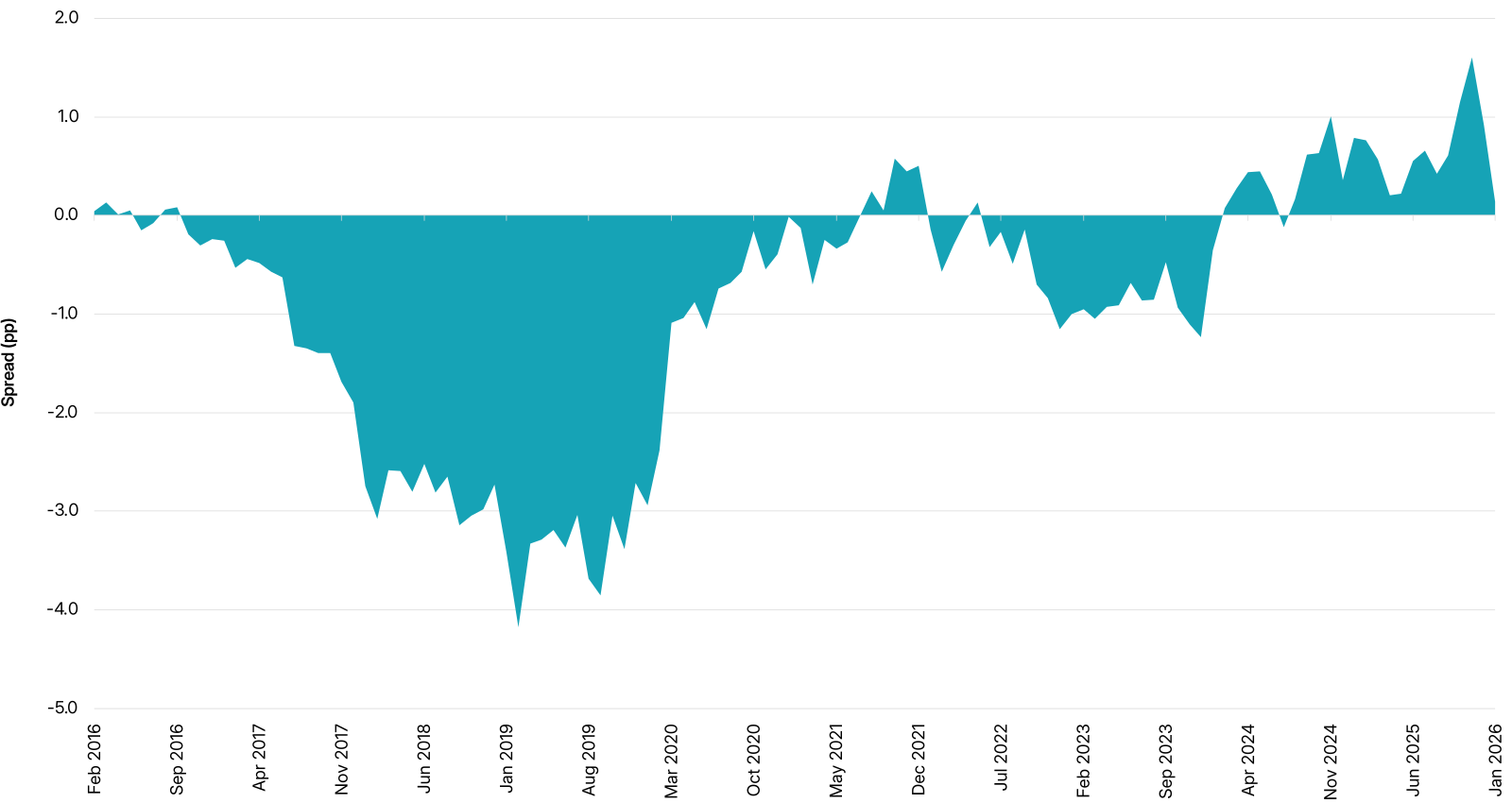
Data as of February 2026. Returns are based on cumulative total return from February 2016 through to January 2026. The analysis includes equity-issuing companies only. The broad portfolio consisted of the 2,692 issuers in the MSCI World Industrials IMI not captured by the broad weapons exclusions, while the narrow portfolio consisted of 2,705 issuers in the MSCI World Industrials IMI not captured by the narrow weapons exclusions.
Divergence in company exclusions tied to the definition of a controversial weapon may become more pronounced as lethal autonomous weapon systems (LAWS) become ubiquitous on the modern battlefield. Working groups under the Convention on Certain Conventional Weapons are reviewing potential guardrails for militaries developing or deploying LAWS.4
Whether such restrictions gain sufficient international support to be adopted in international law, or whether these systems come to be viewed by investors as controversial weapons, remains uncertain. Their continued development, encompassing both the hardware and the AI systems enabling it, is likely to shape the defense-investment debate in the years ahead.

Subscribe todayto have insights delivered to your inbox.
From Cloud to Kill Chain
Rising defense budgets are prompting investors to revisit “controversial weapons” exclusions — from nuclear value chains to AI-enabled systems across the kill chain.
Can Bombs and Bullets Be Sustainable?
Does the defense industry have an ESG problem? Is there such a thing as an ethical bomb? These are questions emerging as the European Union ramps up investment in its defense sector as part of a broader rearmament effort. In this episode, we examine whether these concerns are well-founded or simply a dubious proposition.
Rethinking Defense Exposure in Sustainable Funds
Sustainable investing is evolving — defense exposure in Article 8 and 9 funds is challenging traditional norms, urging investors to reassess risk, return and responsibility in a changing world.
1 “Commission Notice on the application of the sustainable finance framework and the Corporate Sustainability Due Diligence Directive to the defence sector,” Official Journal of the European Union, Dec. 30, 2025.
2 This has often meant excluding some or all of the following weapon types from sustainable portfolios: cluster munitions, antipersonnel landmines, chemical and biological weapons, incendiary weapons (such as white phosphorus), weapons designed to injure through nondetectable fragments and blinding lasers.
3 The law’s prohibited activities are extensive, often treading into areas public companies are not involved in. We have interpreted the following activities as prohibited under Law No. 220 with reference to antipersonnel mines, cluster munitions and submunitions — of any nature or composition or parts thereof: construction, production, development, assembly, repair, preservation, employment, use, storage, warehousing, possession, promotion, sale, distribution, import, export, transfer, transportation and conducting of technological research. All references to laws, rules or regulations, are provided “as is” and does not constitute legal advice or any binding interpretation.
4 Ray Acheson, "GGE Informal Consultations Show Cautious Optimism and Remaining Concerns Over Elements for an Instrument on Autonomous Weapons," CCW Report 14, no. 1, Reaching Critical Will, Jan. 28, 2026.
The content of this page is for informational purposes only and is intended for institutional professionals with the analytical resources and tools necessary to interpret any performance information. Nothing herein is intended to recommend any product, tool or service. For all references to laws, rules or regulations, please note that the information is provided “as is” and does not constitute legal advice or any binding interpretation. Any approach to comply with regulatory or policy initiatives should be discussed with your own legal counsel and/or the relevant competent authority, as needed.