
Markets in Focus: AI’s Partners Become its Prey
- U.S. equity underperformance in early 2026 is concentrated in technology-related industries. The software sell-off is an industry-wide repricing rather than stock-level differentiation.
- Pro-growth factors are declining at their fastest pace ever in the U.S. while momentum gains. The most exposed segments have positive growth-linked loadings but falling shares. Rerating is outpacing fundamental deterioration.
- Markets will likely remain sensitive to AI narratives. For equity portfolio and risk managers, the spread between growth-linked factors and price trends is a measurable gauge of the gap between narrative and fundamentals.
U.S. equities trailed the rest of the world by 10% through February, extending a drawdown that began in 2025, when a falling dollar and capital rotating toward cheaper international stocks drove the gap as tariffs unfolded.1
This year the story is playing out at the industry level, with a handful in the path of AI. Product launches and viral research notes have moved software stocks as though they were earnings warnings from management. The U.S. software & services industry group is vast, rivaling Japan in its market capitalization. Its disintermediation would be consequential; software was central to the extraordinary run of U.S. equities for the better part of a decade.
For equity investors, a key question is how much of this selloff reflects a genuine reassessment of business models, and how much is narrative running ahead of the financials. Here we use MSCI analytics, including a refreshed regional equity model, to measure a tension that may persist throughout the year.
Attribution points toward allocation rather than stock differentiation
Four Global Industry Classification Standard (GICS®)2 industry groups accounted for 85% of U.S. underperformance in the first two months of 2026. Three were technology-related, alongside financial services, shown below. The software & services and semiconductors & semiconductor equipment groups led the downturn, but the composition within software & services stands out.
MSCI’s allocation-selection attribution shows most of the software drag was allocation effect: The market repriced the industry wholesale rather than differentiating among companies within it. Stock selection played a minor role.
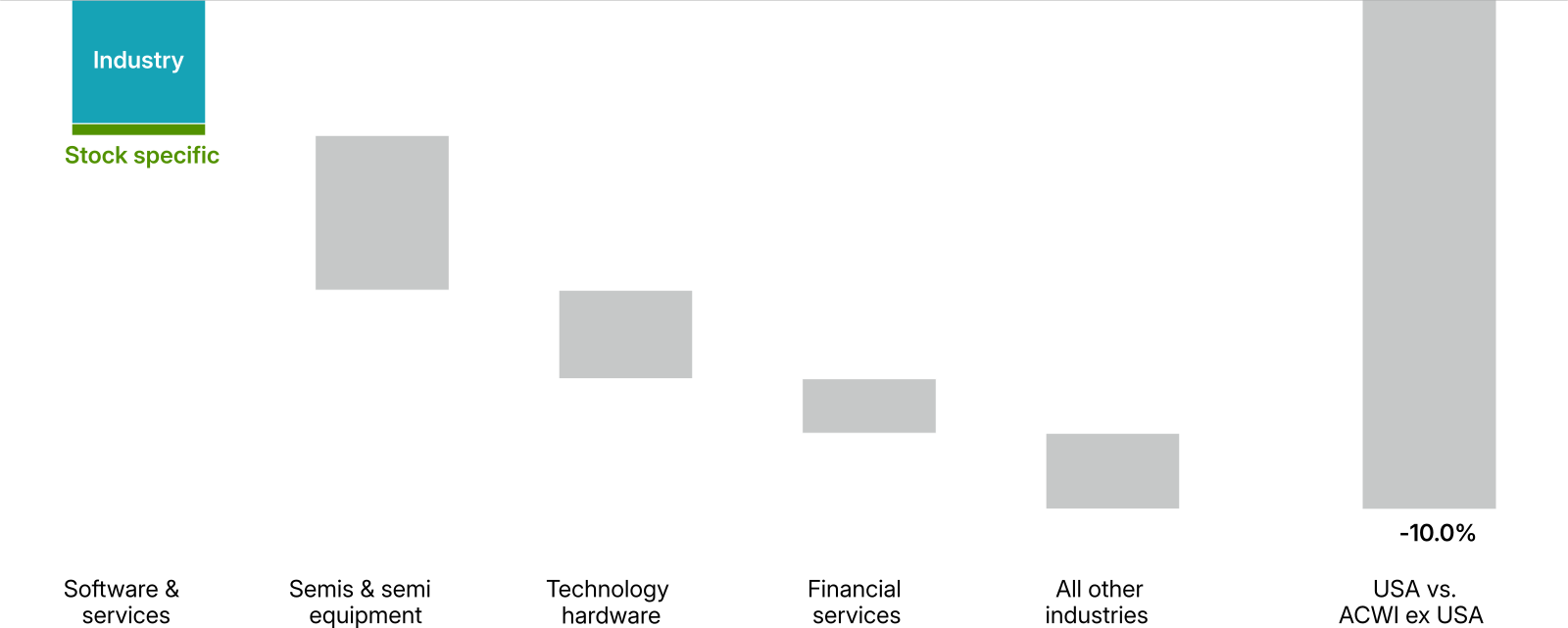
MSCI attribution of the MSCI USA vs. the MSCI ACWI ex-USA Index, YTD through Feb. 28, 2026, and based on GICS industry groups. Allocation selection is highlighted only for the software & services group.
A rare factor regime in developed markets
Factor returns also point to a narrative-driven unwind. MSCI’s Global Economic Regions Equity Factor Model traces factor returns separately across U.S., developed ex U.S. and emerging-market (EM) regions. Three earnings-linked factors — analyst sentiment, growth and profitability — all declined sharply in developed markets (DMs) at the start of the year. EMs did not show the same pattern.
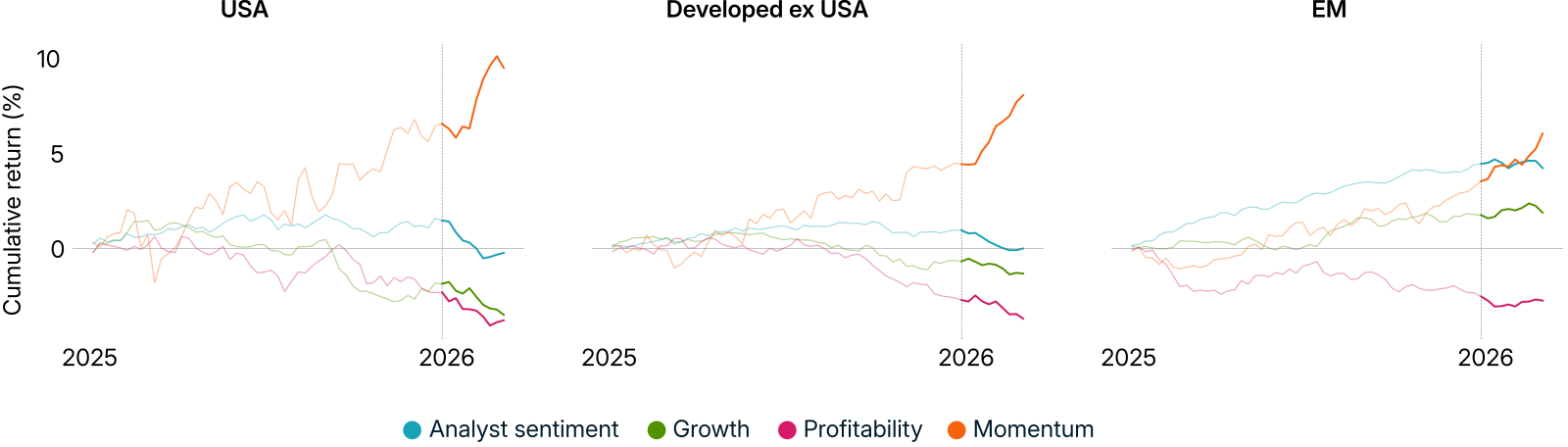
MSCI Global Economic Regions Equity Factor Model. Cumulative factor returns, January 2025 – February 2026.
The chart below shows the equal-weighted return to the pro-growth trio over 30 years, with the five worst periods highlighted. In the U.S., the current drawdown began in late 2025 and has already surpassed the COVID-19 and dot-com episodes.
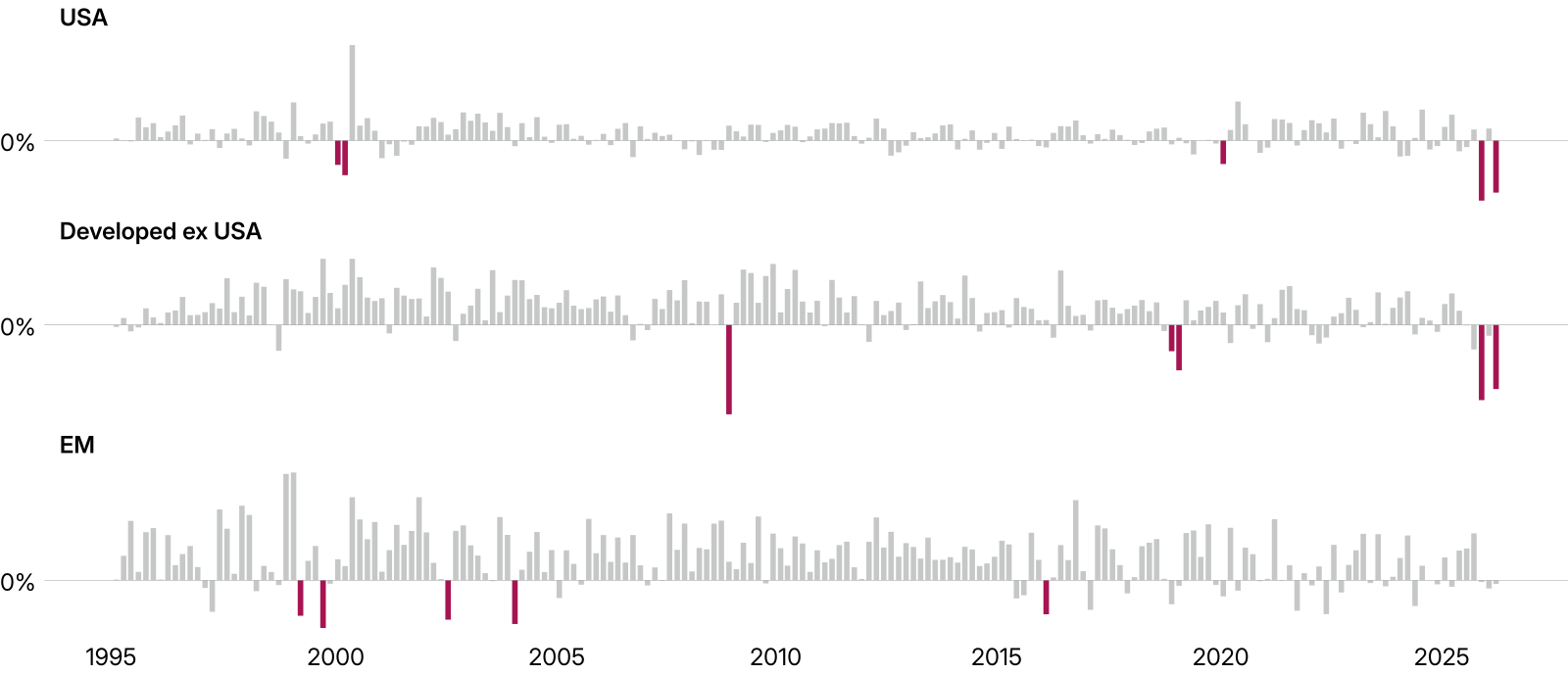
Average two-month return of analyst sentiment, growth and profitability factors. Red bars highlight five worst historic drawdowns. January 1995 – February 2026.
Momentum, meanwhile, rose sharply in DMs. Traders were rewarded for selling firms that analysts still favored, a decoupling of price trends from fundamental signals that others have flagged as well.3 Accounting for momentum's rise alongside the pro-growth decline, the configuration becomes even more uncommon in the historical record.
Where in the AI value chain is the repricing?
The decoupling between growth and momentum is sharpest in the application and data layers of the AI value chain. To measure this, we used MSCI’s Investment Strategy Explorer, which classifies global equities into nine segments based on their role in the AI ecosystem. The hypothetical portfolio spans roughly 230 companies across physical infrastructure and software, and is 80% U.S. by market capitalization.
Factor profiles of the nine AI segments, alongside U.S. software & services, show where the pro-growth unwind has been concentrated. U.S. software and key segments of the AI value chain (application development, data processing and early-stage adopters) shared an overlapping profile: positive on several growth-linked factors, negative on momentum.
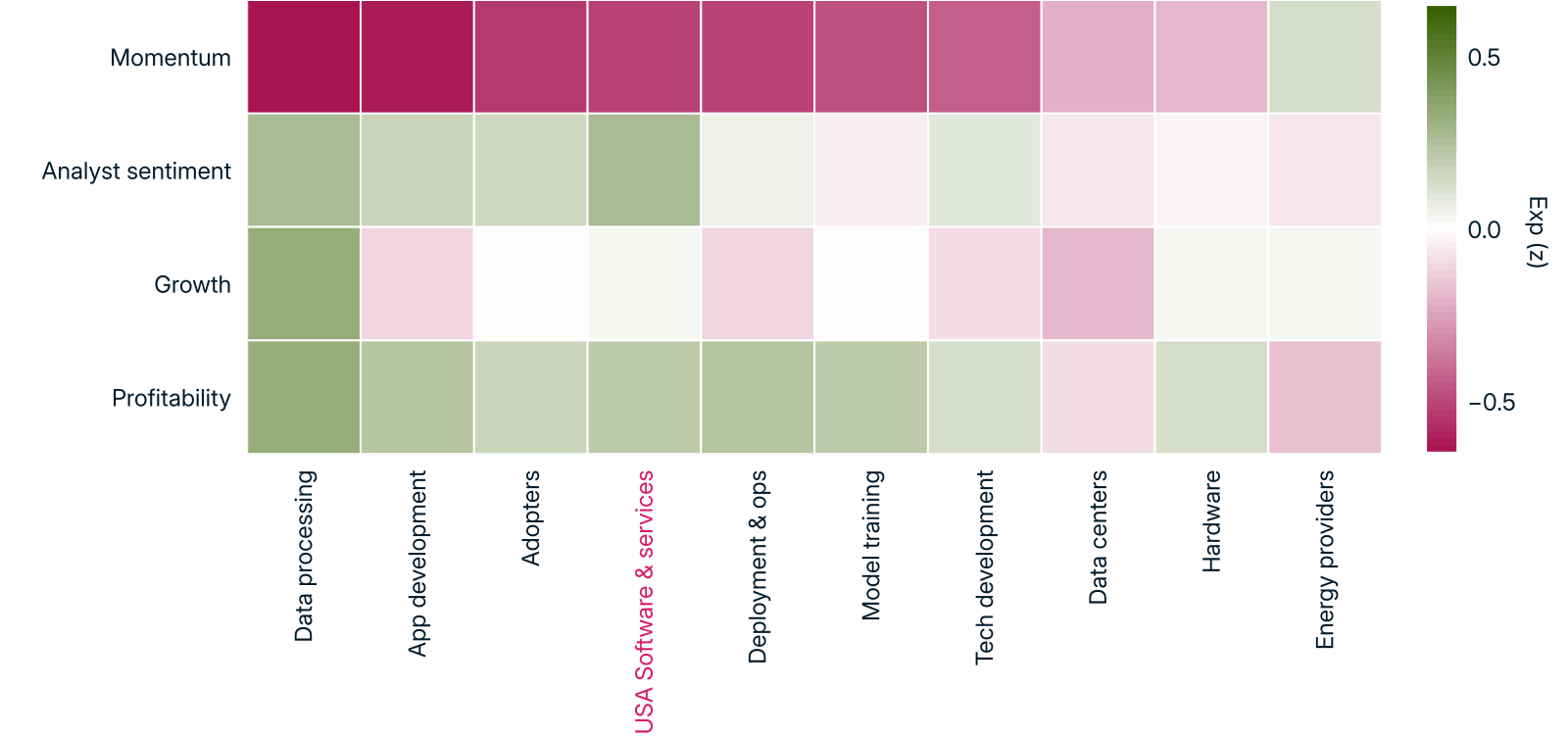
Factor exposures (z-score) for U.S. software & services and MSCI AI value chain segments. MSCI Global Economic Regions Equity Factor Model, as of Jan. 30, 2026. Segments are equally weighted and may overlap.
The AI value chain offers a complementary lens to GICS alone. Many of the firms now in the crosshairs were, until recently, AI’s partners: the data processors and application developers whose products fed the ecosystem. The market is now treating them as its prey to disintermediate.
Implications for investors: The data doesn't yet support what markets are pricing in
The current factor regime is historically rare. Pro-growth factors are contradicting the fundamental signals that analysts and earnings data support, with few historical precedents. Whether this represents an overcorrection or an early signal of structural change, the statistical rarity alone warrants attention.
We do not yet find signals of fundamental deterioration. Short-term earnings growth forecasts for U.S. software actually rose throughout February. Anthropic, the foundation model provider whose late 2025 product launches accelerated the selloff, published labor market research in March 2026 measuring actual AI usage against theoretical capability. Even for the most exposed occupations, automated usage covers roughly a third of feasible tasks — and unemployment within those occupations has not increased since late 2022.4 The equity market may be repricing business models faster than disruption is arriving.
For risk managers, the spread between fundamentals and momentum in DMs is worth tracking. Scenario-testing a “growth rewind” — shocking the spread between growth exposures and price signals — can measure portfolio sensitivity to a regime shift. Earnings revisions and customer churn data through the rest of the year will confirm whether the disintermediation narrative finds support or fades as fundamentals hold.

Subscribe todayto have insights delivered to your inbox.
AI Is Rewriting Risk — Are You Ready?
From weeks to minutes: how AI is reshaping risk and portfolio management — and what CIOs and CROs need to consider next.
Investment Trends in Focus: Rebalancing Portfolios in an Unbalanced World
Ashley Lester, chief research officer, and Axel Kilian, chief client officer, explore a transitional period for markets, with geopolitics, AI investment and infrastructure demands set to shape 2026.
Equity Factor Models
Explore portfolio construction, risk management and factor investing tools designed to help you build resilient, data-driven portfolios.
1 Based on MSCI USA vs. ACWI ex USA gross returns in local currency. Year-to-date through Feb. 28, 2026.
2 The Global Industry Classification Standard (GICS) is the industry-classification standard jointly developed by MSCI and S&P Dow Jones Indices.
3 Man Group. “How AI Hijacked the Momentum Trade.” Man Institute (Man Group), February 24, 2026.
4 Anthropic. “Labor Market Impacts of AI: A New Measure and Early Evidence.” March 5, 2026.
The content of this page is for informational purposes only and is intended for institutional professionals with the analytical resources and tools necessary to interpret any performance information. Nothing herein is intended to recommend any product, tool or service. For all references to laws, rules or regulations, please note that the information is provided “as is” and does not constitute legal advice or any binding interpretation. Any approach to comply with regulatory or policy initiatives should be discussed with your own legal counsel and/or the relevant competent authority, as needed.