
Real Assets in Focus: Commercial Real Estate on a Knife's Edge?
- Rising long-term bond yields are testing commercial real estate's fragile recovery, squeezing liquidity in gateway markets like London and Seoul.
- Institutional investors, fund managers and allocators tracking global real-estate markets must be aware that markets are at risk of further correction should bond yields remain at elevated levels.
- How bond markets behave in the coming months will shape the second half of the year for real-estate capital markets and whether the recovery can be maintained.
Global real-estate investment volumes are on a nine-quarter winning streak after activity bottomed out in early 2024. A slow and steady recovery has been built on a stabilization in interest rates, which spiked in the aftermath of the post-pandemic inflationary squeeze. This has allowed real-estate capital values to stabilize and encouraged capital to return to the market. The recovery is both uneven and fragile, however, with investment volumes in key segments well down on the historical average and investor confidence negatively impacted by continued geopolitical volatility.
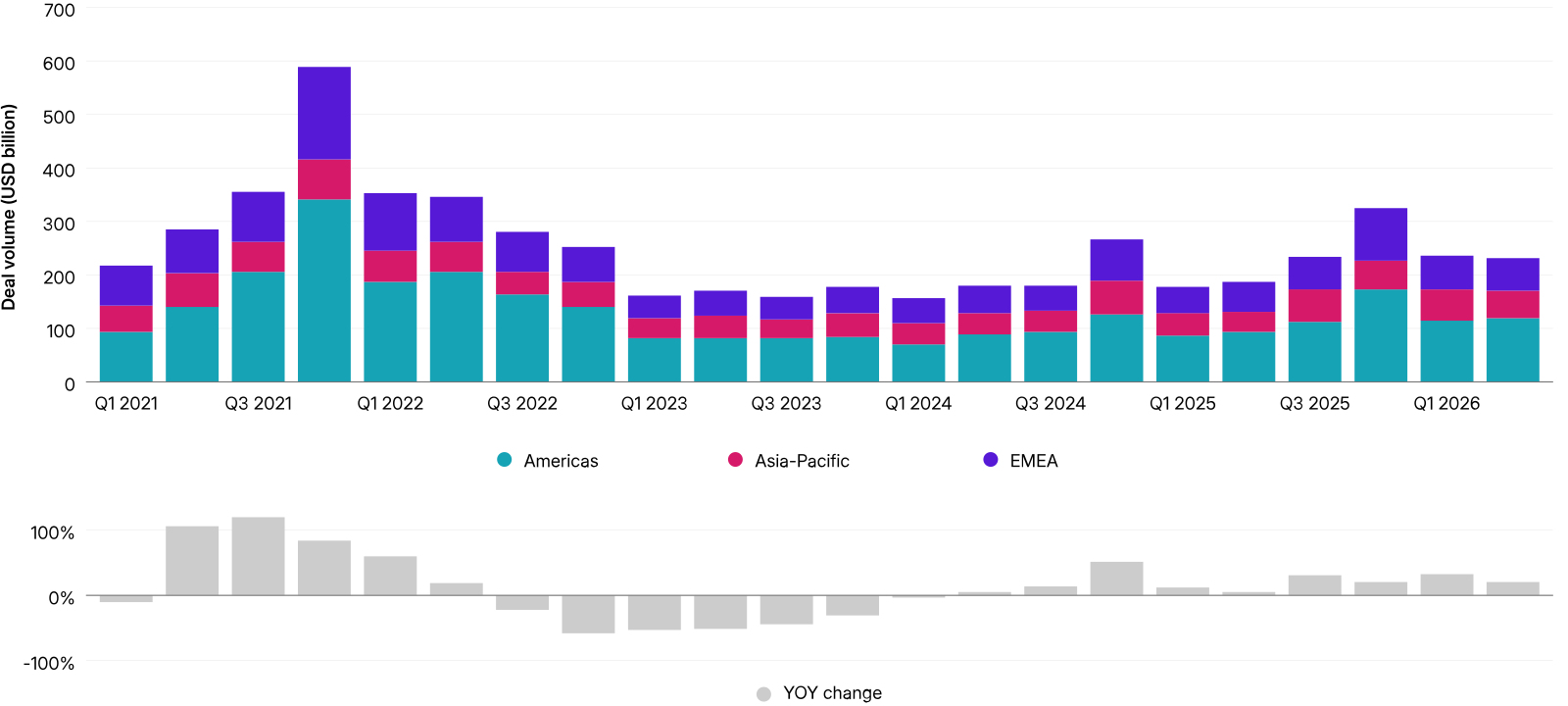
In this context, the recent spike in long-term bond yields is notable and has implications for the global property market. Yields on U.S. 30-year Treasurys topped 5.3% for the first time since 2007, while U.K. 10-year gilts are at their highest level since 2009 and yields on German 10-year bunds are at their highest level since 2011.
The market is forcing governments to pay higher prices to borrow because of the conjunction of several factors: renewed tensions between the U.S. and Iran, prompting inflationary fears; concerns around fiscal sustainability, with many developed economies running a significant budget deficit; and the AI development boom, which has required a significant amount of debt financing through corporate-bond issuance and is competing with government debt for capital.
Why rising yields matterThis shift matters for real estate. Property is a price-taker — i.e., it is predominantly priced relative to the risk-free rate, while interest rates set the cost of capital, with debt being the lifeblood of the commercial-property market. If bond yields remain at elevated levels, it will put upward pressure on property yields and therefore downward pressure on prices and values. This creates a negative feedback loop for property, depressing market liquidity, which prevents managers from selling assets to return capital to investors. This, in turn, prevents investors from recycling that capital into new fund vintages, and so the recovery remains starved of new investment.
Liquidity tightening in gateway marketsThis pressure is already being felt in some property markets. The seasonal nature of dealmaking means Q1 is usually the slowest quarter of the year, but Q1 deal volumes in the U.S., U.K., Germany and France were higher than in Q2. Such a shift suggests that the momentum that had built up through the second half of 2025 is dissipating.
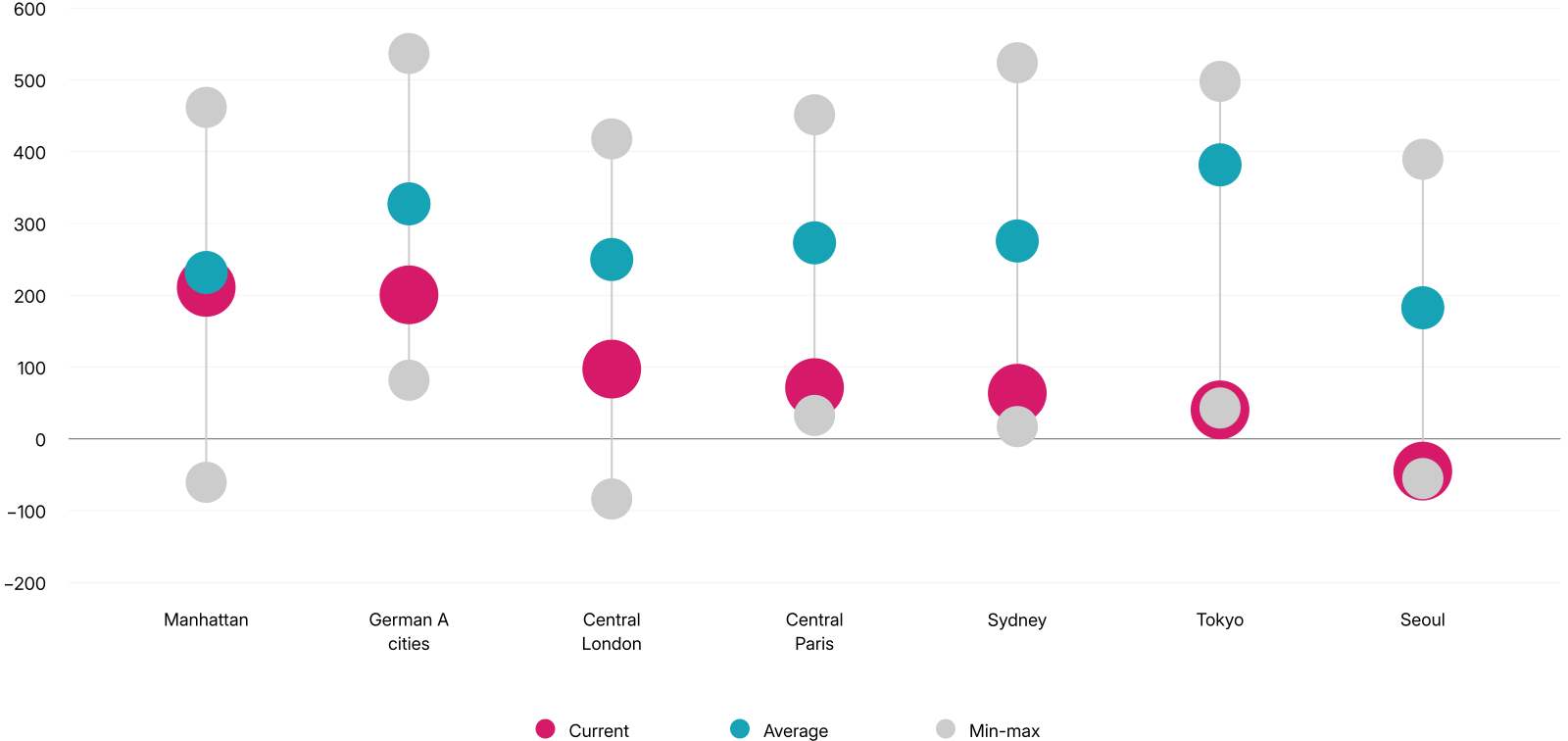
The impact of higher rates is also feeding through to pricing in some gateway cities. In Central London, office yields compressed to below 5.5% in the second half of 2025, but the outward shift in U.K. gilts means transaction yields were pushed back above 6% at the end of June. Despite some large deals, market liquidity is now at its lowest recorded level according to MSCI Capital Liquidity Scores.
Some Asia-Pacific markets look similarly exposed, and the yield gap between government bonds and average yields is at or close to historical lows in Tokyo and Seoul. Seoul is currently recording a negative yield gap. Buyers may be happy transacting at yields below the risk-free rate if they can price robust rental growth into their models but this situation has generally proven to be unsustainable for other markets and presaged a correction. Of the major gateway markets, Manhattan looks better placed and the yield gap is on par with the long-term average, with office yields at levels last recorded in 2004.
With a market as diverse as global real estate, there are segments where liquidity is above average. Spain's economy is one of Europe's fastest-growing, and buyers have responded. Spanish deal volumes are back at their pre-inflation peak and are well above the long-run average in both the office and residential sectors. Australian deal volumes were also up, despite interest-rate increases by the Reserve Bank of Australia.
Chinese deal volumes were double their H1 2025 levels in H1 2026. While the growth was from a low base, activity is also around 25% above the 10-year average. Meanwhile, 2026 is already a record year for Singapore after H1 volumes reached USD 10.3 billion, with another USD 3.5 billion already in the books in H2. The running total of USD 13.8 billion is well ahead of the prior record of USD 12.5 billion achieved in 2019. Notably, China and Singapore are among the handful of markets where real estate is not being squeezed by higher rates.
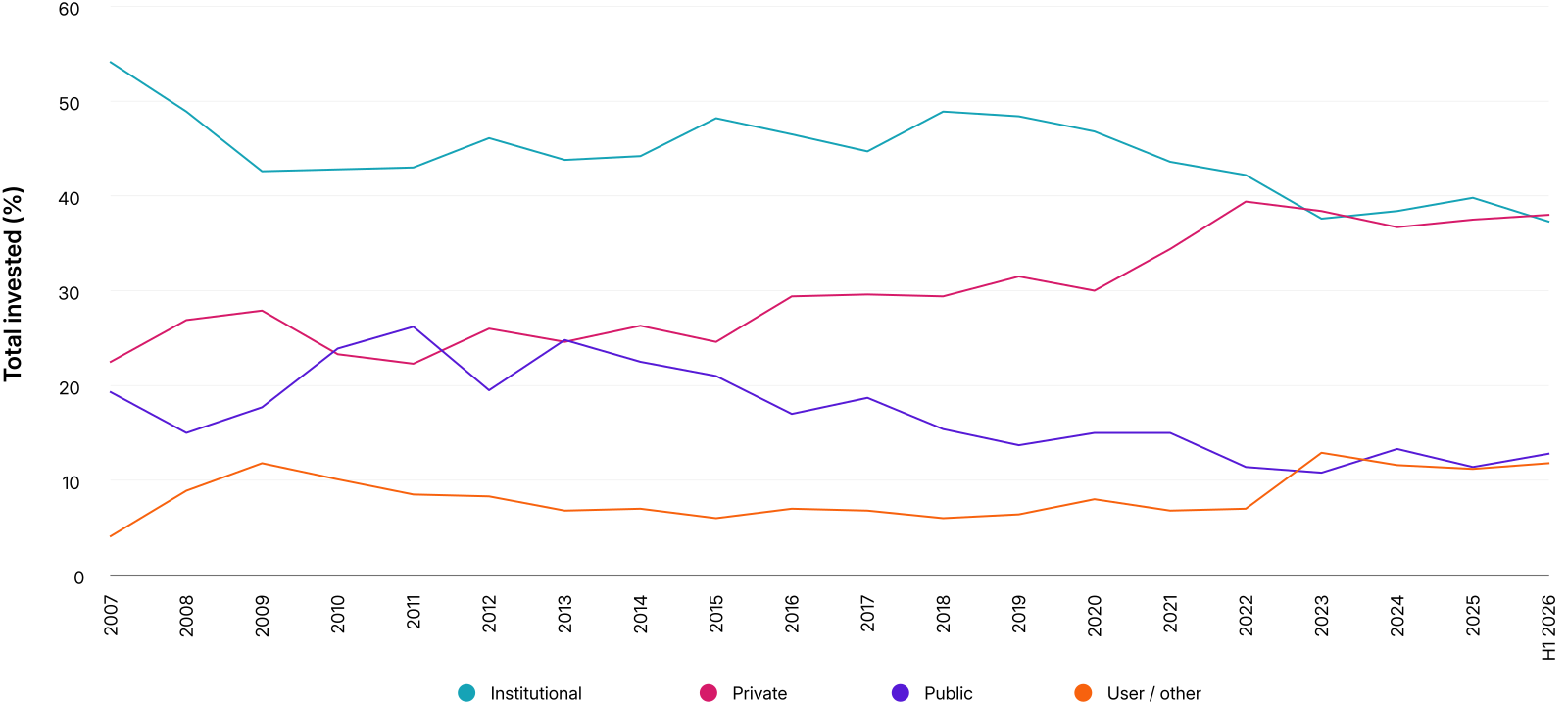
Private capital is filling the gap institutions leave behindSome buyer groups are also relatively unaffected by the shifts in the interest-rate environment. For example, private investors may not face the same pressures as performance-driven investment managers investing on behalf of third parties. On a global basis, private acquisitions of income-producing real estate account for 38% of deal volumes, well above the long-term average of 30%. For example, Pontegadea, the investment vehicle of billionaire Zara founder Amancio Ortega, has acquired close to USD 2 billion of real estate in Europe and North America so far in 2026, on top of the USD 2.7 billion they invested in 2025.
In contrast, institutional participation continues to be limited by liquidity constraints, as outlined above. Global acquisitions of income-producing real estate by institutional players account for 37% of the H1 market, which is lower than in any calendar year on record. Indeed, on balance, many institutions have been net sellers as they attempt to liquidate investments made in the prior cycle to return capital to investors and reshape their portfolios for the challenges ahead.
The bigger question is whether this is a temporary spike or a more structural repricing of the cost of capital. The forces pushing yields higher, including fiscal deficits, geopolitical risk premia and the debt-financing needs of the AI buildout, show little sign of abating and are unlikely to unwind quickly. If long-term yields settle at a higher plateau than envisaged 18 months ago, private real-estate pricing will need to adjust further to become competitive. This is the knife's edge on which the recovery remains balanced: A further rise in yields could tip more markets into the same negative yield gap as Seoul, while easing in bond yields would be one of the clearest signs that the pressure is beginning to recede.

Subscribe todayto have insights delivered to your inbox.
Real Capital Analytics
Transparent, proprietary intelligence across global private real estate markets connecting investors, funds, assets and transactions on one platform.
Latest on US Commercial-Property Pricing
We report the latest trends in the RCA CPPI for the U.S. We cover the all-property index and indexes for the major property types including industrial, retail, apartment and office.
Lighter Transaction Evidence May Not Be the Constraint for Valuations
Valuers wait for confirmed transaction evidence rather than pricing to sentiment in commercial real estate. We analyzed 26 years of data to examine the accuracy of those valuations.
The content of this page is for informational purposes only and is intended for institutional professionals with the analytical resources and tools necessary to interpret any performance information. Nothing herein is intended to recommend any product, tool or service. For all references to laws, rules or regulations, please note that the information is provided “as is” and does not constitute legal advice or any binding interpretation. Any approach to comply with regulatory or policy initiatives should be discussed with your own legal counsel and/or the relevant competent authority, as needed.