
The Case for Systematic Tax Management in Canada
- Tax-loss harvesting has long been a feature of wealth management in Canada, but the systematic, portfolio-level approach pioneered by U.S. direct indexers is only beginning to take hold.
- Hypothetical strategies tracking the MSCI Canada Index generated up to 5.5% of the initial portfolio in taxable losses over a three-year period, with a tracking error of just 1.5%.
- Using MSCI's Quantitative Investment Solutions, we illustrate how wealth managers might implement systematic tax-loss harvesting at scale to achieve measurable after-tax benefits.
Mentioned in this blog post:
Canadian wealth managers may find many U.S. tax-loss harvesting strategies applicable for their Canadian-domiciled, high-net-worth clients, given the structural similarities between the two countries’ treatment of capital gains. Tax-loss harvesting is well established among U.S. wealth managers, with technology enabling systematic, year-round application at scale. Direct-indexing strategies in the U.S. held USD 864 billion AUM at year-end 2024.1
To illustrate the potential impact of using tax-loss harvesting in Canada, we ran several long-only, tax-loss-harvesting direct-indexing strategies tracking the MSCI Canada Index, benchmarked against a tax-agnostic reference strategy.2 We used MSCI’s Quantitative Investment Solutions platform to evaluate three-year strategies to maximize the number of complete periods within our study window. Strategies sharing identical positions, but different start dates, can behave differently under the same tax-aware optimization profile: A sale that realizes a loss in one portfolio may incur a gain in another, depending on cost basis. We captured this by comparing strategies across vintage years and examining losses harvested, risk and portfolio turnover.
The similarities between the U.S. and Canadian tax codes mean that the setup of loss-harvesting strategies mirrors our previous analysis for the U.S. market. The main differences between the two are summarized below:
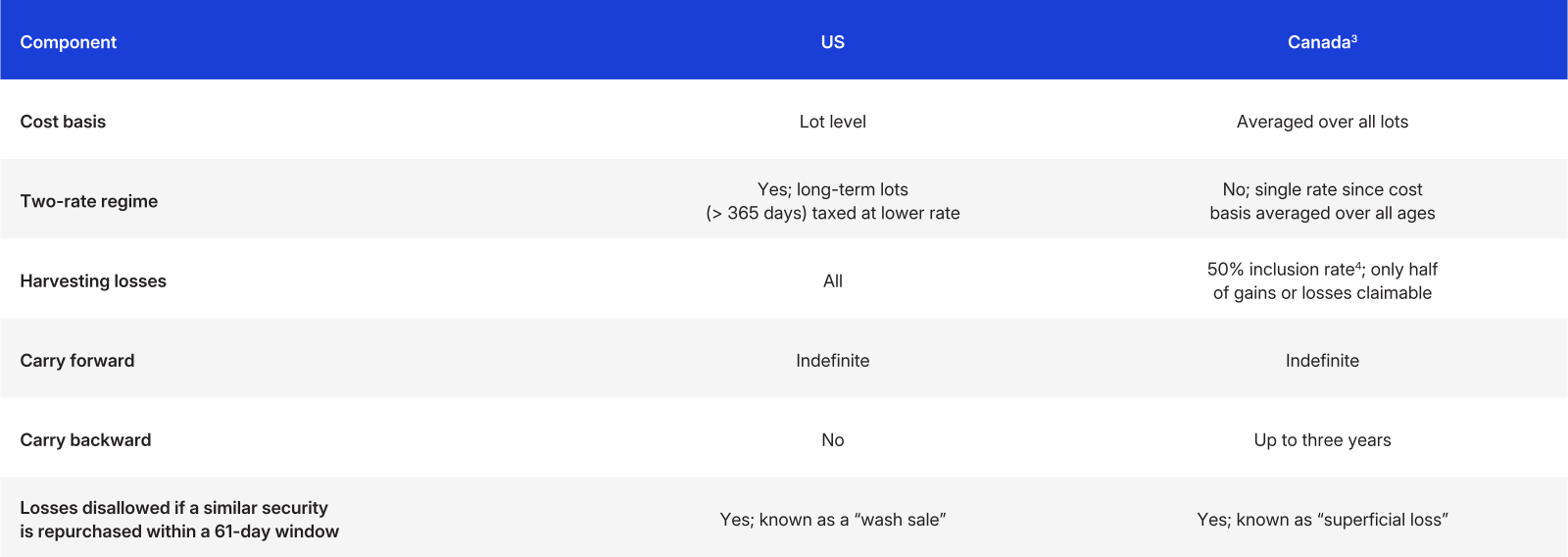
The most notable difference is that in Canada, cost basis is averaged across all lots, so managers cannot select which lot to sell to influence realized gains or losses. This generally reduces realized gains compared to the U.S. but also makes losses harder to realize — minimizing taxes may be easier but maximizing harvestable losses is more challenging.
Beyond cost basis, under the Canadian tax code, losses from long positions can only offset capital gains, while short-sale losses can be netted against income. Canada also allows losses to be carried back up to three years. Wealth managers may want to consider these nuances so that they can leverage them for their clients if appropriate.
Over our study period, the loss-harvesting strategy generated a potential loss benefit of between 0.75% and 5.5%.5 A manager starting with a CAD 10 million cash portfolio in the 2013 vintage year, for example, would have generated just under CAD 550,000 in taxable losses in three years that could be applied to gains generated elsewhere.
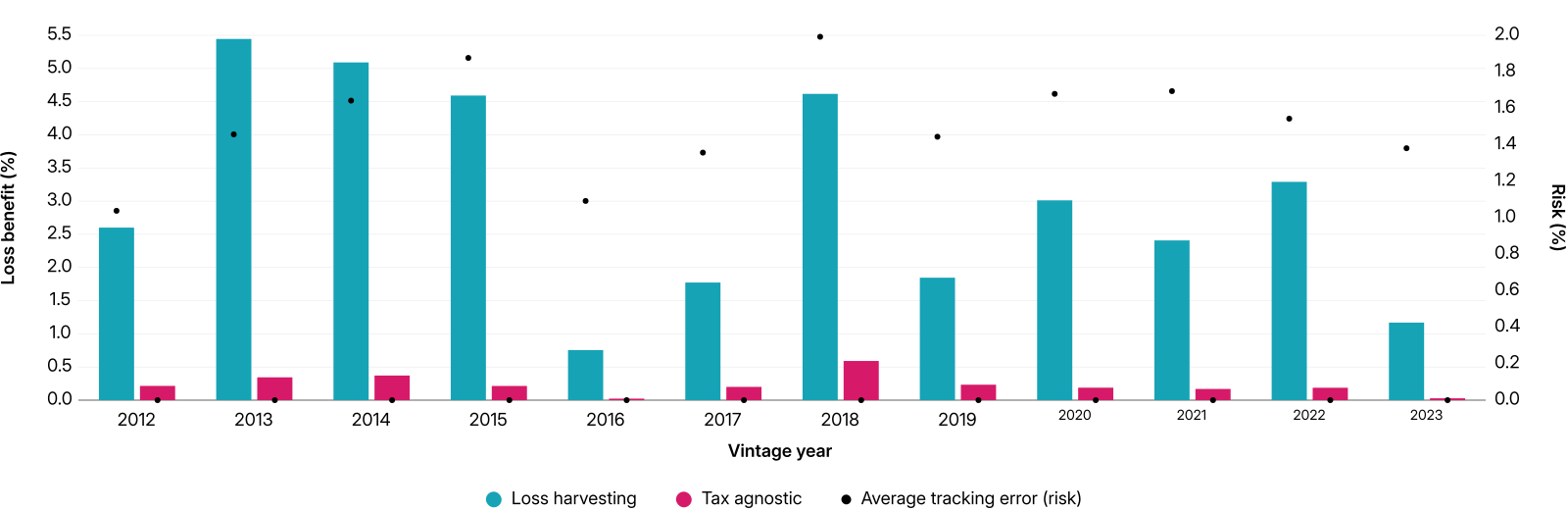
Data from January 2012 to December 2025.
The active tax management that generates this loss also results in an average annual tracking error of 1.4% over the life of the strategy. Note that the level of tracking error incurred doesn’t completely align with the loss benefit amount — a drawdown will generate more loss opportunities than a market rally, though both may have a similar effect on portfolio volatility.
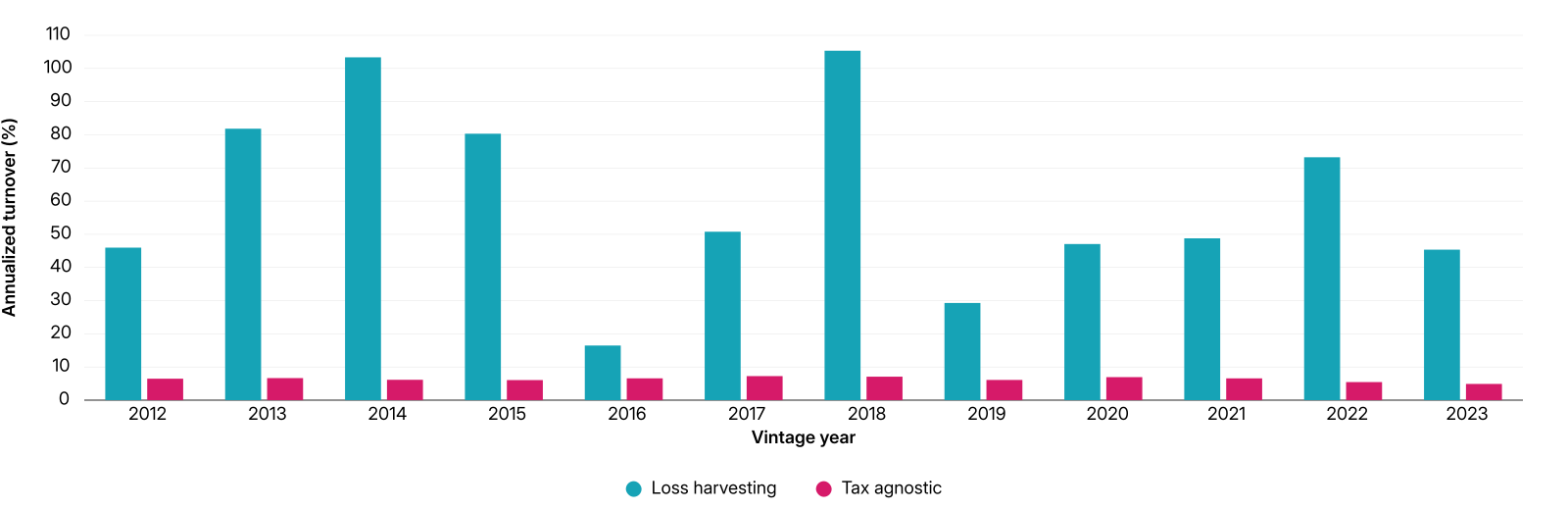
Data from January 2012 to December 2025.
Loss-harvesting strategies can potentially increase portfolio turnover as managers trade more often in the process of realizing losses; the 2014 and 2018 strategies have annualized turnover exceeding 100%. This may not be an issue if the primary goal of the strategy is to generate realized losses, but wealth managers may want to monitor portfolio turnover and ensure that clients are comfortable with it.
While some Canadian tax code elements appear to limit the scope for loss harvesting, our simulations show that systematic tax-loss harvesting may still deliver material benefits — simulated tax savings of up to 5.5% of the initial portfolio value in our hypothetical strategies. These results highlight the importance of having the right analytical infrastructure and tools to evaluate the benefits and trade-offs of systematic tax management for client portfolios. MSCI’s Quantitative Investment Solutions platform enables wealth managers to implement and monitor these strategies at scale, balancing after-tax return potential against tracking error and turnover constraints.


Subscribe todayto have insights delivered to your inbox.
Are Your Clients Ready for US Tax Day?
Given the complexity of U.S. tax regulation, wealth advisers continue to grapple with how to build tax-efficient portfolios while balancing clients’ other objectives. We propose a rules-based way of doing so and analyze its benefits and trade-offs.
Loss Harvesting – No Longer Just a Year-End Exercise
Continuous tax-loss harvesting, versus a dedicated year-end process, could potentially generate greater net realized losses. And with modern portfolio-management systems, it can be largely automated as part of a regular rebalancing cadence.
1 “Direct Indexing Assets Close Year-End 2024 at $864.3 Billion,” Cerulli Associates, April 10, 2025.
2 Illustration only, not indicative of actual results. This analysis includes hypothetical, backtested or simulated performance results. There are frequently material differences between backtested or simulated performance results and actual results subsequently achieved by any investment strategy.
3 “Calculating and reporting your capital gains and losses,” Canada Revenue Agency, last modified Feb. 5, 2026.
4 An investor’s net gain or loss is multiplied by the inclusion factor, which is set by the Canada Revenue Agency to determine their taxable gain or loss. As of June 2026, the inclusion factor was 50%. For this analysis, we assume a capital gains rate of 33%.
5 Loss benefit is calculated as the hypothetical tax savings of realized losses expressed in USD or CAD. Realized losses are multiplied by the inclusion factor and the tax-rate assumptions from the previous footnote to determine the reduction in taxes that the net loss would provide. We assume that the investor has realized sufficient gains from other investments, that the realized losses are fully offset. The loss benefit is then expressed as a percentage of initial portfolio value.
The content of this page is for informational purposes only and is intended for institutional professionals with the analytical resources and tools necessary to interpret any performance information. Nothing herein is intended to recommend any product, tool or service. For all references to laws, rules or regulations, please note that the information is provided “as is” and does not constitute legal advice or any binding interpretation. Any approach to comply with regulatory or policy initiatives should be discussed with your own legal counsel and/or the relevant competent authority, as needed.