
The Macroeconomic Side of Physical Risk
- For long-term asset owners, including pension funds, insurers and sovereign wealth funds, understanding physical climate risk requires looking beyond direct asset damage to include economywide effects.
- As projected global temperatures exceed critical thresholds, many commonly used climate-damage functions have tended to show losses rising more gradually than in the real economy.
- Using MSCI’s Macroeconomic Physical Risk Climate VaR, we found that worst-case scenarios suggest losses for global equity portfolios could be up to nine times greater than direct damage alone.
Traditional physical-risk models typically focus on direct impacts such as asset damage from acute hazards like floods and wildfires, and productivity losses from acute and chronic hazards including extreme heat. These impacts matter and are often measurable at the asset level. For long-term investors, however, an important additional source of risk is macroeconomic physical risk — the economy-wide effects of climate change on companies’ costs. In worst-case scenarios, these macroeconomic spillovers can amplify potential costs for companies by up to nine times and may have an outsized effect on portfolios.
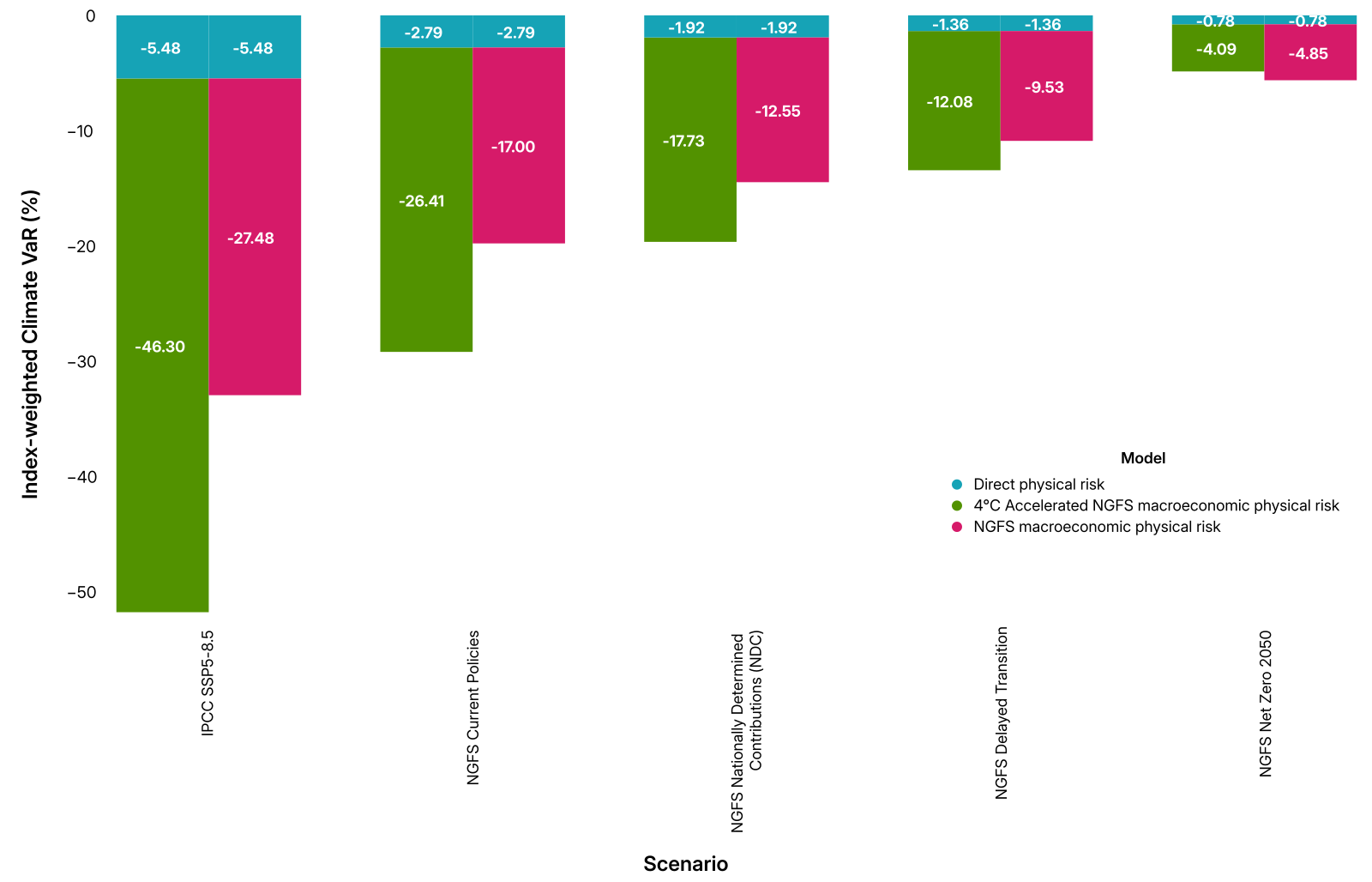
Data as of Dec. 31, 2025, based on constituents and weights of the MSCI ACWI Investable Market Index (IMI). Results shown reflect average outcome factors. Network for Greening the Financial System (NGFS) macroeconomic results apply damage functions directly from the NGFS. The 4°C Accelerated scenario builds on these functions by adding an additional term that assumes total economic collapse once the 4°C temperature threshold is breached. Source: MSCI Sustainability & Climate Research. MSCI Sustainability & Climate products and services are provided by MSCI Solutions LLC in the United States and MSCI Solutions (UK) Limited in the United Kingdom and certain other related entities.
Extreme weather-related disasters are becoming more frequent and costly as climate hazards intensify and development continues in exposed regions. Over the past two decades, global losses from floods, storms, droughts and wildfires have trended higher. In 2024, economic losses exceeded USD 300 billion, around 80% higher than the average over the previous decade.
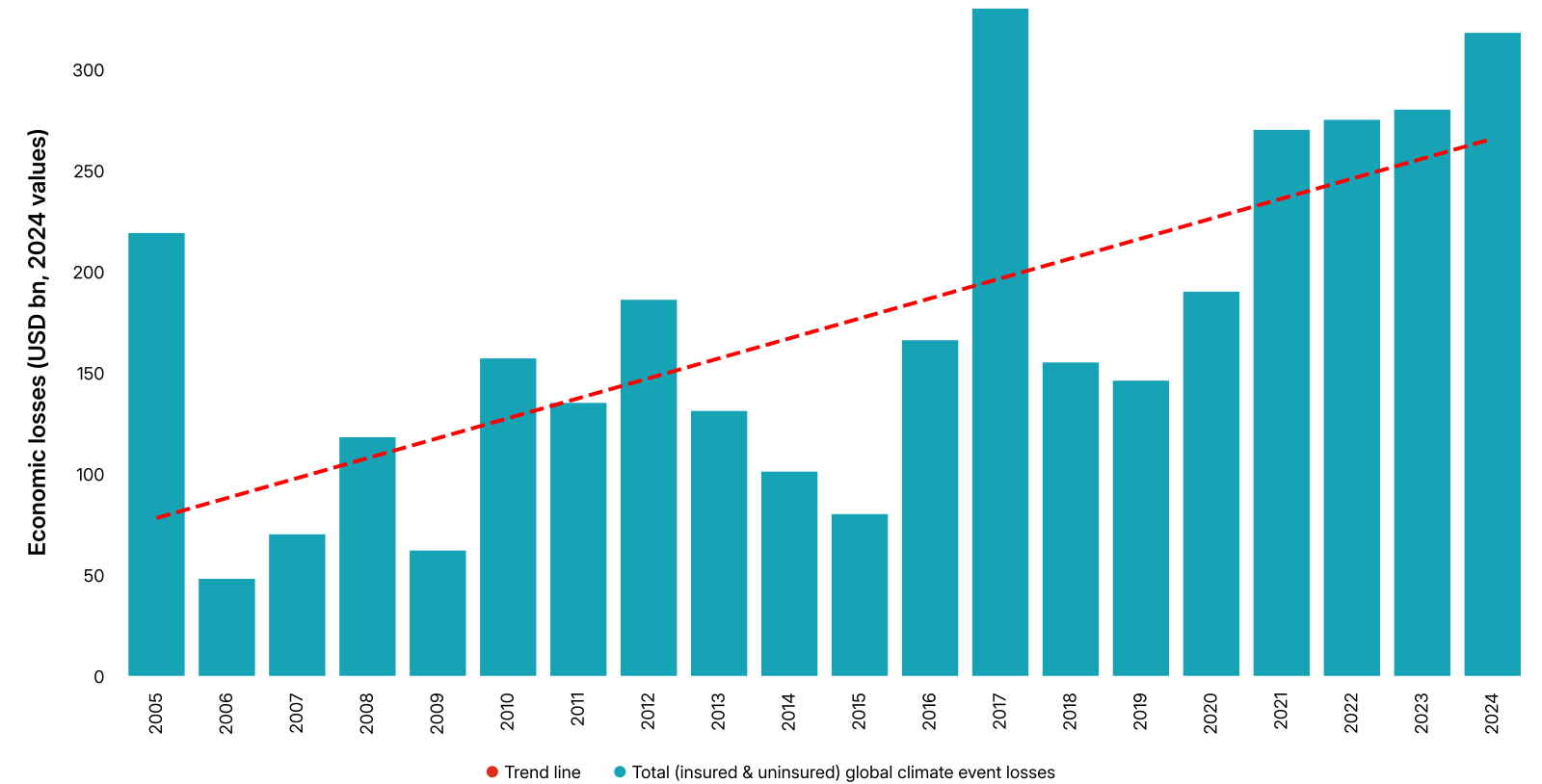
Source: Swiss Re Institute, sigma 1/2025.
These costs are already materializing in portfolios. In a recent paper, Hidden in Plain Sight: Physical Risk in Asset Owners’ Portfolios, MSCI Research & Development worked with 18 major asset owners to map nearly 500,000 physical assets underpinning their listed equity holdings. The findings were stark: 55% of companies in the combined portfolio already face severe physical hazards, representing roughly a quarter of total portfolio value. Heat waves and water scarcity dominate current exposures, and 89% of assets face significant exposure to at least two hazards.
For asset owners with multi-decade investment horizons, including pension funds, insurers and sovereign wealth funds, the need to account for direct physical damage is clear. Less clear is whether commonly used climate-risk approaches extend beyond these direct effects to capture the broader transmission channels that can influence portfolio values over time.
As global mean temperatures rise, companies increasingly face indirect pressures transmitted through the broader macroeconomy. Climate-related disruptions, including supply chains, geopolitics, technology adoption, migration and labor force participation, can translate into higher costs of capital, increased capital expenditure and shifts in demand, including greater spending on adaptation and reconstruction. As a result, physical climate risk also operates through indirect macroeconomic cost channels.
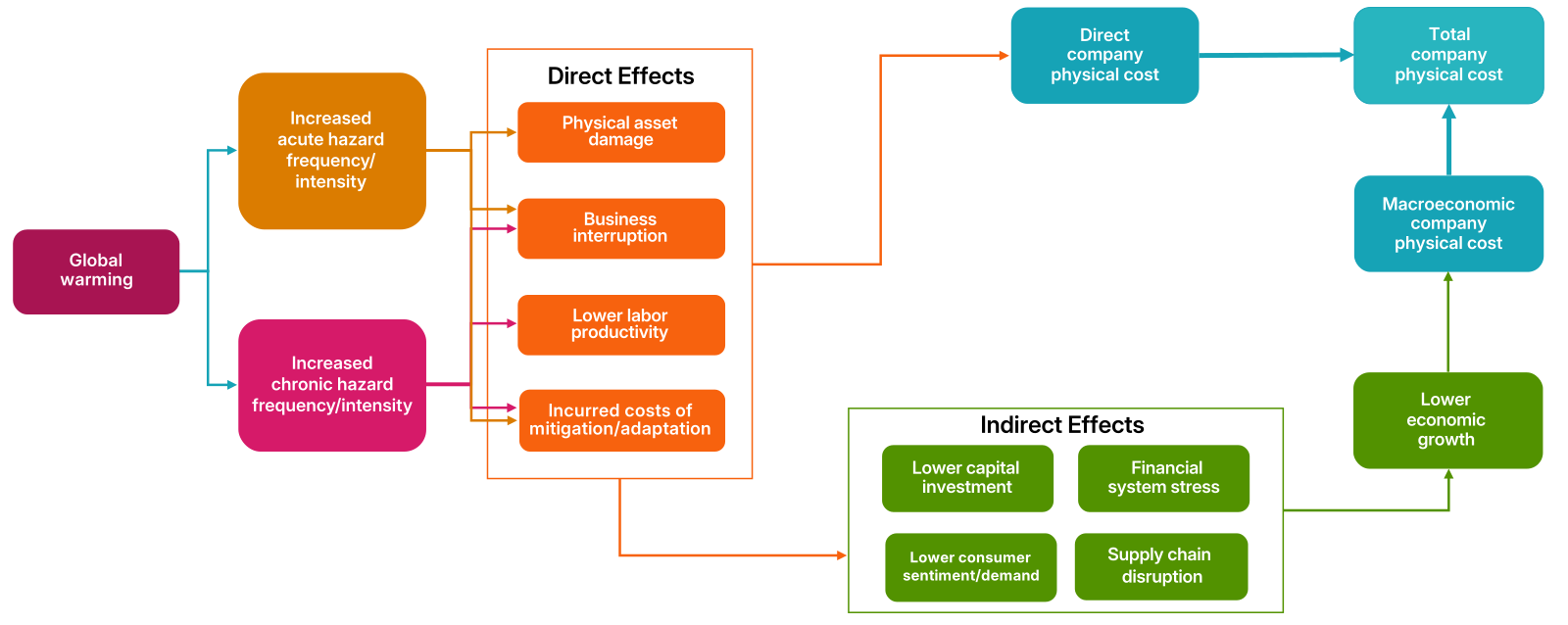
Note: Incurred costs of mitigation/adaptation are not currently covered in MSCI’s direct physical-risk model. Source: MSCI Sustainability & Climate Research.
Estimating forward-looking, scenario-based climate costs using a macroeconomic approach is not new. However, many commonly used climate-damage functions have been criticized for underrepresenting non-linear outcomes, particularly as projected global temperatures exceed critical thresholds that may trigger Earth-system tipping points. In practice, this means losses may rise gradually in models but accelerate more sharply in the real economy.
MSCI’s macroeconomic physical risk Climate VaR model complements and builds on MSCI’s direct physical risk model by expanding the definition of physical risk within the Climate VaR framework. It draws on NGFS damage functions, supplemented with enhanced damage functions designed to explore possible non-linearities and tipping-point dynamics.
Applied to the MSCI ACWI IMI, the combined analysis shows material financial impacts, expressed as Climate VaR, across scenarios:
- Net-zero 2050 (1.5°C warming by 2100): 5.6% (approximately USD 6 trillion) market-cap loss1
- Current policies (about 3°C warming by 2100): 19.8% (approximately USD 20 trillion) market-cap loss
These results are directionally consistent with external research. Swiss Re Institute estimates that the global economy could lose 18% of GDP under a 3°C warming scenario,2 while the Potsdam Institute for Climate Impact Research projects global income reductions of 19% under a business-as-usual scenario.3
The issuer-level perspective in our Hidden in Plain Sight: Physical Risk in Asset Owners’ Portfolios paper helps answer questions such as which holdings to engage with and where to set risk limits. This macroeconomic analysis addresses a different set of questions for long-horizon investors: What does tail risk look like for a diversified portfolio once economywide transmission channels are taken into account?
Several implications stand out:
- Physical risk can remain significant even in transition scenarios. Under the Net-zero 2050 pathway, our analysis still shows a meaningful market-cap impact from physical hazards.
- Focusing on direct impacts alone may understates overall risk exposure, as macroeconomic transmission can turn localized hazards into broad-based valuation effects.
- Scenario design also matters: Asset owners may wish to evaluate physical risk across both transition and higher-warming pathways, then test how results change under different assumptions about non-linearity and economic spillovers.
Taken together, asset-level insights and macroeconomic scenario analysis provide a stronger foundation for assessing climate risk across long-dated liabilities and informing strategic asset allocation decisions.

Subscribe todayto have insights delivered to your inbox.
Hidden in Plain Sight: Physical Risk in Asset Owners’ Portfolios
Where assets are located matters. MSCI and Swiss Re Risk Data Solutions uncover how physical hazards are reshaping asset-owner portfolios — and how insight can drive resilience.
Physical Risk: The New Frontier
Financial crises come and go. Physical risks — climate, geopolitics, demographics — are unprecedented and alter the world for decades. It’s time investors confront these realities reshaping our world.
1 Index value sourced from MSCI ACWI IMI Index as of Dec 31. 2025.
2 “The Economics of Climate Change: No Action Not an Option,” Swiss Re Institute, 2021.
3 Maximilian Kotz, Anders Levermann and Leonie Wenz, “The Economic Commitment of Climate Change.” Nature 628, 551-557, (2024).
The content of this page is for informational purposes only and is intended for institutional professionals with the analytical resources and tools necessary to interpret any performance information. Nothing herein is intended to recommend any product, tool or service. For all references to laws, rules or regulations, please note that the information is provided “as is” and does not constitute legal advice or any binding interpretation. Any approach to comply with regulatory or policy initiatives should be discussed with your own legal counsel and/or the relevant competent authority, as needed.