
TINA, Meet TAWD: Euro Sovereigns as a USD Alternative
- USD diversification demand has elevated euro sovereigns to a core allocation, with the euro gaining 4% or more against its G7 peers over the past year.
- Fixed-income portfolio managers, asset owners and multi-currency macro investors face complex risk-reward decisions as they consider this strategy for diversifying their developed-market rates and currency exposures.
- Analyzing risks like diminished spread-rate diversification and the fact that Europe is not monolithic (as shown by France’s negative performance) is essential, and may even require new portfolio-construction approaches.
“Whom do I call to talk to Europe?”
—Henry Kissinger (apocryphal)
The unrelenting outperformance of USD-denominated assets in the decade following the European sovereign-debt crisis — combined with fiscal, inflation and policy volatility in the U.S. — has prompted global investors to rethink their dollar bias.1 Simultaneously, as the euro outperformed the currencies of the eurozone’s Group of Seven peers by more than 4% over the past year, global asset owners have begun to speak openly about reducing their exposures to USD assets.2
The prime beneficiaries of this reallocation seem to be EUR-denominated assets. If the decade and a half of USD dominance was defined by TINA (“there is no alternative”), the current regime may be better described as TAWD (“the alternative will do”).
The question for fixed-income portfolio managers, asset owners and multi-currency macro investors is: Will eurozone sovereign bonds be able to absorb this renewed diversification demand?
For the first time in years, large euro-denominated sovereign markets look like credible peers to U.S. Treasurys. The eurozone sovereign universe, now exceeding half the notional size of the Treasury market, provides scale, yield and institutional stability. Yet investors venturing beyond USD debt must recognize that Europe’s sovereign landscape is anything but uniform.
Across most of the bloc, fiscal repair and normalized yield curves mark a return to the pre-crisis status quo. The chart below shows quarterly spread curves for euro sovereigns with greater than USD 500 billion debt outstanding. Spreads have rallied (i.e., compressed) steadily since 2022, after the initial invasion of Ukraine by Russia. This recent trend reflects improving growth and debt trajectories and declining economic disruption from the Russia-Ukraine war, as well as the European Central Bank’s backstop credibility.
France, however, stands apart.
French sovereign spreads have roughly doubled since the surprise election of July 2024, due to political uncertainty following the election, persistent budget deficits nearly twice the EU’s mandated 3% debt limit and a negative credit-rating outlook. In contrast, Southern European sovereigns, in a quixotic reversal since the crisis years, have demonstrated unexpected fiscal discipline and credit resilience.
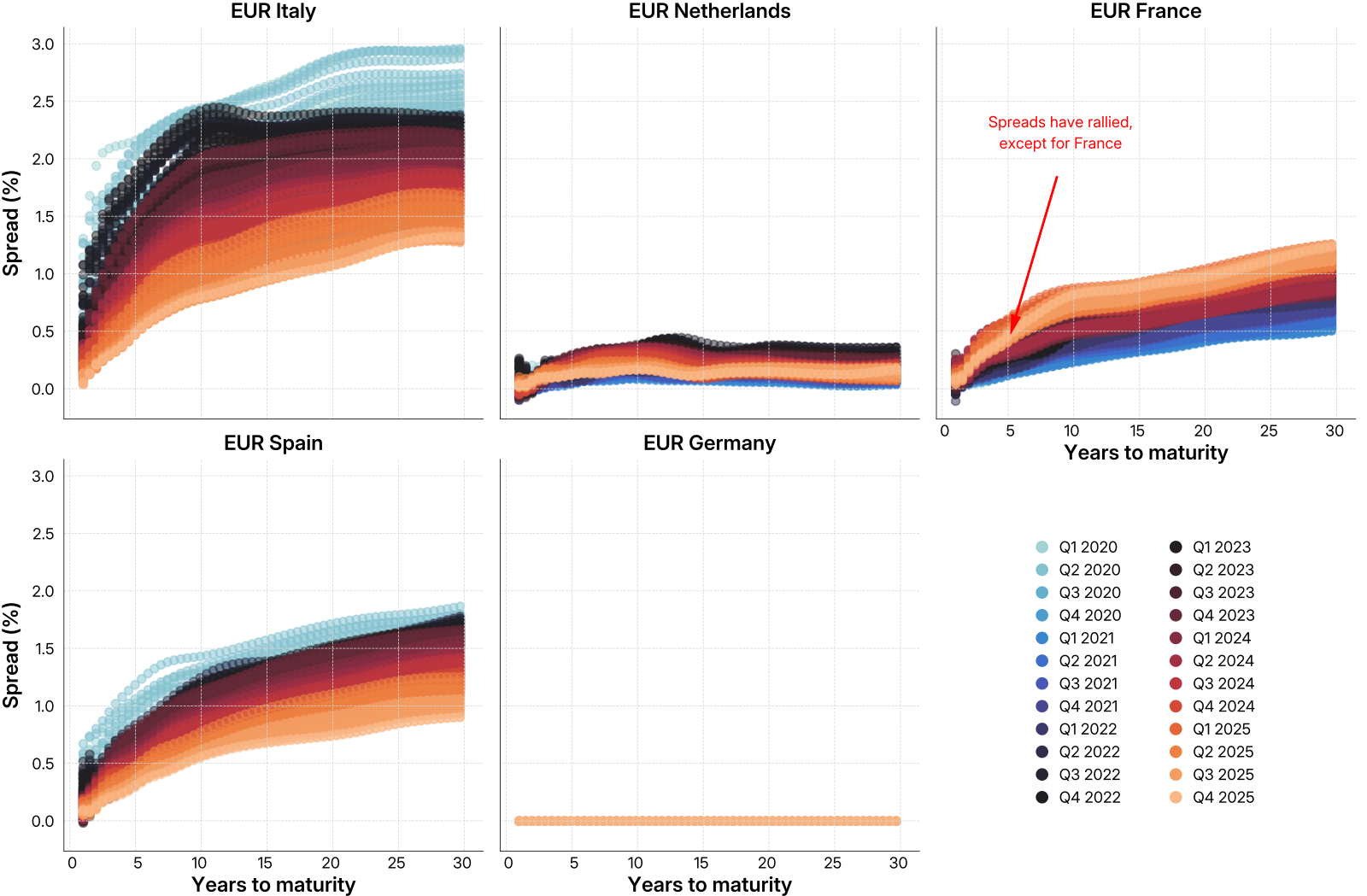
Quarterly spread curves for euro sovereigns with more than USD 500 billion outstanding.
The larger story, though, is the rise in yields across the bloc. Yields on German 10-year bunds have regularly been above 2.5% since the end of 2022, a level they had failed to break for the previous 11 years. This new yield regime is similar to what prevailed before the decade and a half of crises that began with the 2008 global financial crisis. And, except for France, all sovereigns were near the EU’s 3%-of-GDP budget-deficit cap, as of the first quarter of 2025.3 Moreover, factor correlations across these spread and rates markets tell a different, perhaps more important, story.
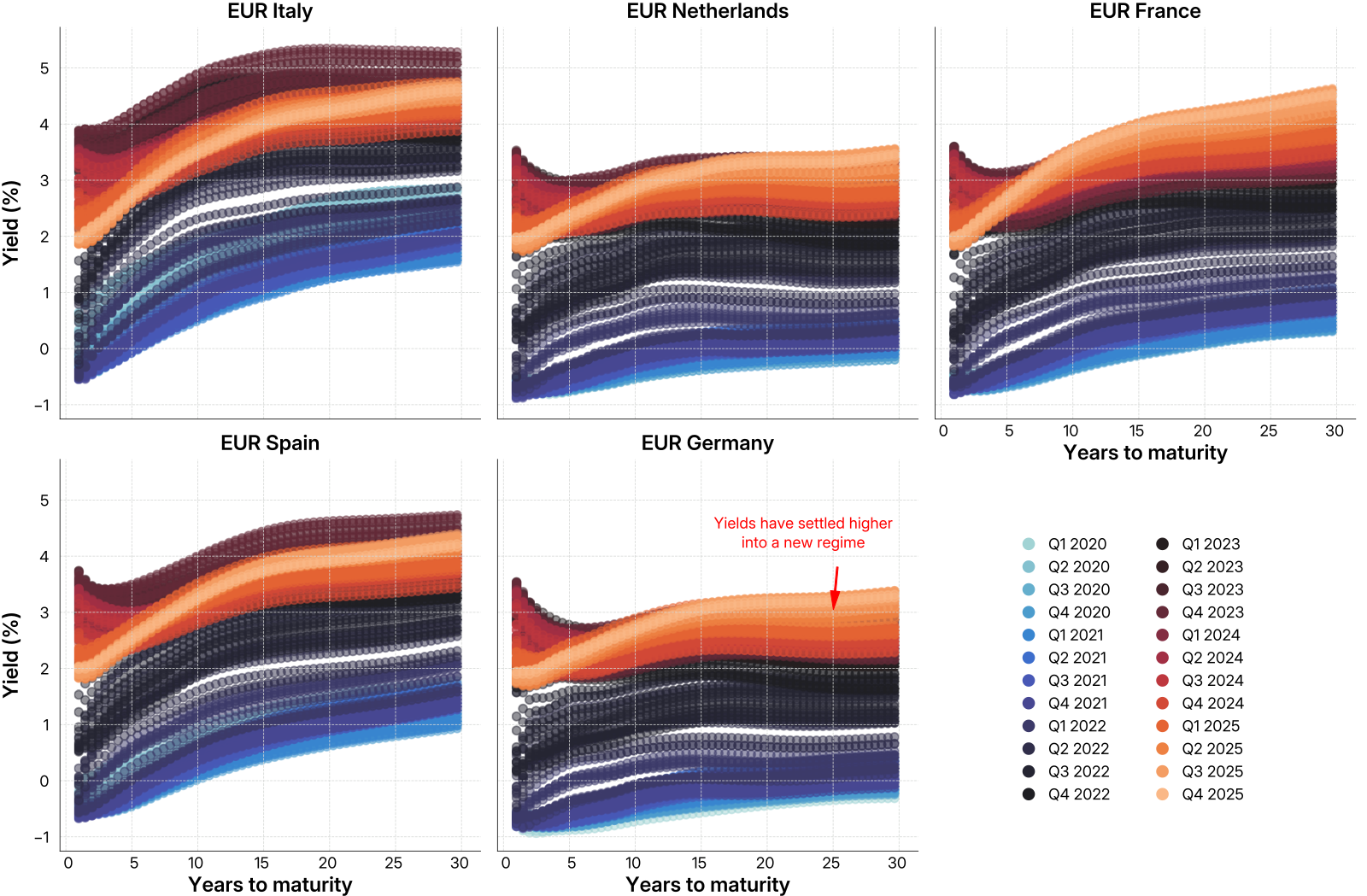
Quarterly yield curves for eurozone sovereigns with more than USD 500 billion outstanding.
While the euro currency and EUR-sovereign spreads have been rallying, the diversification benefit of euro spreads has faded with each passing year. The historical negative correlation between sovereign spreads and core rates has weakened steadily since its debt-crisis peak. The chart below plots factor correlations for 10-year euro-sovereign yields and spread factors from the MSCI Multi-Asset Class Factor Model for long-term investors (MAC.L).
Euro sovereigns’ spreads diversify returns to bund yields much less now than they have historically, reducing their hedging value inside multi-sovereign portfolios. This trend may lead investors to demand higher spread compensation, or to rethink portfolio construction. Given the limited capacity for smaller eurozone sovereign-bond markets to absorb potential reallocation from USD investments, incorporating this market fact into portfolio construction will be essential. If sovereign spreads no longer diversify rate risk, then the spread compensation may be the equilibrating factor.
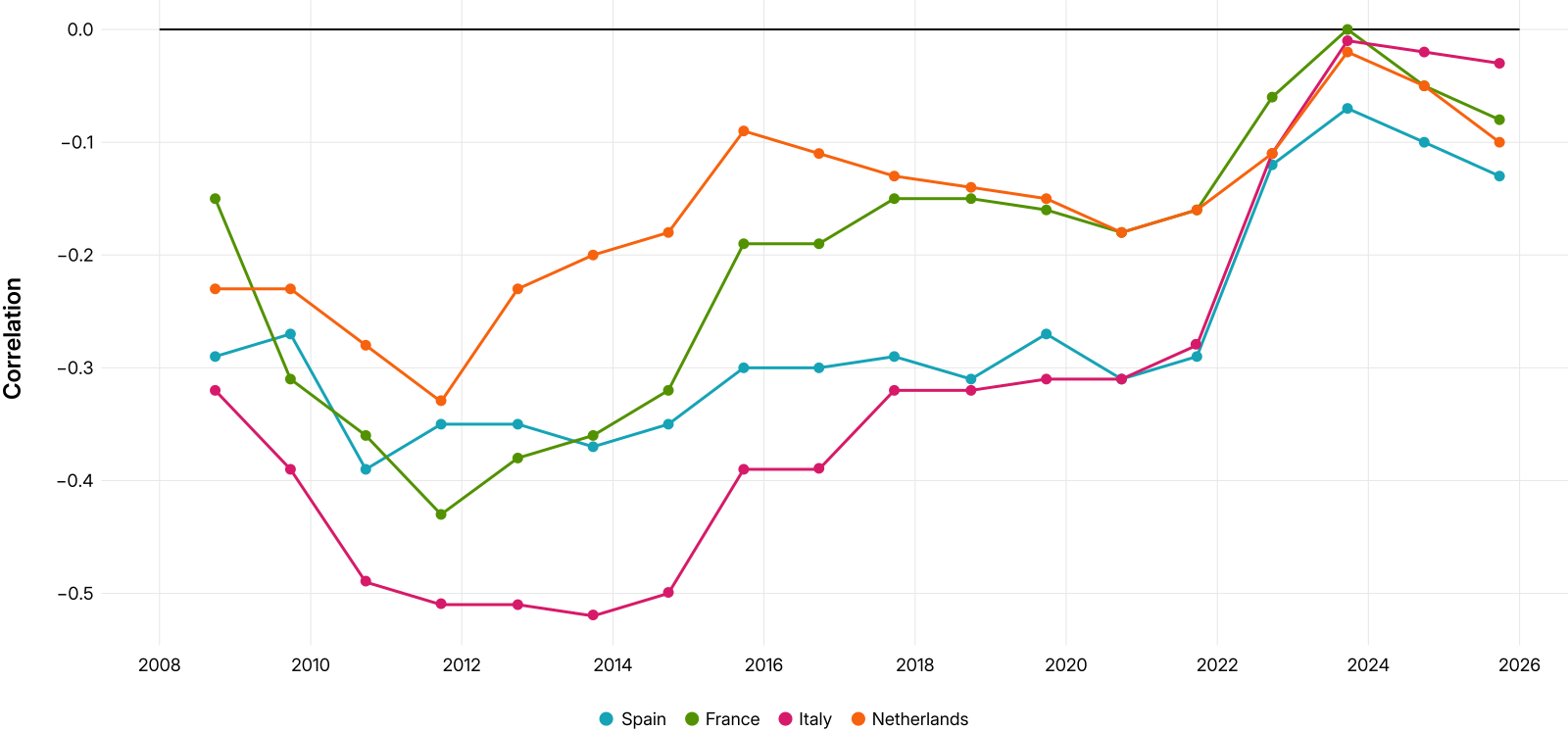
Annual correlations for 10-year sovereign spread factors with the 10-year euro (German) rates factor for sovereign bonds with more than USD 500 billion outstanding. The hedging properties of EUR sovereign spreads have been steadily declining since their peak in the aftermath of the eurozone sovereign crisis.
Taken together, the passage from TINA to TAWD puts the spotlight on the market for euro sovereign bonds as a potential central allocation choice. But this new status requires nuance: The eurozone is not a single credit. France’s divergence is a reminder that political and fiscal idiosyncrasies persist, even inside a shared currency. For global investors reallocating out of USD assets, the alternative may indeed do, but not all alternatives are equal.

Subscribe todayto have insights delivered to your inbox.
Investment Trends in Focus: Keeping Pace with the First-Half Market Reshuffle
The first half of 2025 flipped the investment script. Chief Research Officer, Ashley Lester, explores whether these shifts signal a momentary wobble or a tectonic realignment in global investing.
1 See, for instance: Harry Downie, Madison Faller and Samuel Zier. “Is this the downfall of the U.S. dollar?” J.P. Morgan Private Bank, April 25, 2025.
2 Ian Smith and Mary McDougall, “Selling of dollar assets signals start of longer-term shift, warn investors,” Financial Times, May 9, 2025.
3 Jorge Valero and Marton Eder, “EU Calls Out One Third of Members for Breaking Its Fiscal Rules,” Bloomberg, June 4, 2025.
The content of this page is for informational purposes only and is intended for institutional professionals with the analytical resources and tools necessary to interpret any performance information. Nothing herein is intended to recommend any product, tool or service. For all references to laws, rules or regulations, please note that the information is provided “as is” and does not constitute legal advice or any binding interpretation. Any approach to comply with regulatory or policy initiatives should be discussed with your own legal counsel and/or the relevant competent authority, as needed.