
To Hedge or Not to Hedge? Lessons from History for US Equity Investors
- The U.S. dollar has weakened nearly 10% as of Aug. 30, 2025, eroding international investors’ returns despite the strong performance of U.S. equities.
- For international investors in U.S. equity markets, managing USD currency risk has become a leading topic in an increasingly volatile foreign-exchange environment.
- We show that the historically optimal hedge ratio can vary widely between currency pairs. Moreover, for some currencies such as the Japanese yen, varying investment objectives may require entirely opposite hedging strategies.
While the MSCI USA Gross USD Index recently reached an all-time high, returns for investors in currencies such as the euro and Swiss franc are down 2% in the year to date through Aug. 29. We examine how currency fluctuations influence returns of the MSCI USA Index. With a focus on how global investors are affected, we also evaluate the relationship between the dollar and major currencies to explain how different hedging choices may affect risk and return.
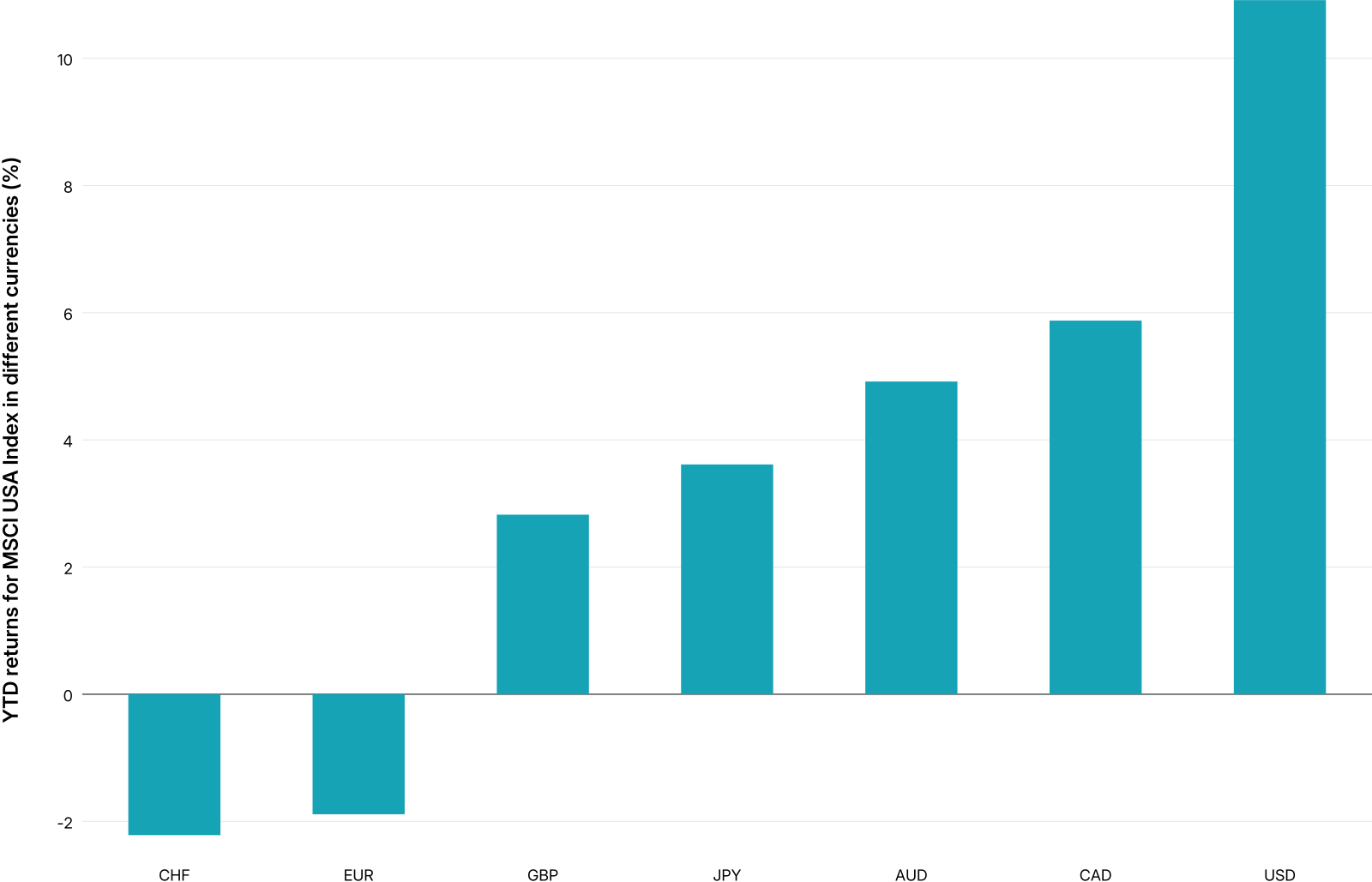
Data from Dec. 31, 2024, to Aug. 29, 2025. The plot represents the year-to-date performance of the MSCI USA Index in the respective currencies.
Historically, the US dollar has strengthened in times of stress but during the April 2025 spike in volatility, the dollar weakened alongside falling equity markets, suggesting a potential shift in its role as a safe-haven asset. The dollar’s weakening this year has been driven by investor response to the growing policy uncertainty in the U.S. and rising concern over fiscal sustainability and monetary policy independence. Investor positioning, based on Commodity Futures Trading Commission data, reflects this change of sentiment.1 Based on surveys of central banks, although these events may not lead to immediate de-dollarization, they may be the start of gradual diversification away from the USD as the reserve currency.2
To better understand the implications for investors, we focus on six key developed-market (DM) currencies: AUD, CAD, GBP, CHF, EUR and JPY. We use purchasing-power parity (PPP) to estimate the fair value of each currency relative to USD.3 On that basis, some currency pairs appear significantly undervalued: JPY/USD by around 70%, CAD/USD by 35% and EUR/USD by 16%. While PPP is an estimate, rather than an exact measure, it offers a helpful long-term reference.
Using MSCI’s Barra EFMGEMLT model, we can track trends in currency risk versus USD. Since 2020, currency risk has been rising steadily for most currency pairs.
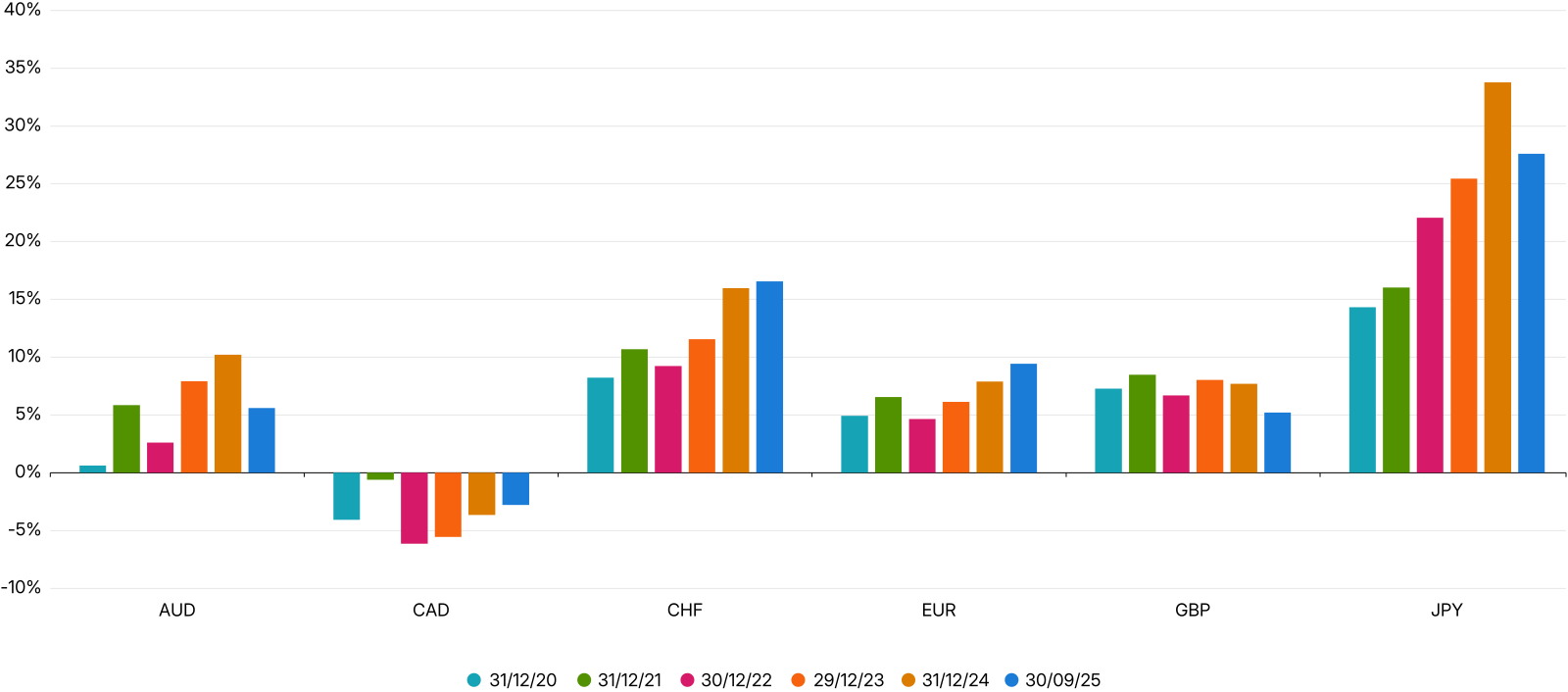
The plot shows currency share of risk for the MSCI USA Index in different base currencies.
The chart below shows how different currencies behaved in stressed market conditions, measured by their correlations to equity volatility.
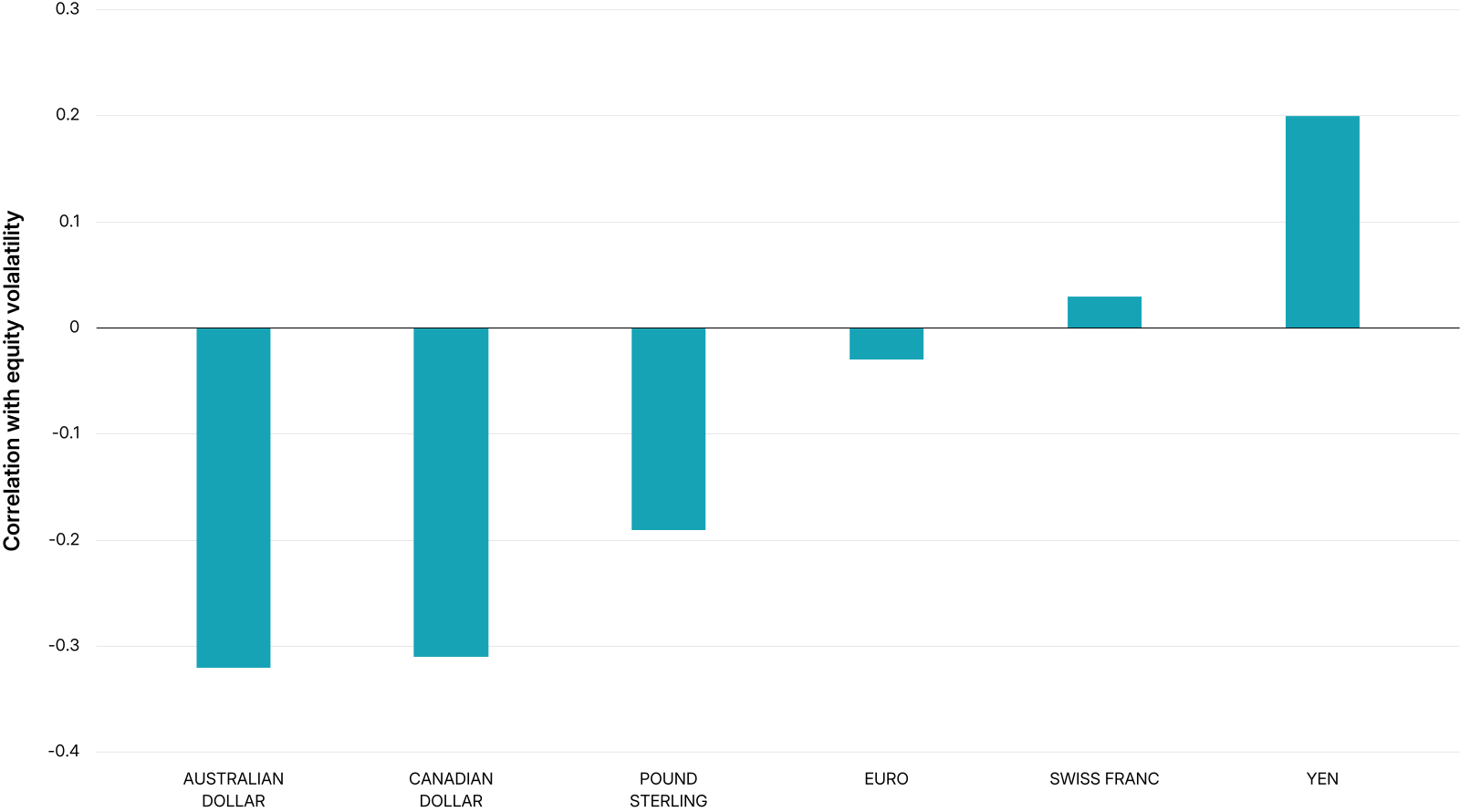
Data from Dec. 30, 2016, to Aug. 30, 2025. Correlation of monthly currency returns with month-on-month percent changes in the CBOE Volatility Index® (VIX® Index). Monthly value of volatility calculated as the maximum volatility levels during that month. Source: Cboe.
Japanese yen (JPY) and Swiss franc (CHF) tend to show positive correlations with the VIX, reflecting investors’ preference for these currencies during stress. By contrast, pro-cyclical/commodity-linked currencies such as the Canadian dollar (CAD) and Australian dollar (AUD), and to a lesser extent the British pound (GBP), typically display negative correlations with the VIX and weaken during volatility spikes. The euro (EUR) and GBP sit closer to the middle, rolling 12-month correlations alternate between risk-on and risk-off behavior. GBP has often been more negatively correlated than EUR, especially in the post-Brexit period, while EUR has hovered near zero behaving as a mild safe haven.
The effectiveness of a currency hedge depends on factors such as interest-rate differentials, currency and interest-rate volatility and spot currency behavior under market stress. This forecasting challenge and the operational complexity of regular hedge adjustment means many investors settle for static hedges at 50%, 100% or staying completely unhedged (0%). The ultimate choice will affect risk and return on an absolute, relative and risk-adjusted basis.
For investors exposed to the same universe as the MSCI USA Index, the chart below shows how risk (measured by annualized volatility) varies by currency and hedge ratio. For example, the lowest volatility for CAD-based investors was with a near-0% hedge (unhedged) while JPY-based investors experienced the least total risk when fully hedged (100% ratio).
Investments denominated in GBP, or in risk-on currencies like AUD and CAD, had higher return volatility as hedge ratios increased, whereas investments based in JPY and CHF had a steady decline in risk as hedging increased. EUR showed a more neutral pattern: Volatility remained relatively stable across hedge levels.
Returns were a different story. The return differences include the hedging cost, something determined by the short-term interest-rate differential between home and target currency. During the analysis period, U.S. rates were generally higher than those in most other DM countries. This tended to make hedging more expensive for international investors. For JPY, for example, the hedging costs almost took up 50% of unhedged returns.
The trade-off between these two has sometimes been surprising. For JPY, hedging reduced currency return volatility, but also significantly reduced returns. That made an unhedged approach (0% hedge ratio) historically optimal for risk-adjusted returns.
Time period: Dec. 31, 1999, to June 30, 2025. Annualized risk is calculated using monthly returns, reflecting unhedged and varying hedge ratios applied to MSCI USA Index exposure across different currencies.
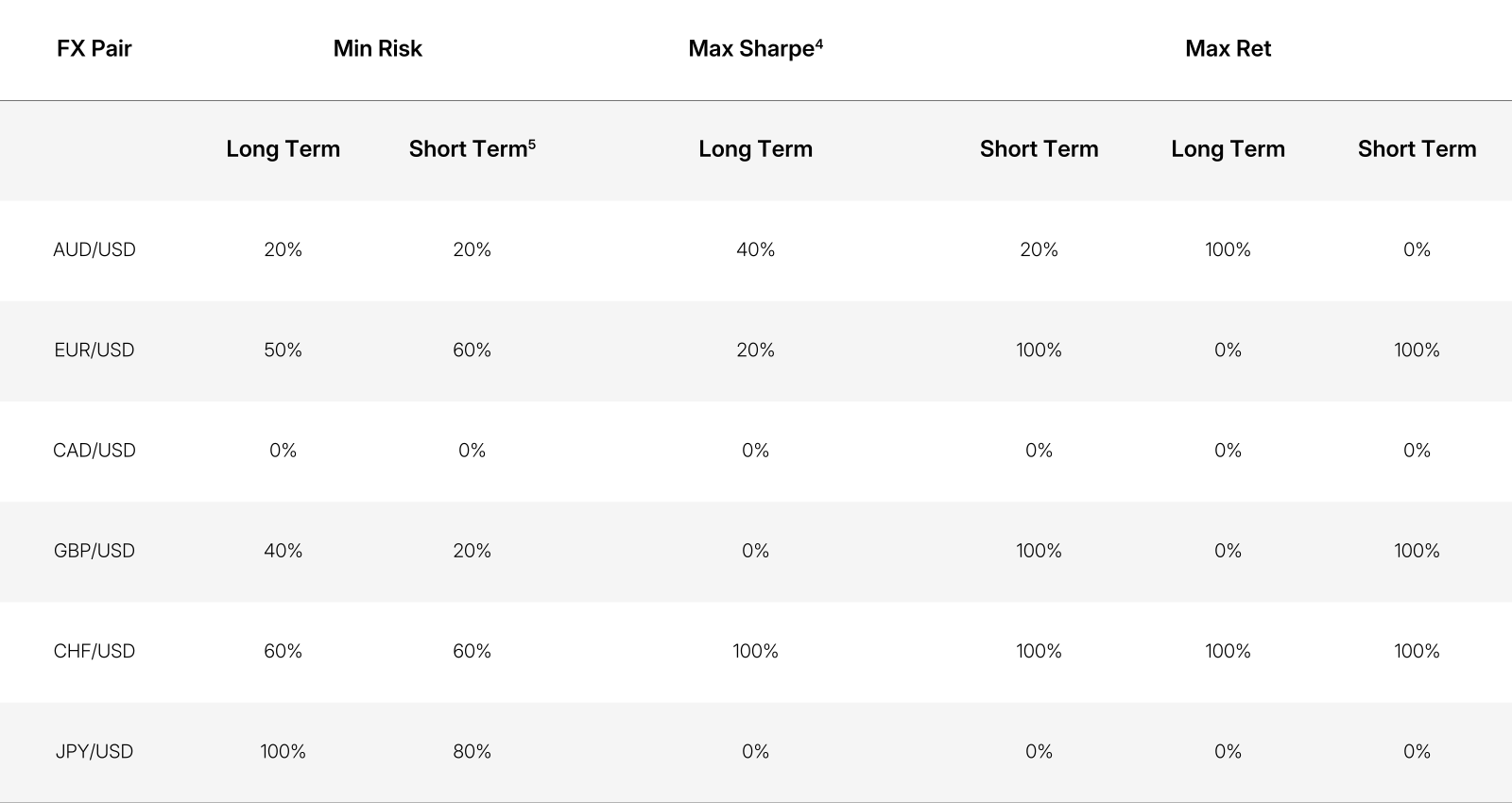
Hedge ratios for currency pairs are based on the MSCI ACWI ex USA Currency Index.
U.S. equities continue to deliver strong earnings growth and differentiated technology exposures, securing a place in many investors’ global portfolios despite elevated market valuations. However, the macroeconomic uncertainty in the U.S. has elevated currency risk and is a concern for international investors. Our analysis of the past two decades shows that there is no universal hedging strategy — optimal hedging approaches depend on various factors such as the behavior of the currency pair and an investor’s specific portfolio objectives. As global macro conditions continue to quickly evolve, maintaining an optimal hedge ratio will play a growing role in navigating the changing landscape.



Subscribe todayto have insights delivered to your inbox.
Investment Trends in Focus: Keeping Pace with the First-Half Market Reshuffle
The first half of 2025 flipped the investment script. Chief Research Officer, Ashley Lester, explores whether these shifts signal a momentary wobble or a tectonic realignment in global investing.
Markets in Focus: Currency Risk Higher for Global Equity Investors
Currency relationships have been in flux since early 2022. We analyze how these changes have impacted global equities and outline the economic and political events that could influence fixed-income performance over the balance of 2024.
1 The Commodity Futures Trading Commission’s “Commitment of Traders” report shows non-commercial USD index futures shifted from around 10,000 contracts long at the start of the year to nearly 6,000 contracts short by June 24, 2025.
2 “Global Public Investor 2025,” OMFIF, June 24, 2025.
3 For this, implied PPP conversion rate for each currency per USD 1 was compared against spot currency value against USD as of June 30, 2025.
4 Simplified as risk-adjusted returns.
5 Short-term defined as the period from Sept. 30, 2022, when the USD Index had reached its highest level, to June 30, 2025.
The content of this page is for informational purposes only and is intended for institutional professionals with the analytical resources and tools necessary to interpret any performance information. Nothing herein is intended to recommend any product, tool or service. For all references to laws, rules or regulations, please note that the information is provided “as is” and does not constitute legal advice or any binding interpretation. Any approach to comply with regulatory or policy initiatives should be discussed with your own legal counsel and/or the relevant competent authority, as needed.