
Why Wealth Managers Should Think Differently About AI
- According to new MSCI survey data, 68% of wealth managers view AI as moderately to very important, but only 27% believe their segment is leading in AI adoption when compared to the broader financial services sector.
- The perceived gap could be explained by differences in business models: Wealth managers prioritize scale and client engagement over alpha generation, which affects how they benefit from AI.
- Advisers may benefit most from AI when they apply it to their core competency, such as proposal generation and personalized offerings, measuring their progress against their own goals rather than those of other segments.
Investment in AI is increasing across financial services. But not all adoption of AI technology is equal — nor is every firm necessarily pursuing AI for the same reasons.
Hedge funds use AI-powered alternative datasets, while more traditional asset managers launch machine learning models built to support return-seeking strategies.
A recent MSCI survey of global wealth managers, however, reveals a more nuanced picture: Many respondents said they feel their segment is lagging the broader financial services industry when it comes to adoption of AI technology.1 They also disagreed on how to best prioritize integrating it into their practice.
It’s possible though that this perceived “AI gap” may be less about technology and more about the yardstick wealth managers use to measure their AI success.
Managers that have yet to implement AI may feel left behind by this rapid evolution, concerned that AI is advancing faster than they can implement it. In fact, the MSCI survey shows a dichotomy — 68% of wealth managers view AI as moderately to very important, yet only 27% consider the wealth management segment to be leading in this area.
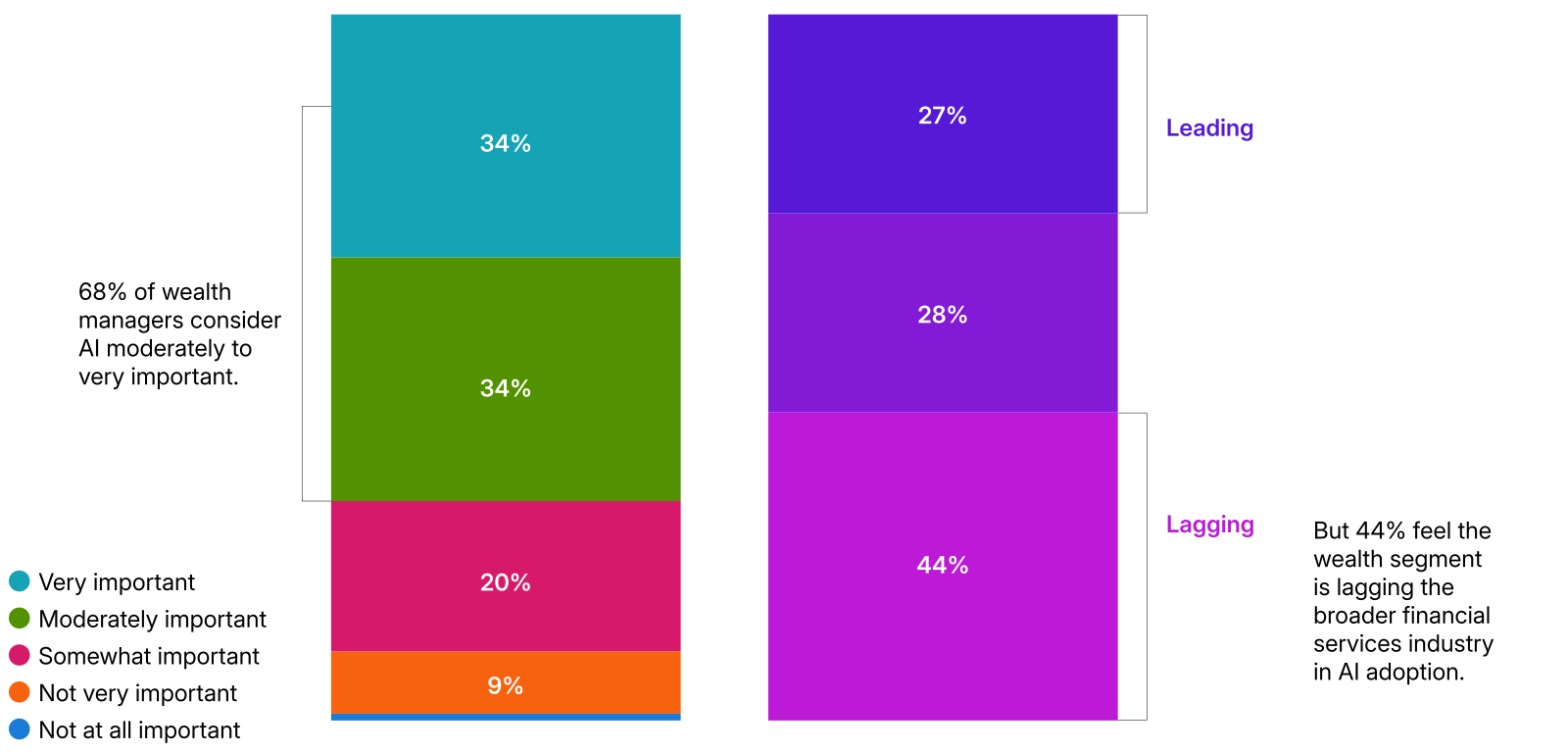
The data raises questions about how wealth managers assess AI progress and what benchmarks they use to evaluate adoption. Wealth managers appear to feel they are lagging other investment managers in an area they consider a strategic focus.
Measuring AI progress through the right lens
One explanation for this apparent contradiction could lie with the distinct wealth management business model. Wealth managers focus on scale and client engagement — growing their business by attracting new clients while working to ensure that every proposal reflects each client’s unique circumstances and preferences. Hedge funds and other asset managers, however, focus on generating new investment ideas or seeking to outperform benchmarks.
Wealth managers oversee dozens, sometimes hundreds, of portfolios, each with their own constraints, objectives and personalization needs. Their competitive edge lies not in proprietary data or complex trading models, but in the strength of their client relationships and their ability to deliver a deeply personalized service. In fact, some research shows that human support can outweigh tech in terms of productivity.2
While asset managers and hedge funds often rely on their investment process and access to proprietary datasets as differentiators, wealth managers frequently distinguish themselves through their client relationships and their ability to provide a uniquely personalized service.
Applying AI where it matters most
Firms may see greater benefits from AI when they apply it to their core competency, which is new client proposal generation and personalized offerings for wealth managers. Asset managers and others will likely maximize the benefit of AI through idea generation and incorporation of alternative data.
This may explain why 44% of wealth managers see their segment as lagging other areas of investment management in AI adoption: The survey responses suggest advisers tend to focus on proposal generation, for which there are already off-the-shelf solutions.
Asset managers and others looking to integrate AI for alpha generation typically implement their AI tools in-house, in addition to sourcing and preparing their proprietary datasets. With that process, firms are less able to use third-party providers and more likely to require a bigger investment in AI in order to achieve their goals.
When implementing AI, wealth managers may progress by prioritizing their unique needs and the subtle differences between their business model and that of asset managers or hedge funds. That means focusing their AI use on measurable improvements that may support business goals such as growth and client retention — and measuring their progress against their own needs, rather than those of other investment professionals.

Subscribe todayto have insights delivered to your inbox.
An Emerging Approach to Accessing Emerging Markets
Using the MSCI ACWI ADR Index, wealth managers can implement tax-efficient strategies while gaining global equity exposure and broad diversification.
Ctrl-Alt-Invest: Rebooting Risk for a New Era
2025 has been a year defined by rapid change: shifting macro dynamics, rising geopolitical tension and the acceleration of AI across the investment process. In this episode, we bring together the most compelling insights from MSCI’s Risk Summits around the world.
MSCI Wealth
We enable investment teams, portfolio managers and financial advisers to deliver solutions customized to their clients’ investment needs.
1 For details, see MSCI Wealth’s Wealth Trends 2026 report scheduled for publication in January 2026. MSCI surveyed 250 global wealth management professionals on industry trends over Aug. 8 – Aug. 22, 2025.
2 2025 The Kitces Report, Volume 1, 2025 – 2025 Advisor Tech Study.
The content of this page is for informational purposes only and is intended for institutional professionals with the analytical resources and tools necessary to interpret any performance information. Nothing herein is intended to recommend any product, tool or service. For all references to laws, rules or regulations, please note that the information is provided “as is” and does not constitute legal advice or any binding interpretation. Any approach to comply with regulatory or policy initiatives should be discussed with your own legal counsel and/or the relevant competent authority, as needed.