
Total-Portfolio Approach: Framework in Practice
Mentioned in this paper:
MSCI Multi-Asset Class (MAC) Factor Model | MSCI ACWI IMI AI Value Chain Index | MSCI ACWI IMI Index
Preview
The growth of private markets, a more volatile macroeconomic environment and a broader risk landscape have collectively exposed the limits of the asset-class silos of traditional strategic asset allocation, a framework built for a different investment world.
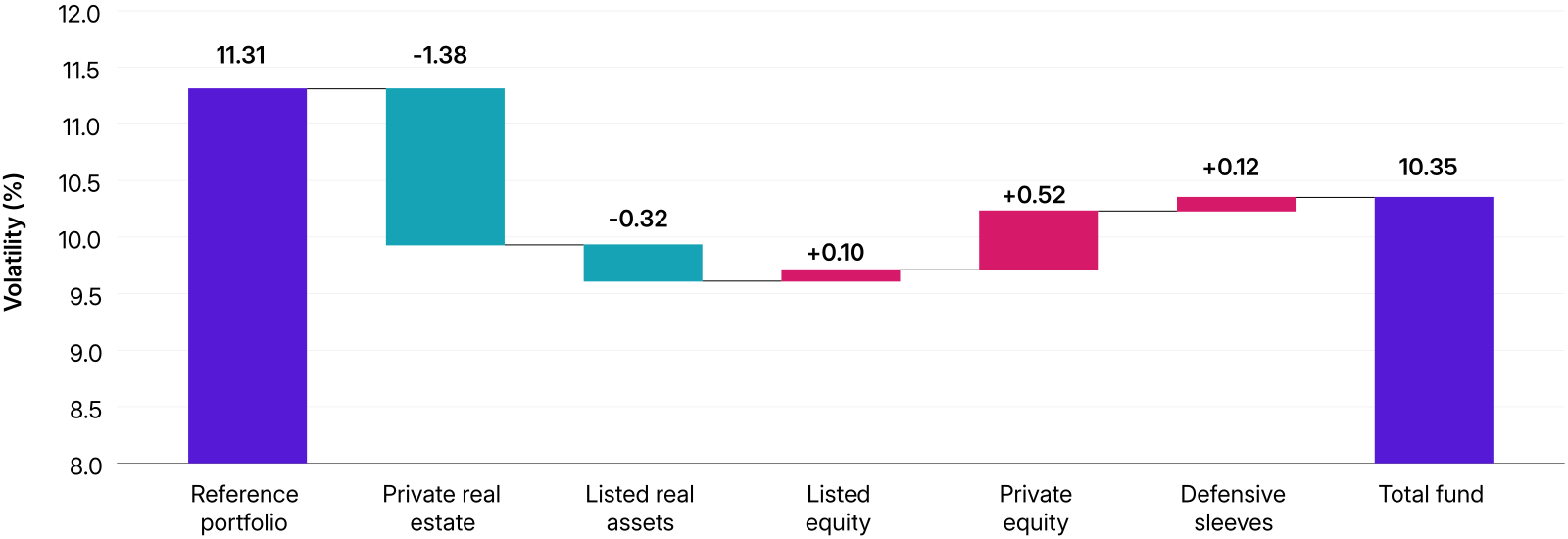
The total-portfolio approach (TPA) offers a more integrated alternative. Instead of managing each asset class against its own benchmark, TPA judges every investment decision by its contribution to total portfolio outcomes. In this paper, we show what the approach delivers in practice.
We follow a hypothetical U.S. public-pension plan through the stages of adoption. Its sizable private-market allocations make it harder to manage each asset class on its own.



Read the full paper
Provide your information for instant access to our research papers.
Beyond Asset-Class Silos: The Total-Portfolio Approach
Why are pension funds and sovereign wealth funds abandoning asset-class silos? Part 1 of a series on the total-portfolio approach examines the organizational shift behind the numbers.
The Total Portfolio Approach: An Analytical Toolkit
This paper builds the cross-asset factor toolkit for a total portfolio approach that can show what asset-class labels miss — then puts it to work in a full portfolio walkthrough.
Total Portfolio Solutions
See exposure, performance, risk and liquidity across public and private holdings in one consistent, independent view of your total portfolio.
The content of this page is for informational purposes only and is intended for institutional professionals with the analytical resources and tools necessary to interpret any performance information. Nothing herein is intended to recommend any product, tool or service. For all references to laws, rules or regulations, please note that the information is provided “as is” and does not constitute legal advice or any binding interpretation. Any approach to comply with regulatory or policy initiatives should be discussed with your own legal counsel and/or the relevant competent authority, as needed.