
PermanenceWill the climate benefits last?
Permanence reflects the likelihood that emissions reduced or removed by a project stay stored over time, rather than being released back into the atmosphere.

What is permanence?
Not all emissions reductions are permanent. For some project types, mitigation comes from avoiding emissions in the first place. For others, carbon is stored in physical or biological reservoirs that can release it again through events such as fire, land-use change, system failure or other natural or human-driven disturbances.
Permanence measures the likelihood of reversal. Because it relates to future outcomes, it cannot be observed directly. Assessments estimate the likelihood and scale of reversal risk and how effectively that risk is managed.
How permanence is assessed
Assessments focus on whether a project’s emissions reductions or removals is likely to be maintained over time, given the risks it faces and the safeguards in place. Three factors drive the assessment:
- Reversal risk exposure: How vulnerable is the project’s stored carbon to natural events such as fire or drought, or human actions such as land-use change?
- Risk mitigation measures: Does the project or crediting program apply safeguards, such as buffer pools or monitoring requirements, to compensate for potential reversals?
- Storage characteristics: What is the form and expected duration of carbon storage, which varies substantially across project types and technologies?
Together, these factors indicate how likely the credited emissions reductions are to persist and the degree of uncertainty associated with that assessment.
How permanence varies across project types
Permanence risk differs markedly across project types, driven by differences in how carbon is stored, what threatens that storage and what safeguards are in place.
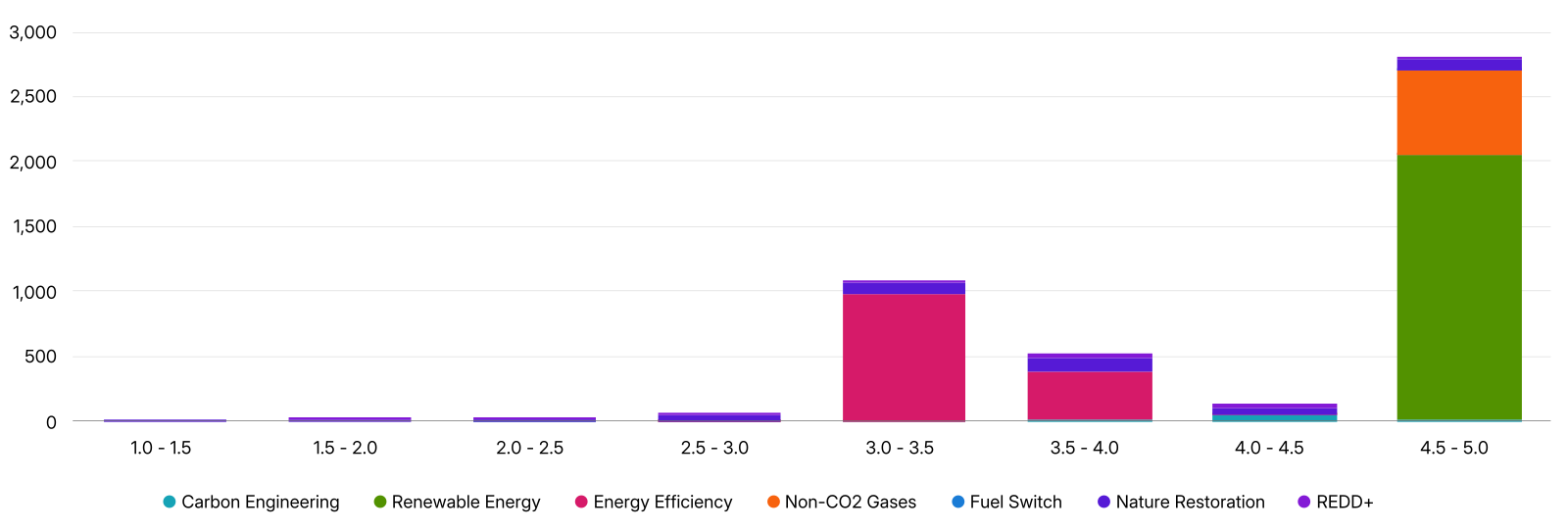
Common patterns observed across the market include:
- Engineered removal projects often exhibit stronger permanence. Carbon is stored in more stable forms or controlled systems with lower risk of reversal.
- Nature-based removal projects, such as afforestation or restoration, face higher reversal risk from fire, pests, climate impacts and land-use change. Outcomes depend heavily on management quality and safeguards.
- Avoided-emissions and reduction projects typically have limited or no permanence risk. Emissions are prevented rather than stored.
- Clean cooking projects may carry indirect permanence risk. Reductions depend on sustained behavioral change and continued use of improved technologies.
As with other criteria, there is substantial variation within project types, highlighting the importance of assessing permanence at the project-level.
Case illustration: Permanence in nature-based projects
For forest-based projects, permanence depends on whether stored carbon stays intact. Assessments examine exposure to fire, drought and other natural hazards, the strength of land tenure and management practices, and whether buffer pool contributions are adequate to cover potential losses.
Projects with robust monitoring, conservative buffer allocations and credible long-term management plans tend to exhibit lower permanence risk than those operating in high-risk regions with limited safeguards.
Conclusion
Permanence reflects how likely emissions reductions or removals are to endure over time. Managing reversal risk is essential to support the alignment of carbon credits with lasting emissions reductions.
Carbon Project Ratings
Investor-grade ratings for over 4,000 carbon projects grounded in granularity and backed by geospatial intelligence.

Projects and Transactions
Access roughly 30,000 projects spanning more than 15 registries and 1 million transactions.1

1 Data and coverage as of December 2024.