
What defines a high-quality carbon credit?Build confidence in every carbon credit
Quality matters
Carbon credits vary widely in their climate impact. High-quality credits represent verified, measurable and lasting emission reductions or removals. Lower-quality credits may overstate emissions' impact, which can weaken confidence in market outcomes. MSCI analysis indicates that a meaningful share of assessed projects show material integrity risks under defined evaluation criteria.
Differences in quality may arise from the nature of the project, the methodologies used to define and generate credits, and how rigorously those methodologies are applied. Projects may also differ in the co-benefits they deliver, as well as in their social, ethical, legal risks and safeguards.
How integrity is assessed
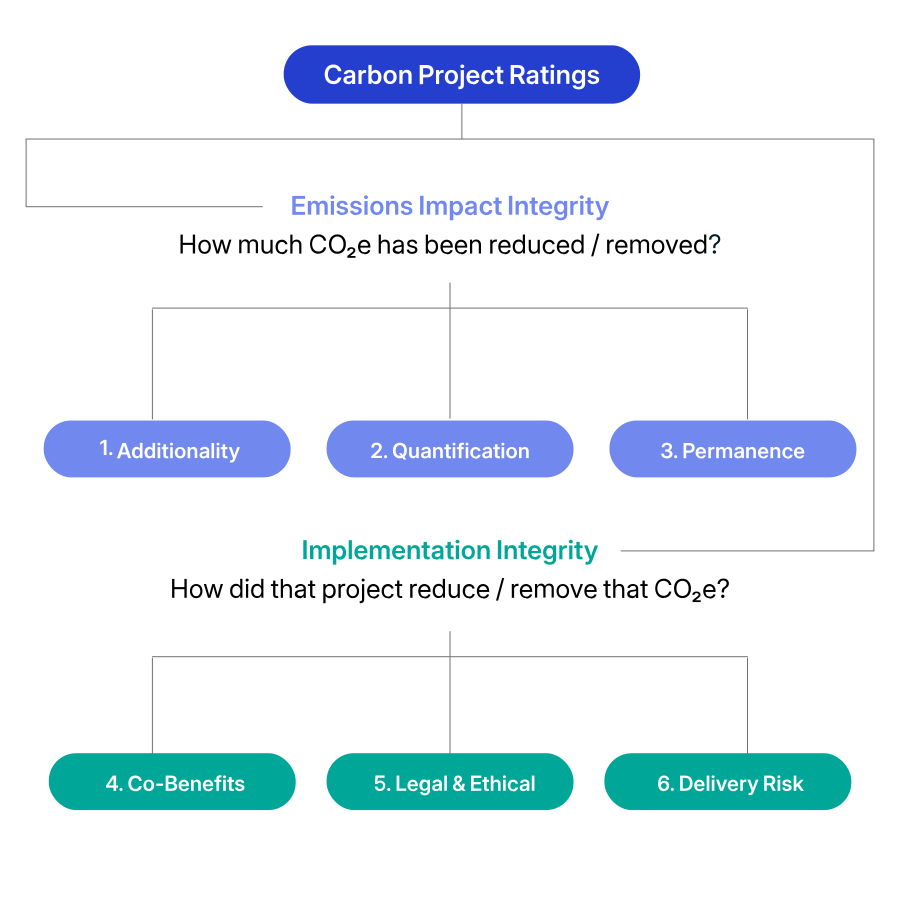
Debates over carbon credit integrity tend to focus on three questions: How many emissions have been reduced or removed? How did the project deliver that outcome? And how are the resulting credits reviewed and used?
Credit integrity assessments mainly focus on the first two of these.
- Emissions-impact integrity considers how many emissions have been reduced or removed, and how likely it is that this impact has been accurately estimated and will be maintained over time.
- Implementation integrity relates to how the project delivers that impact—including its safeguards, legal and ethical practices, and the factors that affect whether credits will be issued as expected.
Each of these considerations can be broken down further into specific criteria.
Six criteria for assessing credit quality
There is growing alignment on how integrity should be assessed at the project level. The following six criteria span both emissions-impact and implementation integrity. Discover how MSCI applies these criteria in practice.
Determines whether the project’s emissions reductions or removals would have happened without carbon-credit revenues.
Assesses whether emission reductions or removals are measured and reported accurately.
Evaluates how likely it is that stored or avoided carbon will stay out of the atmosphere over time.
Measures a project’s wider social and environmental impacts beyond the emissions reductions or removals themselves.
Assesses whether the project and its developers operate in compliance with legal and ethical standards.
Considers whether a project will deliver the expected emission reductions or removals, particularly for credits sold before issuance.
Conclusion
No single criterion tells the full story. Assessing credit integrity involves bringing multiple dimensions of integrity together, from the accuracy of emissions estimates to the project's social and ethical practices.
Carbon Project Ratings
Assess the integrity of more than 4,000 carbon projects with independent, in-depth assessments across six key criteria.

Carbon Market Solutions
Gain clarity in fast-evolving carbon markets with investor-grade data, analytics and insights.