
A Systematic Way to Access the Marine-Shipping Value Chain
- Global equity investors looking to reduce U.S. tech concentration can find an alternative growth source in the marine-shipping value chain.
- The MSCI ACWI IMI Marine Shipping Index captures shipbuilders, vessel operators and port infrastructure — industrials-heavy, Asia-concentrated, with near-zero megacap tech overlap.
- The Index offers investors a systematic way to access this value chain, outperforming the MSCI ACWI IMI by 13.5% annually since May 2020, driven by key geopolitical and decarbonization trends.
Over 80% of global trade by volume moves by sea, yet marine shipping remains one of the least represented sectors in institutional equity portfolios. Global equity portfolios have become increasingly concentrated in U.S. markets and technology/AI-driven themes. This creates a structural challenge for investors attempting to diversify their portfolios while still accessing global growth beyond U.S. tech.
The shipping value chain offers one such exposure: tied to global growth but with limited overlap with U.S. technology sectors. It spans shipbuilders, vessel operators, port infrastructure and marine logistics, with companies concentrated in Korea and Japan.
Structural trends support the shipping value chain
Geopolitical risks in recent years have caused logistical disruptions and extended voyage distances, reflected in substantial growth in tonne-miles. In 2024, tonne-miles grew by 6%, three times faster than tonnage growth.1 The disruption following the start of the Iran War, especially in the Strait of Hormuz, has seen tonne-miles of small-sized Aframax tankers increase by an estimated 7% since March 2026.2
Approximately a quarter of the global fleet faces challenges complying with the International Maritime Organization (IMO) tightening decarbonization targets.3 From 2028, non-compliant vessels face rising carbon costs. The scope of the required reductions means many older ships will need to be retired, accelerating the vessel replacement cycle. Shipyards are running at full capacity with an estimated lead time of about 3.7 years for new deliveries,4 supporting a multi-year demand pipeline for shipbuilders.
Steady growth in physical trade is another key driver, as shipping revenues are coupled to the volume of goods moving worldwide. Global merchandise trade has averaged 2.5% annual growth between 2010 and 2023.5
Introducing the MSCI ACWI IMI Marine Shipping Index
Capturing the full breadth of this value chain in a portfolio is not straightforward. Standard classifications such as the Global Industry Classification Standard (GICS®)6 do not map neatly to the shipping theme: Shipbuilders sit in capital goods, vessel operators in transportation, port companies in transportation and infrastructure and marine insurers in financials. A simple sector filter would miss parts of the chain or include false positives.
MSCI recently launched the MSCI ACWI IMI Marine Shipping Index (hereafter referred to as “the Index”), designed to measure companies whose primary activities are directly associated with the commercial maritime value chain — shipbuilding, transport, port and terminal operations and related logistics.
The Index selects companies associated with at least one value chain component with a strategy exposure of 10% or more (a measure reflecting the aggregate revenue from segments linked to the component definitions: shipbuilders & equipment, ship owners & financiers, ship operators & managers, port & terminal operators, insurance & legal and tech & data providers). Selected stocks are weighted by market cap and strategy exposure.
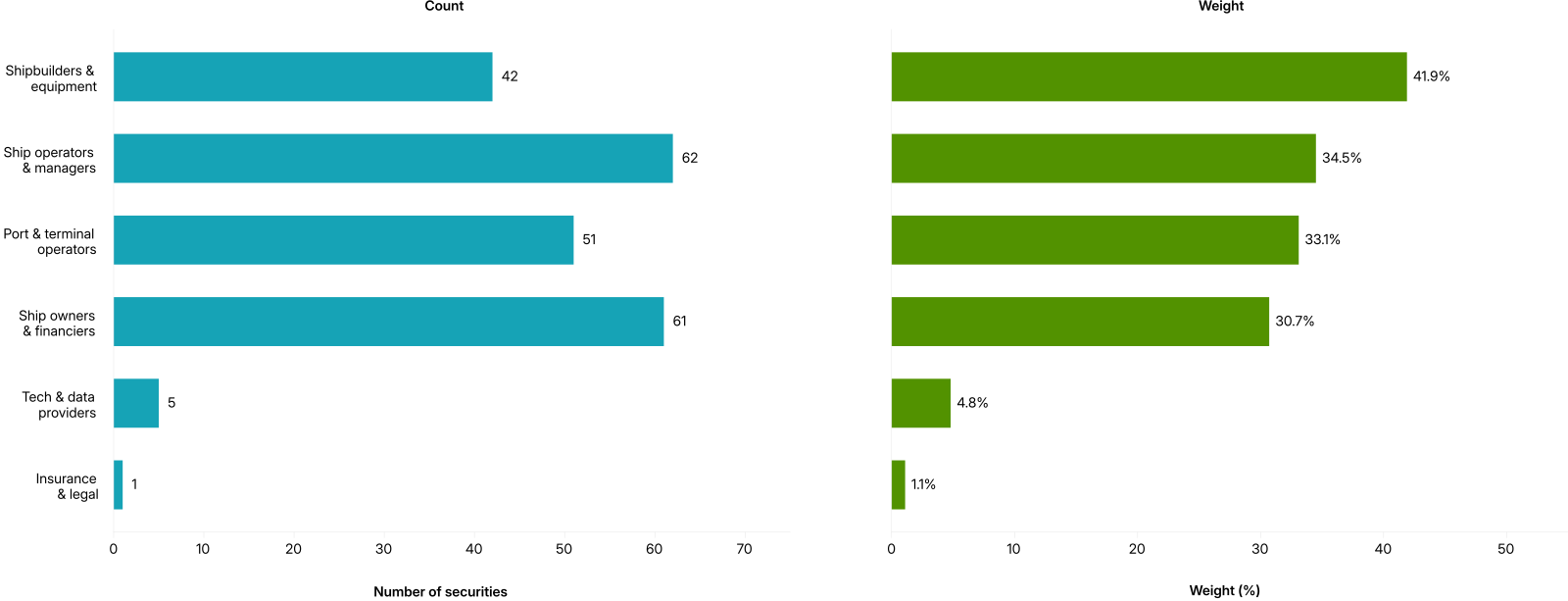
Data as of April 30, 2026.
As of April 30, 2026, the Index held 140 constituents. By weight, shipbuilders and equipment makers account for roughly half. Ship owners and port and terminal operators are well-represented, while maritime insurers and technology providers carry more modest weights.
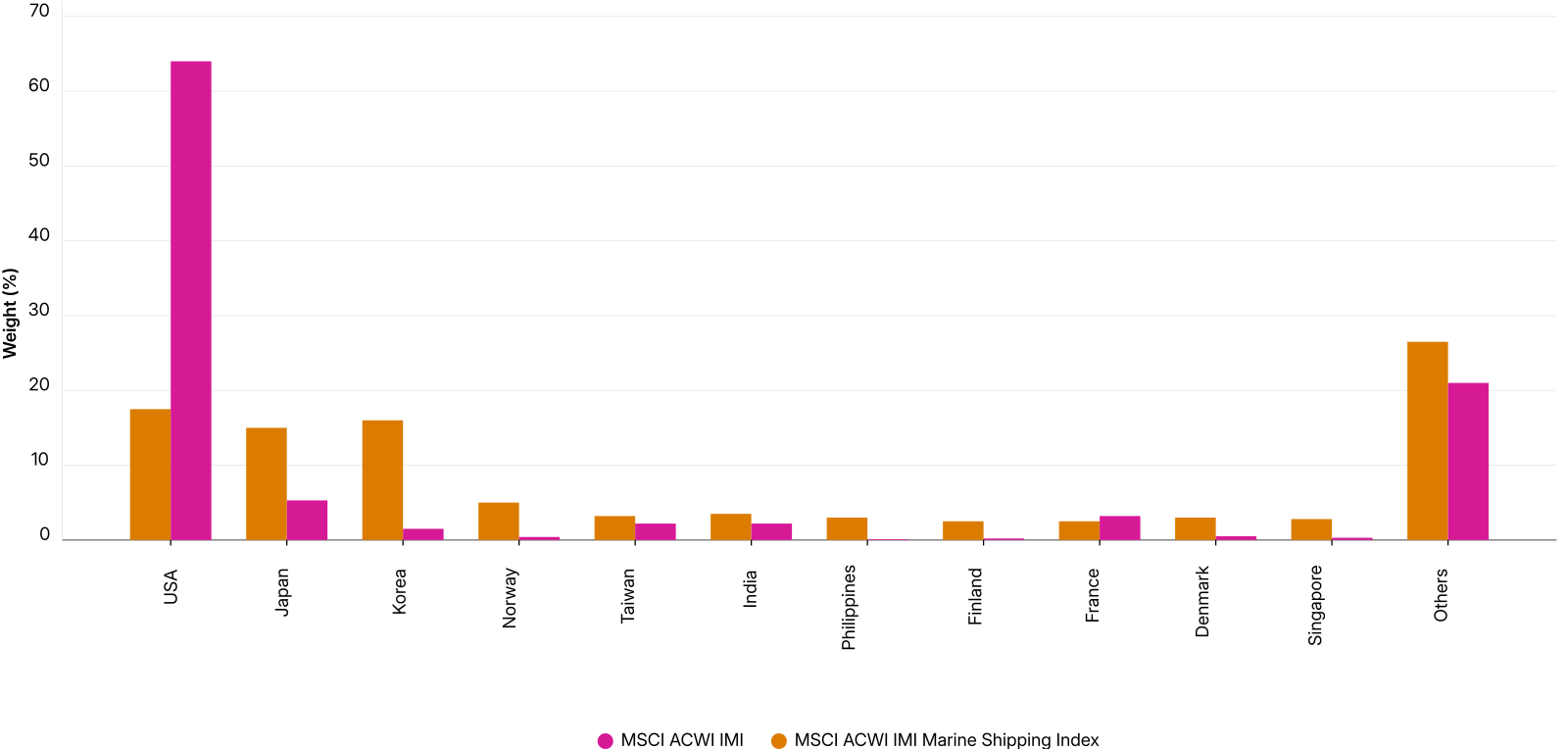
Data as of April 30, 2026.
Japan and Korea together account for over a quarter of the Index, compared to roughly 7% in the MSCI ACWI IMI (the Parent Index). The U.S. is substantially underweight relative to the Parent.
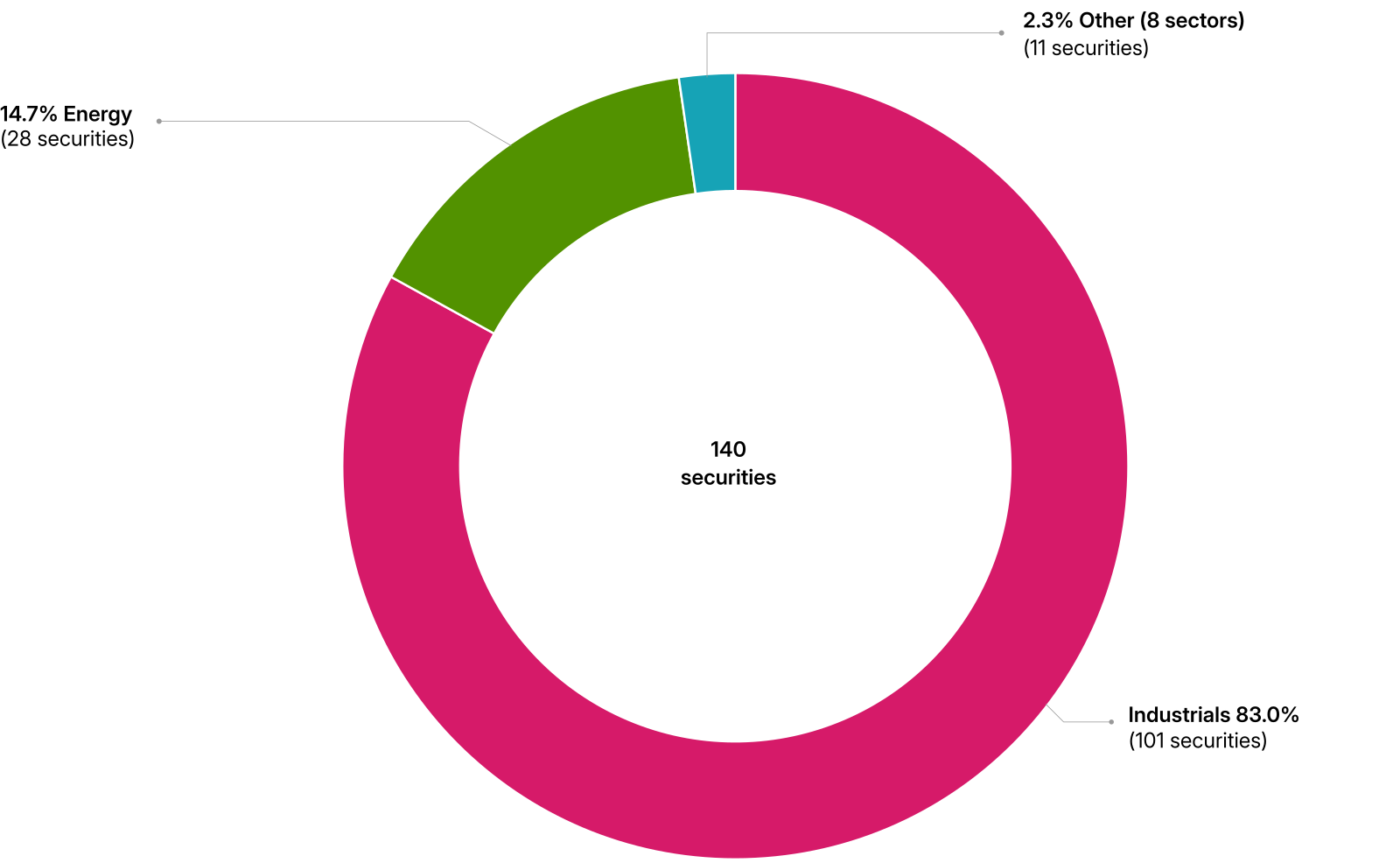
Data as of April 30, 2026.
By sector, industrials dominate at approximately 83% of the Index. Energy is another overweight while materials are broadly in line with the Parent.
Geopolitical stress drove outperformance, while calm periods held steady
Since its inception in May 2020, the Index outperformed by 13.5% gross in USD per annum. During geopolitics-related shipping-route disruptions, the Index sharply outperformed as extended voyage distances tightened effective fleet capacity and lifted shipping earnings. In calmer periods, performance was broadly in line with the Parent, reflecting support from steady trade growth and the ongoing shipbuilding replacement cycle.
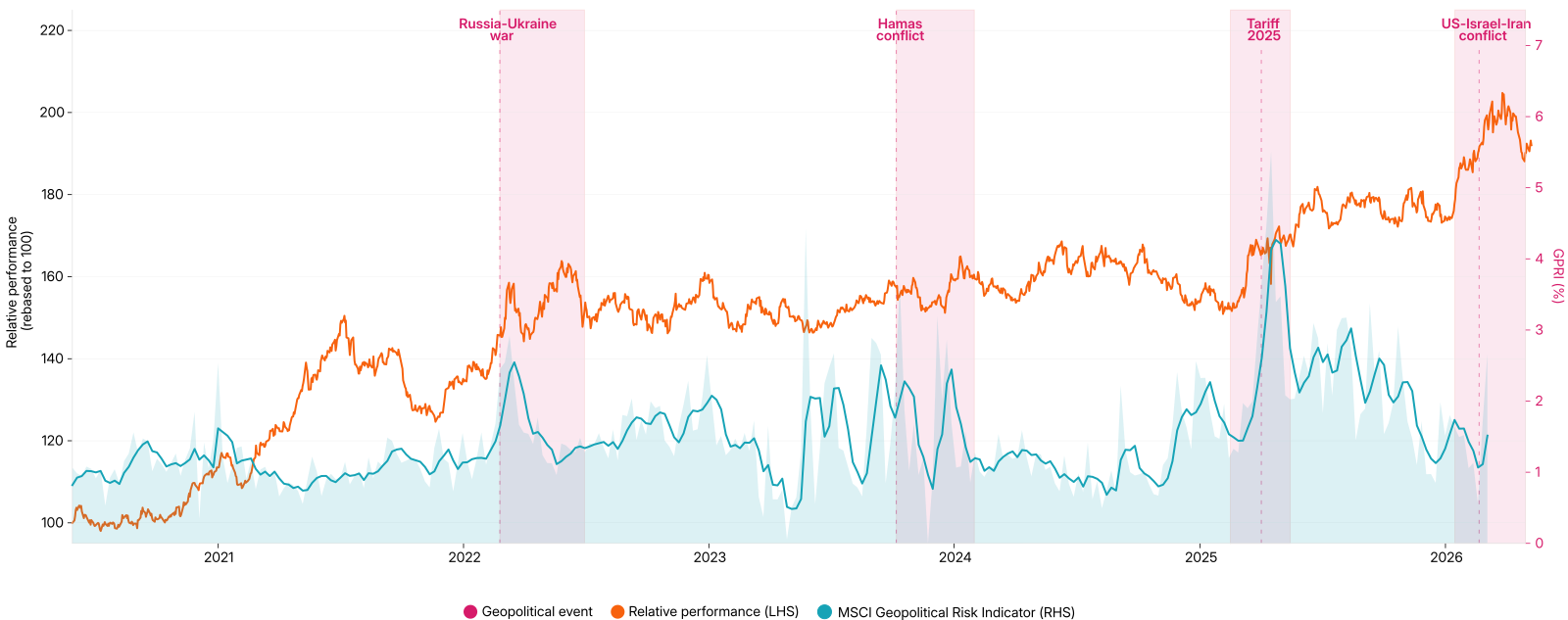
Geopolitics Risk Indicator (GPRI) measures market-wide sentiment around geopolitics-related risks. Data period: May 2020 – April 2026.
The active performance attribution reinforces the diversification story. Over half of the active return came from the stock-specific component, reflecting the differentiated nature of shipping exposure versus any particular country, industry or factor allocation. The remaining third came from structurally distinct country, industry and style exposures: overweight to Japan and Korea; overweight in machinery, aerospace and defense and steel; and overexposure to book-to-price and earnings yield, indicating reasonable valuations throughout. The Index carries an active IT weight of approximately negative 27%, near-zero weight in Magnificent Seven stocks and minimal exposure across MSCI's technology-related thematic scores — digital economy, disruptive technology and autonomous technology — where the Parent has exposures of 22% to 25%.
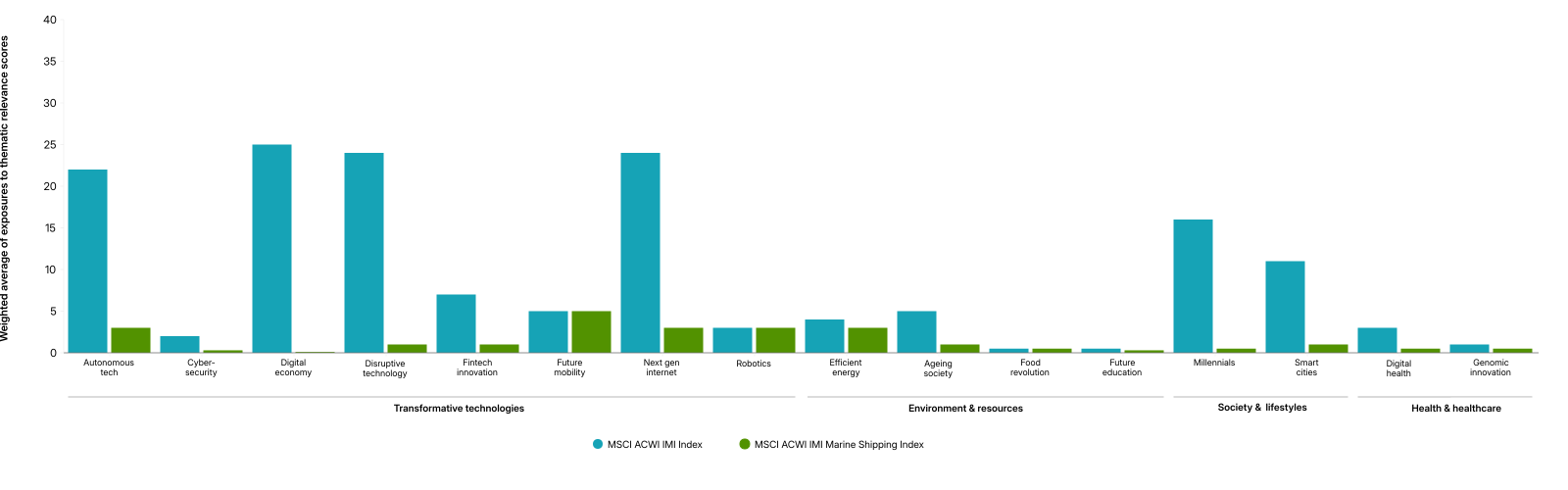
MSCI Thematic Exposure Standard. Data period: May 2020 – April 2026.
Diversifying away from US tech concentration
Concentration in global equities has increased, led by U.S. and Tech/AI sectors. Investors seeking to diversify could consider the shipping value chain as an alternative source of growth, dominated by industrial companies in Japan and Korea. Growth in global merchandise trade, elevated geopolitical risks and IMO decarbonization regulations are structural trends driving revenue for these companies. The MSCI ACWI IMI Marine Shipping Index systematically captures this value chain using strategy exposure, and its performance since inception tracked the evolution of these trends and key periods of geopolitical stress.


Subscribe todayto have insights delivered to your inbox.
Uncovering Supply-Chain Risks in the Iran War
The Iran war hit global markets unevenly. We map three hidden channels — revenue, operations and supply chains — revealing where conflict risk truly sits in equity portfolios.
Concentration Risk in Global Equity Indexes
Global concentration risk varies widely: U.S. and EM indexes remain concentrated, while EAFE offers lower top-10 exposure, impacting diversification benefits.
ACWI IMI Marine Shipping Index
The MSCI ACWI IMI Marine Shipping Index is designed to measure the performance of companies whose primary business activities are directly associated with the commercial maritime value chain.
1 “Vessel rerouting pushed up ton-miles (the distance each ton of cargo travels) to a record 6% in 2024, nearly three times faster than trade volume growth.” UN Trade and Development (UNCTAD) News, 24 September 2025.
2 "Shipping Interrupted: Tracking the Impact of Disruptions in the Strait of Hormuz." Hellenic Shipping News Worldwide, 30 April 2026.
3 "2023 IMO Strategy on Reduction of GHG Emissions from Ships." International Maritime Organization (IMO); and Dewi Ballard, "CII Ratings Announced." Infineum Insight, 4 March 2025.
4 Steve Gordon, "Green Technology Tracker: Record Investments in Alternative Fuel." Clarksons Research, 22 March 2025.
5 WTO, Global Trade Outlook and Statistics, April 2024, Chart 3
6 GICS is the industry-classification standard jointly developed by MSCI and S&P Dow Jones Indices.
The content of this page is for informational purposes only and is intended for institutional professionals with the analytical resources and tools necessary to interpret any performance information. Nothing herein is intended to recommend any product, tool or service. For all references to laws, rules or regulations, please note that the information is provided “as is” and does not constitute legal advice or any binding interpretation. Any approach to comply with regulatory or policy initiatives should be discussed with your own legal counsel and/or the relevant competent authority, as needed.