
Uncovering Supply-Chain Risks in the Iran War
- The Iran war reignited oil fears and hit global ex-U.S. markets — but the sell-off occurred across a wide array of markets, regions and industries, signaling that risks are concentrated and exposures more complex than they first appear.
- Asian oil import dependency through the Strait of Hormuz quietly shapes exposure across petrochemicals, utilities and manufacturing in ways standard allocations don't capture.
- Granular mapping of revenues, operations and supply chains reveals where conflict risk truly sits — enabling portfolio managers and risk officers to move beyond index weights and manage positions more strategically.
When the war started in the Middle East, the immediate market impact was clear: Oil prices spiked, safe-haven flows strengthened the dollar and equities declined. What's less obvious is where the "real" exposure lies within global portfolios.
Geopolitical shocks don't affect all investors equally. The degree of impact depends on hidden linkages embedded in holdings: which companies generate revenue from affected regions, where they operate physical facilities and how vulnerable their supply chains are to disruption. This research maps three channels through which Iran-war risk is flowing into equity portfolios, revealing exposures that traditional geographic classifications miss.
After a sustained rally through early 2026, emerging markets (EM) were outperforming developed markets by a wide margin heading into March. The onset, on Feb. 28, of further conflict in the Middle East reversed that sharply. The sharpest swing was in EM Asia ex-China, led by Korea and Taiwan, two markets with heavy semiconductor and hardware weights that had rallied earlier on the AI build-out. China, which had underperformed prior to the conflict, saw a comparatively modest decline.
World ex-U.S. markets were also heavily affected, with France, Germany, Japan and Spain each experiencing drawdowns in the range of 8-10%.
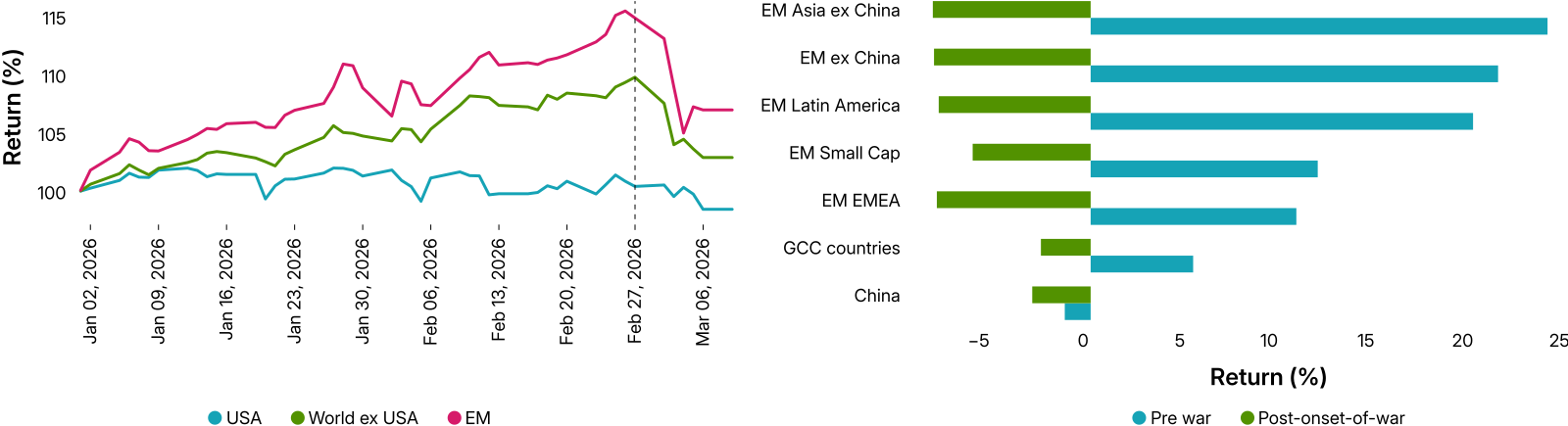
Gross returns in USD. Left chart: year to date through March 9, 2026. Right chart: pre-war: YTD through end of February 2026; post-onset-of-war: end of February 2026 to March 9, 2026. Charts generated using MSCI Index AI insights. MSCI GCC Countries Combined Index includes Bahrain, Kuwait, Oman, Qatar, Saudi Arabia and the United Arab Emirates.
An unwinding of crowded EM trades, along with energy vulnerability, drove this performance gap.1 Earlier we showed that a sustained closure of the Strait of Hormuz is the long-term risk to equities. The Asian markets hit hardest are the most vulnerable to oil-supply disruption through the strait. China, South Korea, India and Taiwan have high dependency on Hormuz-transiting oil. Their elevated weight in the MSCI EM Index amplifies portfolio-level impact for investors.
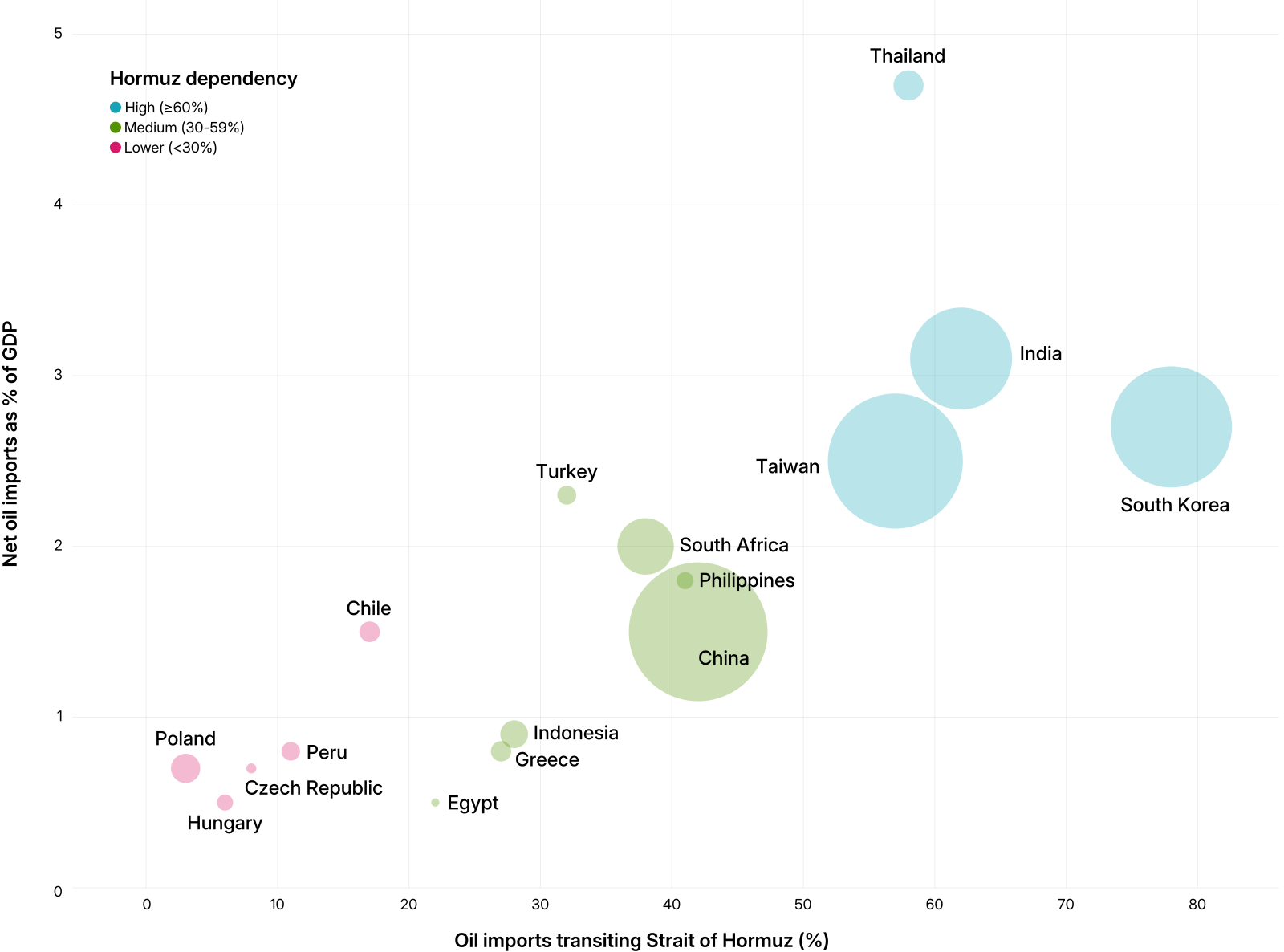
Data as of 2024-2025. Bubble size equals MSCI EM Index weight as of Feb. 27, 2026. EIA estimates that 84% of the crude oil and condensate and 83% of the liquefied natural gas that moved through the Strait of Hormuz went to Asian markets in 2024. Source: IEA, EIA, IMF, Nomura
Understanding why these markets moved requires looking beyond headline index weights to the supply chain and economic and operational linkages connecting global companies to the conflict zone.
The Strait of Hormuz doesn't just transport oil to markets; it connects Gulf Cooperation Council (GCC) producers directly to industries that depend on uninterrupted energy supply as a core input. We used MSCI GeoSpatial Asset Intelligence alongside economic data from the Organization for Economic Cooperation and Development and U.S. Bureau of Economic Analysis to map these dependencies and reveal which industries face immediate operational risk if supply routes close.
Assuming that the biggest consumers of oil and gas from the GCC are facing the highest potential disruption, specific Asian economies — China, India, Korea and Japan — emerged as the most exposed, consistent with the prior vulnerability assessment. Tier-1 supply-chain analysis revealed relationships across multiple industries. Based on the total value of input costs likely to be made up of oil and gas from the GCC, petrochemical refineries faced the highest exposure, as direct consumers of crude-oil feedstock. Electric power generation and utilities also showed significant vulnerability, as these countries still rely on oil and gas for a portion of power generation, though local stockpiles are likely to protect against short-term disruption.
What makes supply-chain exposure particularly consequential is its cascading nature. The industries on the right aren't just affected themselves — each affected industry feeds inputs into hundreds of others, turning one shock into many. This creates tier-2 supply-chain effects with global ramifications (not shown). For instance, we found indirect supply-chain relationships with a number of manufacturing (petrochemical, plastics, organic chemical, etc.) and transportation industries in the U.S.
Data as of Feb. 27, 2026. The left side shows the source — oil and gas extraction and petroleum-refining capacity concentrated in Iran, Iraq and GCC countries; the middle shows destination markets; the right side shows industries within those economies facing first-order exposure. Nodes and flows represent estimated share of input or output. Hover over the nodes to highlight the connected links. Based on MSCI supply-chain data.
Revenue ties create earnings sensitivity that pure geographic-domicile classifications miss. Direct investment in GCC markets represents only 0.6% of global equity market capitalization, a negligible allocation for most portfolios. But revenue sources based on MSCI Economic Exposure data tell a different story.
EM companies generate three to four times the revenue exposure to GCC economies compared to developed-market peers, reflecting deeper trade relationships and local ties. While this exposure has declined modestly in recent quarters, it remains structurally elevated relative to developed markets.
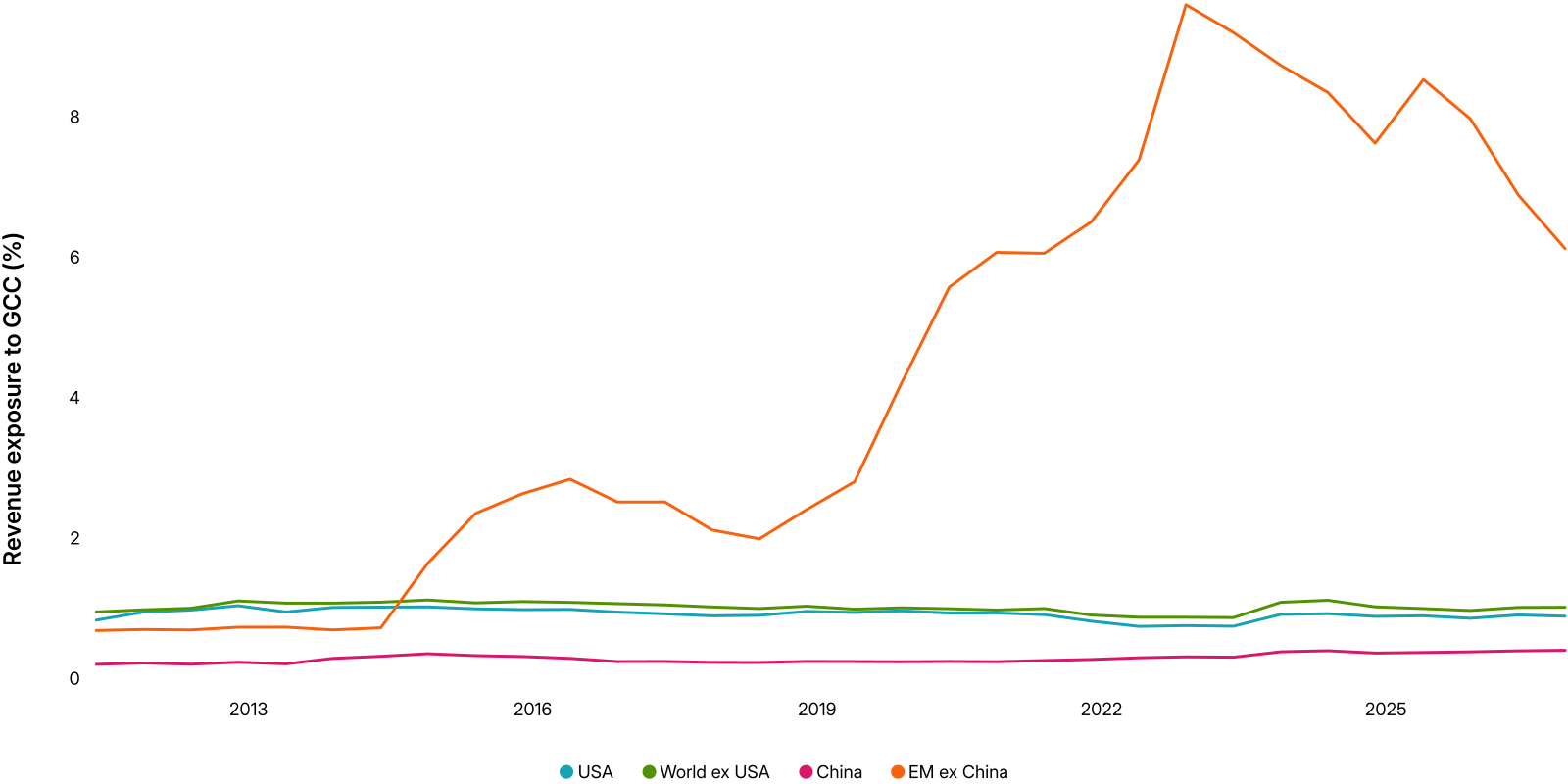
Data as of Feb. 27, 2026. Based on MSCI Economic Exposure data.
Domicile can understate how much a company's operation depends on a region. Geospatial asset data reveals that firms from India, the U.S., Japan and Taiwan all have economically meaningful physical presence in GCC countries (>2% of asset share each) — cumulatively representing 2.5% of MSCI ACWI weight — exposure that wouldn't appear in standard geographic classifications.2
The scale is larger than most investors assume. U.S. companies alone have roughly 3,000 facilities in the GCC region, spanning retail, leisure and office operations. Indian firms cross materiality thresholds through direct operations. This is compounded by India's large expatriate workforce in the Gulf, which creates remittance dependence and workforce-safety risk.
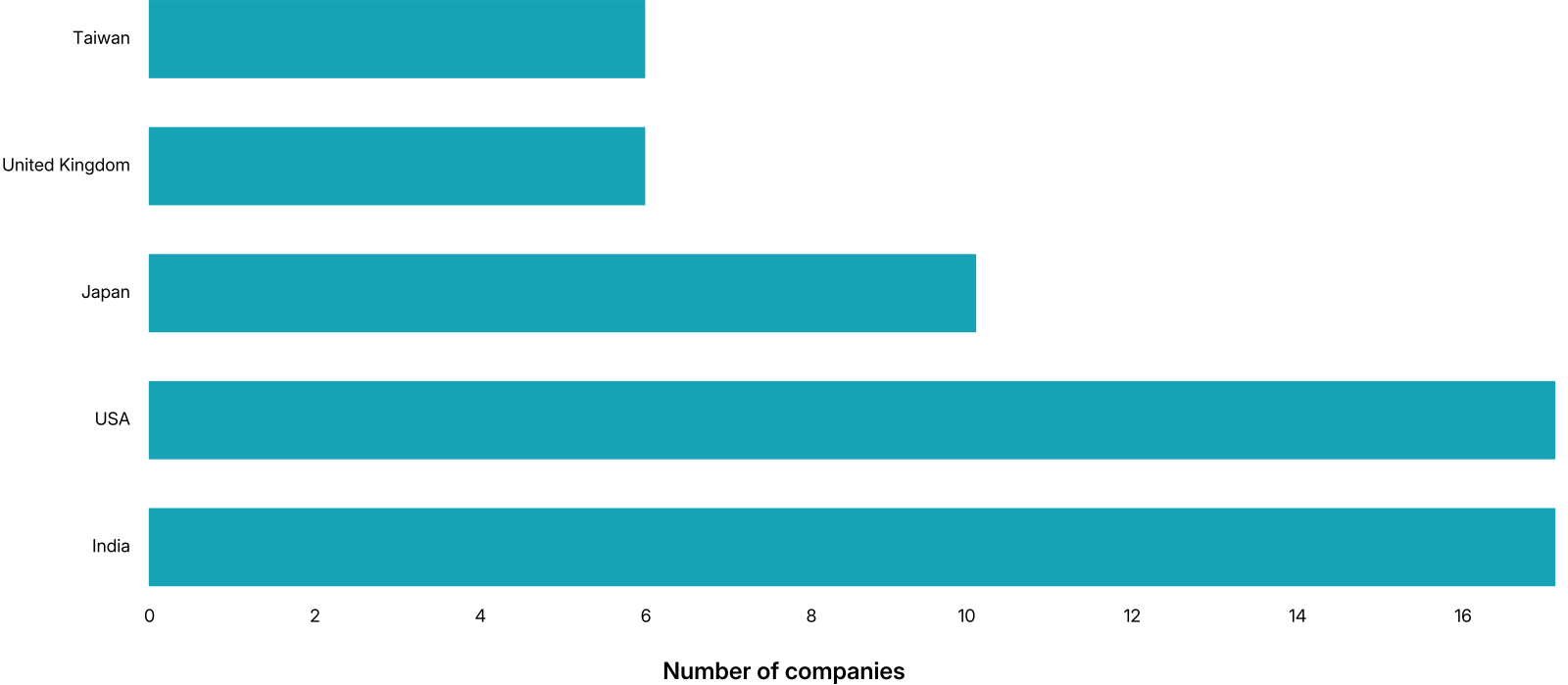
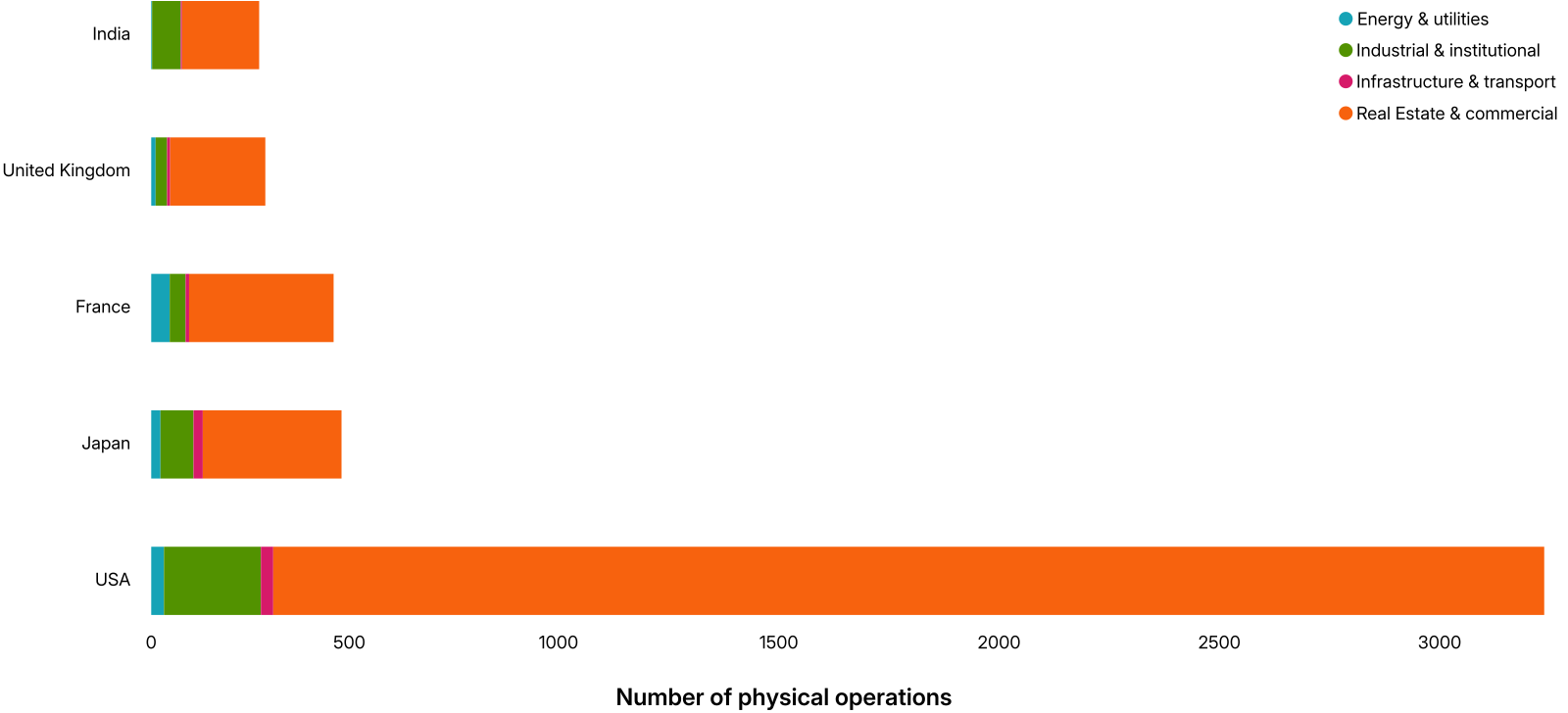
Data as of Feb. 27, 2026. Left chart: top ex-GCC countries with firms having >2% assets in GCC countries. Right chart: top ex-GCC countries with number of physical operations in GCC region by country; operations classified based on economic activity. Based on MSCI Geospatial Asset Intelligence data.
Identifying hidden exposures matters only if it informs decisions. Given uneven impact across companies and industries, investors can use granular exposure mapping to hedge strategically or stress test holdings with material Gulf linkages for supply disruption and currency shocks. The conflict has already moved markets. Understanding exposure embedded in portfolios can provide an additional lens for risk assessment in addition to standard classifications.
The author thanks Anil Rao, Russ Bowdrey and Sieun Choo for their contributions to this blog post.

Subscribe todayto have insights delivered to your inbox.
Scenario Analysis: Middle East War, Oil and the Stagflation Threat
The U.S. and Israel-Iran war raises questions for global multi-asset-class investors about the global economy, with oil at the center. What could happen to markets?
A Multi-Asset Playbook for Geopolitical Shocks and Oil Supply Disruption
We examine how asset classes have performed across geopolitical conflicts linked to oil supply disruption — and what the latest escalation in Iran may mean for multi-asset investors.
1 The EM stock-crowding factor experienced a sharp decline in the week of March 2. Based on MSCI Global Equity Model for Economic Regions.
2 The MSCI GeoSpatial Asset Intelligence data contains information on physical assets owned or operated by public companies, including elements such as spatial and nonspatial attributes — for example, geographic coordinates — and types of activity carried out at the facility.
The content of this page is for informational purposes only and is intended for institutional professionals with the analytical resources and tools necessary to interpret any performance information. Nothing herein is intended to recommend any product, tool or service. For all references to laws, rules or regulations, please note that the information is provided “as is” and does not constitute legal advice or any binding interpretation. Any approach to comply with regulatory or policy initiatives should be discussed with your own legal counsel and/or the relevant competent authority, as needed.