
From Sustainability and Climate Blind Spots to Actionable Insights
- Investors and lenders with exposure to small or private companies may struggle to find company-reported sustainability and climate data.
- These blind spots can pose challenges for financial institutions that are looking to strengthen their risk-management processes or address growing regulatory pressures.
- Expanding data coverage beyond company-reported information can support more comprehensive evaluations of sustainability and climate-related risks and opportunities.
Increasingly, sources of portfolio risks and opportunities extend beyond traditional financial drivers to include climate and sustainability-related factors. Financial firms are also facing pressure from regulators in major markets demanding greater transparency. Yet in many cases — especially among smaller or private companies — the sustainability and climate data that firms disclose is limited or missing altogether. This creates blind spots across portfolios.
To demonstrate an approach that may help address such issues, we analyzed a representative commercial loan book developed for a hypothetical bank. Our approach applied a combination of MSCI Sustainability and Climate On-Demand Solutions, MSCI ESG Ratings and MSCI Climate Data and Metrics methodologies to provide comprehensive portfolio coverage, overcoming gaps where company-reported information is limited or not available.
The stylized loan book we analyzed was designed to reflect the lending portfolio of a typical mid-sized European bank. The commercial loan book was set at EUR 30 billion (approximately USD 36 billion) and segmented into SMEs, mid-cap firms and corporates and comprised 12,725 client entities.
We determined the client composition of the commercial segments as follows:
- Corporate segment (125 clients): We selected European-domiciled companies from the coverage universe of MSCI ESG Ratings and MSCI Climate Data and Metrics. Companies were chosen at random but collectively reflected the size and sectoral distributions of the MSCI ESG Ratings universe. These data sets were also used to source the sustainability factors and carbon emissions incorporated into this segment’s analysis.
- SME and mid-cap segments (12,600 clients): We created fictional entities distributed across relevant sectors. Each entity was assigned a primary business activity, country of operation, revenue and enterprise value — inputs into MSCI Sustainability and Climate On-Demand Solutions. These attributes are typically collected by banks during standard onboarding, know your client (KYC) and credit assessment processes, even when disclosure is limited.
As shown below, loan amounts for each entity were assigned using calibrated parameters to reflect representative financing patterns, and the sectoral composition of the commercial loan book was designed to approximate that of the broader European Union banking system. 1

Data as of August 2025. EVIC represents enterprise value including cash. Source: MSCI Solutions
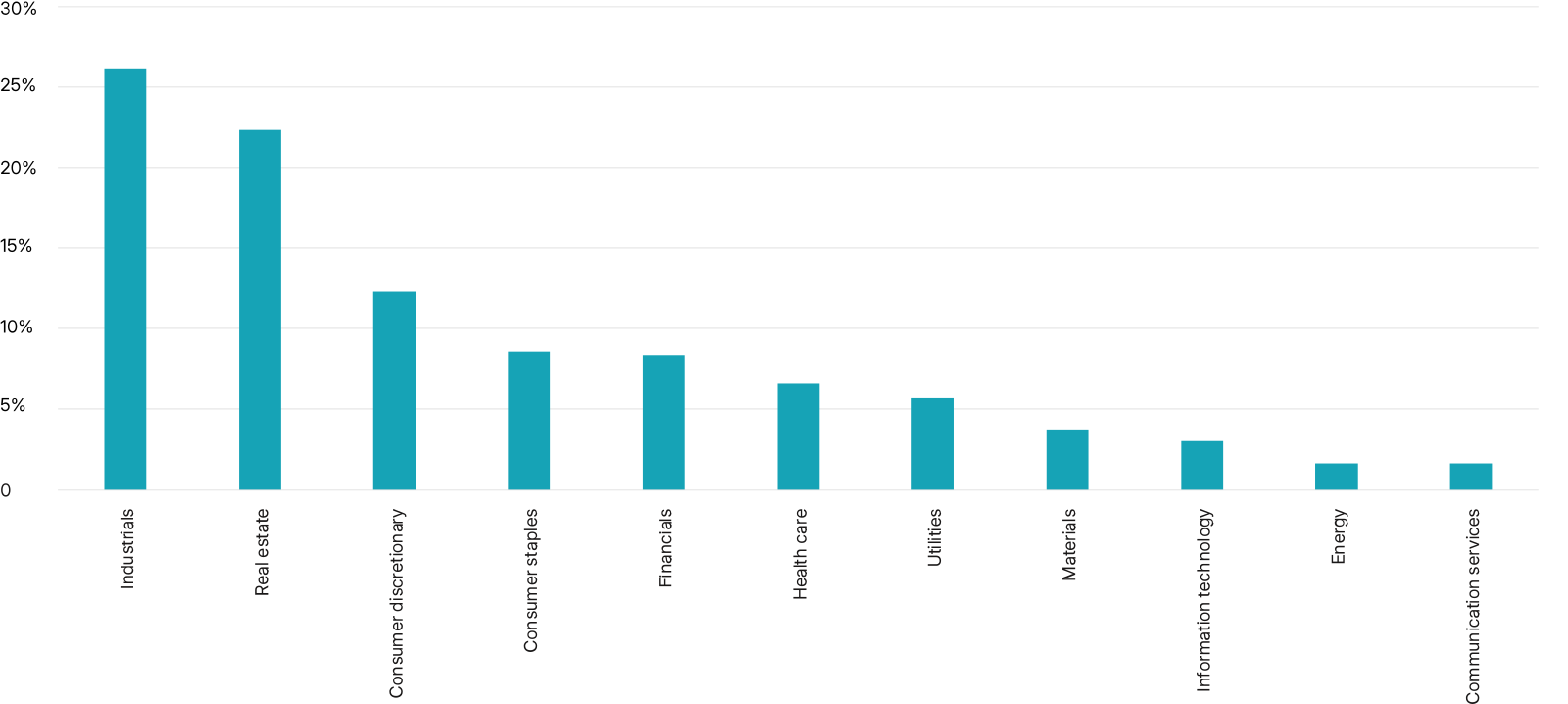
Data as of August 2025. Sectors are defined according to the Global Industry Classification Standard (GICS®). GICS is the industry-classification standard jointly developed by MSCI and S&P Dow Jones Indices. Source: MSCI Solutions
By integrating MSCI solutions to compensate for limited company disclosures, we generated several outputs at both the company and portfolio levels. Two examples are particularly illustrative: the varying intensity of sustainability risks (as measured through MSCI ESG Ratings key issues) and the portfolio’s financed emissions.
Lenders and investors are exposed to financial risks and potential opportunities through the environmental, social or governance characteristics of their client companies. Using data from MSCI ESG Ratings key issues, we assessed the companies in our hypothetical loan book’s exposure to, and management of, financially relevant sustainability risks.
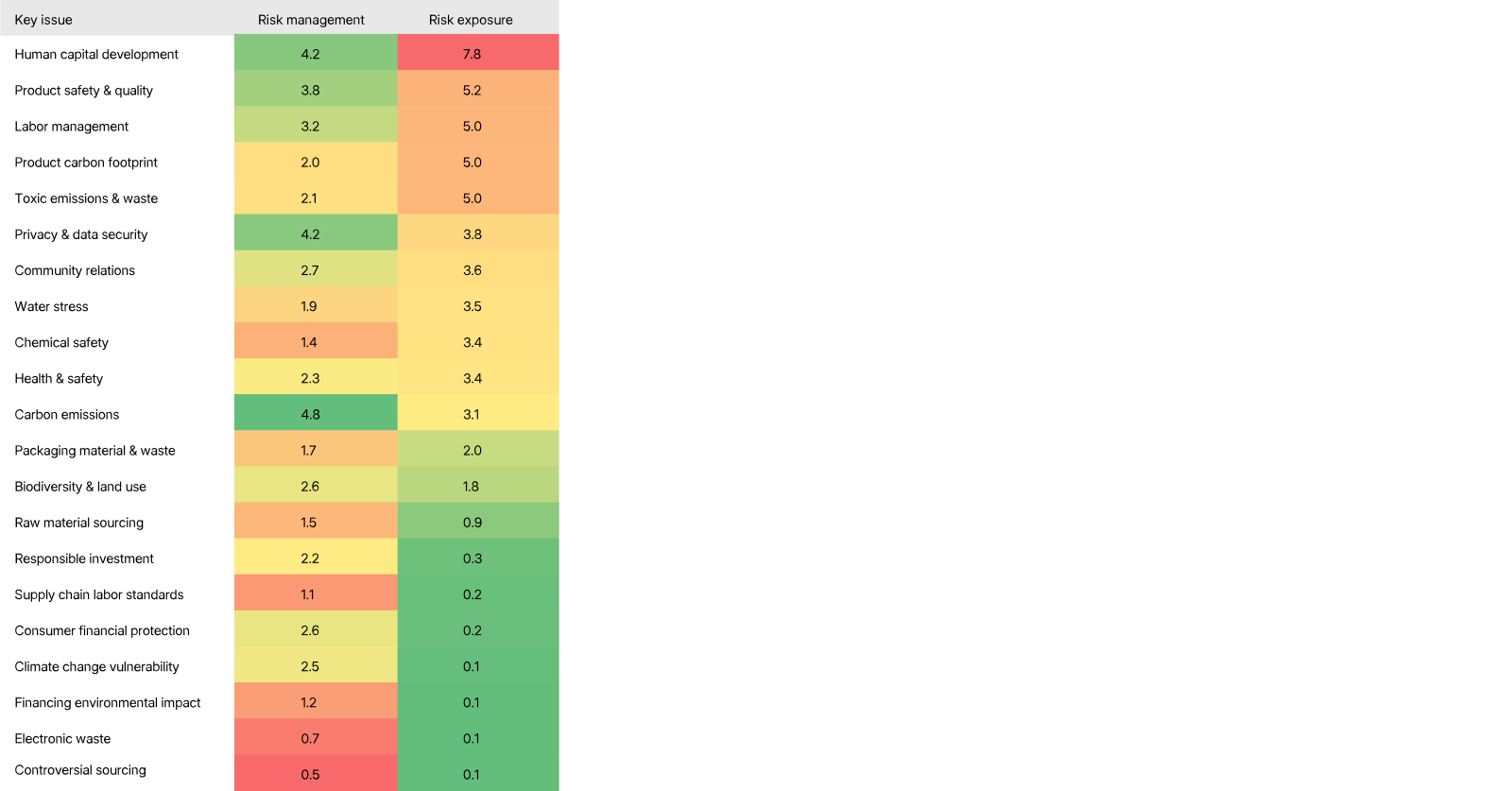
Data as of August 2025. Colors illustrate the loan-weighted average risk exposure and risk-management scores across all risk-oriented environmental and social key issues for the sample loan book. Risk exposure captures inherent vulnerability (red = high, green = low), while risk management reflects the strength of practices to address these risks (red = weak, green = strong), according to the MSCI ESG Ratings Methodology. Source: MSCI Solutions
In our loan book, the most significant risks stemmed from companies’ workforce management and development. Risks related to sourcing raw materials from sensitive or high-risk supply chains were not significant at the overall portfolio level, but many client companies had limited programs in place to mitigate such risks.
These types of insights can help lenders identify both systematic and idiosyncratic risks within their portfolios. From there, they can prioritize engagement and monitoring efforts, strengthen due diligence on high-exposure borrowers and integrate enhanced sustainability criteria into lending-risk frameworks.
When it comes to emissions, we generated estimates for both financed emissions and carbon-intensity metrics for each client company. This enabled analysis across industries, segments and at the aggregate portfolio level, as per the table below.
These insights can help banks identify borrowers with above-average carbon intensity, uncover opportunities for transition finance and inform the development of sectoral decarbonization strategies and lending policies.
In the hypothetical commercial loan book we analyzed, total financed emissions amounted to 14.5 million metric tons of CO2. On average, for every USD 1 million loaned to clients, 404 metric tons of CO2 were emitted across Scopes 1, 2 and 3.
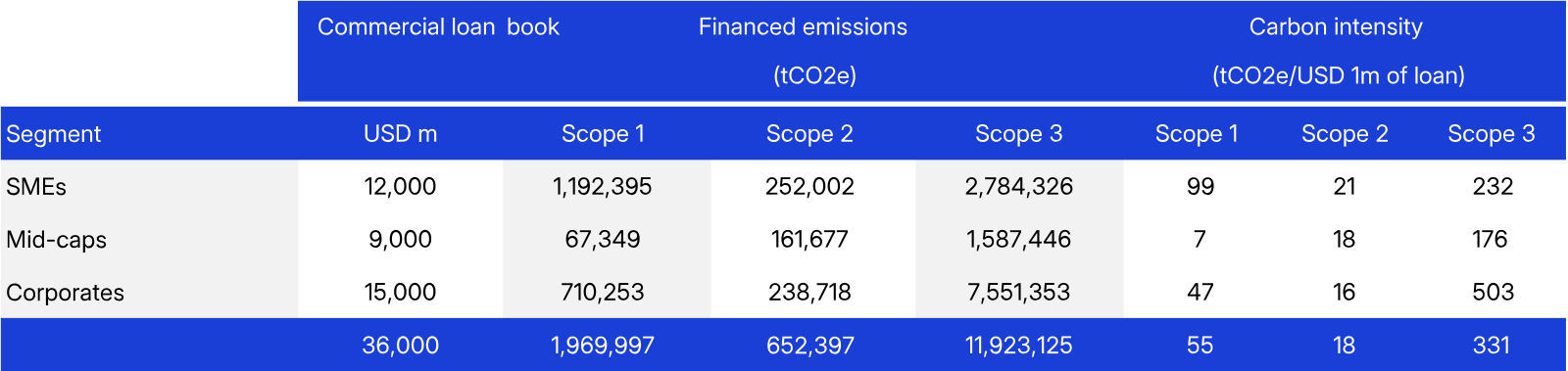
Data as of August 2025. Source: MSCI Solutions
This exercise demonstrates how banks and other financial institutions can apply data-driven solutions to address challenges in segments with limited public disclosures. In doing so, they may be better able to meet evolving regulatory expectations — such as the European Central Bank’s climate risk stress tests,2 and the European Banking Authority’s ESG disclosure framework under Pillar 2 (supervisory review)3 and Pillar 3 (disclosure)4 — while strengthening their sustainability and climate-risk-management practices.

Subscribe todayto have insights delivered to your inbox.
Carbon Footprinting for Banks
Assessing the carbon footprint of their lending and investment activities is crucial for banks to achieve stated net-zero targets. Using a fictious bank’s balance sheet, we show how MSCI Total Portfolio Footprinting can help calculate financed emissions.
How Climate-Transition Risks May Impact Lending Practices
Climate-transition risks are reshaping lending and investment activities. Find out how banks can navigate these challenges with scenario-based risk-management strategies to meet new regulatory expectations.
Risk insight in low-disclosure companies
Evaluate risks in companies with sparse sustainability reporting. A scalable tool for fast, comparable insights across public and private markets.
1 “2024 – EU Wide Transparency Exercise,” European Bank Authority, October 2024.
2 “2022 Climate Risk Stress Test,” European Central Bank, July 2022.
3 “Guidelines on the Management of ESG Risks,” European Banking Authority, January 2025.
4 “EBA Draft ITS on Pillar 3 Disclosures on ESG Risks,” European Banking Authority, January 2022.
The content of this page is for informational purposes only and is intended for institutional professionals with the analytical resources and tools necessary to interpret any performance information. Nothing herein is intended to recommend any product, tool or service. For all references to laws, rules or regulations, please note that the information is provided “as is” and does not constitute legal advice or any binding interpretation. Any approach to comply with regulatory or policy initiatives should be discussed with your own legal counsel and/or the relevant competent authority, as needed.