
How Megacap IPOs in 2026 Could Reshape Global Benchmarks
- A potential wave of megacap IPOs, including SpaceX, in 2026 could reshape public equity benchmarks by altering market exposures.
- To help equity investors assess the hypothetical impact, we modeled the inclusion of the 10 largest companies from the MSCI All Country Venture-Backed Private Company Index into the MSCI ACWI IMI as a proxy.
- Index investors could anticipate higher U.S. weight, meaningful sector and sub-industry shifts (into application software and aerospace/defense), turnover effects and billions of U.S. dollars in index-driven flows.
After a subdued 2025, the IPO market is poised for a potential surge in 2026.1 A backlog of large, venture-backed companies that are disproportionately concentrated in high-growth segments stands ready to go public.2 Given their size (ranging from USD 50 billion to USD 1 trillion), these firms could reshape global equity benchmarks, redefine sector leadership and redirect capital flows through index-tracking strategies.
Since MSCI equity indexes are built on free-float-adjusted market capitalization, each IPO simultaneously expands the investable universe and shifts index weights as private ownership converts to public float. To understand this, we modeled the addition of the 10 largest companies in the MSCI All Country Venture-Backed Private Company Index to the MSCI ACWI Investable Market Index (IMI) as a proxy for such a megacap IPO scenario. Financial media widely cite several of these firms as IPO candidates, and they collectively represent some of the economy’s highest-growth areas, including AI software platforms, fintech and new-economy industrials such as aerospace and defense.
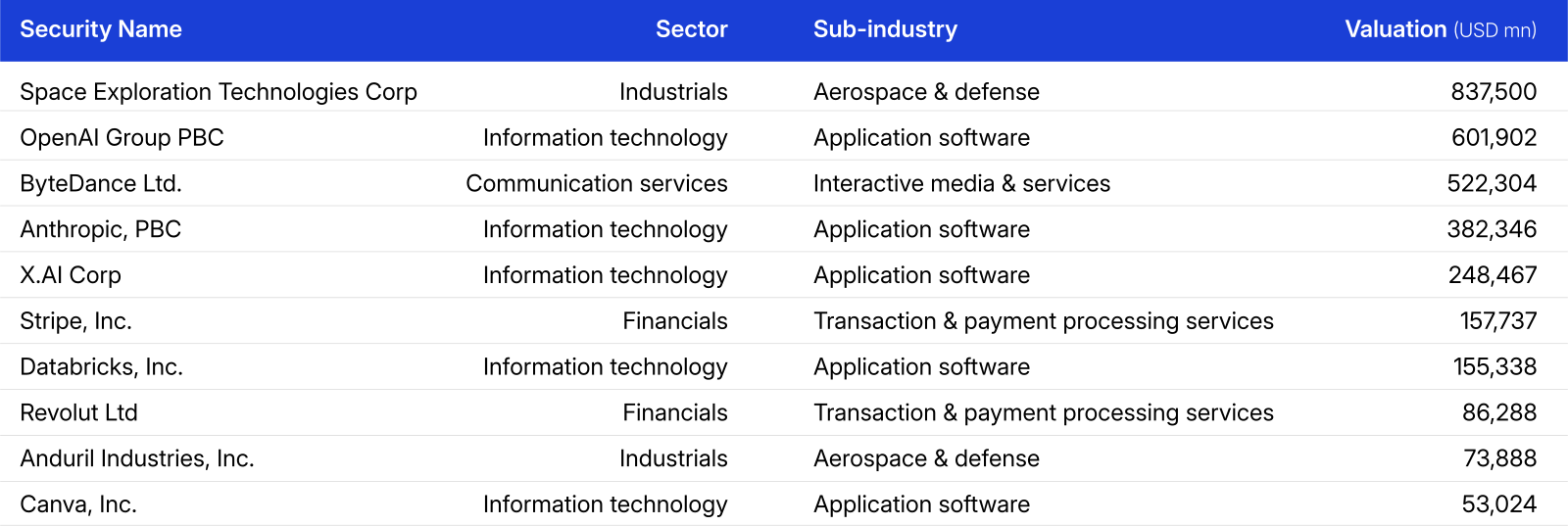
Top 10 constituents of the MSCI All Country Venture-Backed Private Company Index as of Jan. 30, 2026. Estimated valuations are obtained from MSCI data partners and modeled using venture-capital funding rounds, secondary-market trades, price events and public comparables. Classifications of private companies using MSCI PACSTM, a global standardized taxonomy for private assets.
Because free float at IPO is uncertain, we tested a range of plausible free-float outcomes (5%, 10%, 25% and 95%) and assessed index inclusion.3 The 95% case is not meant to represent an immediate post-IPO float. Rather, it approximates a terminal state in line with the average free float of the four U.S. sectors represented by these companies.
The private valuations are large enough that, at higher float levels (25% or more), all 10 firms would qualify as index constituents. At lower float levels, however, not all companies would qualify since free-float-adjusted market cap determines inclusion.4 In the 95% terminal-state scenario, three IPOs ranked among the top 30 constituents of the MSCI ACWI IMI by index weight.
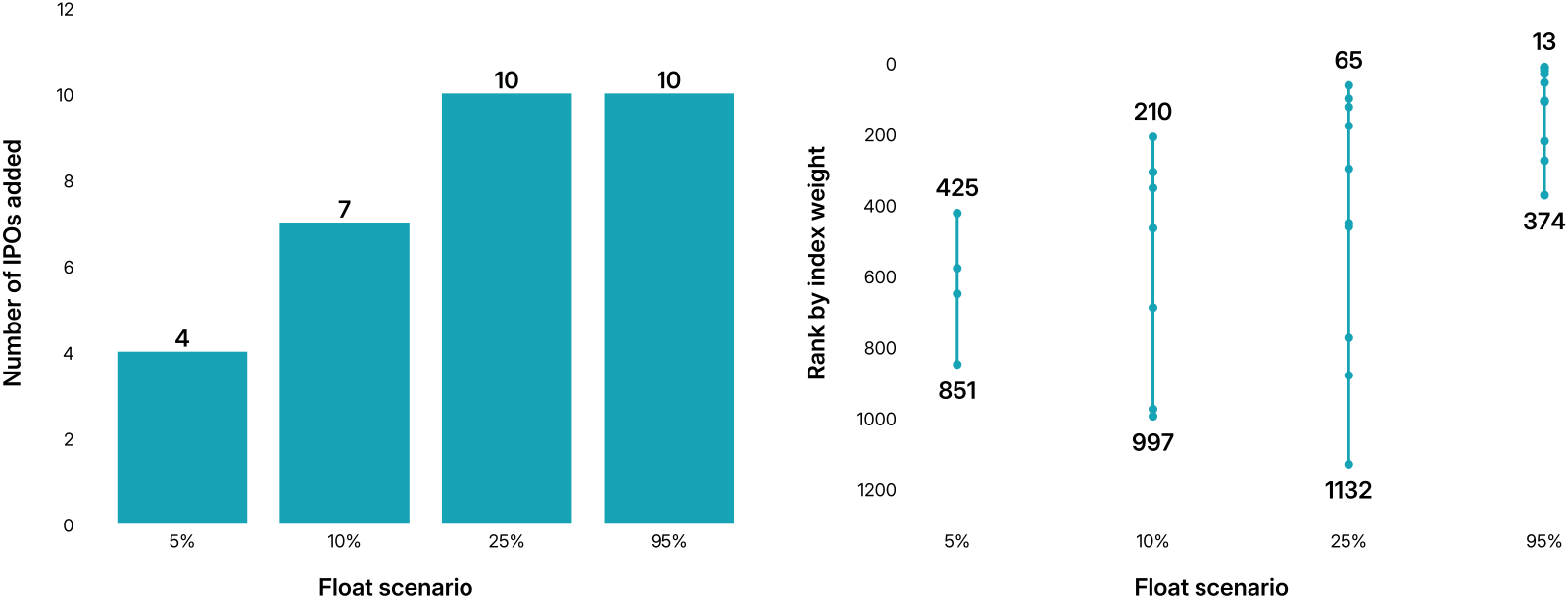
Data as of Jan. 30, 2026. Each vertical line in the right chart spans the highest and lowest rank of the included IPOs by index weight in the MSCI ACWI IMI for that float scenario. As of Jan. 30, 2026, the MSCI ACWI IMI had 8,206 constituents.
We assumed that every company is U.S.-listed, which would give global benchmarks incremental U.S. weight. For asset owners and wealth managers that treat the MSCI ACWI IMI as a global reference, this drift can translate into marked reallocations and potential discomfort around increased U.S. concentration, as the offsetting changes are spread across other countries.5 At 25% float scenario, the U.S. weight in MSCI ACWI IMI rose from 61.75% to 62.03%, and in the 95% terminal-float scenario it rose to 62.78%. In the simulation’s largest inclusion outcomes, the largest declines occurred in Japan (-0.15%), the U.K. (-0.09%) and Canada (-0.08%). While the percentage changes look modest on paper, benchmark weights can scale into significant dollar flows quickly when implemented by investors replicating the index.
Within the U.S., sectors and stocks drive turnover
If the global story is “more U.S.,” the domestic story is “different U.S.” The hypothetical IPO cohort leans heavily into application software and also adds a meaningful aerospace and defense component, while introducing incremental weight in interactive media and services and payment processing.
Within the MSCI USA IMI, the footprint of the industrial and information technology sectors increased the most. The most notable shift, however, is within tech itself — from the infrastructure layer (semiconductors and hardware) to the platform and application layer (software and AI adopters) — purely through the entry of new constituents.
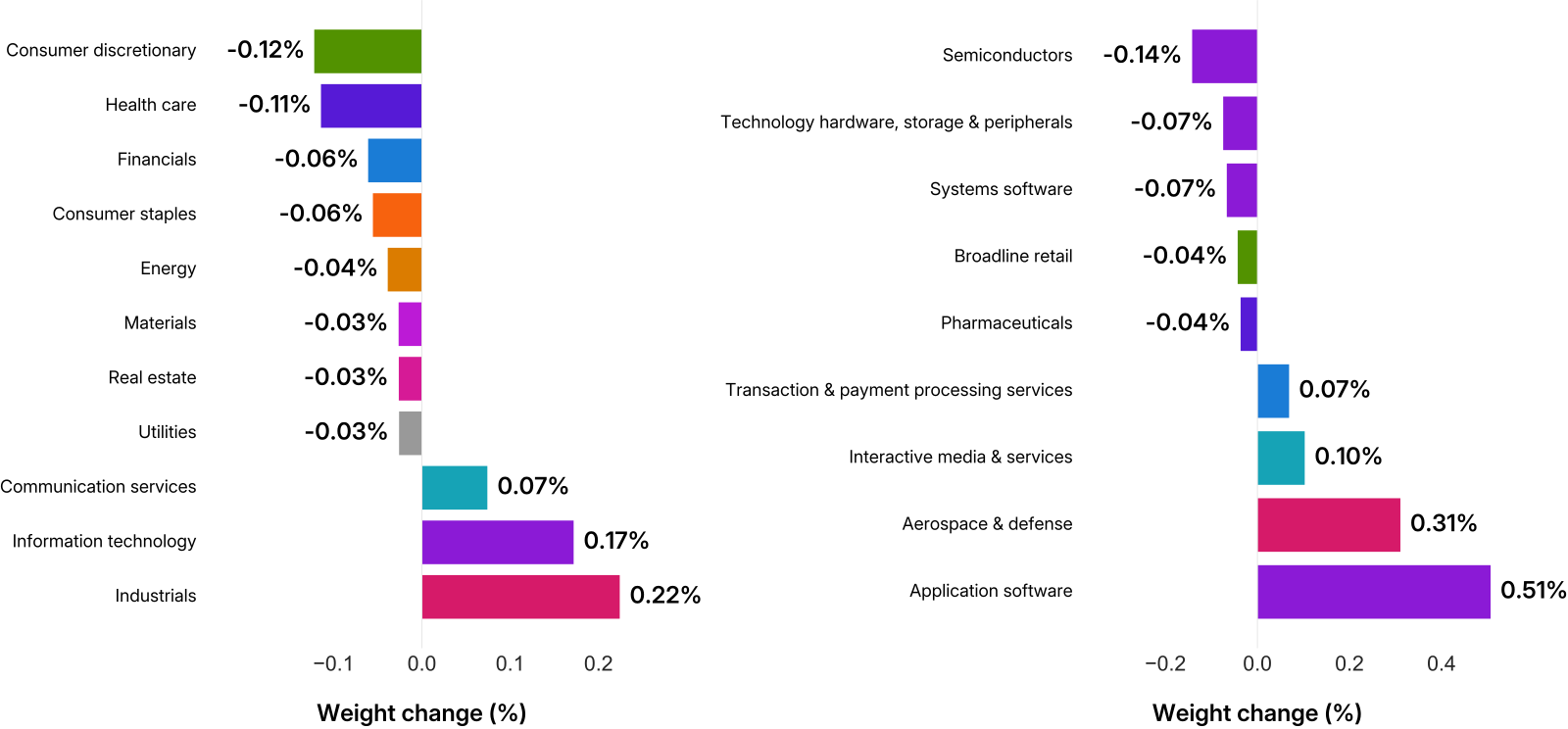
Changes based on the 25% float scenario. Data as of Jan. 30, 2026, using the MSCI USA IMI. Color coding of subindustries is set to match the sectors to which they belong.
At the constituent level, the largest MSCI USA IMI companies face the steepest weight declines as IPOs claim market share. If it became public, Space Exploration Technologies Corp. could become the fourth-largest industrials constituent.
Data as of Jan. 30, 2026. Only those sectors where IPOs were added are shown. Within sectors, weights were renormalized to 100%.
Where investors would be most directly affected, however, is index turnover, which can introduce trading events and increase implicit costs. In the 25% float scenario, MSCI USA turnover is 1.28% and MSCI USA IMI turnover is 1.16%.6 Turnover was higher within sectors. Industrials accounted for a large share (3.34% for USA IMI industrials), with communication services (1.86%) and information technology (1.7%) following.
Based on the assumptions, a USD 100 million MSCI USA IMI allocation would require USD 1.16 million in total rebalancing: USD 1.16 million in IPO purchases and USD 1.16 million in sales of existing holdings (proportional to market cap). Net sector flows could be +USD 202,000 for industrials, +USD 118,000 for information technology, and (-) USD 109,000 for consumer discretionary.
IPOs could impact billions in global flows
At scale, these portfolio adjustments can translate to substantial market flows. With trillions globally tracking relevant MSCI indexes through ETFs and index funds, below we show estimated aggregate inflows to the 10 IPOs (given a 25% float scenario) and the largest outflows from down-weighted holdings.
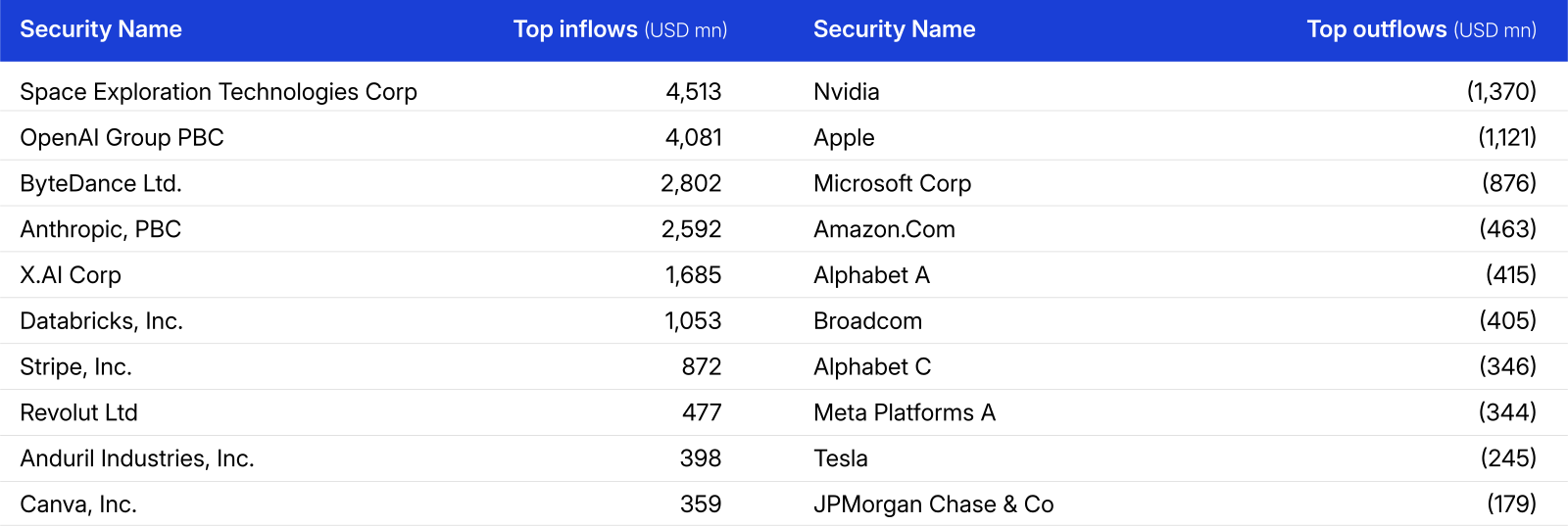
Flow estimates based on MSCI Index AUM dataset (with AUM in ETF index products as of Jan. 30, 2026 and AUM in non-ETF index products as of Sept. 30, 2025), covering USD 5.79 trillion. Analysis filtered for (1) indexes with ≥ USD 5 billion AUM (USD 5.17 trillion coverage), (2) market-cap weighted or capped methodologies, and (3) U.S. regional exposure, resulting in 20 indexes with USD 1.86 trillion in tracking AUM. Flows calculated as change in index weight × tracking AUM.
A wave of megacap IPOs could reshape index dynamics in ways that demand investor preparedness. While headline index weights may only shift modestly, the impact to investors would be felt through sector rotation, increased turnover and rebalancing flows. Concentration in high-growth sectors would accelerate capital into technology while sector-specific turnover would increase tracking error. Index inclusion could trigger substantial index-linked flows that may create significant liquidity and trading events. Managers should stress-test portfolios against multiple float scenarios now, to prepare portfolios against a potential IPO wave.


Subscribe todayto have insights delivered to your inbox.
Secondaries First: Accessing Innovation Before the IPO
Can you index innovation? Hear how MSCI, Caplight and KraneShares are tackling private-market opacity, pricing and access as firms spend more time — and achieve more growth — before going public.
How Does Free Float Impact Stock Returns?
Free float should be viewed as a key risk and liquidity factor. Integrating float data into models and portfolios can enhance trading, liquidity management and investor decision-making.
Market Cap Indexes
MSCI Market Cap Indexes include large-, mid- and small-cap indexes designed to represent and measure global equity markets as they evolve.
1 Yuliya Chernova, IPOs in 2025 Were Too Meager to Resolve the VC Liquidity Crisis, Wall Street Journal, December 30, 2025.
2 Craig Coben, The Outlook for IPOs in 2026: Oversized and Over There, Financial Times, January 6, 2026.
3 IPOs were treated as corporate events and evaluated for inclusion in the MSCI ACWI IMI as of Jan. 30, 2026. Under this framework, the global minimum size requirement remains unchanged, leaving the existing equity universe unaffected except for the new IPO additions.
4 As per MSCI Global Investable Market Indexes (GIMI) methodology, the free float-adjusted market cap of an IPO should be at least 1.8 times one-half of the cutoff for the standard index's interim size-segment for early index inclusion. At 10% float as of Jan. 30, 2026, three companies — Revolut Ltd, Anduril Industries Inc. and Canva Inc. — had float-adjusted market caps below the USD 13.2 billion cutoff required for standard size-segment addition.
6 MSCI USA includes large- and mid-cap securities whereas MSCI USA IMI includes small-caps as well.
The content of this page is for informational purposes only and is intended for institutional professionals with the analytical resources and tools necessary to interpret any performance information. Nothing herein is intended to recommend any product, tool or service. For all references to laws, rules or regulations, please note that the information is provided “as is” and does not constitute legal advice or any binding interpretation. Any approach to comply with regulatory or policy initiatives should be discussed with your own legal counsel and/or the relevant competent authority, as needed.