
International Value Has Outshone US Growth
- Since generative AI’s debut in 2022, value and growth have diverged sharply in the U.S. vs. developed ex-U.S. markets. The MSCI EAFE Value Index saw its highest year-to-date returns (33.8%) in over 25 years.
- Value’s outperformance in international developed markets was driven by banks and their return-on-equity-led margin recovery while the MSCI USA Growth Index has outperformed the MSCI USA Index by 11% since November 2022.
- A 50/50 blend of the MSCI USA Growth and MSCI EAFE Value Indexes has offered diversification benefits and resilience across different sectors and macroeconomic regimes.
2025 saw a clear shift in the global equity market leaderboard: After almost two decades of U.S. dominance, non-U.S. stocks have taken the lead. This reversal has been regionally broad-based but has had a distinct style flavor: Value has outperformed growth in international developed markets (DM) while the opposite has been true in the U.S. and emerging markets (EM).
Our new research examines the fundamental drivers behind value’s strength in international DM, analyzes why it has behaved differently in the U.S. and draws lessons for institutional investors about portfolio construction and asset allocation.
Resurgence of value investing in international equities
In 2025, the usual gap between style performance across regions has become unusually wide. Developed markets outside the U.S. and Canada (EAFE) have shown a tilt towards Value, which has led Growth by 13%, while the U.S. and EM remained Growth-led. Indeed, the MSCI EAFE Value Index has outperformed all MSCI EAFE single-factor indexes.1
Sample period: As of Oct. 31, 2025. Gross total returns in USD. Returns are annualized except for periods of less than a year.
The MSCI EAFE Value Index’s five-year returns in USD are comparable to those of the MSCI USA Growth Index, which highlights the potential of a regional style-diversification strategy that could enable investors to better manage global growth-portfolio tilts.
International and US value paths diverged since Gen AI’s launch in 2022
Historically, market dislocations have defined whether value or growth outperforms in a given period. The tech bubble burst led to a sharp correction in technology and telecom stocks, triggering a value-led phase. Following the Global Financial Crisis (GFC), central banks cut interest rates, prompting investors to favor long-duration assets and supporting a prolonged period of growth outperformance. As economies reopened after the COVID-19 lockdowns in 2020, value staged a broad global rebound and outperformed growth.
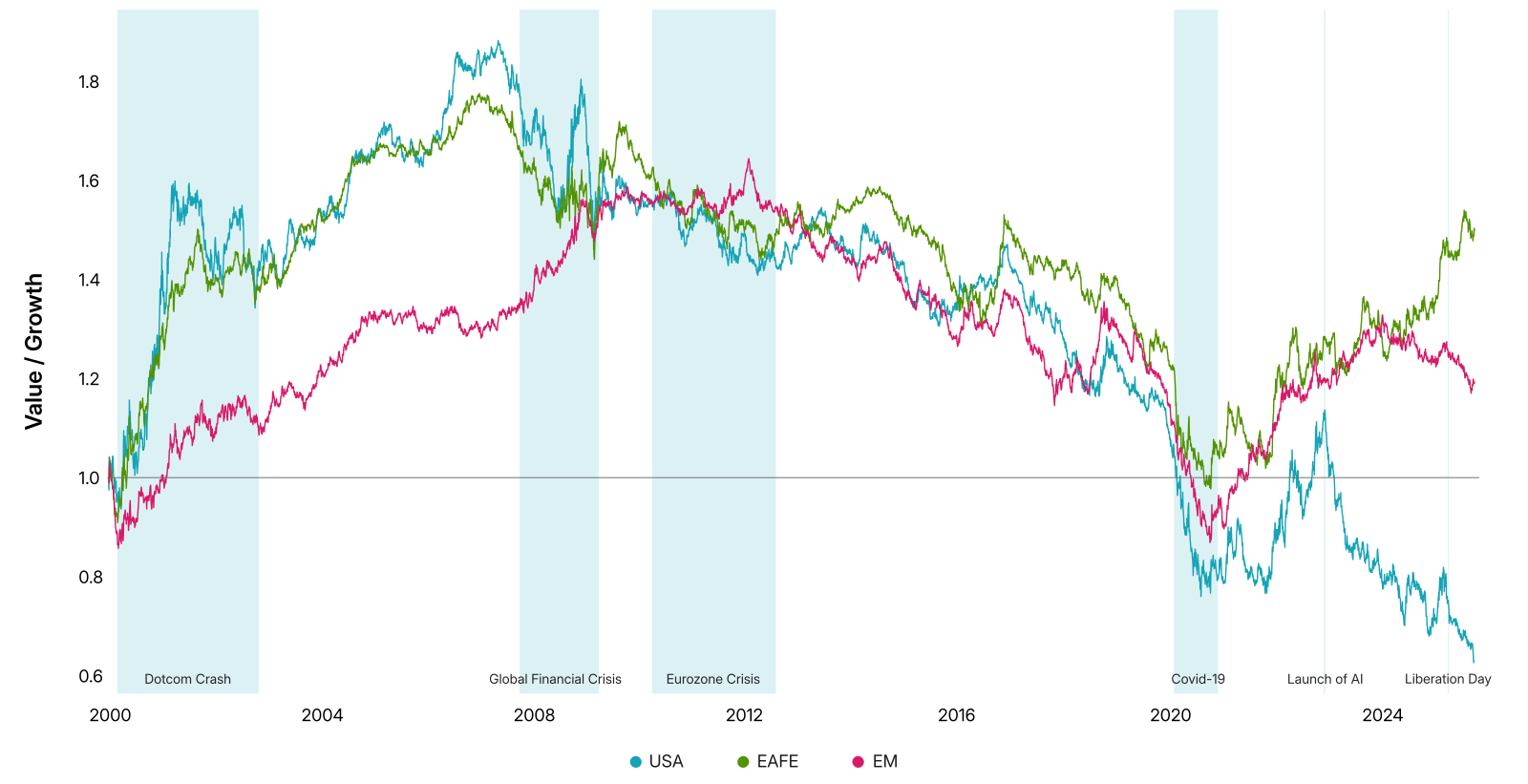
Sample period: Dec. 31, 1999 to Oct. 31, 2025. Value/Growth is calculated using respective gross index levels in USD for all the regions. Launch of AI date is noted as Nov. 30, 2022.
The public launch of generative AI in 2022 marked a regional split. Supported by strong investment and optimism in AI-related technologies, growth started to outperform value in the U.S. In contrast, EAFE continued to see value outperformance while EM has more recently flipped to growth outperformance, though less strongly than in the U.S.
EAFE banks: Rerating that return on equity earned
Value’s outperformance in EAFE suggests an investor shift toward fundamentally strong, attractively valued stocks in international DM. Using a Brinson attribution, we can see that banks in particular, with an 8% overweight in financials, accounted for more than 55% of this outperformance, while an underweight of aerospace and defense stocks dragged on performance.1
EAFE banks, which had underperformed in the post-GFC low-rate environment, have improved operationally since 2021. Global rate hikes have lifted their net interest income by around 37% since the launch of Gen AI, supported by stronger net interest margins (in Italian banks) and steady balance-sheet growth (in Australian banks).2 In aggregate, this has meant a recovery in the industry return on equity (ROE) from its historical lows (3.86%) in 2021 to around 12% as of Oct. 31, 2025.
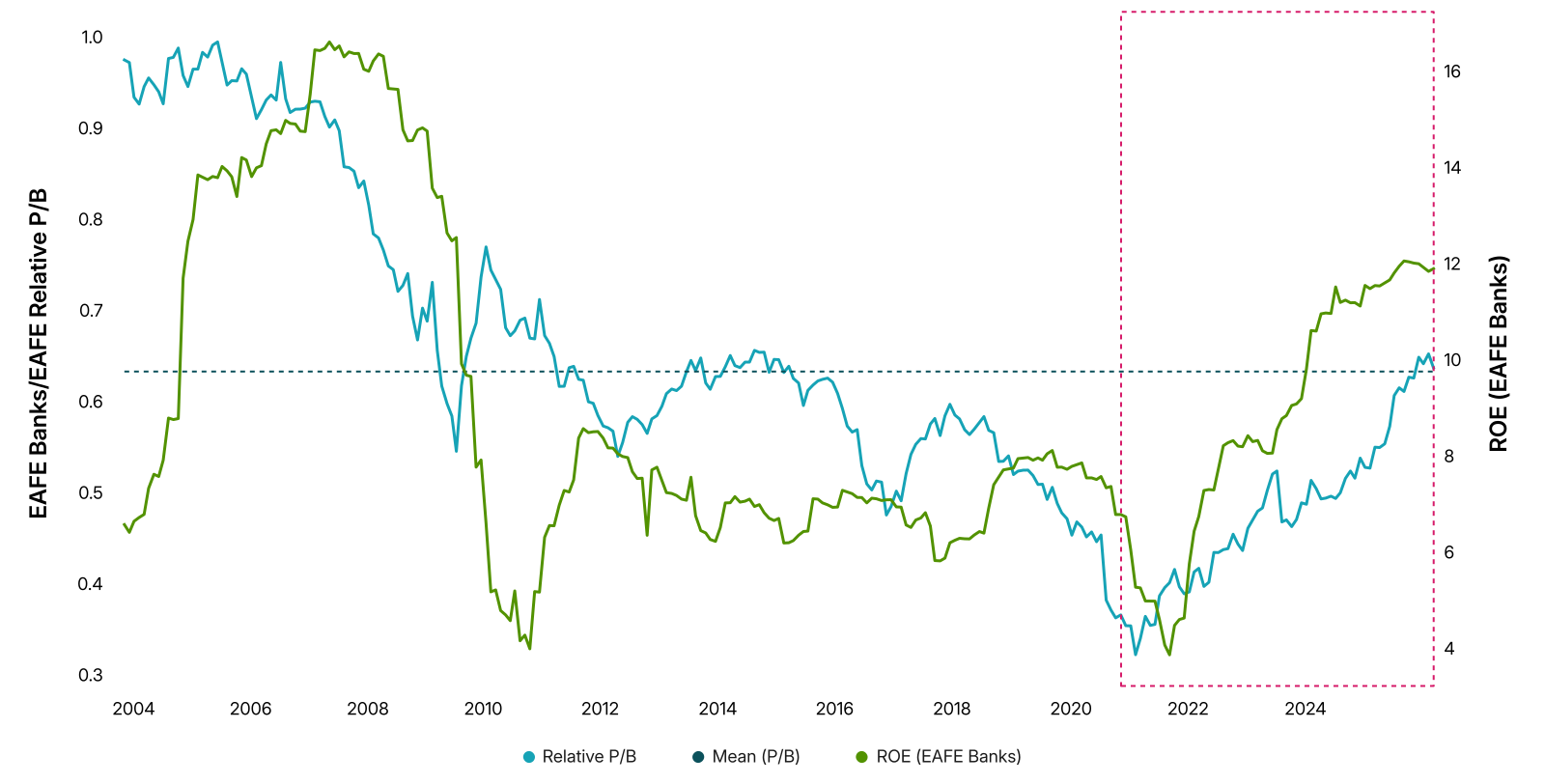
Sample period: June 30, 2003 to Oct. 31, 2025. Valuation ratios follow MSCI Fundamental Data Methodology.
EAFE banks’ price-to-book ratios have also recovered from record lows. Nevertheless, valuations remain around their long-term average, reflecting that improved fundamentals have been the driver of outperformance.
Wide valuation spreads favored international value
Valuation gaps between value and growth stocks sit near the top quartile of their long-term range for both the U.S. and EAFE markets.3 In EAFE, value’s recent performance has only slightly narrowed this gap: Value stocks still trade at almost twice the earnings yield of growth as of Oct. 31, 2025.
Since 2000, whenever valuation spreads in EAFE have been this wide (4th quartile), value has on average shown modest outperformance as markets have moved back toward fundamentals.4 In the U.S., wide spreads have typically coincided with growth’s outperformance, although value has occasionally done better in these periods. In EM, returns have been broadly flat when spreads are wide.
Across regions, valuation spreads remain elevated despite recent outperformance, and the strongest periods of value’s performance have not taken place in the most recent phase, reflecting the ongoing strength of growth stocks.
Two styles, one resilient portfolio
Pairing the MSCI USA Growth and MSCI EAFE Value Indexes has historically provided both sector and macro diversification. As below, the simulated 50/50 blend balances the sector-weight extremes seen in each index. The MSCI USA Growth Index is heavily concentrated in information technology, while the MSCI EAFE Value Index has larger weights in financials, energy and utilities. When combined in equal proportion, these opposites are offset.
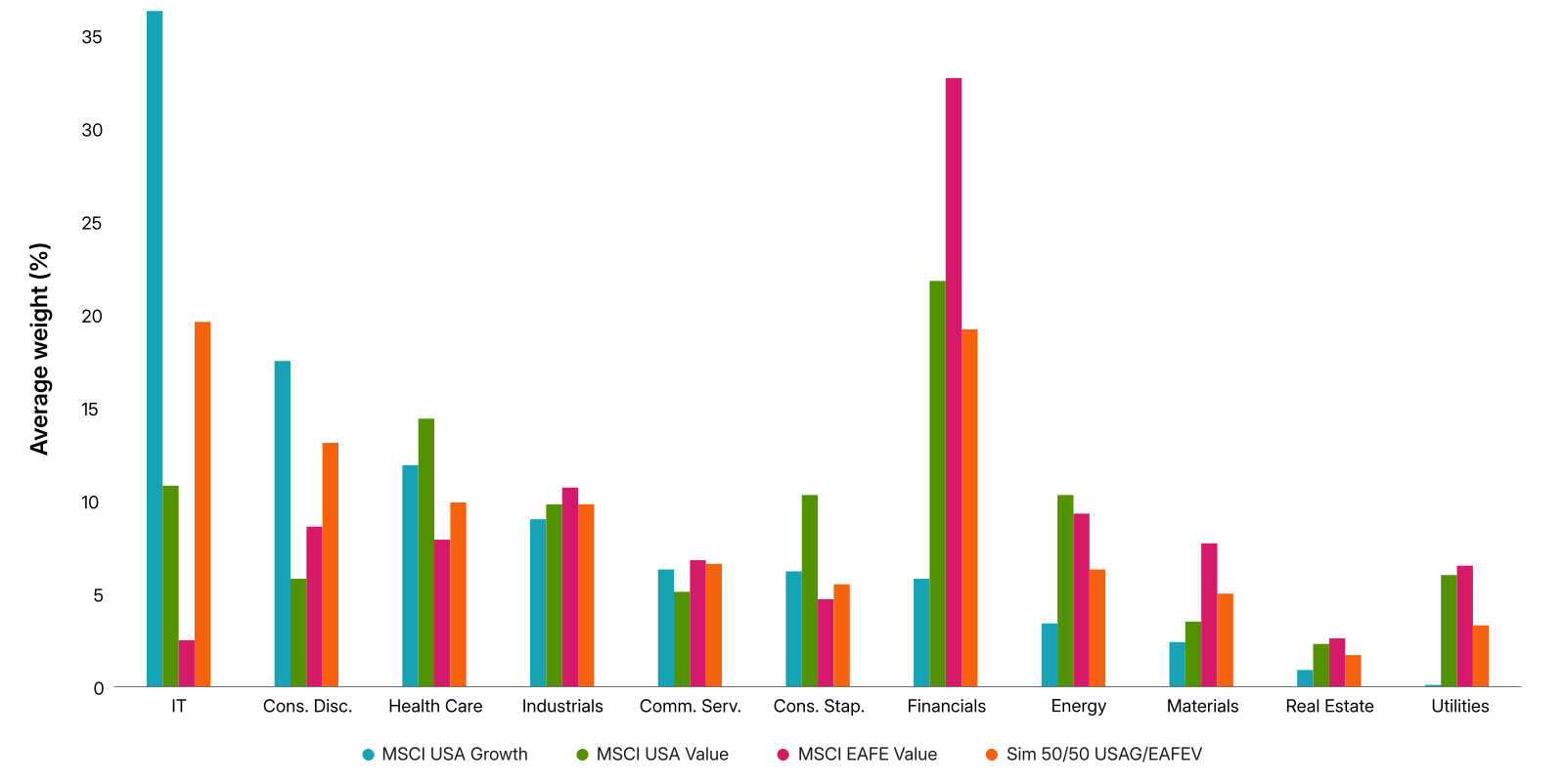
Average monthly sector exposures from Nov. 30, 2009 to Oct. 31, 2025. 50/50 USAG/EAFEV is a simulated index combining the MSCI USA Growth and MSCI EAFE Value Indexes in equal proportions.
This mix has provided return diversification benefits, particularly in a reflationary (growth rising, rates rising) environment, when the MSCI EAFE Value Index has delivered stronger average monthly returns than both the MSCI USA Growth and MSCI USA Value Indexes. It has also held up better than the MSCI USA Growth Index when rates rose into a slowdown. On the other hand, the MSCI USA Growth Index has led when growth was accelerating, especially with falling rates. Over the study period, a simulated 50/50 index of the MSCI USA Growth and MSCI EAFE Value Indexes has resulted in: higher average returns, lower volatility and a better return-to-risk ratio relative to the MSCI USA Growth Index during periods of rising interest rates.
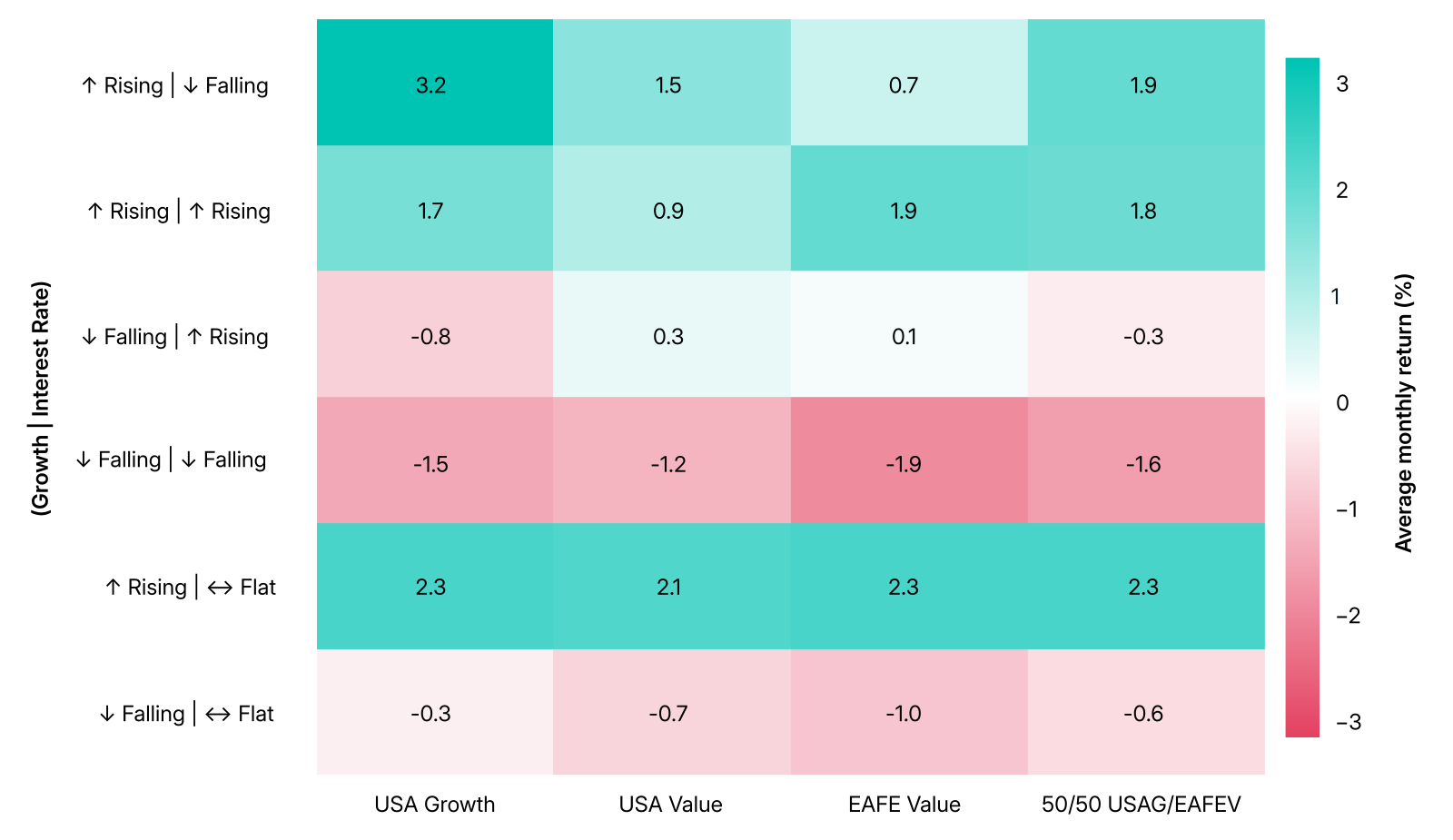
Growth regime is based on change in OECD CLI indicator for the U.S. over three months. Interest-rate regime follows change in U.S. 3M T-bill over last 3 months: where greater than +25 bps change is rising, lower than –25 bps change is falling, and any other range is flat. Gross total monthly returns in USD are used for average return calculations. For the sample period from Dec. 31, 1999, to Sept. 30, 2025, 14 months were classified under rising/falling, 24 under rising/rising, 38 under falling/rising, 35 under falling/falling, 119 under rising/flat and 77 under falling/flat growth/interest rates macro-economic scenarios. 50/50 USAG/EAFEV is a simulated Index combining the MSCI USA Growth and the MSCI EAFE Value Indexes in equal proportions.
The 2025 outperformance of international value — driven largely by EAFE banks’ restored profitability and still-attractive valuations — highlights how style leadership can diverge meaningfully across regions. With growth continuing to dominate in the U.S., driven mainly by technology and AI-related sectors, investors face a landscape where regional fundamentals, rate regimes and sector composition increasingly shape outcomes.
A balanced approach that pairs the MSCI USA Growth and MSCI EAFE Value Indexes has historically delivered relatively higher returns during periods of rising growth and interest rates, while offering sector and macro diversification that a single-style exposure may not. As valuation spreads remain elevated, a more intentional, regionally aware style allocation may offer institutional investors a broader and more resilient path forward.

Subscribe todayto have insights delivered to your inbox.
Factor and Sector Behavior Across Macro Regimes
Over the last nearly 50 years, changes in interest rates have had a more pronounced impact on the performance of factor and sector indexes than the rate level itself. Insights from these findings may be helpful in realigning portfolios to a shifting macro view.
Factor Performance amid Concentration Shifts
Noting the parallel between today’s technology- and AI-driven concentrated rally and the late 1990s’ technology boom, we examined factor performance and factors’ over- and underweights in the top 10 MSCI USA Index constituents over both periods.
MSCI EAFE Value Index
The MSCI EAFE Value Index captures large and mid cap securities exhibiting overall value style characteristics across Developed Markets countries around the world, excluding the US and Canada. The value investment style characteristics for index construction are defined using three variables: book value to price, 12-month forward earnings to price and dividend yield.
1 Sectors are defined according to the Global Industry Classification Standard (GICS®). GICS is the industry-classification standard jointly developed by MSCI and S&P Dow Jones Indices.
2 In USD terms
3 Valuation spread (Value - Growth) calculated using Earnings Yield (1/(P/E)) for the respective universe for Jan. 31, 1997, through Oct. 31, 2025.
4 Sample period: December 1999 to October 2025. Valuation spread at month t is St=log(E/PValue,t)−log(E/PGrowth,t) (equivalently log(P/EGrowth,t)−log(P/EValue,t)) where earnings yield (E/P)=1/(P/E). We sort observations into four equal-count spread buckets (1=low, 4=value much cheaper than growth). Performance is measure based on average 12-month forward relative return of value vs growth, (1+RV)/(1+RG)−1, using gross USD total returns. Higher bucket means value is cheaper vs growth at formation; returns are measured from t+1 to t+12.
The content of this page is for informational purposes only and is intended for institutional professionals with the analytical resources and tools necessary to interpret any performance information. Nothing herein is intended to recommend any product, tool or service. For all references to laws, rules or regulations, please note that the information is provided “as is” and does not constitute legal advice or any binding interpretation. Any approach to comply with regulatory or policy initiatives should be discussed with your own legal counsel and/or the relevant competent authority, as needed.