
Iran War Breaks Link Between Oil Prices and GCC Markets
- Despite the parallels to Russia-Ukraine — energy spike and stagflation risk — the impact on Gulf Cooperation Council (GCC) markets from the Iran war is fundamentally different, especially for domestically exposed sectors.
- Oil-equity correlations flipped negative for four of the six GCC countries, the opposite of the Russia-Ukraine episode, while momentum reversed from the strongest to the weakest style factor.
- With correlations, factor dynamics and hedging relationships all shifting at once, GCC investors may need to reassess the assumptions underpinning their allocation and risk frameworks.
The first three weeks of the Iran war showed that rising oil prices do not necessarily benefit Gulf Cooperation Council (GCC) markets when the region itself is under direct threat. Using MSCI equity, fixed-income and private-capital data, we compare the market response to the Russia-Ukraine war of 2022, when rising oil prices benefited Gulf producers from a safe distance — and we find a fundamentally different pattern.
The divergence plays out across equities, credit and oil-asset correlations, each telling a different part of the story for those with investments in the region. Domestically exposed equity sectors sold off sharply, with real estate down 22%, information technology 12% and industrials 10%, as of March 20. Sovereign and corporate spreads have widened several times more than during the first three weeks of the Russia-Ukraine war. And oil-equity correlations turned negative for four of the six GCC countries.
For this analysis, we examined 23 Middle East conflicts since 2006 and none produced a sustained macro shock.1 The Russia-Ukraine war, however, while not a Gulf-region event, is a reference point many global investors reach for when a geopolitical shock hits energy markets, and the event we focus on for our analysis. In the early days of the Russia-Ukraine war, GCC equities rallied broadly and nearly every sector posted gains. The current conflict has split the market. As noted above, the real-estate, tech and industrials sectors fell, while health care and consumer staples rose. This is less of a blanket risk-off story than one about sector rotation.
Credit spreads tell a similar story. Corporate bond spreads widened across almost every sector, led by real estate at 131%, dwarfing the modest moves seen during the Russia-Ukraine war. At the country level, UAE’s corporate spreads have widened 55% and Bahrain’s 48%, compared to single-digit moves during the earlier conflict. Sovereign spreads have flipped entirely: While every GCC country saw tightening during the Russia-Ukraine war, spreads in all six are now widening.
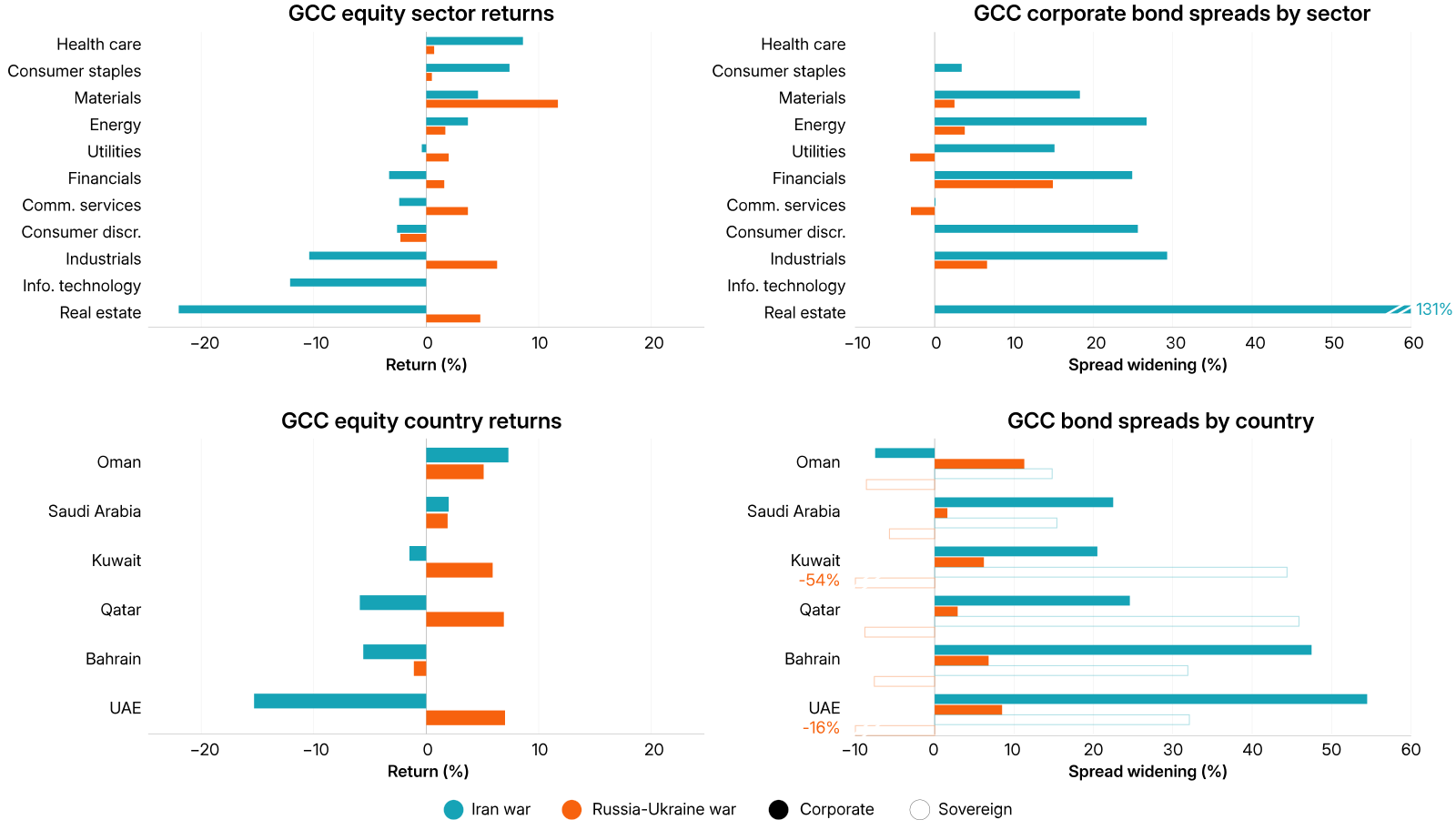
Left: GCC country and sector returns based on the MSCI GCC Countries Combined Index and the Global Industry Classification Standard (GICS®), developed by MSCI and S&P Dow Jones Indices. The MSCI GCC Countries Combined Index includes Bahrain, Kuwait, Oman, Qatar, Saudi Arabia and the UAE. Charts generated using MSCI Index AI insights. Right: Credit-spread widening based on the MSCI GCC Fixed Income Indexes. Returns measured between Feb. 23 and March 16, 2022, for the Russia-Ukraine war and between Feb. 27 and March 20, 2026, for the Iran war.
The rotation reflects the domestic nature of GCC equities. MSCI Economic Exposure data shows that both the materials and energy sectors, which have held up, derive a large portion of their revenue from international sources. The sectors experiencing the largest declines — industrials, real estate, tech and financials — are most dependent on the domestic cycle of government spending, bank lending, foreign direct investment, tourism and property development. With roughly 80% of the GCC’s equity-market revenue tied to the local economy, domestic concentration is higher than in most other emerging markets (EM), making GCC equities particularly sensitive to local economic disruption.
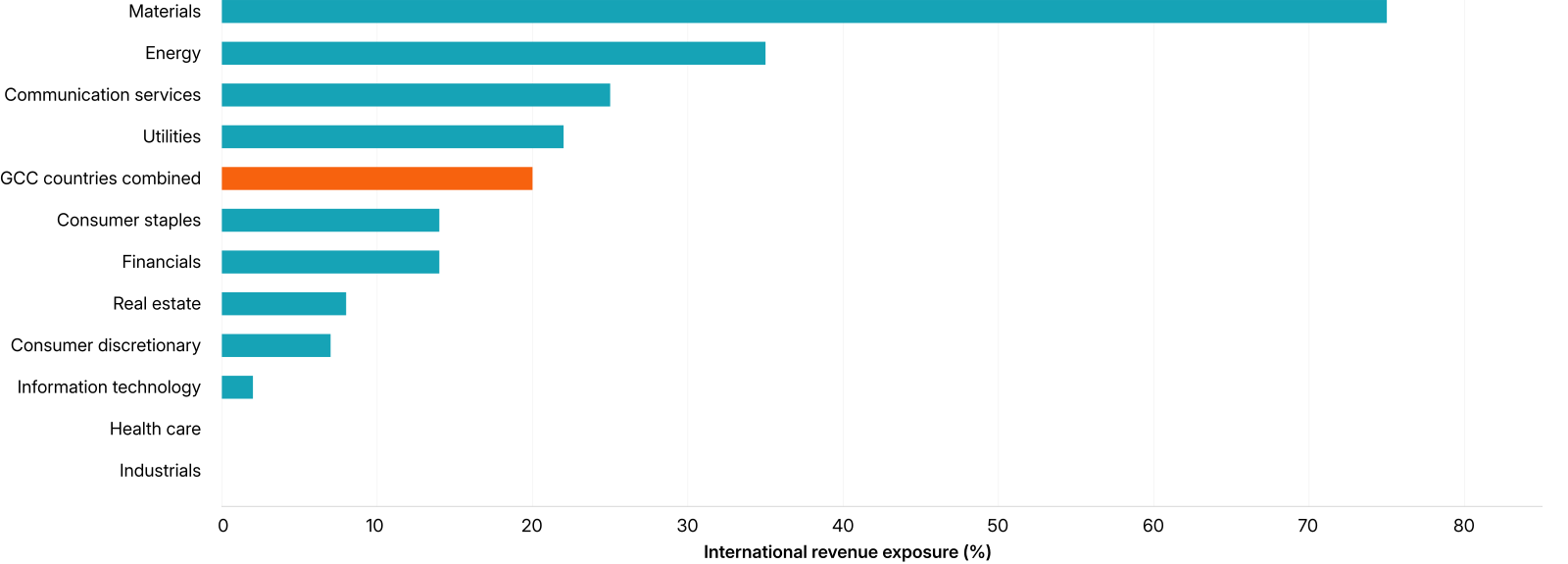
Based on MSCI Economic Exposure data. Showing international revenue sources by GICS sector for constituents of the MSCI GCC Countries Combined Index, as of Feb. 27, 2026.
During the first weeks of the Russia-Ukraine war — a distant supply shock — rising oil prices translated into higher fiscal revenue and stronger equity markets across all six GCC countries. This time, with GCC infrastructure under direct threat, the usual link between oil and equities has broken down for all six markets, turning negative for four of them. Saudi Arabia and Oman proved more resilient, potentially because Saudi Arabia can reroute crude via its East-West Pipeline to the Red Sea, while Oman's ports sit outside the Strait of Hormuz.
Though not as extreme, credit markets reflect this divergence as well. Oil co-movement with Middle East financials spreads weakened but remained positive. Energy credit barely moved, consistent with the resilience of the energy sector in equities.
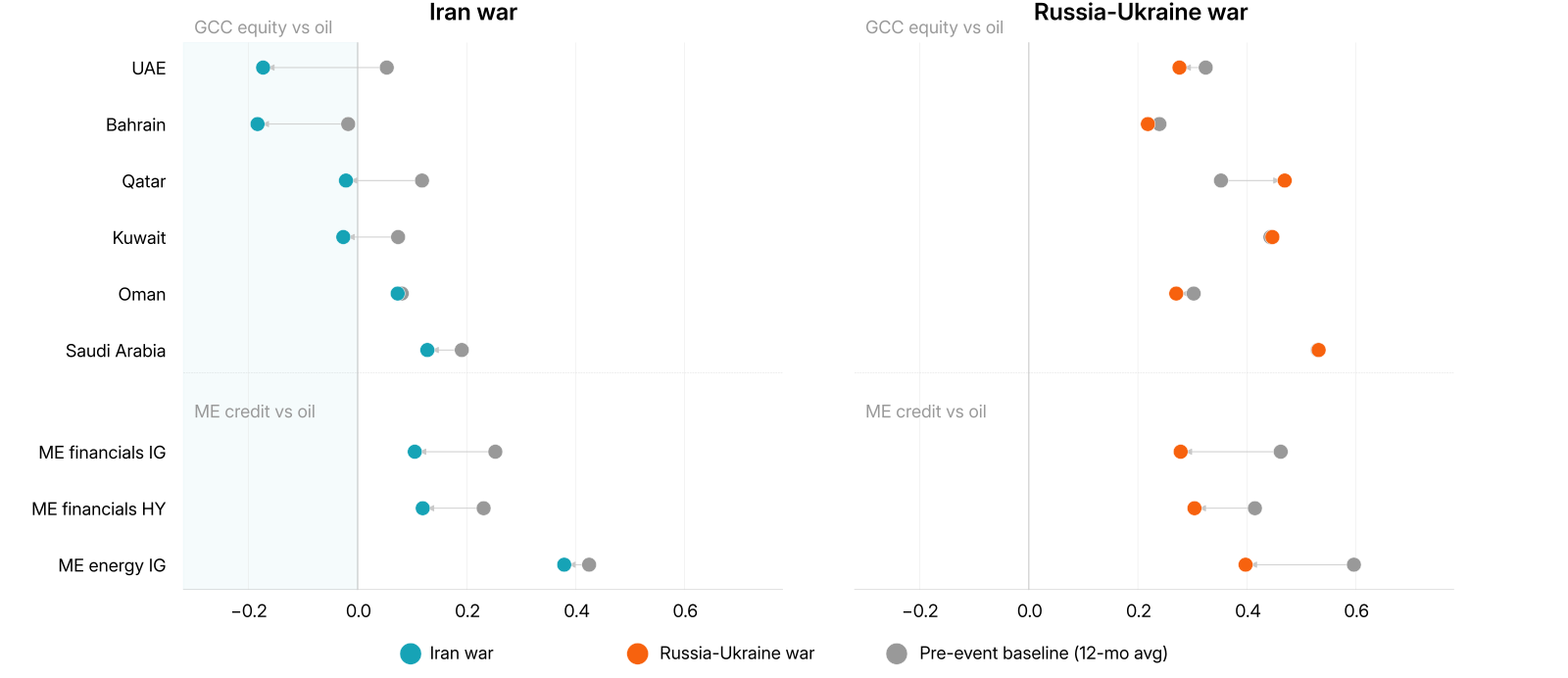
Correlation of GCC equity country factors and EM Middle East credit factors with crude oil. Baseline is the 12-month pre-event average; event-end is three weeks after the start of the war. A positive correlation reflects co-movement of asset prices. Correlation is estimated with a 30-day half-life for volatility and one year for correlation. (The capability to adjust half-lives for factor covariance estimation will be made available to MSCI clients on BarraOne later this year.)
In the current conflict, momentum has reversed to -1.1%, the sharpest swing of any factor group related to GCC equities. Value, risk appetite and quality also turned negative. Defensive/income is the only factor group that remained positive, suggesting that high-dividend, liquid names offered a degree of resilience even as the broader market sold off.2 The contrast with the Russia-Ukraine war is stark. During that time, every style-factor group posted positive returns. The reversal confirms that the playbook from a distant supply shock did not transfer to a conflict in the region itself, and that investors positioned in GCC momentum strategies were directly exposed.
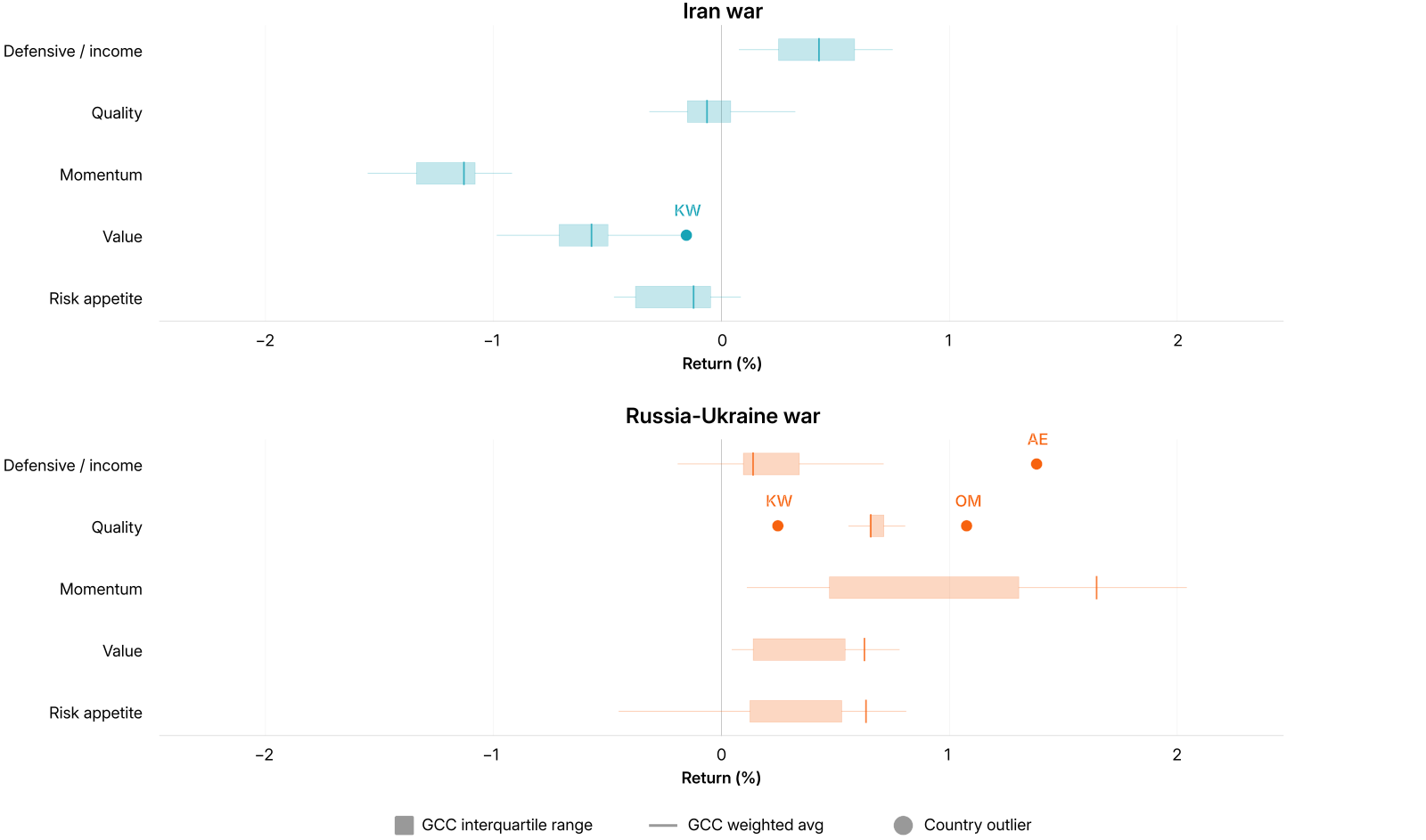
Thematic style-factor returns for the first three weeks after event onset. Box shows interquartile range across the six GCC countries. Factor returns are from the MSCI’s Barra® MAC Factor Risk Model, grouped into five thematic categories. Returns measured between Feb. 23 and March 16, 2022, for the Russia-Ukraine war and between Feb. 27 and March 20, 2026, for the Iran war.
GCC private capital in drawdown funds totaled approximately USD 15 billion in assets — a small universe by global standards, representing roughly a tenth of Canada's and a thirtieth of the U.K.'s funds.3 About 80% sits in equity strategies, such as venture-capital, buyout and expansion-capital funds, with the remainder in corporate lending, infrastructure and real estate.
Notably, the sector composition is strikingly different from public markets. Where public GCC equity is dominated by financials at over 60%, private capital is more evenly spread across tech, industrials and financials, each between 20% and 25%. Of note, tech and industrials are also among the sectors that sold off most sharply in public markets. Private portfolio valuations adjust with a lag, but the underlying exposure is there. The question is how much of that exposure has already translated into risk.
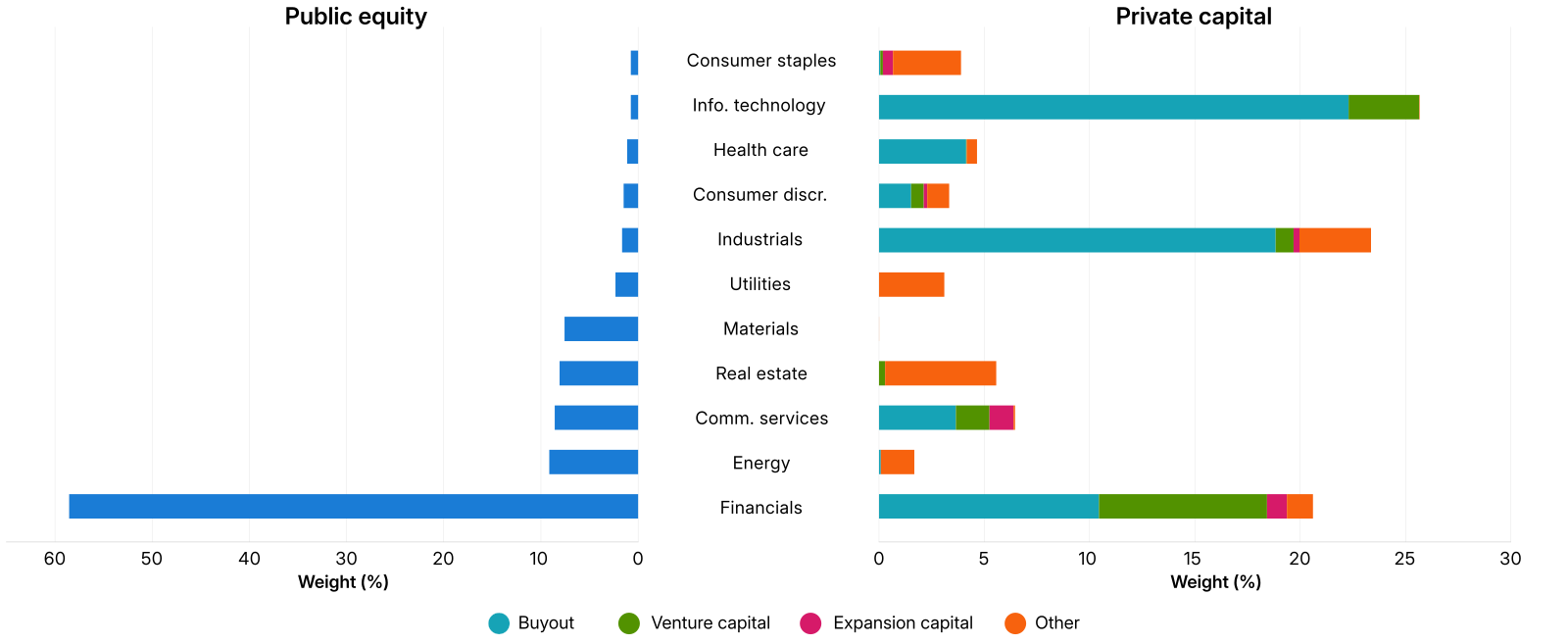
Left: The MSCI GCC Countries Combined Index sector weights based on GICS classification (as of Feb. 27, 2026). Right: GCC private capital by GICS sector and fund asset class. "Other" includes corporate lending, infrastructure, real estate funds and asset-backed lending. As of Sept. 30, 2025
Using the MSCI Private Equity Model’s proxy framework, we constructed a public-equity proxy weighted to match the sector composition of GCC buyout holdings — heavier on tech and industrials than the broad GCC index. We estimated that buyout systematic risk rose from 20.9% to 23.5% in the three weeks following the event onset.4 Roughly 45% of that sits in the pure private component, risk that is not observable in listed markets.
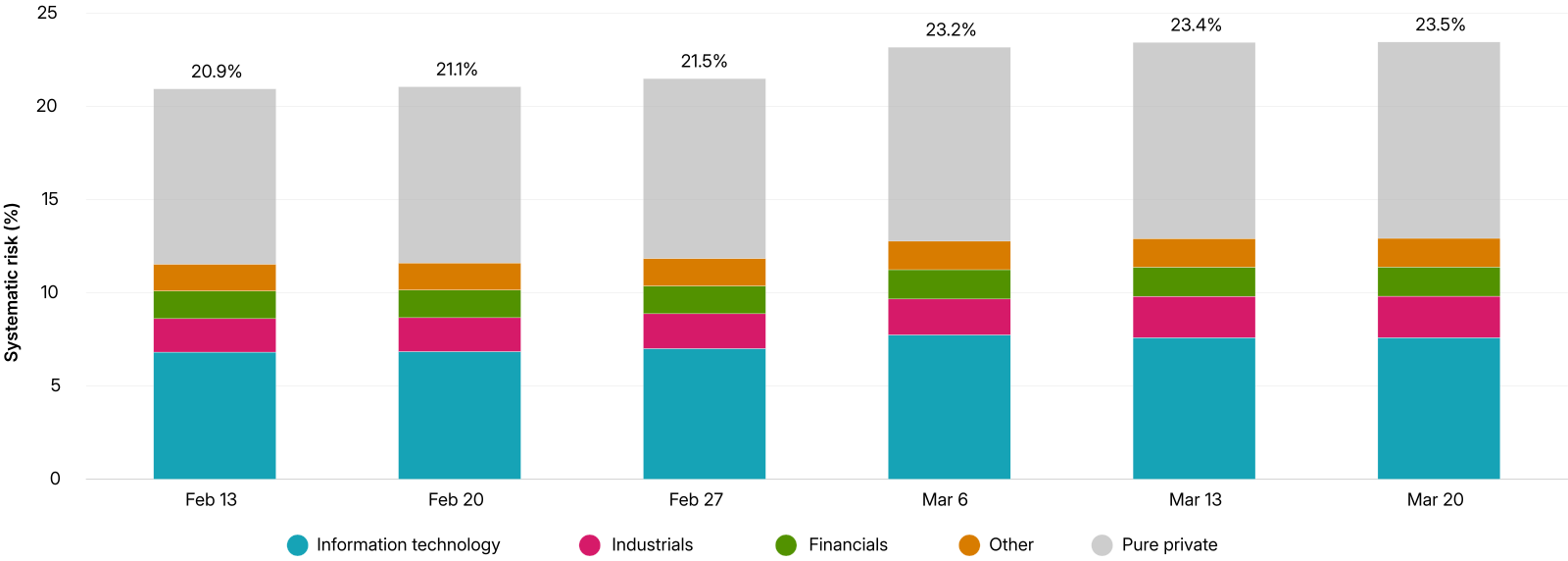
Decomposition of estimated buyout systematic risk into public-proxy sector contributions and pure private factor risk. Sector contributions from MSCI MAC risk model.
The conflict in the Middle East has triggered a shift in how oil, equities and credit interact across the GCC region. The core lesson is that proximity to conflict overrides the oil windfall. Correlations that held for years can invert in weeks, momentum strategies can reverse overnight and private portfolios built on a benign domestic outlook may be carrying more risk than their latest valuations suggest.
For investors, this means three things. First, domestic-revenue concentration, a feature of GCC markets, can now be seen as a first-order risk factor. Second, hedging relationships built on the assumption that oil and GCC assets move together need stress-testing against a scenario where that relationship inverts. Third, private portfolios tilted toward tech and industrials are in the path of the public-market repricing, even if their valuations have not yet moved.
The situation remains fluid, and investors with regional exposure would be wise to reassess hedging relationships and allocation assumptions as the situation develops.
The authors thank Will Baker, Sameer Bhatt, Hamed Faquiryan, Hassan Hmedi, Anil Rao and Patrick Warren for their contributions.



Subscribe todayto have insights delivered to your inbox.
A Multi-Asset Playbook for Geopolitical Shocks and Oil Supply Disruption
We examine how asset classes have performed across geopolitical conflicts linked to oil supply disruption — and what the latest escalation in Iran may mean for multi-asset investors.
Scenario Analysis: Middle East War, Oil and the Stagflation Threat
The U.S. and Israel-Iran war raises questions for global multi-asset-class investors about the global economy, with oil at the center. What could happen to markets?
1 The 23 events include the Saudi-led intervention in Yemen (2015), the Gulf of Oman tanker attacks (2019) and the Abqaiq-Khurais drone strike on Saudi Aramco (2019). The Gulf of Oman episode — the closest Strait of Hormuz precedent — saw oil spike 13% but revert within weeks as the strait remained open. The current conflict's oil move, around 45% higher after three weeks, exceeds all historical precedents including Russia-Ukraine.
2 We aggregated individual Barra MAC style factors as follows: defensive/income (dividend yield, liquidity), quality (earnings quality, profitability, investment quality), momentum (momentum), value (book-to-price, earnings yield) and risk appetite (beta, leverage, residual volatility, mid capitalization).
3 As of Sept. 30, 2025.
4 Risk here refers to the annualized volatility of the estimated "true" underlying return — the hypothetical return if positions were marked to market in orderly transactions, rather than carried at smoothed or par valuations. The MSCI Private Equity Model estimates this true return by applying Bayesian de-smoothing to observed private-equity performance. We used the MSCI's PEQ2 proxy approach with Europe Large Buyouts parameters.
The content of this page is for informational purposes only and is intended for institutional professionals with the analytical resources and tools necessary to interpret any performance information. Nothing herein is intended to recommend any product, tool or service. For all references to laws, rules or regulations, please note that the information is provided “as is” and does not constitute legal advice or any binding interpretation. Any approach to comply with regulatory or policy initiatives should be discussed with your own legal counsel and/or the relevant competent authority, as needed.