
A Multi-Asset Playbook for Geopolitical Shocks and Oil Supply Disruption
- Since 2006, geopolitical shocks typically caused losses that faded within a month. When conflict triggered sustained oil supply disruption — as in Russia-Ukraine — damage spread across asset classes and lasted far longer.
- Emerging markets have so far borne a disproportionate burden vs. the U.S. across both equities and fixed income. The U.S. has shown relative resilience as a net energy exporter with weaker economic ties to the Middle East.
- Multi-asset investors may not be able to rely on bonds as a geopolitical hedge. Since 2022, gold and the U.S. dollar have proven more reliable diversifiers.
The onset of the U.S. and Israeli strikes on Iran has sent shockwaves through global markets with oil prices spiking and risk assets selling off. For investors the critical question is not just how bad the initial impact is but how long it will last and whether the geopolitical shock spills over into the broader macroeconomic environment.
Using MSCI Multi-Asset Class (MAC) Indexes, we analyze cross-asset performance across five geopolitical shocks linked to oil supply disruption: Four Middle East events and the Russia-Ukraine war, which offers a starkly different lesson about when geopolitical risk becomes a macro shock. We then use oil sensitivity data to drill down into equity and fixed-income allocations, identifying the most exposed regions and sectors.
We examined five events: the Second Lebanon War (2006), NATO intervention in Libya (2011), the start of the Russia-Ukraine war (2022), the conflict in Gaza (2023) and the recent strikes on Iran (2026-). At the one-day and five-day horizons, the pattern across Middle East events is consistent. Equities sell off, particularly in emerging markets (EM) and developed markets (DM) outside the U.S. (World ex-USA), while the U.S. holds its ground.1 By one month, most of the damage dissipates.
The Russia-Ukraine war initially followed the same pattern, but coinciding with a period of high inflation, it led to a sustained energy shock that kept inflation high, prompting the most aggressive central bank tightening cycle in decades.
This distinction matters in the current conflict as investors watch for a sustained supply disruption, particularly through the Strait of Hormuz, that could shift the macro trajectory.
Gross returns in USD showing how geopolitical shocks have historically affected MSCI MAC Indexes including the MSCI Gold Futures, MSCI ACWI ex US Currency, MSCI Developed Markets Government Bond, MSCI USA Government Bond, MSCI USD Emerging Markets Sovereign Bond, MSCI USD Emerging Markets Corporate Bond, MSCI USD IG Corporate Bond, MSCI USD HY Corporate Bond, MSCI World ex USA IMI, MSCI Emerging Markets IMI, MSCI USA IMI and MSCI Global Digital Assets Indexes. Industrial metals is an equal weighted basket of MSCI Copper Futures, MSCI Aluminum Futures, MSCI Nickel Futures, MSCI Lead Futures and MSCI Zinc Futures Indexes. We have used 1-month constant-maturity commodity future prices for Brent crude oil and silver.
The analysis above shows that geopolitical shocks and associated oil supply disruptions hit EM and World ex-USA hardest while the U.S. remains relatively less impacted. To understand why, we looked at how oil price sensitivity is distributed across regions using the MSCI FactorLab oil sensitivity factor.
The U.S. had mildly positive exposure, reflecting its status as a net energy producer. World ex-USA had the most negative sensitivity, driven largely by Europe where the loss of cheap Russian energy has left the industrial base structurally more exposed to oil price shocks. EM is also negatively exposed, pulled down by large energy importers like India.
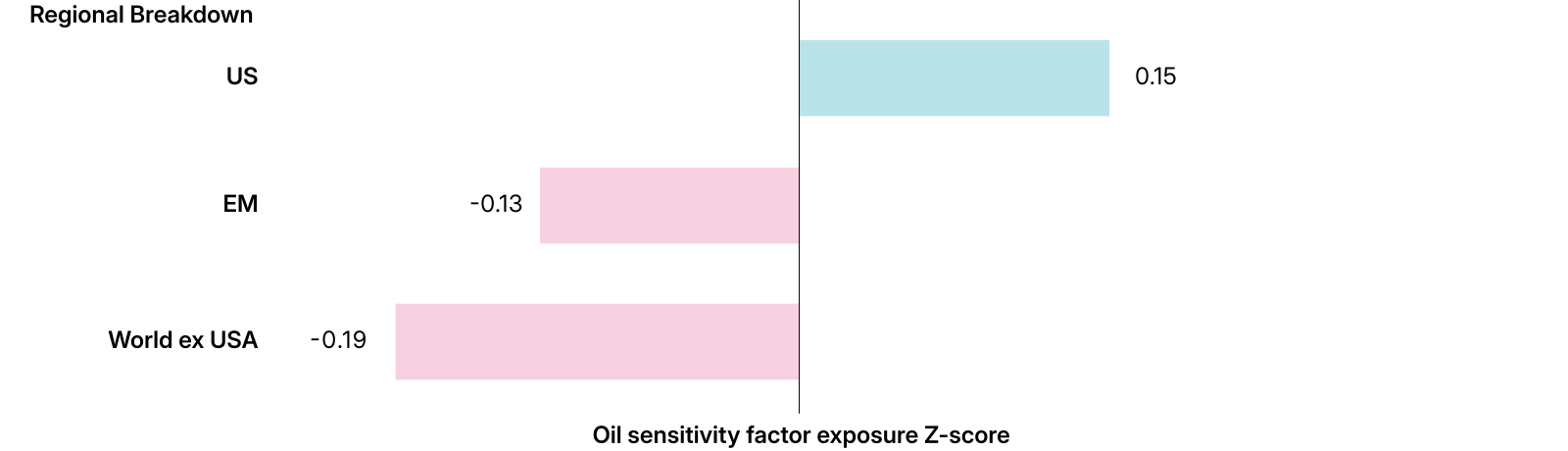
Average exposure of Oil Sensitivity factor in MSCI FactorLab by region from March 2, 2026, to March 6, 2026. Oil Sensitivity is computed as the sensitivity of asset CAPM residual returns to crude oil spot price returns using the historical beta methodology.
At the sector level, energy had the highest positive sensitivity across all three regions, as expected. Materials were also positive in EM and World ex-USA, reflecting the commodity-heavy composition of these markets.
The early market reaction shows a clear flight to safety since the onset of the war. Defensive sectors (energy, consumer staples, health care and utilities) outperformed cyclical sectors in international equity markets. In the U.S., defensive sectors underperformed cyclical counterparts, which is consistent with the U.S. being less vulnerable to the geopolitical shock given its net energy-exporter status mentioned above and weaker revenue linkages to the Middle East.
Energy had the highest active returns across all three regions, benefiting directly from the oil price spike. In EM, all four defensive sectors (as proxied by MSCI sector indexes) outperformed the parent index, consistent with the region's greater vulnerability to oil-linked geopolitical shocks.
Sector active returns (%) vs. respective parent index, Feb. 27 to March 6, 2026. Gross returns in USD. Active return is the difference between sector return and parent index return over the period. Sectors are classified as cyclical or defensive based on the MSCI Cyclical and Defensive Sectors Index methodology.
Minimum volatility was the only factor to outperform across all three regions, reflecting a broad rotation into lower-risk exposures. In World ex-USA and EM many defensive factors posted positive active returns, with high dividend yield and quality also holding up. Momentum and enhanced value were the worst performers everywhere, consistent with the unwinding of crowded trades and a repricing of risk-sensitive exposures in the immediate aftermath of the conflict. We observed a similar flight to defensive factors during the early days of the Russia-Ukraine war.
The Russia-Ukraine war offers an instructive comparison for the bond yield response to the current conflict. In both episodes USD EM yields rose sharply and immediately, reflecting the credit pressure that oil shocks place on energy-importing EM borrowers. In the current conflict, yields have risen by around 20-25 basis points (bps) within five trading days across most regions.
Cumulative change in government bond yields (bps) from the trading day prior to each event. USD EM represents the yield on the MSCI Emerging Markets Sovereign Bond Index. Day 1 is the first trading day after the event.
During the days following the onset of the Russia-Ukraine war, DM yields initially fell in a classic flight-to-safety move, with France and Germany dropping 20-30 bps in the first week. But as the oil shock fed into inflation expectations, DM yields reversed course and by the end of the first month every major developed market was higher. The current conflict has skipped the flight-to-safety phase entirely, with DM yields rising from the beginning alongside EM. The U.K. has been the worst affected in DM in both episodes, consistent with its sensitivity to global commodity price shocks. Japan remained the outlier, with yields broadly stable in both conflicts, reflecting the Bank of Japan's distinct policy environment.
The bond market response also highlights a potential loss of diversification benefit. The traditional equity-bond hedge has weakened significantly since 2022, which means this yield move may not be providing the portfolio offset that investors have historically relied on.
As a result, gold and the USD may become more critical as diversifiers. Gold posted positive returns on the first trading day of every conflict we studied. As of March 6, 2026, its ex-ante correlation with equities remains low, offering portfolio diversification, while its relationship with bonds has changed significantly since the Russia-Ukraine war started. In March 2022, gold's correlation with DM government bonds was 0.44, nearly double the current level.
During the period of the Russia-Ukraine war we analyzed, U.S. equities had a -0.19 correlation with U.S. government bonds, meaning bonds were actively offsetting equity losses. Today that correlation is near zero which means the traditional equity-bond offset could be largely absent. This weakening is even more pronounced outside the U.S., where equity-bond correlations are significantly higher.
At the same time, the MSCI ACWI ex-US Currency Index generally declined in every conflict while the dollar strengthened, making dollar-denominated assets and gold the more reliable diversifiers.
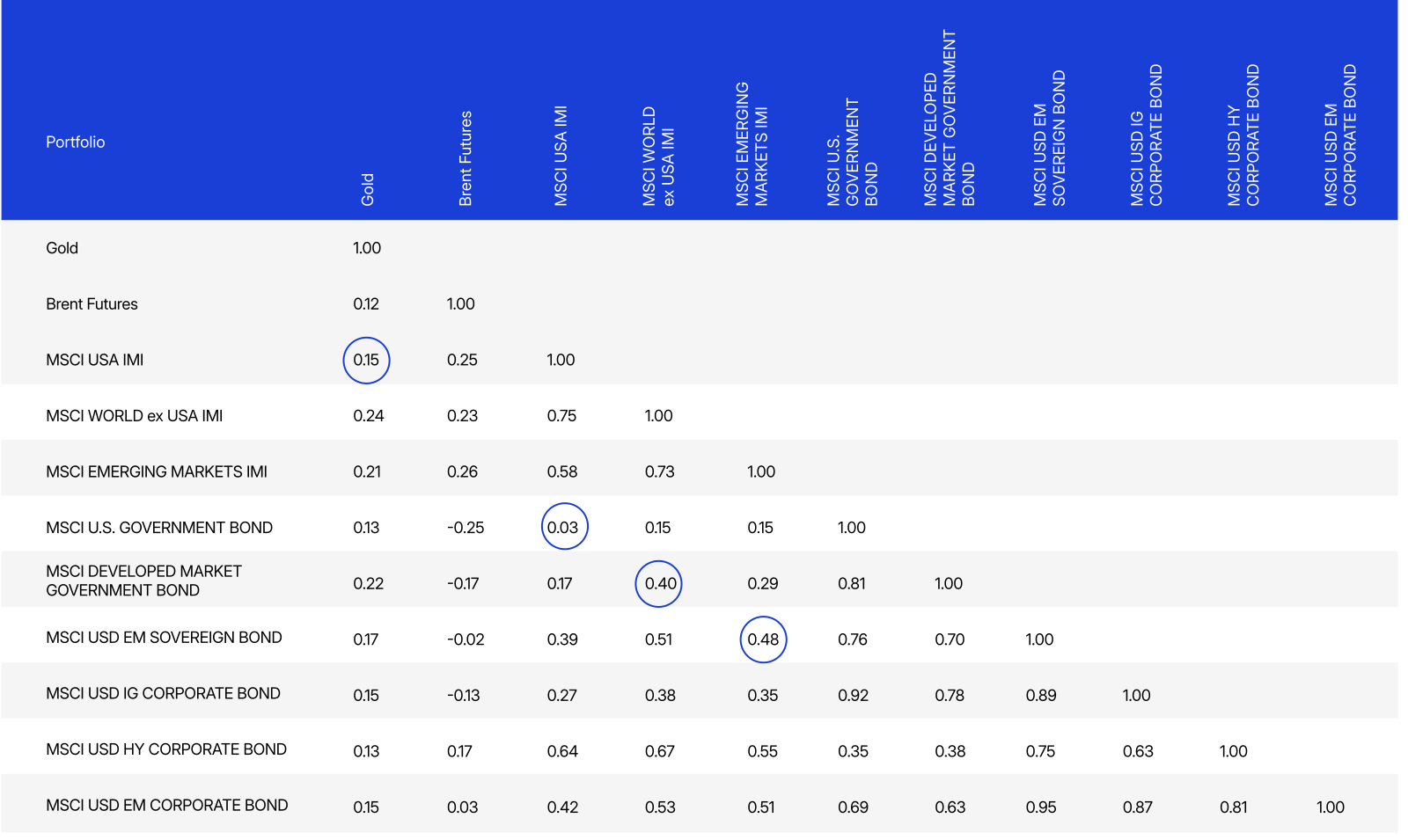
Data as of March 6, 2026.
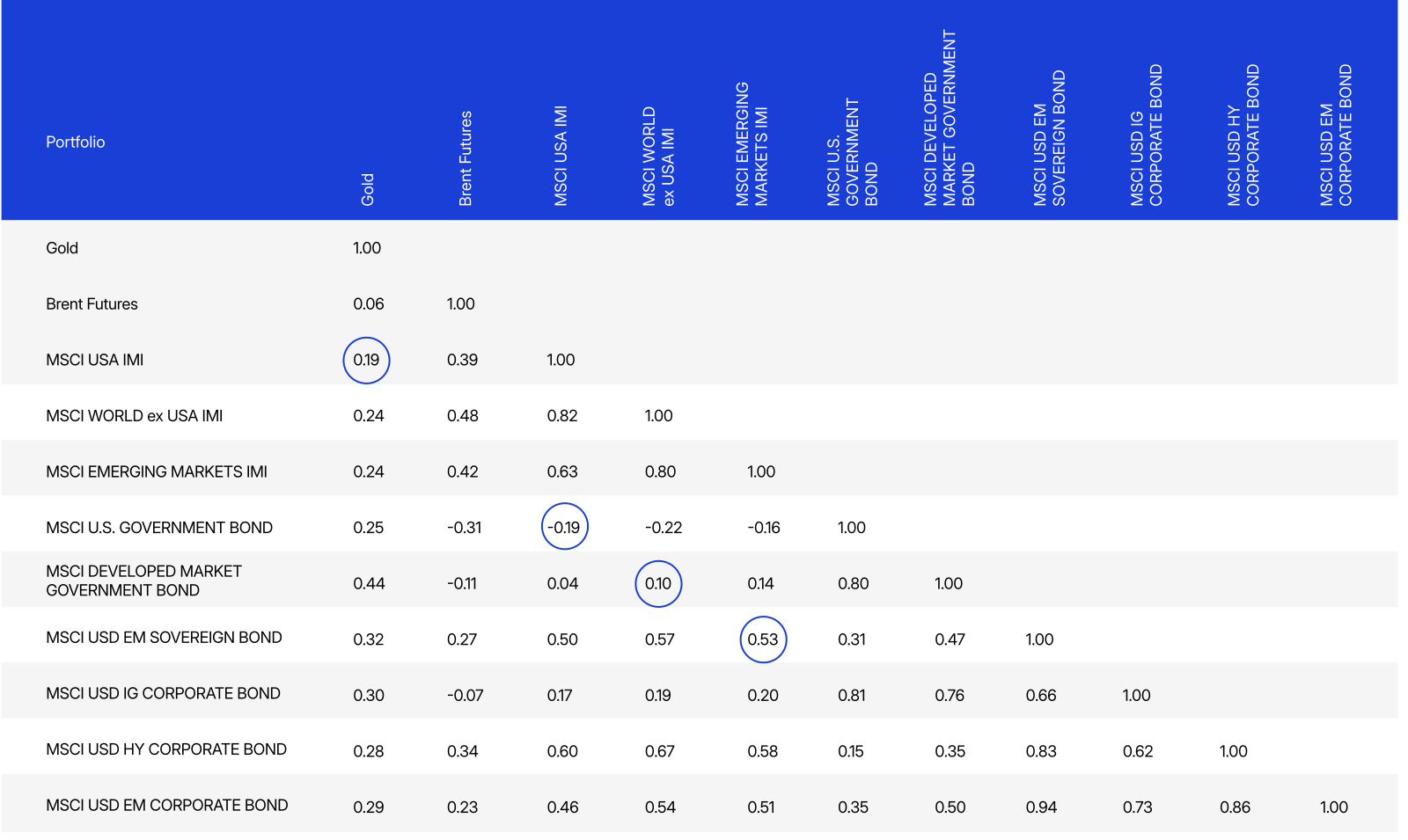
Data as of March 3, 2022.
Tables show the ex-ante correlations estimated using MSCI Multi-Asset Class Short-horizon model (MAC.S) as of the dates shown.
So far, the war in Iran fits the familiar short-term template of geopolitical shocks and associated oil supply disruption and price volatility. But the Russia-Ukraine war precedent reminds us that the real risk for multi-asset portfolios may not be the initial sell-off, but rather whether the conflict escalates into a sustained supply disruption that alters the macro landscape.
The critical issue this time is the Strait of Hormuz. A sustained closure would affect roughly 20% of global oil supply and a far larger share of Asian energy imports. That kind of disruption would likely push inflation higher and constrain central bank flexibility, based on our scenario analysis. If the conflict remains contained, history suggests the short-term damage will fade. If it escalates, the Russia-Ukraine war playbook may apply. In that instance, bonds did not hedge equity losses, EM faced a bigger burden and traditional diversification offered less protection than investors expect.


Subscribe todayto have insights delivered to your inbox.
Scenario Analysis: Middle East War, Oil and the Stagflation Threat
The U.S. and Israel-Iran war raises questions for global multi-asset-class investors about the global economy, with oil at the center. What could happen to markets?
The Russia-Ukraine War and the Markets: One Year Later
While the direct market impact of Russia’s invasion has lessened over time, there have been longer lasting effects that have exacerbated investor concerns around inflation, rising rates and central bank actions around the globe. We examine the issue through a multi-asset-class lens.
Multi-Asset Class Factor Model
An asset allocation model that informs systematic strategies with consistency across asset classes and enables you to identify key risk and return drivers.
1 EM refers to MSCI Emerging Markets Investable Market Index (IMI), World ex USA refers to MSCI World ex USA IMI and U.S. refers to MSCI USA IMI.
The content of this page is for informational purposes only and is intended for institutional professionals with the analytical resources and tools necessary to interpret any performance information. Nothing herein is intended to recommend any product, tool or service. For all references to laws, rules or regulations, please note that the information is provided “as is” and does not constitute legal advice or any binding interpretation. Any approach to comply with regulatory or policy initiatives should be discussed with your own legal counsel and/or the relevant competent authority, as needed.