
Iran War Exposed Distinctions for Importing Oil vs. Gas
- Oil and gas price shocks hit the economy through different channels. Lumping them together as “energy exposure” obscures which industries are actually affected.
- Unsurprisingly, the most energy-intensive industries face the largest cost impact. But whether they can respond depends on what alternatives exist.
- Energy-security exposure and climate-policy pressure are independent forces. Asset owners and managers evaluating energy-cost risk in their portfolios may need both dimensions to identify what will drive company behavior.
The Strait of Hormuz crisis, which disrupted roughly 20% of global seaborne trade in oil and liquefied natural gas (LNG), led to rationing, shortened work weeks and soaring oil prices.1 The supply-chain dependencies it exposed are structural. Oil and LNG transmit cost shocks through largely independent channels and hit different parts of the economy in different ways.2 Oil exposure primarily drives transport costs. Gas exposure primarily drives electricity prices. Either can have a relationship with household heating and cooking costs, depending on the region.
The distinction matters for investors because the transmission mechanisms are different. Simply screening for “energy exposure” without distinguishing between oil and gas channels misses this distinction, and any resulting knock-on effects.
A spike in oil prices compresses airline and shipping margins. A spike in gas prices raises electricity costs for every grid-connected manufacturer. The impact varies by regional source: During the beginning of the Hormuz closure, European benchmark (TTF) prices rose roughly 30%3 while U.S. benchmark prices at Henry Hub remained flat.
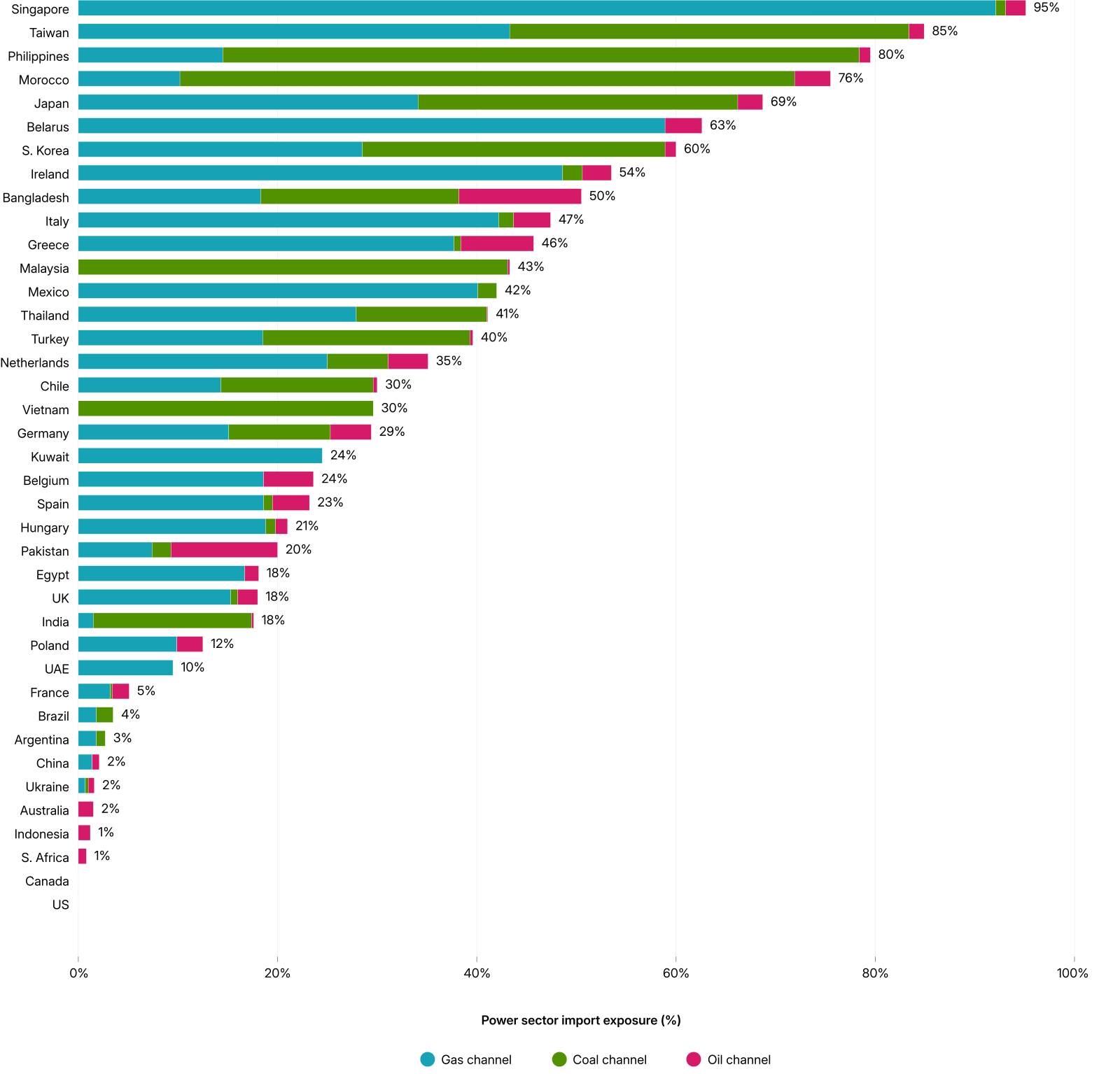
Data as of March 2026. Power-sector imports = sum of (fuel share of electricity generation x fuel import dependency) across gas, coal and oil using simple balances: consumption minus production per fuel. The gas channel is the surface most exposed to LNG price shocks. The coal channel is activated by tightening in the seaborne coal market. Countries sorted by total exposure. Source: MSCI Research, 2025 Energy Institute Statistical Review of World Energy and Ember
A natural assumption is that markets with the highest import dependency also face the most climate-policy pressure. The data shows otherwise: For example, the correlation between MSCI’s transition-policy pressure measure and oil-import dependency was only 0.42 across 69 of the largest energy-consuming countries.4 Between policy pressure and gas-grid exposure, it was 0.13.
This creates a useful two-dimensional map, shown below. Countries like Taiwan, Japan and South Korea sit in the upper right quadrant: high exposure on both oil and gas axes, with strong policy pressure to incentivize a transition toward cleaner energy as well. India, Pakistan and South Africa import nearly all of their oil but run insulated, domestic-fueled grids with low policy pressure. Exporters such as the U.S., Canada and Brazil are largely insulated from both channels.
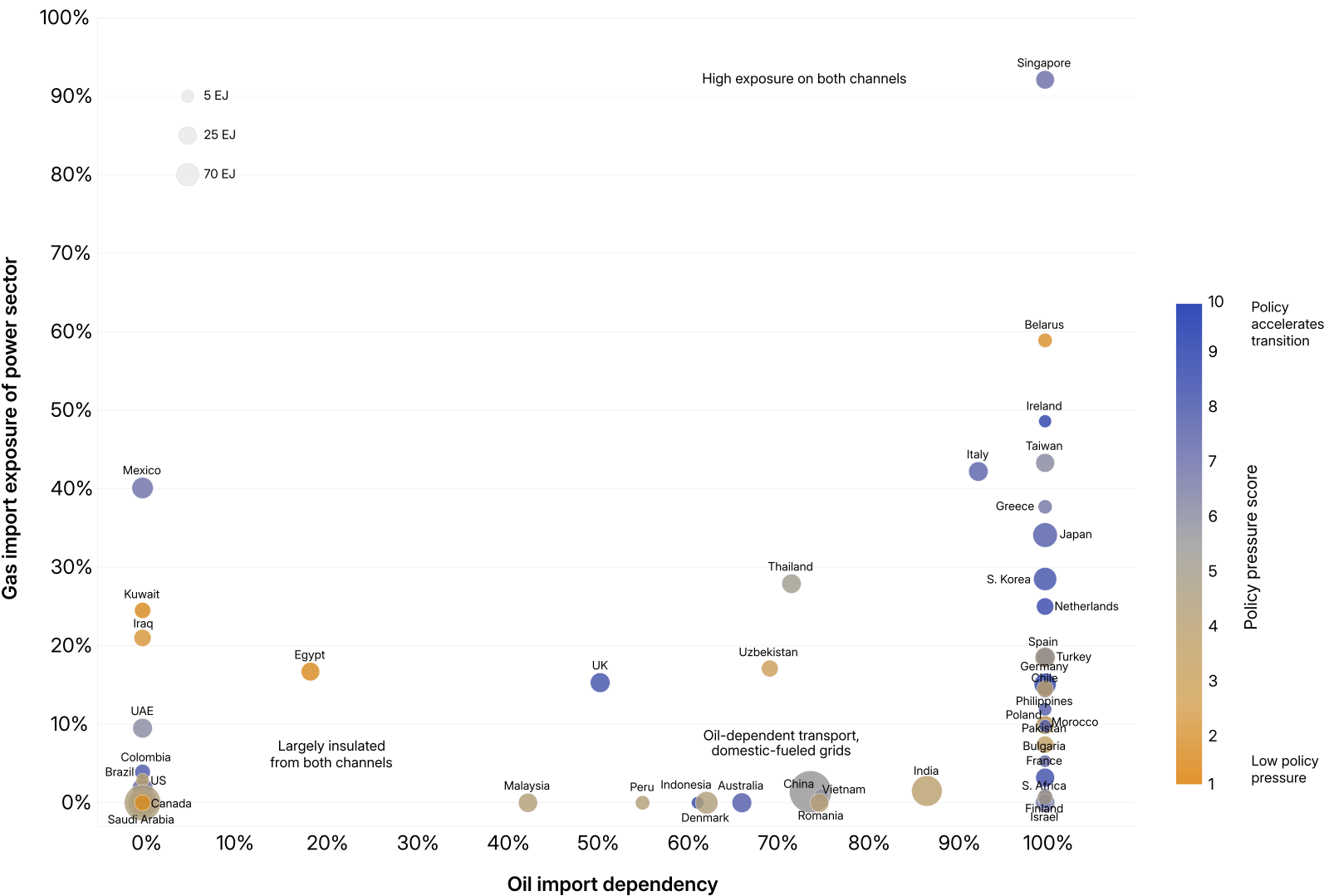
Data as of March 2026. Bubble size is relative to total fossil-energy consumption in exajoules (EJ), and the countries shown represent 96% of global energy consumption as of 2024. The diverging color encoding may be useful for distinguishing between markets where the transition is primarily policy-driven (blue) and those where economic incentives from high import costs may be the more important driver (gold). Source: MSCI Research, 2025 Energy Institute Statistical Review of World Energy and Ember
For investors, the intersection matters: Where both energy-security exposure and policy pressure are highest, the structural incentive to transition is strongest.
Country-level exposure transmits to companies through direct fuel costs and electricity input costs. The industries most affected, unsurprisingly, are those with the highest energy intensity — i.e., median energy consumed per unit of revenue.5
The most energy-intensive industries — including independent power producers, electric utilities, steel, commodity chemicals, aluminum, construction materials and airlines — face the largest cost impact. But whether they can respond depends on what alternatives exist.
To showcase this, in mid-March 2026, a U.S. chemical plant was paying roughly USD 3/MMBtu for natural gas at Henry Hub, while a comparable European plant faced approximately USD 17/MMBtu at TTF — a five-fold difference.6 In response, European chemical and steel manufacturers imposed natural-gas surcharges of up to 30%.7
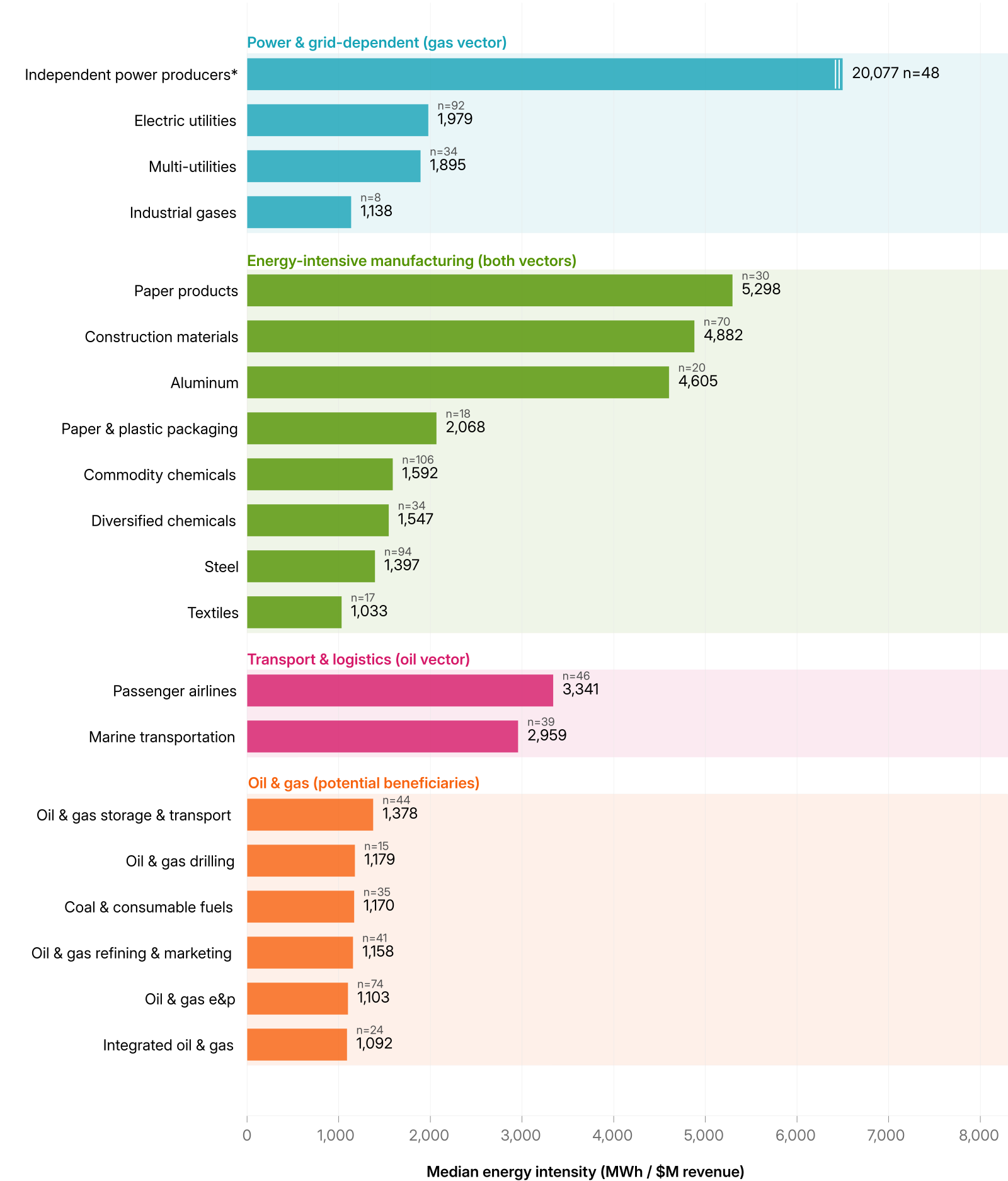
Data as of March 2026. Energy intensity measured as MWh/USD 1 million of revenue. Median energy intensity by GICS sub-Industry, grouped by exposure channel. *IPPs truncated (20,077 MWh/USD million).
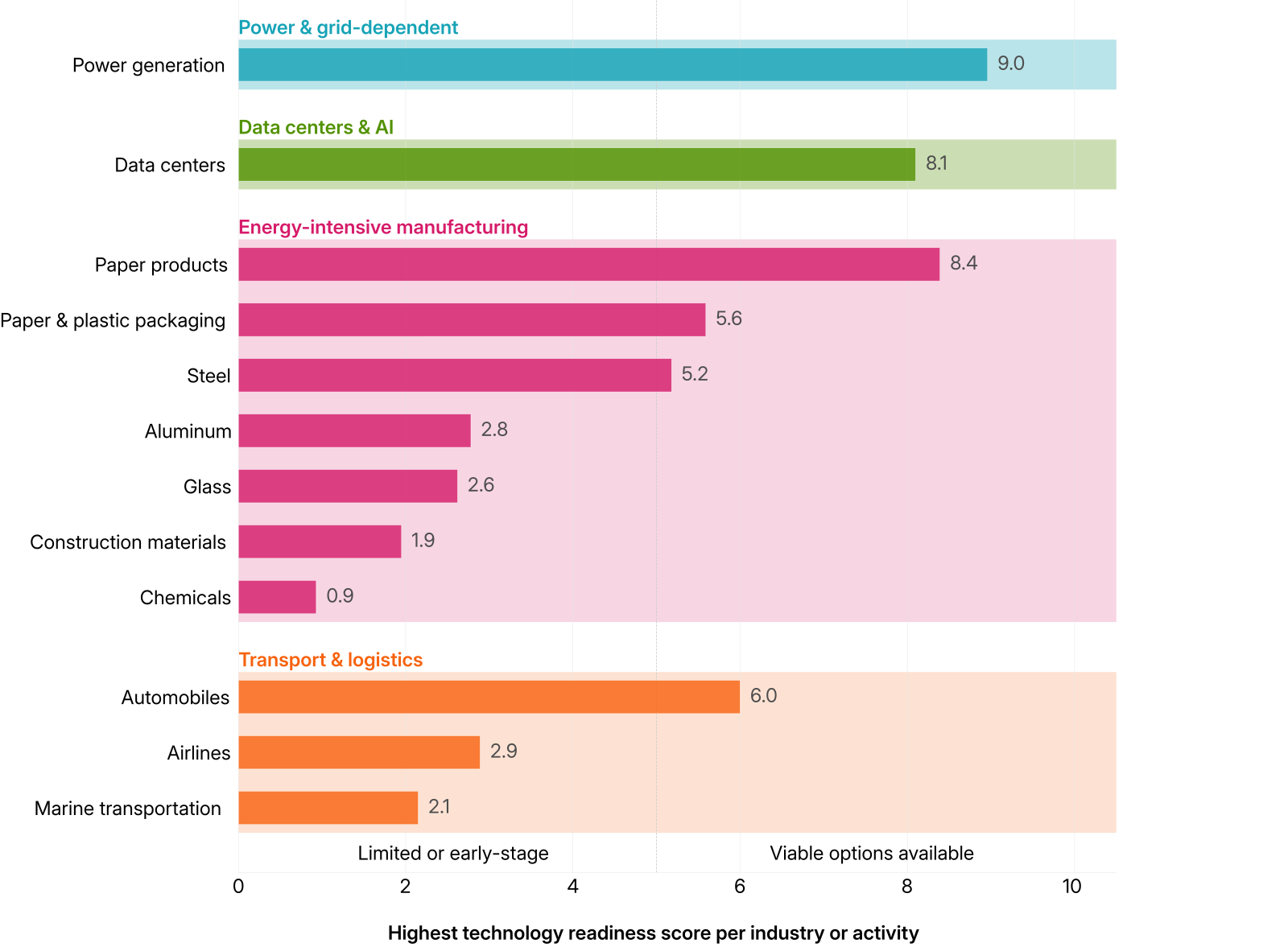
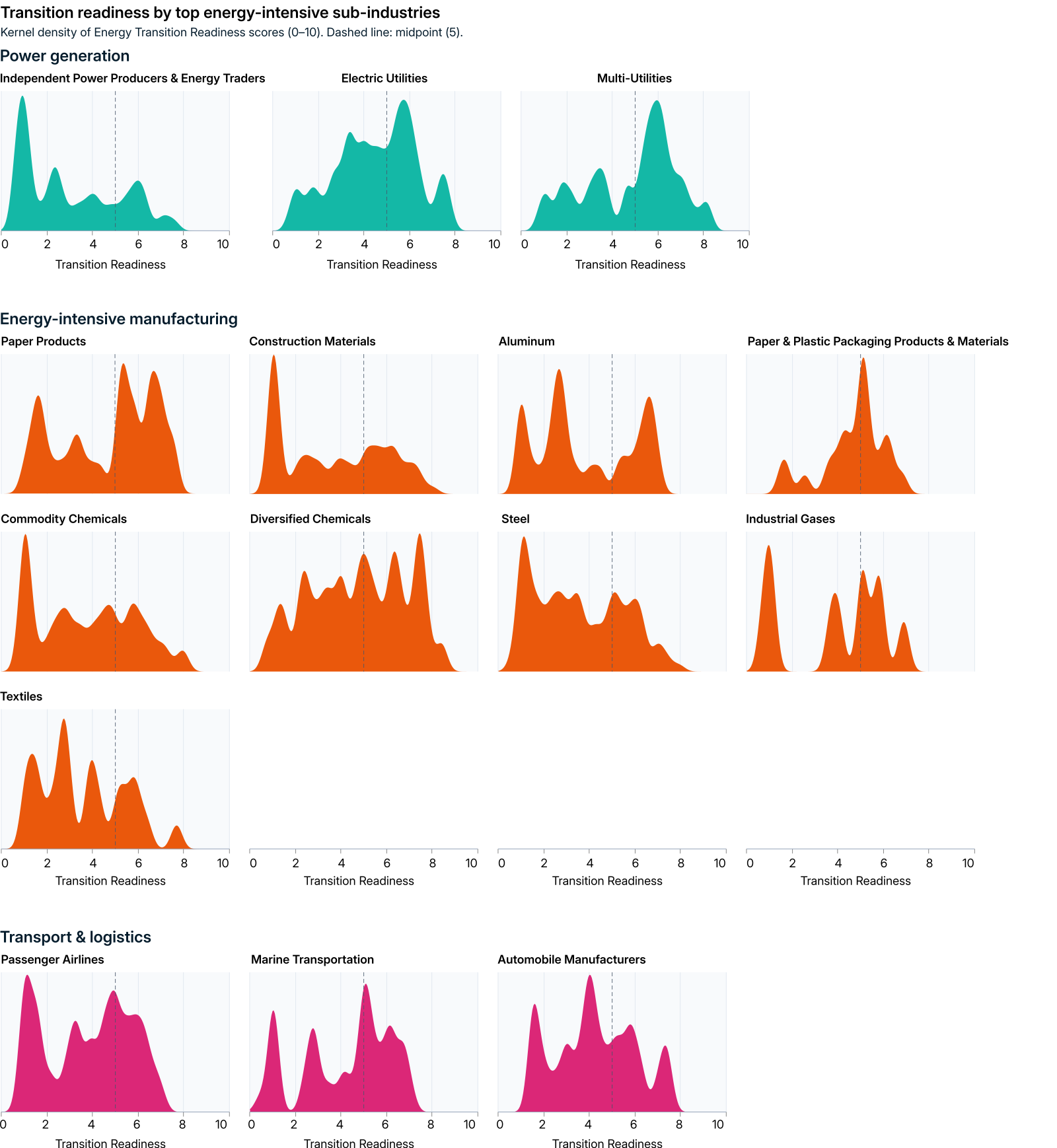
Data as of March 2026. MSCI energy-transition technology readiness scores are assessed for over 130 technologies across 22 industry contexts, as part of MSCI’s Energy Transition Framework. Each technology is scored on four dimensions: cost parity with incumbent processes, market development and deployment scale, resource and supply-chain readiness and decarbonization potential (the share of an activity’s emissions the technology can abate). The score shown for each industry is the highest-scoring individual technology available to that industry context, on a 0–10 scale where 10 indicates a commercially mature, cost-competitive technology with high abatement potential. Energy producers, comprising the oil and gas and coal and consumable sub-industries, are not shown.
Power generation, data centers and paper products have mature, cost-competitive alternatives. For these industries, sustained high import costs accelerate adoption. Chemicals, cement and aluminum largely do not. For them, the same costs compress margins with limited recourse.
The energy-import exposure gaps are structural. They won’t simply close when prices normalize. Countries that import most of their fuel face a persistent cost disadvantage. Industries without viable alternatives absorb those costs straight into margins.
Data as of April 28, 2026.
But as the distributions in transition readiness above show, the spread within every exposed industry is wide. Some companies are better prepared to manage those risks than others. That spread may matter as much as the exposure itself.

Subscribe todayto have insights delivered to your inbox.
Uncovering Supply-Chain Risks in the Iran War
The Iran war hit global markets unevenly. We map three hidden channels — revenue, operations and supply chains — revealing where conflict risk truly sits in equity portfolios.
Navigating Uncertainty: War in the Middle East
Timely analysis to aid decision-making in a rapidly changing environment.
1 “Amid regional conflict, the Strait of Hormuz remains critical oil chokepoint,” US Energy Information Administration, June 2025; “India rations LPG as Hormuz closure chokes supply.” Reuters, March 2026; “Pakistan orders schools closed, 4-day work week amid fuel crisis.” Associated Press, March 2026; US Energy Information Administration. Short Term Energy Outlook. April 2026.
2 MSCI Research review of energy production, consumption, electricity generation and trade flow data from the 2025 Energy Institute Statistical Review of World Energy. Oil import dependency and gas grid exposure calculations by MSCI.
3 “Short-Term Energy Outlook.” U.S. Energy Information Administration (EIA), March 10, 2026.
4 The energy transition policy pressure metric assess the expected pace of transition in a country by measuring the near- and long-term ambition of its emissions reduction targets, the strength of its fossil fuels subsidies and the prevalence of carbon pricing measures.
5 Energy intensity data (median MWh per USD 1 million of revenue) and company counts by per the Global Industry Classification Standard (GICS®) sub-industry from MSCI ESG Research. GICS is the industry-classification standard jointly developed by MSCI and S&P Dow Jones Indices.
6 Henry Hub spot price of approximately USD 3.05/MMBtu as of March 27, 2026 (US Energy Information Administration, Natural Gas Spot and Futures Prices). European TTF benchmark rose from approximately EUR 30/MWh in February 2026 to above EUR 50/MWh by mid-March (ICE Endex, Dutch TTF Gas Futures).
7 “Europe’s chemical makers brace for Iran war impact.” Chemical & Engineering News (C&EN), March 2026.
The content of this page is for informational purposes only and is intended for institutional professionals with the analytical resources and tools necessary to interpret any performance information. Nothing herein is intended to recommend any product, tool or service. For all references to laws, rules or regulations, please note that the information is provided “as is” and does not constitute legal advice or any binding interpretation. Any approach to comply with regulatory or policy initiatives should be discussed with your own legal counsel and/or the relevant competent authority, as needed.