
Long-End Yields Reprice Fiscal Risk as Gold Climbs
- Long-term government-bond yields in the U.S., Europe, Japan and the U.K. have surged to multiyear highs, driven by fiscal risk, issuance and term-premium repricing.
- Gold prices have climbed alongside rising yields, diverging from historical patterns, as global multi-asset-class investors seek protection against geopolitical risks and concerns over debt sustainability.
- The unusual co-movement of gold and long yields highlights regime-dependent correlations. Investors may wish to recalibrate hedges, reassess emerging-market funding and prepare for fiscal-driven shocks.
Long-term government-bond yields have jumped across major markets even though policy rates have come down. MSCI sovereign-bond indexes show that 10-year-plus yields in the U.S., France and Germany have revisited multiyear highs, while the U.K.’s and Japan’s long bonds set a record (as shown in the chart below). At the same time, the gold index rose to new highs. The pattern points to a market narrative driven less by policy-rate guidance and more by fiscal arithmetic, issuance and term-premium repricing.
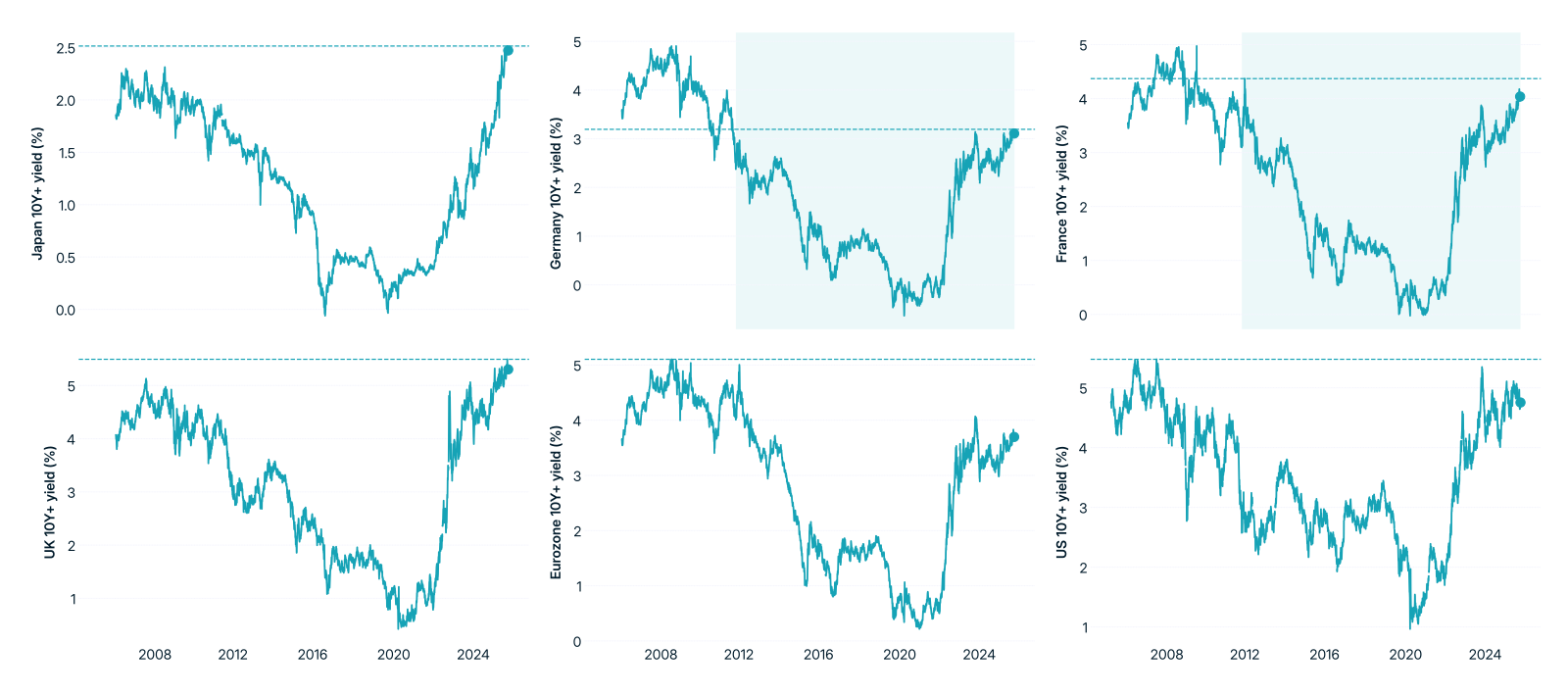
Data from March 1, 2005, to Sept. 25, 2025, based on MSCI Sovereign Bond 10Y+ Indexes’ yield-to-maturity.
The usual cycle playbook — cuts in the policy rate followed by falling market yields — hasn’t held. Recent moves have clustered at the back end of yield curves, as investors demand extra compensation for fiscal risk and inflation uncertainty. Budget seasons in Europe, ongoing debates around U.S. fiscal paths and elevated gross issuance have all coincided with this rise. As shown in the chart above, 10-year-plus yields in the U.S. approached levels last seen in 2008, while Germany and France revisited multiyear highs.1 Japan and the U.K. stand out, as their 10-year-plus yields have risen many times over from pre-2019 levels.
Historically, higher yields have pressured gold prices. Monthly scatter (gold futures’ returns vs. changes in U.S. sovereign bonds’ yield to maturity) shows a negative sensitivity of −5% gold return for each 1-percentage-point rise in yields (as shown in the chart below). Yet in this market environment, gold has gone up with rising long rates. That co-movement is consistent with demand for protection against geopolitical risk and concerns about debt sustainability that can lift both term premia and the appeal of nonyielding stores of value.
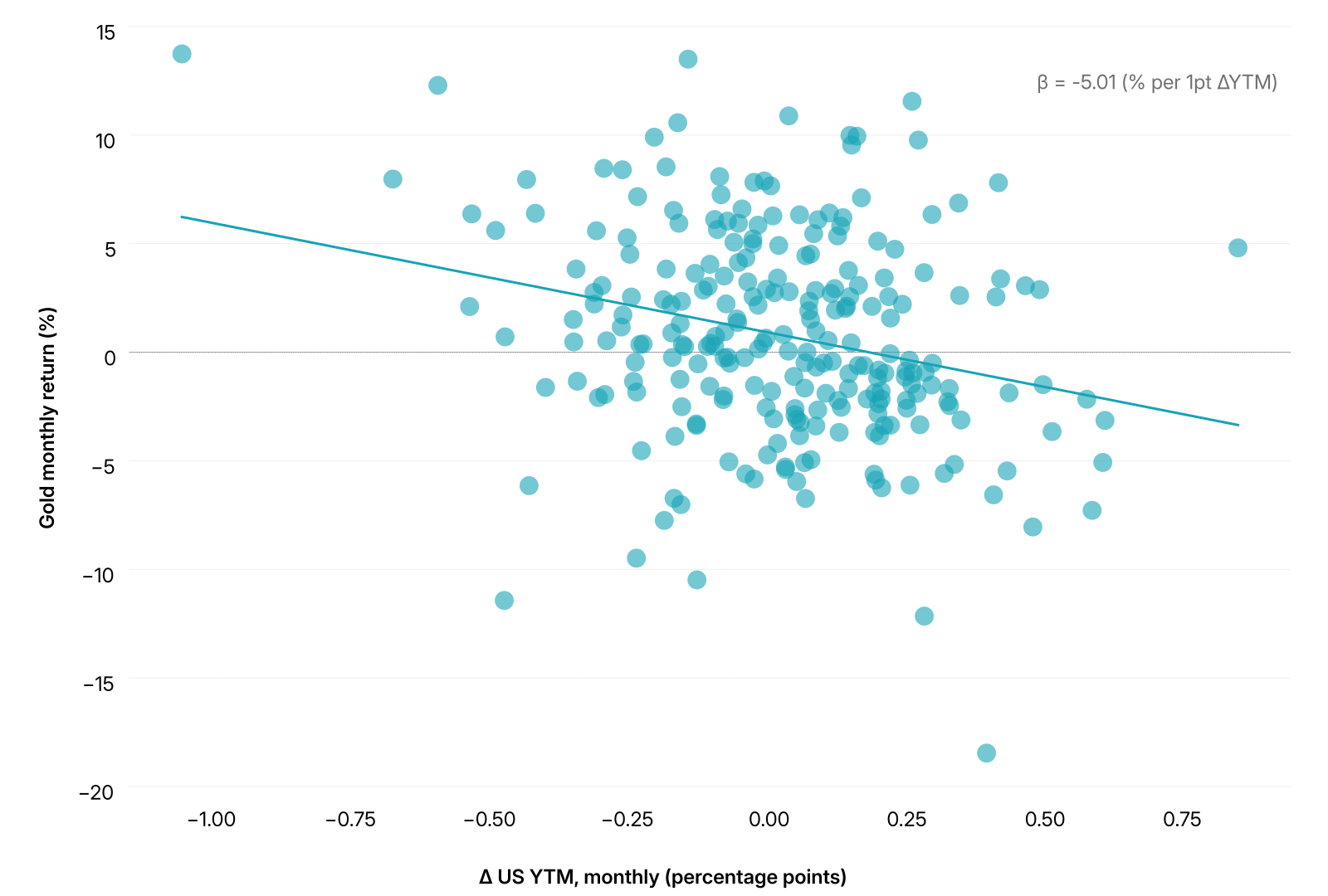
Data from March 1, 2005, to Sept. 25, 2025, based on MSCI Gold Futures Index returns and MSCI US Government Bond 10Y+ Index YTM.
Looking at the yield-curve slope (the spread between 10-year-plus Treasurys and 7-to-10-year Treasurys), gold’s monthly return has risen about 14% for every 1 percentage point of steepening. This shows that when short-term rates fall but long-term rates stay high, gold often rises. A decrease in short-term rates lowers the opportunity cost of holding gold compared to cash, while elevated long-term yields signal inflation and fiscal risks, adding to the appeal of gold as a risk-hedging asset.
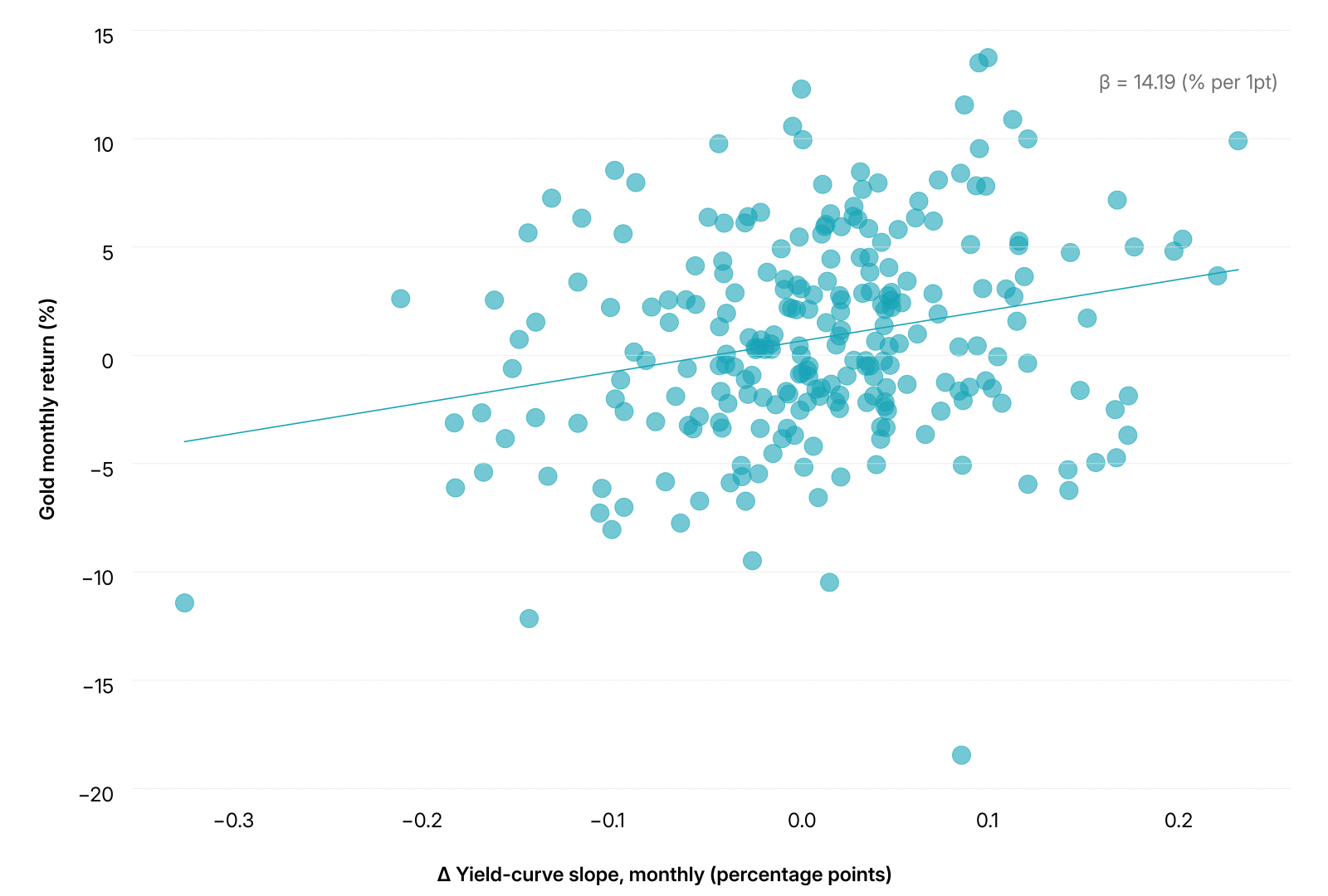
Data from March 1, 2005, to Sept. 25, 2025, based on MSCI Gold Futures Index returns and change in slope of the yield curve (MSCI US Government Bond 10Y+ Index – MSCI US Government Bond 7-10Y Index).
Recent price action looks like a market expressing views on fiscal sustainability and long-horizon inflation, rather than one reacting to policy-rate cuts alone. With long-end yields driving risk, investors may wish to recalibrate liability hedges and treat gold correlations as regime-dependent. They may also need to reassess funding toward onshore emerging markets, as hedged differentials narrow, and monitor supply-driven term-premium shocks that transmit fiscal risks to mortgages, equity discount rates and real-asset valuations.

Subscribe todayto have insights delivered to your inbox.
Scenario Analysis: How Could Soaring US Debt Impact Markets?
Soaring U.S. government debt could trigger market losses from rising yields or inflation from a politicized Federal Reserve, or gains with fiscal discipline.
Borrowed Time? Downside Scenarios on the US Debt Overhang
The initiation of the rate-hike cycle by the Federal Reserve has positioned U.S. monetary policy as a major driver of financial markets. What could two downside scenarios for financial markets as investors consider their path forward?
Fixed Income Indexes
MSCI offers Fixed Income Market Value Weighted, ESG and Climate Indexes designed to support institutional investors.
1 At maturities greater than 20 years, yields may reflect the dynamics of insurance asset-liability management and associated inflation expectations. In non-U.S. markets, ultralong bonds (30 years+), such as U.K. gilts and Japanese government bonds, are frequently influenced by technical factors due to specialized demand and lower liquidity.
The content of this page is for informational purposes only and is intended for institutional professionals with the analytical resources and tools necessary to interpret any performance information. Nothing herein is intended to recommend any product, tool or service. For all references to laws, rules or regulations, please note that the information is provided “as is” and does not constitute legal advice or any binding interpretation. Any approach to comply with regulatory or policy initiatives should be discussed with your own legal counsel and/or the relevant competent authority, as needed.