
Quantifying Geopolitical Risk at the Company Level
- Geopolitical risk is not uniform — different types of shocks transmit differently through sectors, countries and companies, making firm-level assessment essential for portfolio risk management.
- MSCI’s LLM-based geopolitical-risk indicator seeks to capture geopolitical stress in real time, distinguishing between risk drivers with different transmission mechanisms.
- Company geopolitical beta measures each security's sensitivity to geopolitical risk, providing a systematic tool for risk management, scenario analysis and portfolio construction for asset owners and managers.
From trade wars and sanctions to armed conflicts, geopolitical uncertainty has become a persistent feature of the global market environment — and the Iran war has been a timely reminder of how swiftly such risks can move prices. Our previous research shows these risks are far from uniform in their effect at the company level, even within sectors.
For investors, such shocks raise two practical problems: how to assess and compare geopolitical risks, and how to position portfolios to mitigate risks from geopolitical shocks. We introduce two interrelated tools to help answer them. The MSCI Geopolitical Risk Indicator (GPRI) tracks market-wide attention to a range of geopolitical risks detected in corporate news, while geopolitical beta measures firm-specific sensitivity to the GPRI — supporting portfolio construction, risk management and scenario analysis when geopolitical stress flares.
Not all geopolitical stress moves markets the same way. To track it systematically, we developed the GPRI, a weekly, news-based measure that aggregates attention to a set of geopolitics-driven risks in company news.1 The GPRI is calculated using a pipeline based on a large language model (LLM) that filters company news for geopolitical events that pose concrete risks to companies’ business operations, supply chains and financial stability. The GPRI can offer a direct signal of material geopolitics-related risks in corporate news and measures both the speed and spread of such risks across the economy.
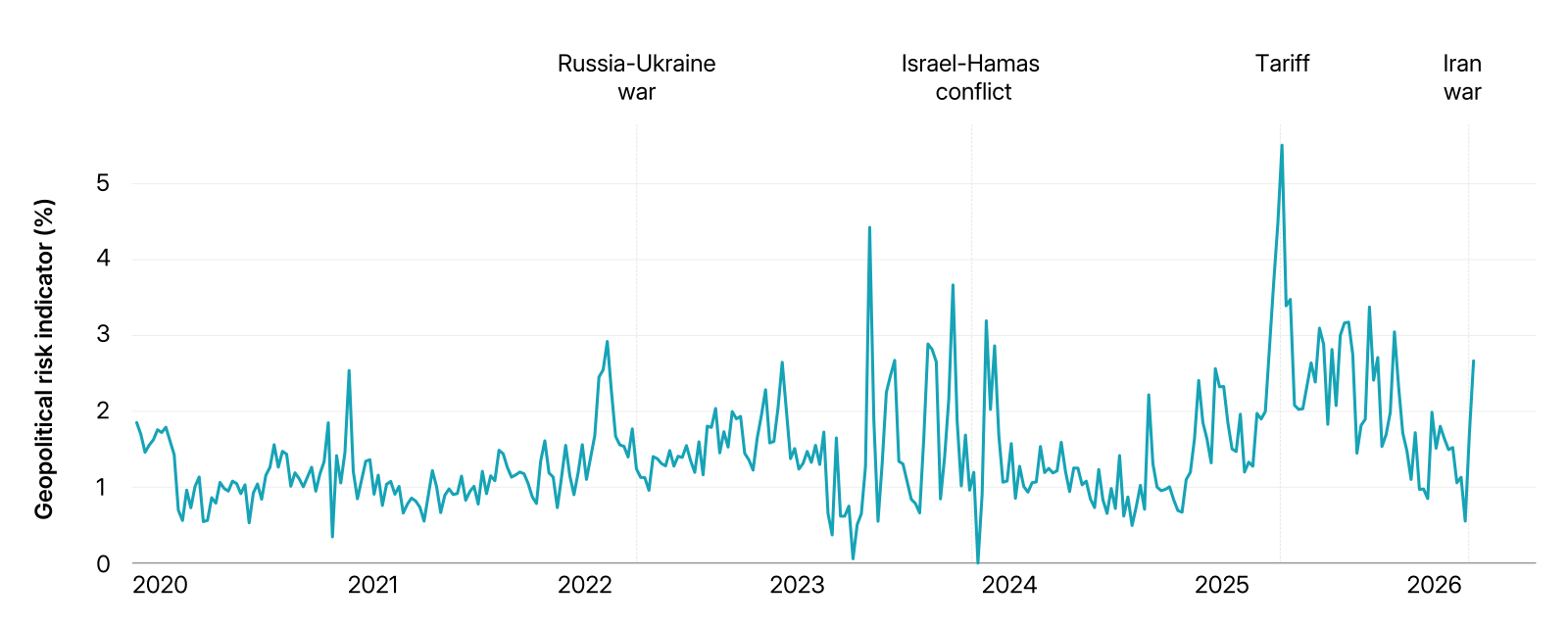
Value of Y-axis represents the percentage of news items in the news universe where attention to geopolitics-related risks were detected.
The aggregate GPRI has risen sharply from recent lows following the start of the Iran war, but it remains well below the peaks seen during the April 2025 tariff crisis. This gap is itself informative: Unlike broad trade restrictions, military conflict hasn’t immediately spread across all sectors and geographies at the corporate level. Digging into the GPRI's components is illuminating. The component “cross-border conflict and military tension” (or CBCMT) has spiked to levels last seen during the start of the 2024 Israel-Hamas conflict, and its evolution warrants close monitoring. “Energy and resource access risk” (ERAR) has simultaneously jumped to its highest-ever reading, indicating that attention to energy-access risk was never higher in our sample. This reflects the market's acute focus on the Strait of Hormuz disruption risk. By contrast, “trade restrictions and economic nationalism” (TREN) — the driver behind the all-time GPRI highs in early 2025 — shows no significant movement, underscoring that certain risk drivers have carried fundamentally greater economic-transmission capacity than others.
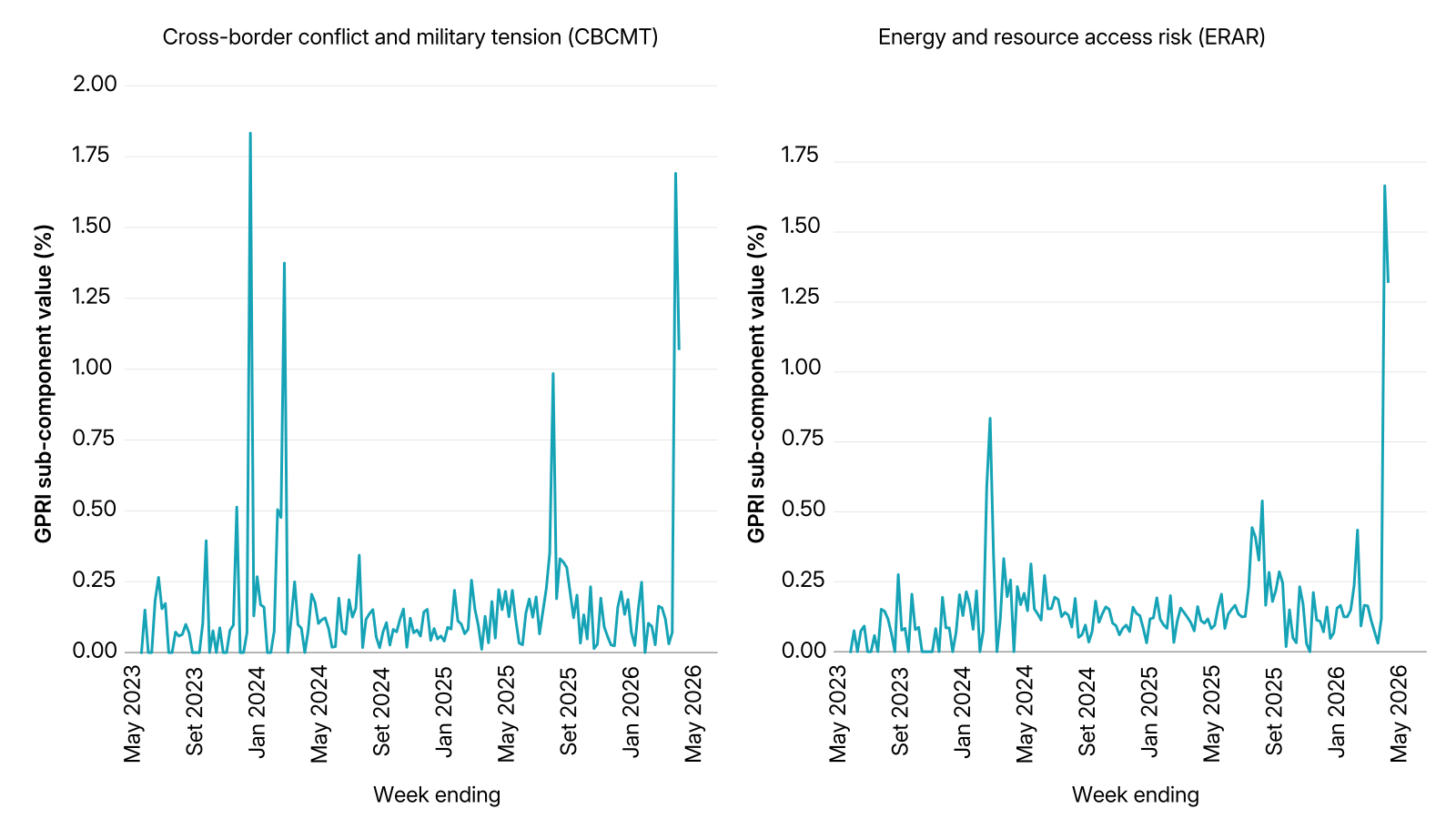
Value of Y-axis represents the percentage of news items in the news universe where attention to geopolitics-related risks was detected.
The GPRI and its components thus show the severity of the current shock, how it compares with previous episodes and the specific components that drive it. GPRI also signals the portions of portfolios that are relatively more exposed to geopolitical shock and the portions that can act as a natural hedge.
To translate that signal into portfolio action, investors may wish to understand how individual securities respond to shifts in geopolitical uncertainty.
To address this, we estimate geopolitical beta — a measure of how sensitively a stock's returns respond to changes in the GPRI.2 A positive geopolitical beta means the stock tends to benefit when geopolitical risk rises, while a negative beta signals vulnerability.
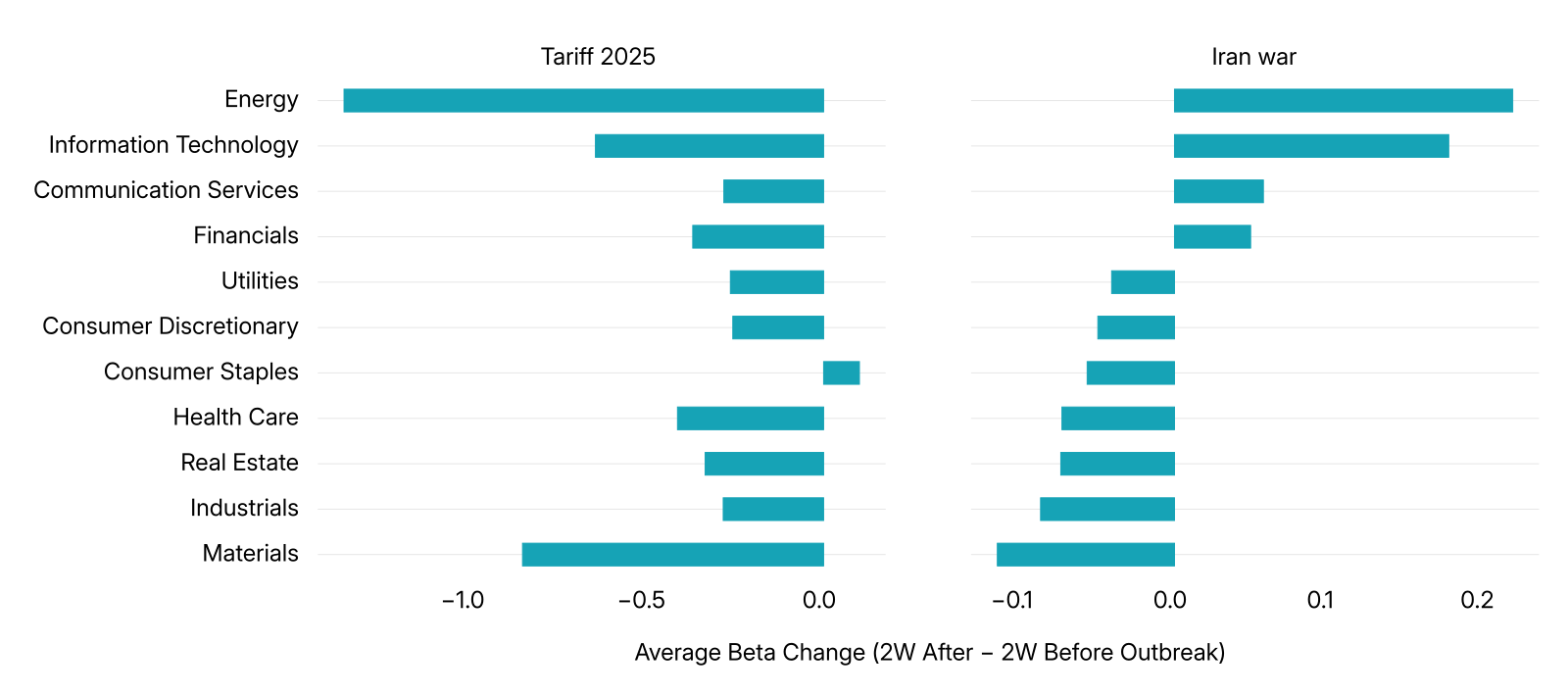
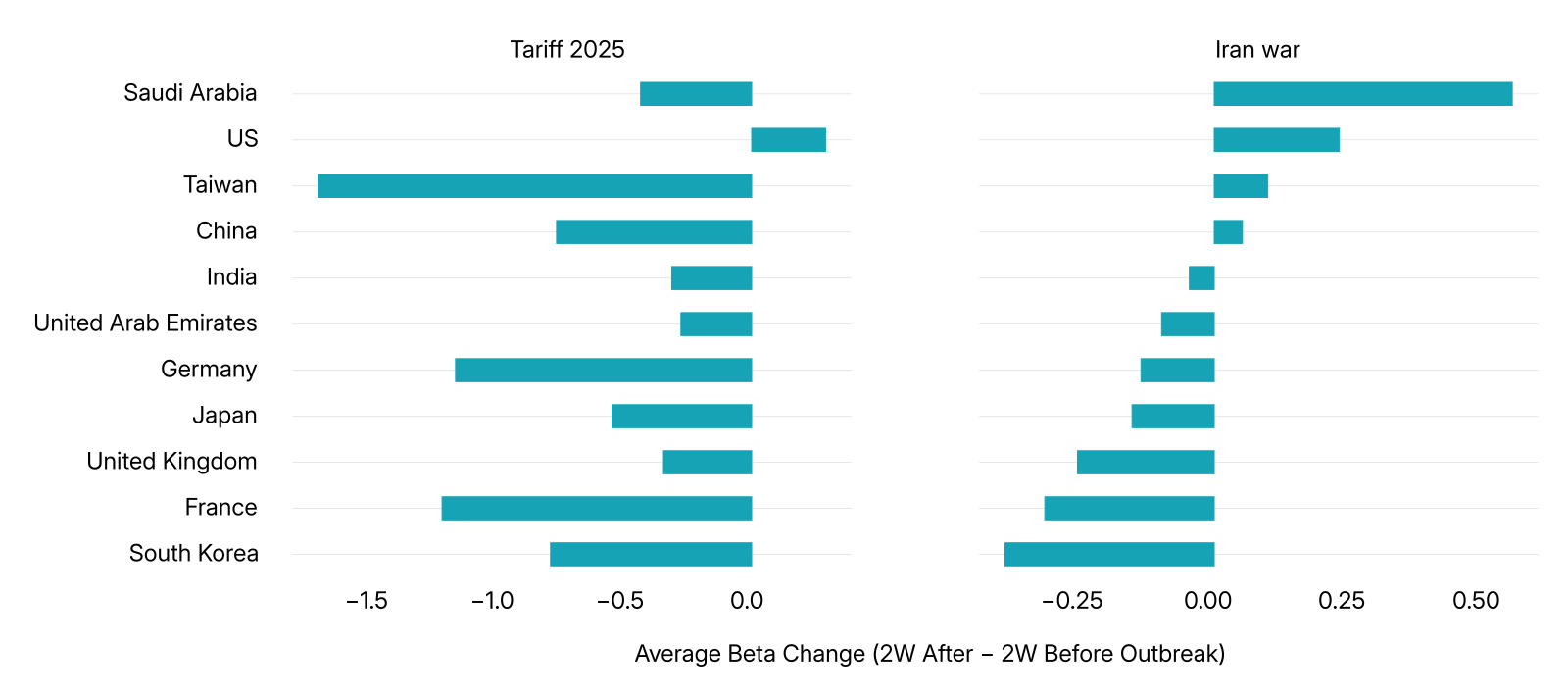
To see how beta shifts in practice, we compared the changes of sector and country exposures3 across two fundamentally different recent events — the April 2025 tariff shock and the current Iran war — which represent different risks. While the level captures a security's baseline geopolitical sensitivity, it is the change that reveals how markets dynamically reprice geopolitical exposure as events unfold.
The sector picture reinforces the transmission story. During the tariff shock, geopolitical beta declined sharply and broadly across almost all sectors, reflecting widespread corporate vulnerability when trade restrictions hit global supply chains simultaneously. The current conflict tells a different story. Energy betas have risen, as markets price in the Strait of Hormuz risk premium. The contrast in both scale and direction underscores that military conflict, unlike trade policy, has transmitted its financial impact through a narrow set of commodity and supply-route exposures.
From the country perspective, under tariff escalation, most countries experienced declining beta, while the U.S. stood out as the only market with a positive beta shift, driven by domestic-facing companies being repriced as relative beneficiaries of tariff protection. Under the current conflict, Saudi Arabia records the largest positive beta change, reflecting direct energy-revenue upside. While the Strait of Hormuz is the critical export artery for much of the Gulf Cooperation Council (GCC), Saudi Arabia's exposure is more limited, as its East-West Pipeline provides an alternative route.4 Korea, by contrast, shows the sharpest negative beta move, reflecting its vulnerability as an energy-importing, export-dependent economy.
To examine the portfolio-performance implications of geopolitical beta, we sorted securities into quintiles from Q1 (lowest beta) to Q5 (highest) and tracked the cumulative return spread between the two groups.
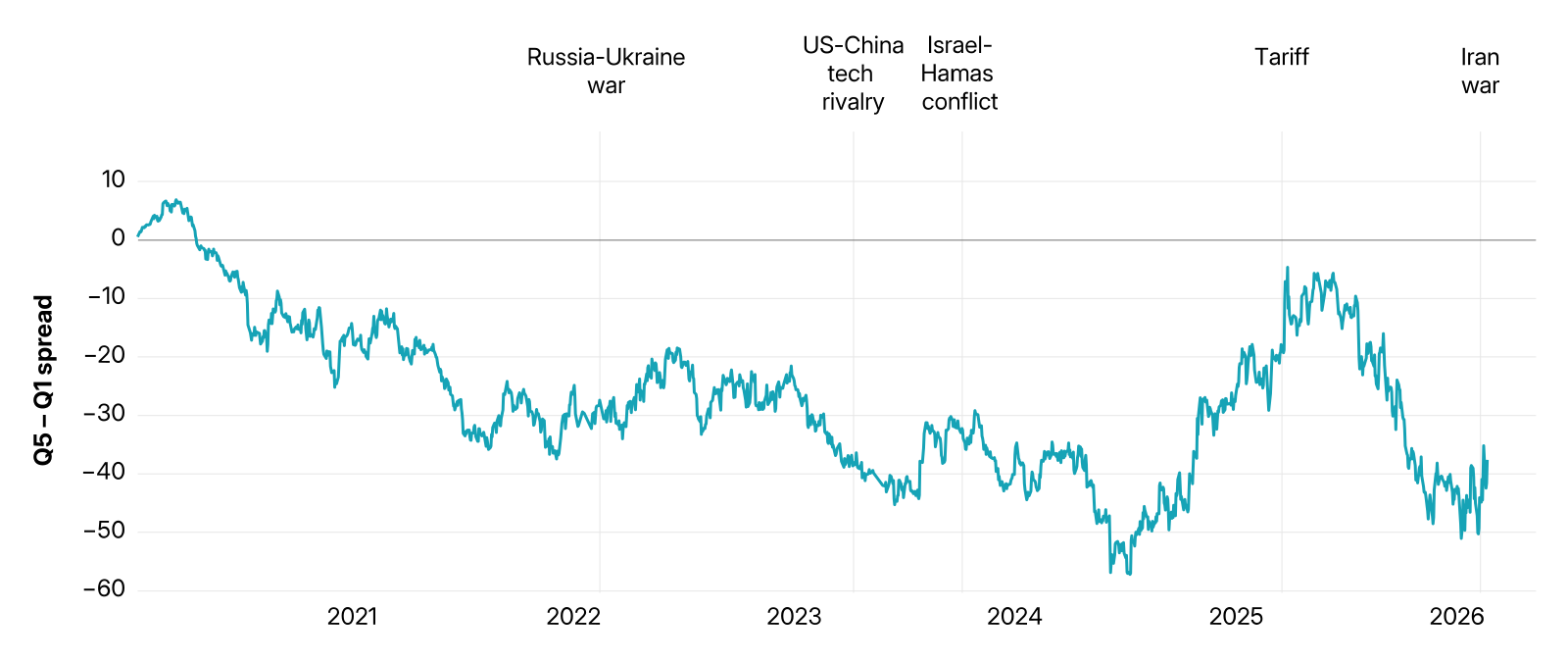
Across the analysis period, the Q5-Q1 spread was persistently negative under cap-weighted constructions, meaning that high-beta securities broadly underperformed their low-beta counterparts since 2021 (our baseline).
During acute stress, however, the pattern consistently reversed. Across all four geopolitical events in the sample, Q5 securities outperformed Q1, with the spread narrowing or turning positive around each episode. In cap-weighted terms, the Q5-Q1 portfolio returned 2.1% in the week following the 2025 tariff outbreak relative to one week prior, compared with 2.3% for the Iran war. The current conflict is still young, but initial data suggest the pattern is repeating — with energy- and defense-linked securities already showing relative strength consistent with their positive beta profiles.
Together, the GPRI and geopolitical beta offer a systematic framework for navigating geopolitical uncertainty. The GPRI is designed to show when and where stress is transmitting at the market level; geopolitical beta to project that signal to individual securities. Used in combination, the two support risk monitoring, scenario analysis, portfolio construction and the design of geopolitical hedge strategies. While the precise timing and form of geopolitical events are rarely foreseeable, their potential implications need not catch investors off guard.



Subscribe todayto have insights delivered to your inbox.
Mapping Market Turmoil with ‘Material’ News Attention
Using an AI-assisted analysis of global news coverage, we created top-down signals of elevated geopolitical and tariff-related risks at the company and sector levels to help spot disruptions early.
Understanding Geopolitical Risk in Investments
Over the last 30 years, high geopolitical risk has been associated with lower equity returns and higher forecast volatilities. We show that measures of geopolitical risk have provided useful information beyond conventional measures of uncertainty.
Uncovering Supply-Chain Risks in the Iran War
The Iran war hit global markets unevenly. We map three hidden channels — revenue, operations and supply chains — revealing where conflict risk truly sits in equity portfolios.
1 GPRI aggregates six geopolitics-driven risks: cross-border conflict and military tension; cybersecurity and state-sponsored digital threats; energy- and resource-access risks; foreign regulatory and legal actions; technology-access risks; and trade restrictions and economic nationalism.
2 We estimate the geopolitical beta using a methodology consistent with the macro sensitivity factors in MSCI FactorLab by regressing each company's weekly CAPM residual returns against the GPRI over a rolling 52-week window, with recent observations weighted more heavily. For securities with limited history, betas are anchored to their sector average to improve stability.
3 Sector and country geopolitical betas are calculated from the bottom up as the equal-weighted average of individual securities’ betas within each sector and country grouping.
4 Saudi Arabia's East-West Crude Oil Pipeline (Petroline) connects the Eastern Province to the Red Sea port of Yanbu, with a design capacity of up to seven million barrels per day — the only pipeline in the region with meaningful capacity to bypass the Strait of Hormuz. Kuwait, Qatar, Iraq, Bahrain and Iran rely on the strait for virtually all their oil exports. See: “Strait of Hormuz Factsheet,” International Energy Agency, February 2026.
The content of this page is for informational purposes only and is intended for institutional professionals with the analytical resources and tools necessary to interpret any performance information. Nothing herein is intended to recommend any product, tool or service. For all references to laws, rules or regulations, please note that the information is provided “as is” and does not constitute legal advice or any binding interpretation. Any approach to comply with regulatory or policy initiatives should be discussed with your own legal counsel and/or the relevant competent authority, as needed.