
Real Assets in Focus: The Impact of Crossing the 4.5% Treasury Threshold

“The issue in 2024 was not so much the level of interest rates as it was the speed of adjustment that impacted liquidity.”
The 10-year U.S. Treasury crossed the 4.5% threshold on May 15 and remained above this level for a week. The last time we saw 4.5% was in 2024, when deal volume for U.S. commercial real estate was in the midst of a 20-month decline in activity. Though rates fell back to 4.45% by the end of May, clients have expressed fears that a return of high interest rates will again choke off deal activity by pushing up mortgage rates.
Keep in mind though, that there is more at play today than just the increase in the 10-year Treasury. Inflation is trending higher than anticipated, and global uncertainty around trade and economic growth have helped put market participants on edge. And maybe most importantly, the issue in 2024 was not so much the level of interest rates as it was the speed of adjustment that impacted liquidity.
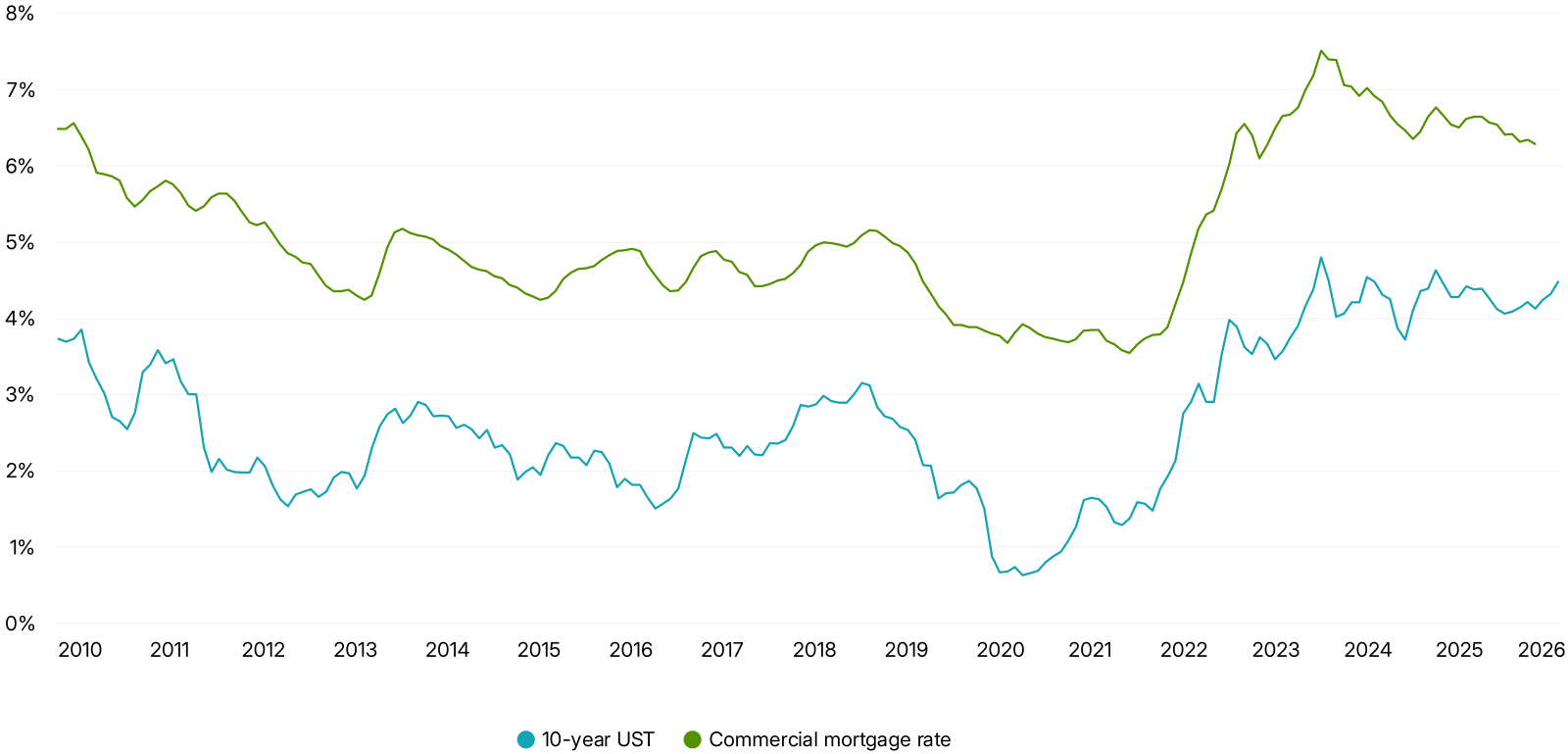
Data as of June 4, 2026.
The speed of adjustment is critical because of the opacity of the commercial-property market and the time it takes to incorporate new information. Appraisals don’t happen quickly, and adjusting assumptions on asset pricing in light of new conditions is not just a few, simple clicks in a spreadsheet. This speed of repricing is an issue given that the way the credit markets operate today is far faster and more transparent than even a few years ago.
Average commercial-mortgage rates for 7/10-year fixed-rate loans hit a low of 3.55% in September of 2021. The spread between these rates and Treasurys was much higher back in 2020, however, when the 10-year U.S. Treasury hit a low of 0.62%. That wider spread highlights some of the hesitancy to lend long term at such low rates, and there was talk of floors at the time.
This same index of mortgage rates hit a high of 7.51% in October of 2023. That change where mortgage rates were going up 16 basis points (bps) per month froze the lending market for a time. There still were lenders who wanted to be active, though fewer than before, and they wanted to be compensated for the risks they faced with their capital sources.
Without instant pricing of the assets involved as prices were falling, loans could not be priced as efficiently as the cost of capital in bond markets. Lenders covered their risk through higher rate-lock fees. But these locks also helped price some deals out of the market and limited transaction activity.
“Deal volume has grown when interest rates were above the 4.5% threshold.”
If the 10-year U.S. Treasury moved from the recent 4.5% range up to even, say, 4.7% two years from today as the forward curve suggests, that change is only a 20 bps adjustment over 24 months. The move from the recent 4.0% level to 4.5% was sharper, but the forward curve suggests that the biggest change has already happened. So the friction of pricing rate locks in the commercial-mortgage market may not be as intense as in 2024 … unless, of course some of the other elements of global uncertainty begin to raise new questions in valuations.
Besides, asset prices for commercial real estate are not falling as fast as during that recent period of deal illiquidity, nor are they as difficult to measure. Commercial-property prices are growing, based on the RCA CPPI US National All-Property Index, which is up 1.1% year-over-year as of April 2026. And sure, a 1.1% pace of growth may not be what investors want right now, but the recent stability may ease a lender’s fears about a borrower coming back in a month with deal mechanics and an appraisal that are hopelessly out of touch with the changes of the cost of capital in the credit markets.
And even at the 4.45% level, the 10-year Treasury is low by historical standards. This measure, in fact, averaged 4.57% from 2005 to 2007, just about the same level where the market has been trending of late.
This three-year period was one where deal volume for commercial real estate grew rapidly with many historic transactions that made careers (and ended others, sadly). Granted, that period was one that many will agree had poorly formed market expectations with the fallout from the subprime mortgage crisis later ricocheting through the financial markets and helping to savage commercial-property values.
The average 10-year Treasury was even higher (6.3%) from August 1987 through January 2006, the term of Alan Greenspan’s tenure as the Chair of the Federal Reserve Board. Here too there were some periods of poorly formed market expectations with shocks that included the S&L Crisis, the Russian Bond Crisis and the Internet Bust. Investment in commercial real estate surged and fell repeatedly over these 18 turbulent years. The point is though: Deal volume has grown when interest rates were above the 4.5% threshold.
What those periods had that this one does not is a cyclically falling interest-rate environment. Every commercial-property deal that was completed over the last seven years is going to face a challenging capital-market environment if the investor decides to sell one of those assets today. (Seven years, by the way, is the average holding period.) That next buyer will have a higher mortgage rate, among other costs, and will likely buy it at a higher cap rate as well.
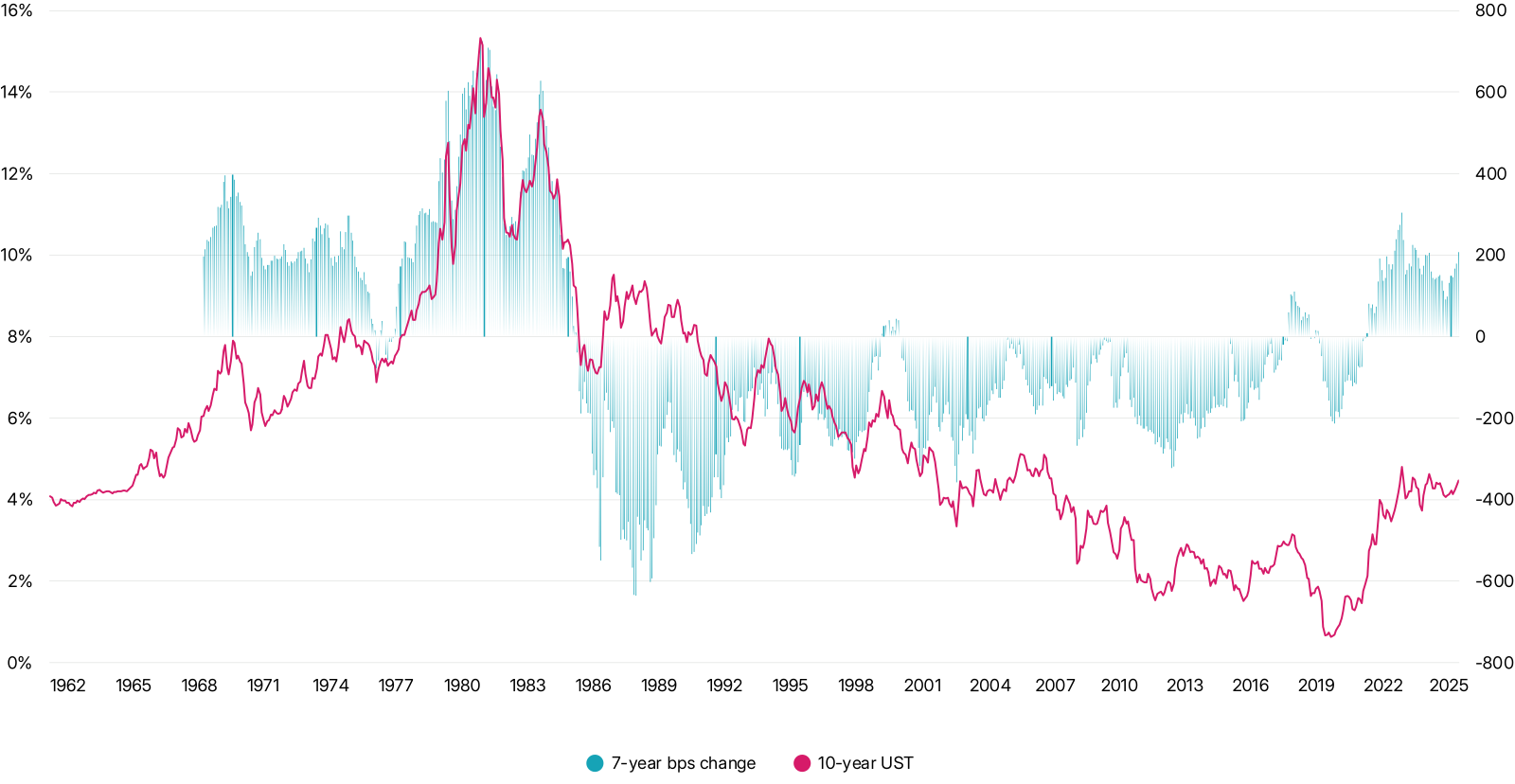
Data as of May 19, 2026.
If the 10-year U.S. Treasury is at 4.2%, 4.5%, 5.0% or who knows where by that point, investments made when the cost of capital was at a record low will have to be repriced. There are some — owners of industrial buildings or data centers, for example, that saw significant appreciation of the underlying collateral — that may do well. The equity gains can easily outstrip the increasing costs of capital for many of those deals. But if you own a low-ceiling-height Midtown Manhattan office tower where few of the good sandwich shops remain, it may take some work to avoid someone “eating your lunch.”
Subscribe todayto have insights delivered to your inbox.
Real Capital Analytics
Transparent, proprietary intelligence across global private real estate markets connecting investors, funds, assets and transactions on one platform.
Latest on US Commercial-Property Pricing
We report the latest trends in the RCA CPPI for the U.S. We cover the all-property index and indexes for the major property types including industrial, retail, apartment and office.
The content of this page is for informational purposes only and is intended for institutional professionals with the analytical resources and tools necessary to interpret any performance information. Nothing herein is intended to recommend any product, tool or service. For all references to laws, rules or regulations, please note that the information is provided “as is” and does not constitute legal advice or any binding interpretation. Any approach to comply with regulatory or policy initiatives should be discussed with your own legal counsel and/or the relevant competent authority, as needed.