
Reassessing the Role of Country Allocation in Europe
- European equities are no longer moving as a single bloc: Return correlations have fractured since 2022, and countries now show sharply different macro exposures, fundamentals and valuation profiles.
- For asset managers and investment strategists using regional allocations, this fragmentation challenges traditional treatment of Europe as one market and increases the importance of understanding country-specific drivers.
- With dispersion rising, investors able to go beyond broad region-level bets may benefit from dynamic country rotation — especially when tilts are guided by systematic momentum, valuation and profitability signals.
Amid renewed investor attention to European equities, we revisit a foundational question: Is Europe behaving like a single market or as a collection of diverging countries? The answer is key to how investors allocate capital, manage risk and think about diversification in European markets. Using a combination of cluster analysis, return attribution, economic exposure and fundamentals such as valuation and profitability, we explore how investors might rethink country allocation within Europe.
To gauge the similarity of country returns and how they have evolved over time, we analyzed clusters of countries in the MSCI Europe Index using principal-component analysis (PCA) and hierarchical clustering.1 The objective was to identify when correlations between country returns changed most meaningfully. We ensured at least 24 months of data on either side and selected the split that produced the largest change in average pairwise correlations across periods.
Correlation matrices over time support the thesis that European equity markets have become more fragmented. Between 2001 and 2022, most countries exhibited strong and consistent pairwise correlations with coefficients often above 0.8. In contrast, the 2023–2025 period has shown more dispersion. Denmark, Norway, the Netherlands and Portugal saw notable declines in correlations.
A plausible macroeconomic rationale behind the shift could be that that this period has been marked by increased market dispersion following the post-COVID-19 policy unwind, the onset of sustained inflation pressures, monetary tightening and growing divergence in macroeconomic conditions across Europe.
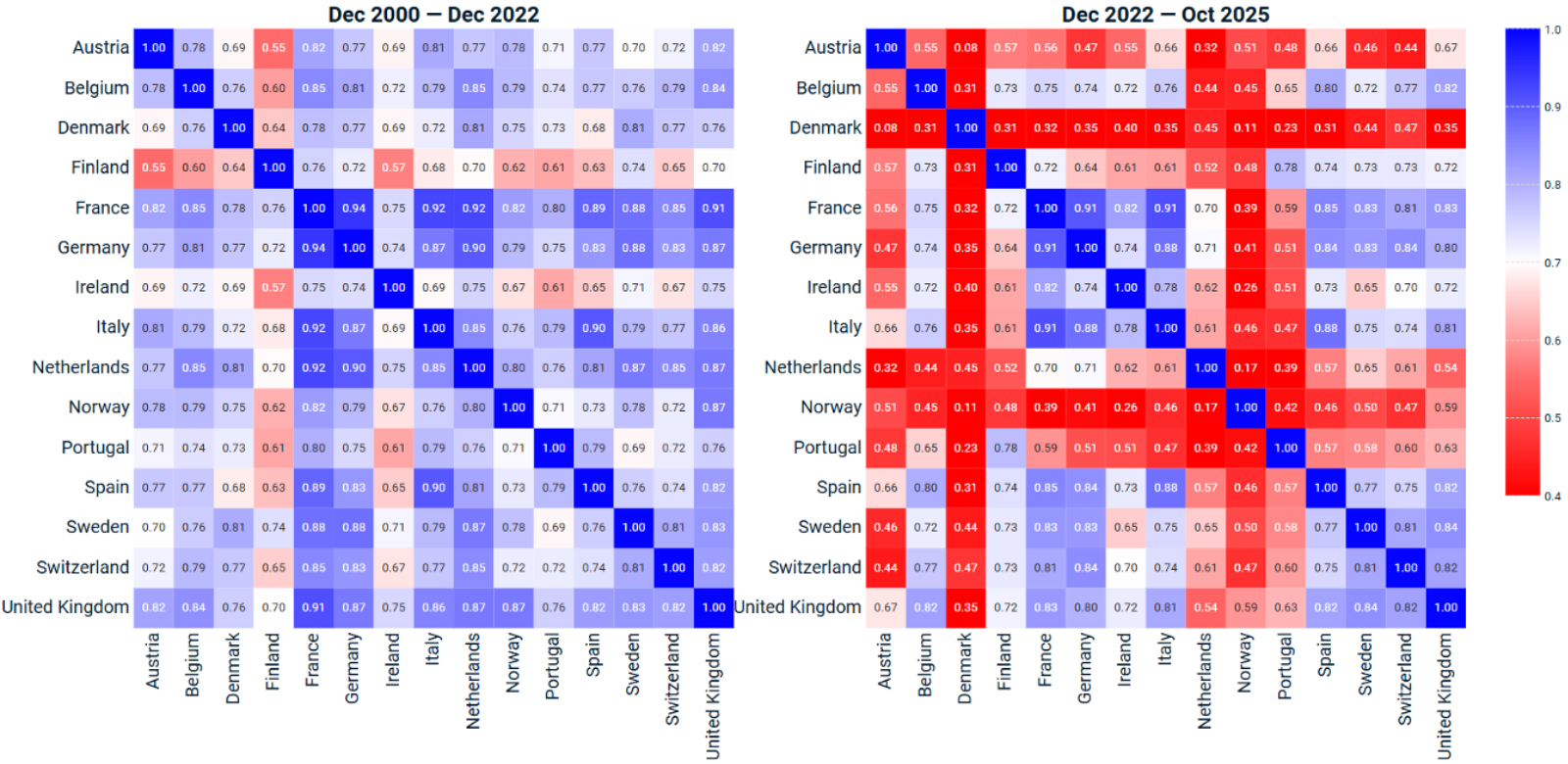
Time period: Dec. 29, 2000 to Oct. 31, 2025. Gross monthly returns (in USD) of the MSCI Europe Country Indexes are used for the analysis.
To explore whether the divergence in country returns is also reflected in their performance drivers, we conducted a return attribution across the same two periods used in the correlation analysis. While earnings growth has generally been the primary driver of returns across European markets, the magnitude and composition of return drivers varied meaningfully between the two sub-periods: December 2000 to December 2022 and December 2022 to October 2025.
In the first period, earnings growth contributed to returns, while valuation changes were a drag across most markets. In contrast, in the more recent period, the dispersion in return drivers widened. Countries like Spain, Austria and Italy benefited from valuation rerating and growth in earnings, whereas Portugal saw negative earnings growth and valuation contributions pull down overall returns.
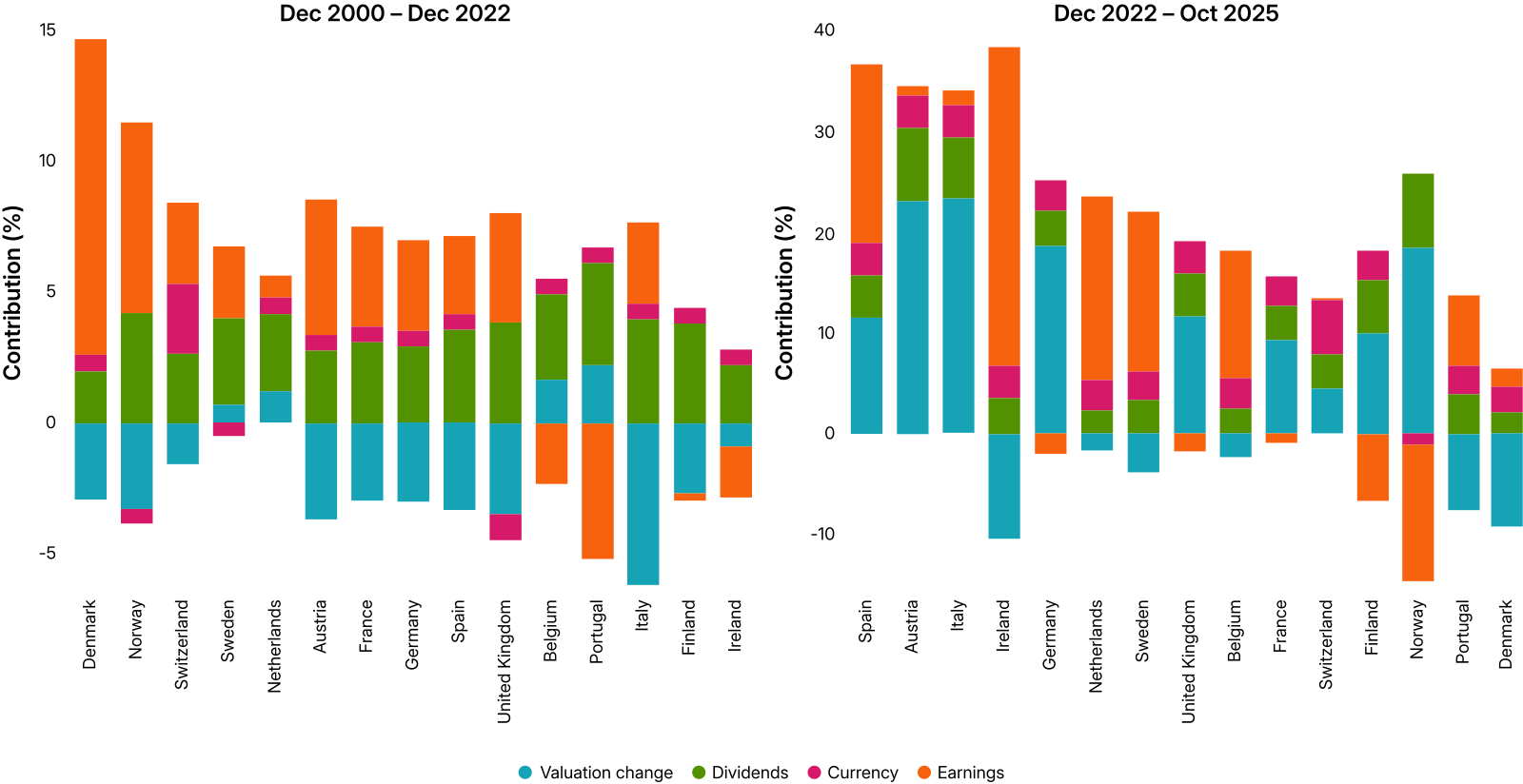
Time period: Dec. 29, 2000, to Oct. 31, 2025. Gross return (monthly) of the MSCI Europe Country Indexes in USD are used for the analysis.
European countries have strongly varying revenue exposure to international markets, especially the U.S. and China, shaping their sensitivity to global growth and trade dynamics. As seen in the chart below, Austria and Portugal currently show more than 80% of their revenue exposure within Europe, potentially making them relatively insulated to global tariffs or trade shifts.
Belgium and Switzerland, however, source more than 30% of their revenues from the U.S. and China combined. This is a clear risk given that disruption in global supply chains and international trade tensions show little sign of dissipating.
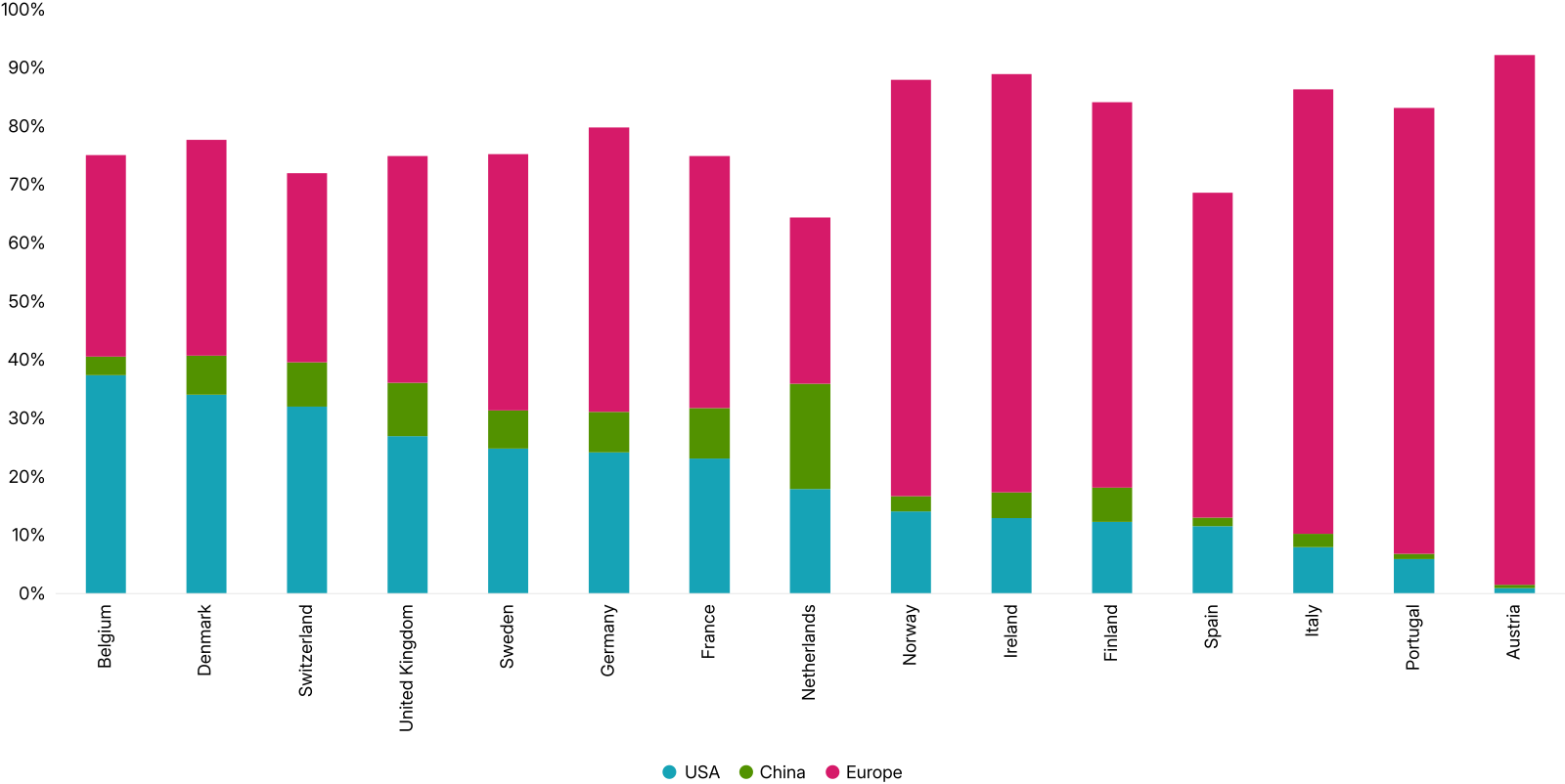
Economic exposure data as of Oct. 31, 2025.
Countries across Europe offer varying exposures to profitability and valuations when measured relative to their respective historical levels. For instance, as of Oct. 31, 2025, Ireland stood out with improving profitability as measured by return on equity (ROE) and a valuation (12-month forward price/earnings ratio) that remains below its five-year average. Spain also showed high ROE, though it appears more expensive compared to history. On the other hand, Denmark exhibited the opposite characteristics, with valuations below average while profitability measures are broadly in line with historical levels.
The dispersion of profitability and valuations across countries suggest a benefit to combining these signals in a country-based allocation process. This approach is consistent with findings from Zaremba and Shemer, who showed that blending value, quality and momentum signals can improve country selection strategies by enhancing return, while controlling for risk.2
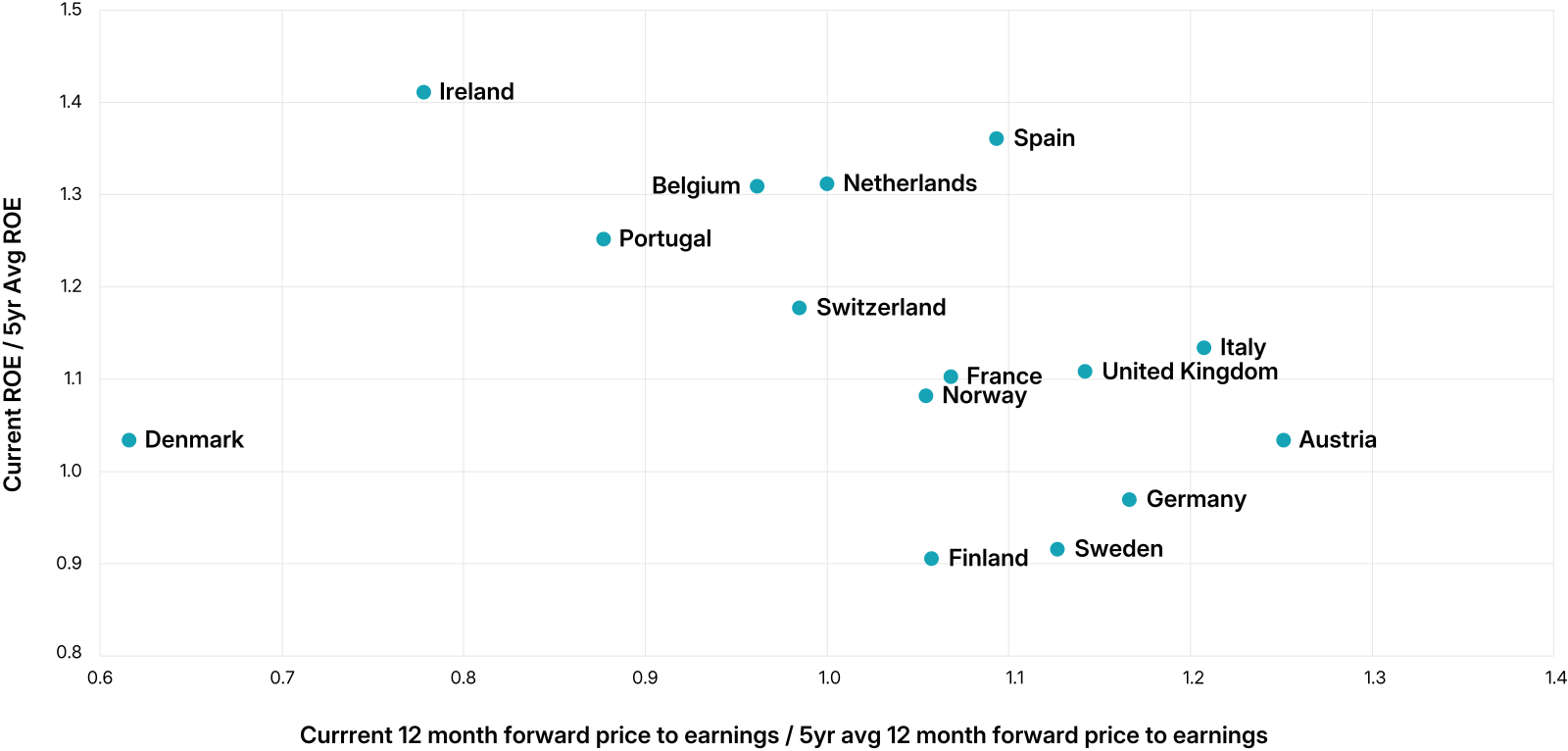
Current return on equity (ROE) relative to five-year average plotted against its 12-month forward PE relative to respective five-year average for European countries as of Oct. 31, 2025.
We simulated a dynamic country-allocation strategy based on fundamentals and price momentum, benchmarked against the MSCI Europe Index. We applied tilts on country weights based on a composite of three signals: six-month momentum, forward PE relative to its five-year average and ROE relative to its five-year average. Countries were then ranked on this basis, with their weights adjusted accordingly.
We tested a range of tilts, where countries were overweighted between 2x and 4x their original weights, and underweighted countries were reduced to between 0.5x and 0.25x respectively. This approach is a value, quality and momentum (VQM) tilt strategy, but implemented at the country level instead of with individual securities.
When compared to the MSCI Europe Index, all three simulations delivered a higher total return with a modest tracking error. Both excess return and tracking error increased with stronger tilts. The improved risk-adjusted returns of the tilt strategy suggest country return momentum, when supported by strong fundamentals, could offer differentiated performance for country-allocation strategies. While the trend-based momentum allocation contributed significantly to outperformance, the VQM-based allocation strategy delivered the highest active return with lower tracking error, resulting in a superior information ratio.
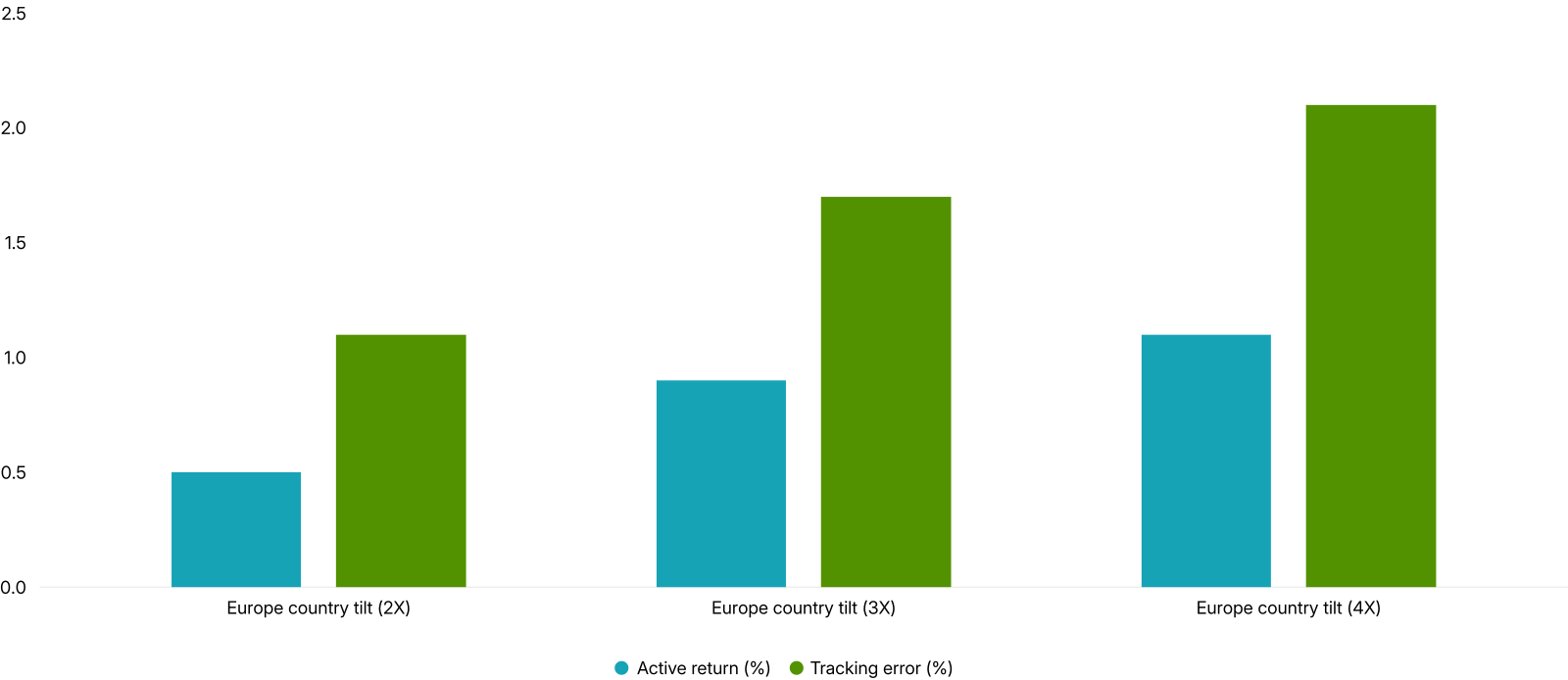
Time period: Nov. 28, 2008 to Oct. 31, 2025.
Return relationships between European countries have become increasingly fractured, moving away from the cohesive patterns observed in earlier decades. Yet most investment mandates continue to treat Europe as a single regional allocation. For investors with the flexibility to differentiate at the country level, a dynamic rotation strategy may offer a more targeted way to capture dispersion in fundamentals and macro exposures.



Subscribe todayto have insights delivered to your inbox.
Emerging market country allocation matters
Investors with strong convictions on emerging markets might consider an approach allowing tilts toward or away from specific themes, such as active allocation to single-country index-based funds. We explore considerations linked with this approach.
Some See a Renaissance for European Equities
European equities are gaining investors’ interest because of their lower valuations, higher dividend yields and better insulation from tariff risks than their U.S. counterparts.
MSCI Europe Index
The MSCI Europe Index captures large and mid cap representation across Developed Markets (DM) countries in Europe. The index covers approximately 85% of the free float-adjusted market capitalization across the European Developed Markets equity universe.
1 To identify the two sub-periods with the most distinct equity market behavior, the time series of monthly returns was split at every possible point, excluding the first and last 24 months, to ensure sufficient data. For each potential split, the dataset was divided into two sub-periods, and hierarchical clustering (Ward’s method) was applied separately to each. Countries were assigned to four clusters in each sub-period. The similarity between the two clusterings was then evaluated using the Adjusted Rand Index (ARI), a statistical measure that equals 1.0 for identical clusterings and approaches 0 as they diverge. The final split was chosen to minimize the ARI — thus maximizing the difference in clustering structure between the two periods.
2 Adam Zaremba and Jacob Shemer, “What Next? Combining and Improving Country Selection Strategies,” Country Asset Allocation, Palgrave Macmillan, New York, 2017.
The content of this page is for informational purposes only and is intended for institutional professionals with the analytical resources and tools necessary to interpret any performance information. Nothing herein is intended to recommend any product, tool or service. For all references to laws, rules or regulations, please note that the information is provided “as is” and does not constitute legal advice or any binding interpretation. Any approach to comply with regulatory or policy initiatives should be discussed with your own legal counsel and/or the relevant competent authority, as needed.