
Sustainability and Climate in Focus: Trends to Watch for 2026
Governments that once led on climate and sustainability are recalibrating toward national security, trade and technological leadership amid growing geopolitical fragmentation. Policy consensus has fractured and public commitments are wavering.
Yet capital hasn’t slowed. Markets are moving on their own momentum — rewarding commercially viable transition technologies and repricing physical climate risk as extreme weather increasingly drives financial losses. Artificial intelligence is amplifying these trends: accelerating demand for clean energy, improving hazard detection and reshaping how investors assemble and interpret sustainability data.
This widening gap between political rhetoric and economic reality defines the sustainability landscape for 2026. Investments in green technology are advancing on commercial strength rather than policy support. Prudential regulators, focused on financial stability, continue to embed climate risk into capital frameworks in the face of mounting physical risks. And as official reporting directives stall, investors are demanding the financially material data they need to price risk and return.
Investors are acting on what endures: the economics of the transition, the cost of inaction and the data that still drive performance. The following five trends trace how that divergence is reshaping portfolios and capital allocation.
1. Market forces keep the energy transition moving
Political winds may shift, but for the right technologies, declining costs are reinforcing competitiveness and driving the transition beyond any single policy cycle. For segments such as renewables and electric mobility where cost parity has largely been achieved, their decoupling from the volatility of oil markets and alignment with grid-buildout needs from data centers have acted as helpful performance tailwinds in the second half of 2025, with new-energy stocks more than doubling the gains of the broader market.1 In less commercially viable areas, such as carbon capture or advanced biofuels, progress may be dependent on policy support. Distinguishing between technologies that can scale economically and those reliant on regulatory momentum will be central to assessing both risk and opportunity in the energy transition.
Trend established, acceleration ahead
Markets have always rewarded the technologies most likely to succeed. Our analysis shows that when we adjust for how commercially ready a technology is — how close it is to cost parity, scale and large-scale deployment — the link between a company’s transition exposure and market performance has been much stronger.2 Companies generating revenues from proven, scalable low-carbon technologies have tended to perform better than those relying on early-stage or unproven innovations, or those that are mature but have lower growth potential. In a macroeconomic and political climate focused on delivering energy fast, this relationship could sharpen.
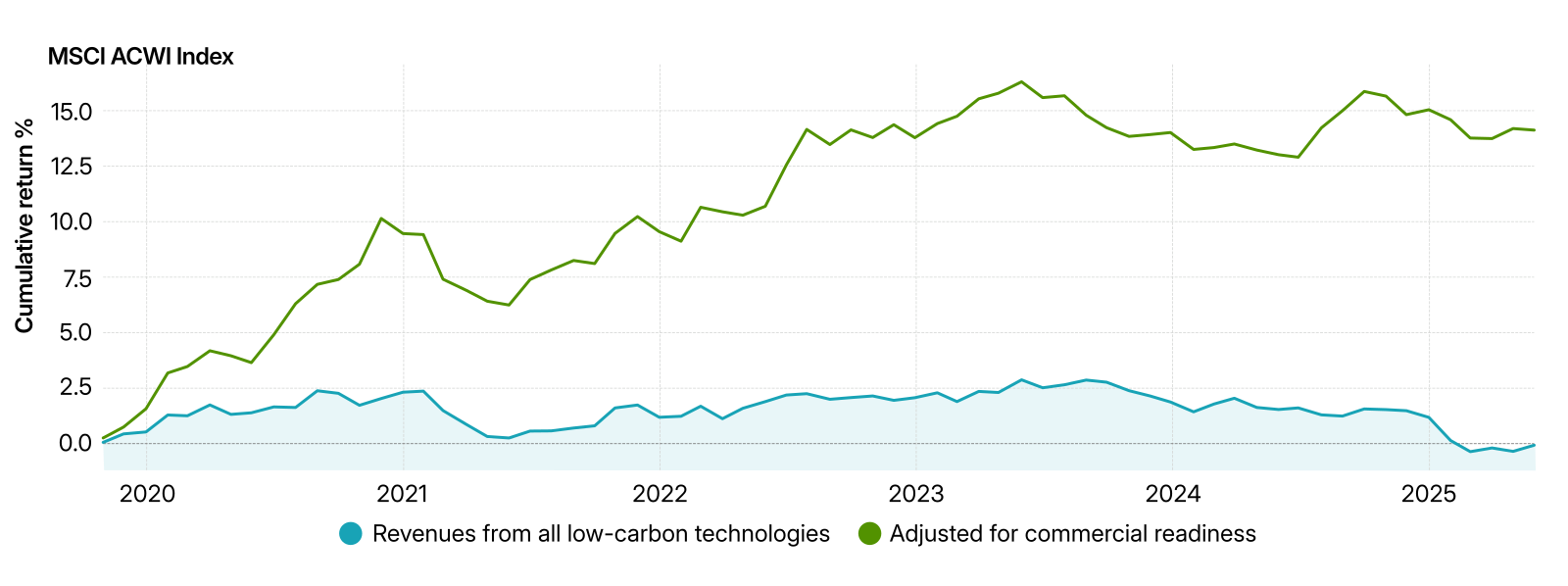
Performance data from Aug. 31, 2019, to June 30, 2025, in the MSCI ACWI Index. Analysis shows the factor performance of revenue share from low-carbon technologies with and without technology filters and adjustment, using the MSCI Global Equity Model for Long-Term Investors (GEMLT), which controls for known factors (including industries, countries and equity-style factors such as value, momentum and quality). Past performance — whether actual, backtested or simulated — is no indication or guarantee of future performance. For a more detailed description of the analysis and the adjustment approach used, see the MSCI Energy Transition Framework Methodology. Source: MSCI Sustainability & Climate. MSCI Sustainability & Climate products and services are provided by MSCI Solutions LLC in the United States and MSCI Solutions (UK) Limited in the United Kingdom and certain other related entities.
2. An increasing share of private assets is exposed to catastrophic climate hazards
For private-capital investors, physical climate risk has become too material to ignore — especially in infrastructure, where assets are fixed, long-term and increasingly exposed. Airports, ports, power networks and transportation systems cannot easily be relocated or retrofitted as conditions change.
To better understand these growing risks, we analyzed infrastructure-related holdings in 1,427 private-capital funds to estimate potential losses from extreme tropical cyclones — events typically classified as “one-in-200-year” occurrences.3 This threshold reflects how investors and insurers assess climate resilience: by testing portfolios against low-probability but high-impact events that drive most of the expected loss.4
The key investor takeaway is that the probability of severe, value-destroying events within infrastructure portfolios is growing dramatically. A surge in extreme weather is transforming today's outlier risks into more frequent occurrences. While average losses may rise only 2% by 2050 under a 3ºC scenario, the share of assets exposed to catastrophic losses exceeding 20% of their value is projected to increase five-fold — signaling a sharp escalation of tail risk.
Regional loss multipliers and market signals
In high-risk regions, losses could multiply further, driven significantly by business disruption — a factor our previous work estimates to be roughly 14 times greater than asset damage costs — alongside rising insurance costs. Long-lived infrastructure assets must therefore be designed to withstand these rare but increasingly costly events.
Insurance markets are already signaling this shift. Premiums for physical-risk and natural-catastrophe protection are projected to rise by around 50% by 2030, and some regulators have begun voicing concerns about the long-term availability of coverage.5 Asset owners are also responding: Our analysis of 18 global portfolios — representing investors with about USD 4 trillion in assets under management — found that roughly a quarter of total equity value is already exposed to severe physical hazards today, prompting investors to reassess location risk and adaptation strategy. The Transport for London pension fund, for example, has identified infrastructure as one of its primary exposures to physical climate risk and now reviews each manager’s process for assessing and managing both acute and chronic hazards.6
For limited and general partners, anticipating how physical risk will evolve is becoming just as critical as understanding where it stands today. The integration of AI-driven geospatial analytics and climate-scenario modeling is making physical-risk assessments more robust, credible and comparable across markets by leveraging location-specific data. This facilitates investors’ ability to price physical risk and distinguish well-adapted assets from vulnerable ones. As a result, in 2026, resilience may begin to emerge not as a defensive theme, but as a potential source of relative returns.
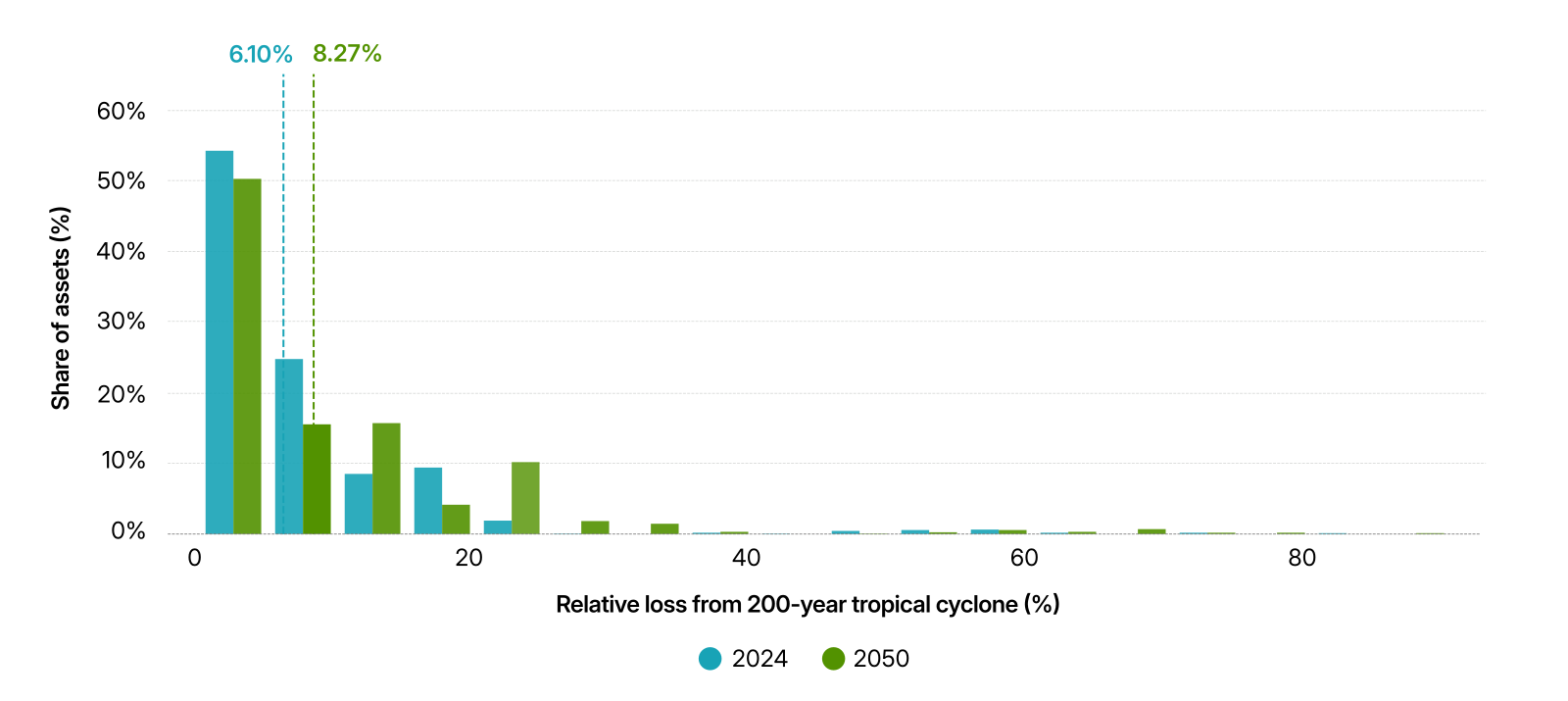
Projected asset damage from a one-in-200-year tropical cyclone in 2024 (blue) and 2050 (green), shown as a percentage of asset value. Based on 2,308 infrastructure assets (28% of peer group) within 448 portfolio companies. 2050 projections reflect a 3°C scenario under the Network for Greening the Financial System (NGFS) REMIND Current Policies scenario. Source: MSCI GeoSpatial Asset Intelligence (data as of October 2025) and MSCI Private Capital Universe (data as of Q2 2025).
3. Central banks advance on climate-risk oversight as policy diverges
While some policymakers are easing back on sustainability reporting requirements, prudential regulators remain focused on the financial risks stemming from climate change. Across the 27 jurisdictions in our study, central banks are integrating climate considerations into supervisory frameworks, understanding that transition risk, physical risk and nature degradation could all threaten financial stability.7 The European Central Bank (ECB), for example, has warned that climate-related natural disasters may lead to the repricing of loans and securities held by financial institutions in higher-risk areas. The most indebted euro-area countries face the highest economic losses — and most of these losses are uninsured.8 In 11 of the 27 jurisdictions we examined globally, regulators now require banks to demonstrate that they have adequate risk-management practices and capital buffers to withstand climate shocks.
Regulations have played a role in bolstering banks’ readiness. Our analysis shows that banks operating in markets with more stringent climate-risk integration requirements — such as Europe, the U.K. and developed Asia-Pacific, tended to have stronger climate governance, strategies and targets. But how far and how fast regulations continue to advance the integration of climate risks into supervisory frameworks remains to be seen. Any measures that increase reporting burdens or are perceived as constraining growth are unlikely to prove popular.
From guidance to enforcement
The ECB is the first high-profile supervisor to move into enforcement territory, imposing fines on ABANCA Corporación Bancaria, S.A. for failing to properly assess its climate risk.9 But focusing on individual enforcement actions risks missing the bigger picture. Supervisors are signaling that climate risk is financially material — a factor in credit quality, capital strength and market stability rather than a disclosure exercise. By embedding climate considerations into prudential expectations, central banks are communicating to capital markets that these risks can shape valuation and financing across sectors.
For investors, this affirms climate as a structural macro factor influencing growth, pricing and capital flows. The signal matters less for its enforcement than for how it redefines what the market considers financially relevant in assessing risk and return.
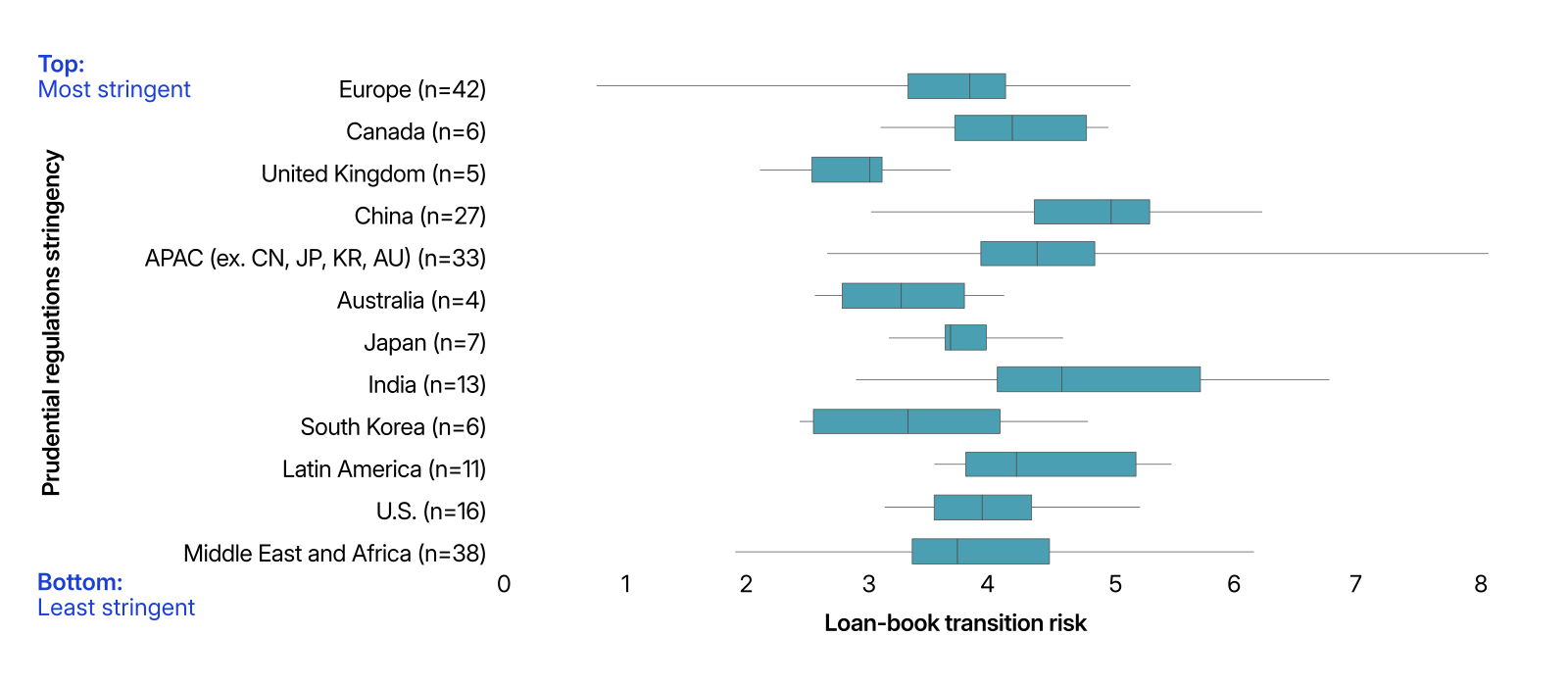
Data as of Sept. 30, 2025. Boxplots show the distribution (min., median, max.) of loan-book transition risk across banks based on the business-pressure component of the MSCI Energy Transition Framework (scale: 0 = low, 10 = high). The sample for loan-book transition risk includes 208 banks that are constituents of the MSCI ACWI Index, With the number of banks per region shown in brackets. Prudential regulation stringency is assessed using 10 equally weighted criteria: (a) legal form & enforceability; (b) supervisory scope and coverage; (c) specificity of requirements; (d) disclosure obligations; (e) integration in prudential processes (e.g., SREP, ICAAP, ORSA); (f) enforcement levers (fines, capital add-ons, escalation); (g) data and quantitative elements (templates, financed emissions, stress testing); (h) timeline certainty (fixed dates, clear phase-in); (i) policy stability (no rescissions/stays); (j) international alignment (ISSB, IFRS S2, BCBS, NGFS). Jurisdictions are ordered vertically from lower (bottom) to higher (top) stringency. Source: MSCI Sustainability & Climate.
4. State ownership is on the rise, and it may not be good news for investors
There’s an industrial-policy shift underway in several developed markets. Recent high-profile examples such as Intel Corp., Eutelsat Communications S.A. and MP Materials Corp. point to more direct government involvement in strategically important sectors — including artificial intelligence, defense and critical minerals — with governments in some cases taking or planning equity stakes in these firms to secure supply chains and national capabilities.
Understanding who a company’s major owners are is critical for investors. The nature of these major owners often determines company priorities, which may not always align with the interests of other investors. In the case of state-owned enterprises (SOEs), in particular, government goals such as preserving jobs, supporting strategic industries or advancing other policy initiatives may take precedence over investor returns.
Over the past 10 years, SOEs have underperformed the MSCI ACWI Index in terms of total shareholder return (TSR) and the greater the government’s stake, the worse that underperformance has been. An analysis of TSR for companies where the state held at least 10% of voting rights found that increasing state control resulted in weaker TSR performance, after controlling for a firm’s size, sector and market development (developed vs. emerging). On average, each additional percentage point of state voting rights was linked to about a half-percentage-point reduction in 10-year TSR.
A different story for bondholders
The story is quite different in credit markets. For bondholders, it can help to have the backing of a government owner. Over the same period, bonds issued by SOEs were less likely to experience adverse credit events such as distressed valuations, credit-rating downgrades or a major spread widening.10 Anticipated government support tends to narrow spreads and reduce default risk — especially for strategically important companies that governments are unlikely to let fail.
The message for investors is clear: State ownership brought resilience, but at a cost to returns. Equity investors may face lower efficiency and slower value creation, while credit investors enjoy an embedded safety net. As governments reassert their role in capital formation, knowing where public capital supports stability and where it erodes profitability will be key to positioning portfolios for the next phase of industrial policy.
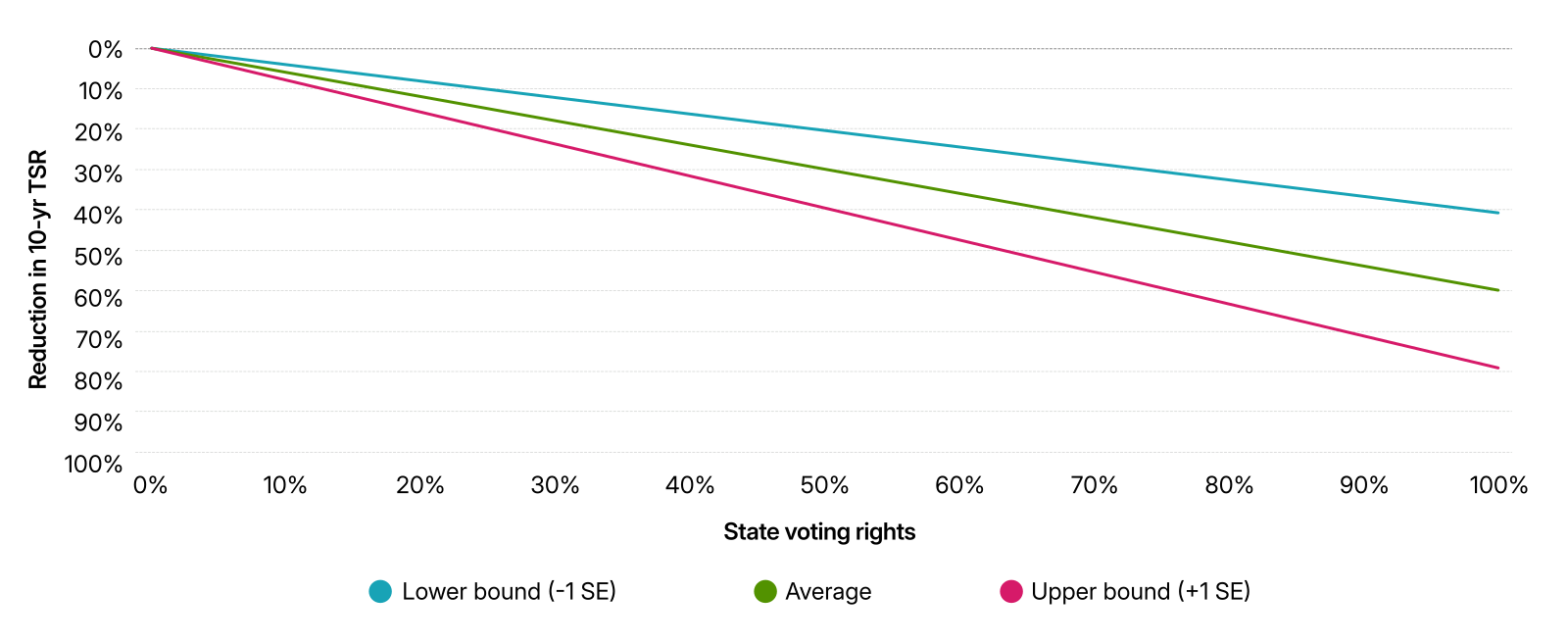
Data as of Sept. 24, 2025. Lower and upper bounds are defined by +/- one standard error (SE) (0.19%). 10-year TSR analysis included 1,906 companies that were continuous constituents of the MSCI ACWI Index between 2015 and 2025, 269 of which were identified as SOEs with 10%+ disclosed state voting rights. Multivariate regression included a continuous variable for state voting rights. Control variables included the natural log of market capitalization, market development and sector dummies. The model was statistically significant: R2 = 0.34; p-value < 0.0001; F-statistic = 73.17. SOE % variable was negative and statistically significant: β = –0.598; p = 0.0017. Regression line extrapolated below 10% state voting rights for illustrative purposes. Correlation does not imply causation. Source: MSCI Sustainability & Climate.
5. Investors demand comparable, financially relevant data
Artificial intelligence (AI) is transforming how sustainability and climate information is gathered. Vast amounts of data can now be scraped, mapped and cross-referenced in seconds. The harder task lies in converting this raw material into reliable, actionable insights. But for investors, the potential to see a fuller picture of the issues that matter most for company performance has never been greater.
For all that AI can do, there remains a subset of data that can only be obtained from companies themselves. Until very recently, investors may have taken for granted that the supply of this data would be guaranteed by disclosure regulations. That assumption is now being tested. The EU’s Omnibus package has proposed delays and key simplifications of the Corporate Sustainability Reporting Directive (CSRD),11 while in the U.S., a change in administration has brought federal climate disclosure mandates into question.
Investors step in to secure transparency
Amid this regulatory wobble, investors are leaving nothing to chance — they’re using market mechanisms to protect their access to information. Proxy voting from the 2025 season showed shareholders of U.S. companies backed proposals grounded in operational reality, while rejecting those that were excessively prescriptive or contrarian.12 There is already evidence that companies reporting clearer sustainability data are being rewarded with a lower cost of capital and higher equity valuations.13
And these investor efforts are bearing fruit. We see rising reporting on specific datapoints that have demonstrable links to financial performance, such as detailed climate targets that signal a company’s intent to manage transition risk,14 and workforce turnover data that allows investors to track performance on employee retention.15
Ultimately, it's not about amassing the reams of data envisioned by more ambitious voluntary frameworks, but instead, focusing on a narrower set of reported metrics that are financially material. For markets, value may well lie in the decision-useful, not the exhaustive.
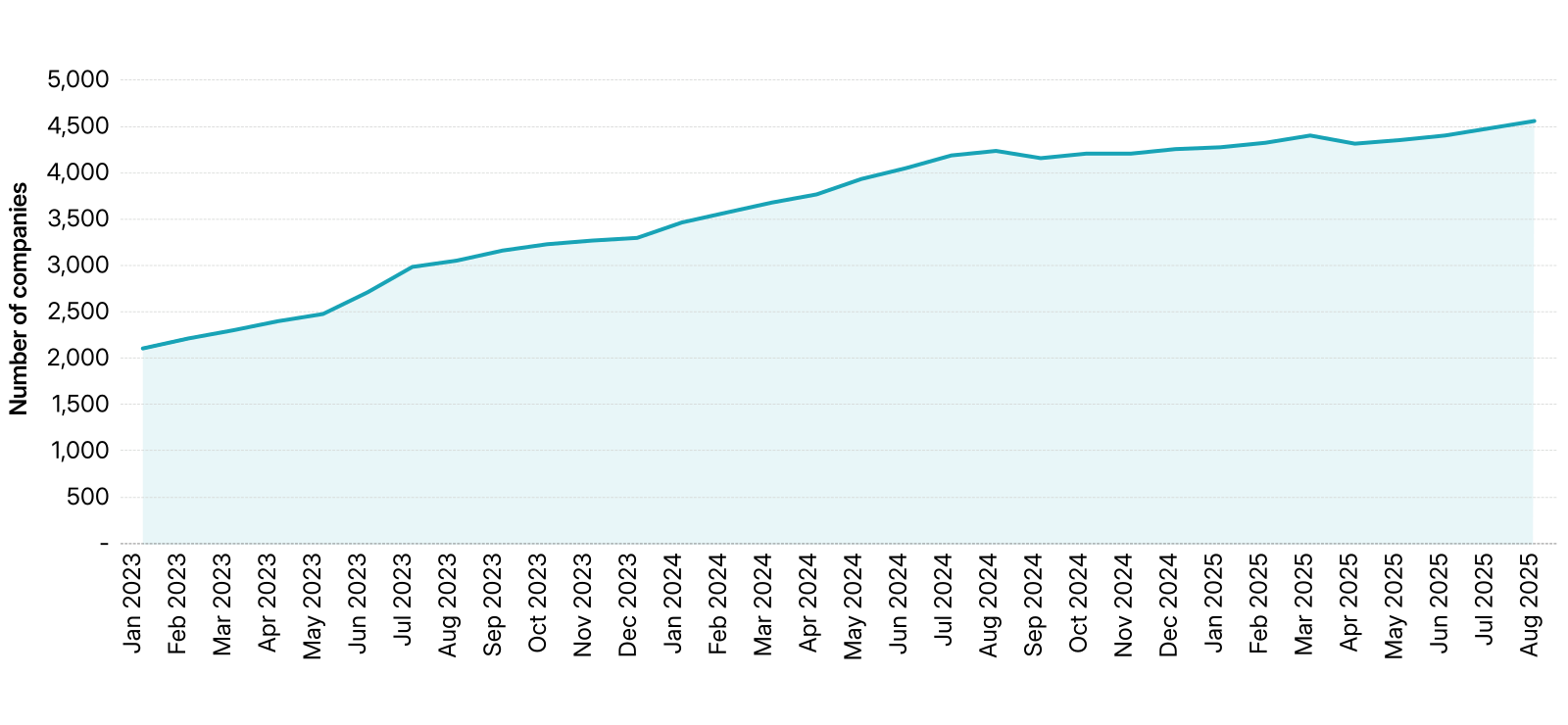
Data as of September 2025. Chart reflects number of issuers that have reported climate targets that meet the criteria for MSCI’s Implied Temperature Rise metric. Includes climate-target data for all companies within MSCI’s Climate Change Metrics database (>12,000 issuers as of October 2025). Source: MSCI Sustainability & Climate and company disclosures.
Acknowledgements: The Sustainability & Climate Trends steering group was headed by Liz Houston with support from Bentley Kaplan, Elchin Mammadov, Mathew Lee, Anthony Chan and Julia Morello.


Subscribe todayto have insights delivered to your inbox.
Sustainability and Climate In Focus: Trends to Watch for 2026 - Webinar
What matters for your investments? And what’s shaping global market forces? In a rapidly evolving financial landscape, having precise and actionable insights is crucial for every investor.
Sustainable investing powered by insight
MSCI’s sustainability data, models, ratings and metrics enable you to better manage risk and identify opportunity.
Bringing clarity to climate investing
MSCI can help you understand, monitor and manage the risk and return of climate exposures with our integrated data, analytical tools, indexes and research insights.
1 Through Oct. 31, 2025, the YTD performance (net returns) of the MSCI ACWI IMI New Energy Filtered Index was 45.33%, compared with 20.67% for the MSCI ACWI Investable Market Index (IMI).
2 Green-revenue share refers to the share of a company’s revenue derived from six environmental impact themes as defined by the MSCI Sustainable Impact Metrics methodology: alternative energy, energy efficiency, green building, pollution prevention, sustainable water and sustainable agriculture.
3 The analysis looks into a peer group of infrastructure assets within 448 portfolio companies that received investments from 1,427 private-capital funds in the following business activities, as per MSCI GeoSpatial Asset Intelligence: infrastructure, education, health care, hospital/health clinic, other utility, other utility services, transmission and distribution, power plant, biomass power plant, coal power plant, gas power plant, geothermal power plant, hydropower plant, nuclear power plant, oil power plant, solar power plant, tidal & wave power plant, waste heat plant, wind power plant, treatment plant, desalination, other waste, water & wastewater, transport, airports, harbors, parking lots/houses, stations, depot, waste, solid-waste disposal. The aggregate underlying valuation of the 2,325 investment holdings in these companies is about USD 232 billion, as of Q2 2025.
4 See: “Solvency II Directive (138/2009/EC),” European Insurance and Occupational Pensions Authority, which defines solvency capital requirements based on a one-in-200-year loss probability.
5 “The Role of Insurers in Tackling Climate Change: Challenges and Opportunities,” European Insurance and Occupational Pensions Authority, 2023.
6 “Climate Change Report 2025 (TCFD Report),” Transport for London Pension Fund, June 2025.
7 Several jurisdictions have introduced, or plan to introduce, measures that also cover nature-based risks. For example, Brazil, China, the EU, Singapore and Switzerland have implemented nature-related prudential requirements. Other jurisdictions, including Saudi Arabia, Japan and the U.K., are exploring similar approaches. See “Stocktake on Nature-related Risks: Supervisory and regulatory approaches and perspectives on financial risk,” Financial Stability Board, July 18, 2024.
8 “Financial Stability Review,” ECB, May 2025.
9 “ECB imposes periodic penalty payments on ABANCA for failing to sufficiently identify climate risks,” ECB, Nov. 10, 2025.
10 Our analysis covered a 10.5-year period of monthly data between January 2015 and June 2025. The analyzed bond universe contained bonds that were constituents of the MSCI Corporate Bond Indexes during the study period. We excluded bonds of issuers that did not have MSCI ESG Ratings at any point during the analysis period. The bonds were equal-weighted in the analysis. The credit events were defined in the same way as in our study: Sustainability as a Leading Indicator for Credit Events.
11 “Simplification: Council Agrees Position on Sustainability Reporting and Due Diligence Requirements to Boost EU Competitiveness,” Council of the European Union, press release, June 23, 2025. For all references to laws, rules or regulations, please note that the information is provided "as is" and does not constitute legal advice.
12 As of Sept. 4, 2025. Includes all proposals submitted to constituents of the MSCI USA IMI. Excludes those submitted on the floor or those that remained unvoted. Contrarian refers to resolutions that push back against established sustainability norms. Source: MSCI Sustainability & Climate.
13 Gao, Yumeng, Benjamin C. Herbert and Lionel Melin, “The ESG Disclosure Premium,” SSRN Electronic Journal, July 2024.
14 Refers specifically to targets included in MSCI’s Implied Temperature Rise metric and Target Summary model, which must include a minimum number of criteria. Further information on these requirements are available in the MSCI Sustainability and Climate Methodologies.
15 Refers to annual reporting data from constituents of the MSCI ACWI Index collected by MSCI Sustainability & Climate. The percentage of companies reporting workforce turnover was as follows: FY 2020: 53%; FY 2021: 57%; FY 2022: 58%; FY 2023: 61%. Collection of FY 2024 data is only partially complete as of Oct. 6, 2025.
The content of this page is for informational purposes only and is intended for institutional professionals with the analytical resources and tools necessary to interpret any performance information. Nothing herein is intended to recommend any product, tool or service. For all references to laws, rules or regulations, please note that the information is provided “as is” and does not constitute legal advice or any binding interpretation. Any approach to comply with regulatory or policy initiatives should be discussed with your own legal counsel and/or the relevant competent authority, as needed.