
Tackling Concentration in Sustainability Indexes
- The level of concentration in market capitalization-based indexes has increased in recent years and can be more pronounced in indexes that select "best-in-class" companies, such as the MSCI SRI Indexes.
- MSCI developed the concentration control mechanism (CCM) that seeks to mitigate high concentration in selection-based indexes while preserving the diversification and sustainability objectives.
- CCM also increases sector representation by reducing the weight of large securities and adding new ones.
MSCI ESG Ratings continue to play a critical role for investors that aim to integrate sustainability considerations in their portfolios. Certain MSCI indexes use the ratings to identify companies that are better-placed relative to their peers in managing financially material sustainability risks and opportunities. In this way, our indexes select best-in-class companies (by MSCI ESG Rating), with varying degrees of constituent selectivity. Examples include the MSCI SRI Indexes that target 25% of free-float market capitalization coverage by sector within each regional building block and the MSCI Selection Indexes that target 50%.1
Increased market concentration led by megacaps
Over the years, we have observed an increased concentration in our broad market-capitalization-based indexes that has been driven by the rise of megacap stocks. This has had a pronounced impact on indexes that select best-in-class firms in terms of MSCI ESG Ratings, using market cap to target a defined level of coverage by sector. In some extreme cases, concentration has resulted in a single security taking up the entire market-cap coverage within a sector of a specific region or country. Managing concentration has now become essential to address investability concerns and ensure better representation of companies with the highest MSCI ESG Ratings across sectors.
CCM limits the weight of large securities while preserving diversification
In the context of indexes that select best-in-class firms in terms of MSCI ESG Ratings, a CCM should meet the following objectives:
- Limit the weight of large securities
- Improve representation in concentrated sectors
- Maintain sector and regional neutrality
To best achieve these objectives, it is more effective to integrate a CCM at the selection stage of index construction, after screening and ranking of securities.
A concentration control factor (CCF) is calculated to adjust the weight of large securities that are up for selection in a particular sector and help reallocate that weight to securities which otherwise would not have been selected. To calculate that control factor, it is necessary to define the maximum active security weight that will be allowed relative to the security weight in the parent Index.
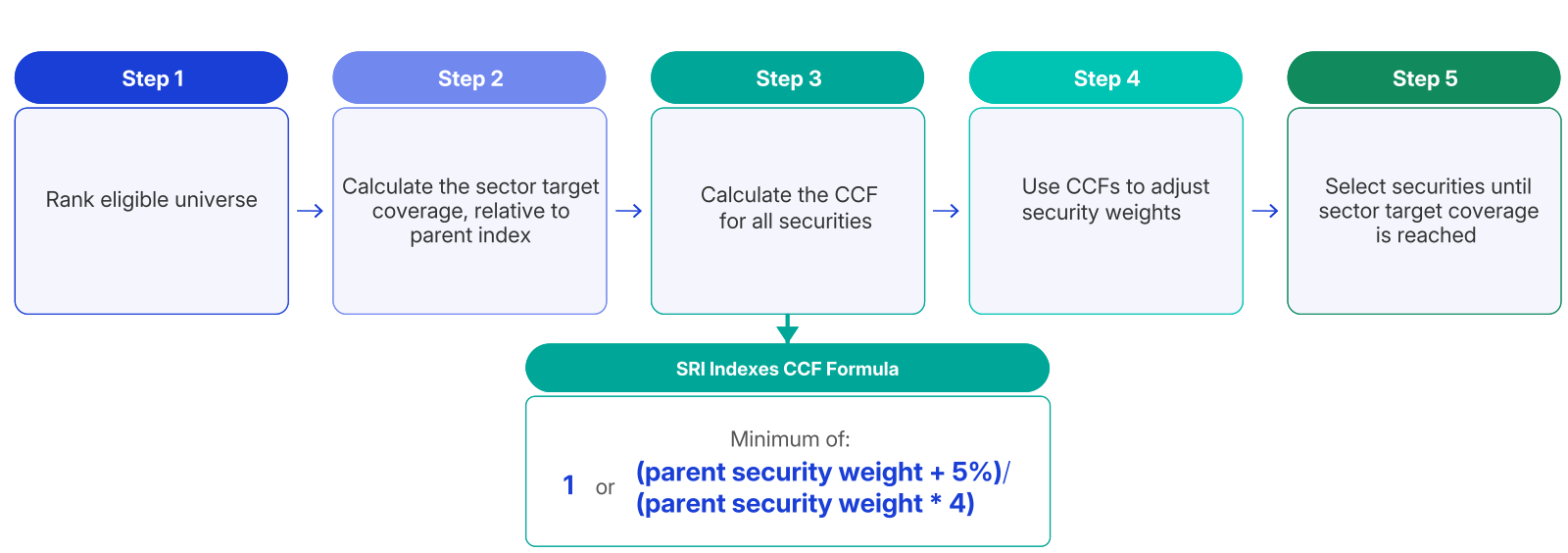
In MSCI SRI Indexes the CCM allows for a maximum overweight of 5% relative to their respective parent index. For example, if a security has a weight of 5% in the MSCI USA Index, the mechanism targets a maximum weight of 10% for that security in the MSCI USA SRI Index.
If no control is applied, given SRI targets 25% coverage of the parent sectors by free-float market cap, the expected weight of a security in the SRI index would be 4x its weight in the parent market-cap index.
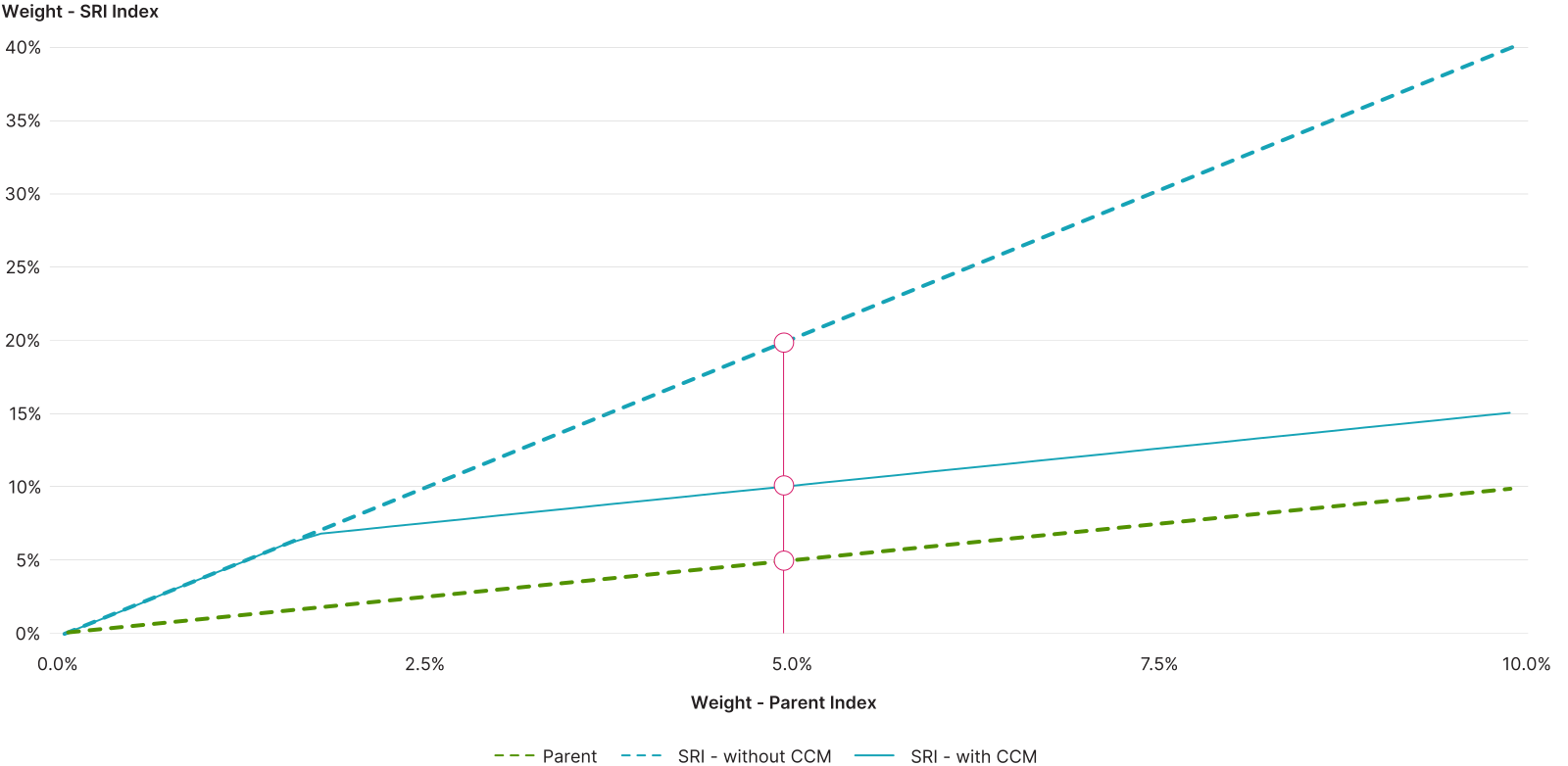
This is how CCM would work for this security:
- When the security is up for selection within its given sector, the weight of the security in the MSCI USA SRI Index (counted as a regional building block) is estimated with and without CCM applied. In this example, the estimated weight would be 10% if CCM is applied and 20% if CCM is not applied.
- If the estimated weight with CCM applied is lower, then the contribution of the security to the sector coverage is reduced accordingly. In this example, the CCF is 0.5x (10/20) and is applied to the coverage of the security in its sector.
- The CCF will also be applied to the free float market capitalization of the security to calculate its weight in the MSCI USA SRI Index.
The CCM can be customized for similar indexes by adjusting maximum active security weight allowed, as well as incorporating the level of “best-in-class” desired.
CCM in action: Lower concentration, more constituents, preserved sustainability profile
To mitigate concentration of single large stocks we implemented CCM in our SRI indexes beginning in May 2025.2 This has resulted in lower concentration across the MSCI SRI Indexes. In particular, we observed the following for the MSCI ACWI SRI Index:
- There was a reduction in weight for 21 large securities.
- The total number of constituents in the relevant regions and sectors generally increased.
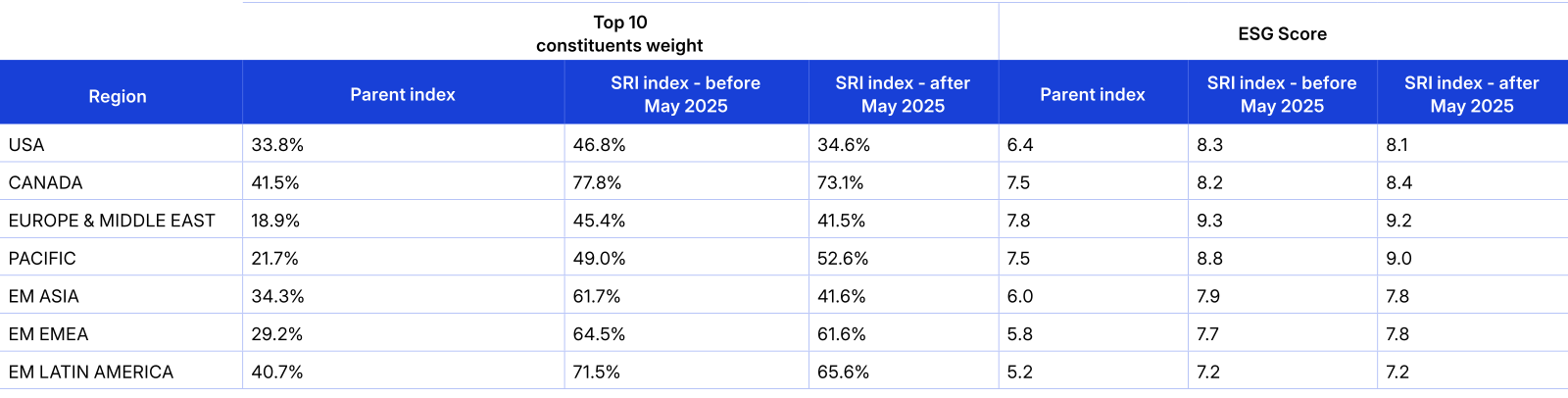
- The aggregate weight of the top 10 constituents decreased, especially in regions with greater numbers of large securities like the U.S. (NVIDIA Corp.) and emerging markets in Asia (Taiwan Semiconductor Manufacturing Co. Ltd.).
- The distribution of sector weights remained close to the parent index, the MSCI ACWI Index, except in the energy sector due to the addition of fossil-fuel-related screens during the May 2025 index review.3
- The ESG score for the MSCI ACWI SRI Index continued to be significantly higher compared to the parent index.
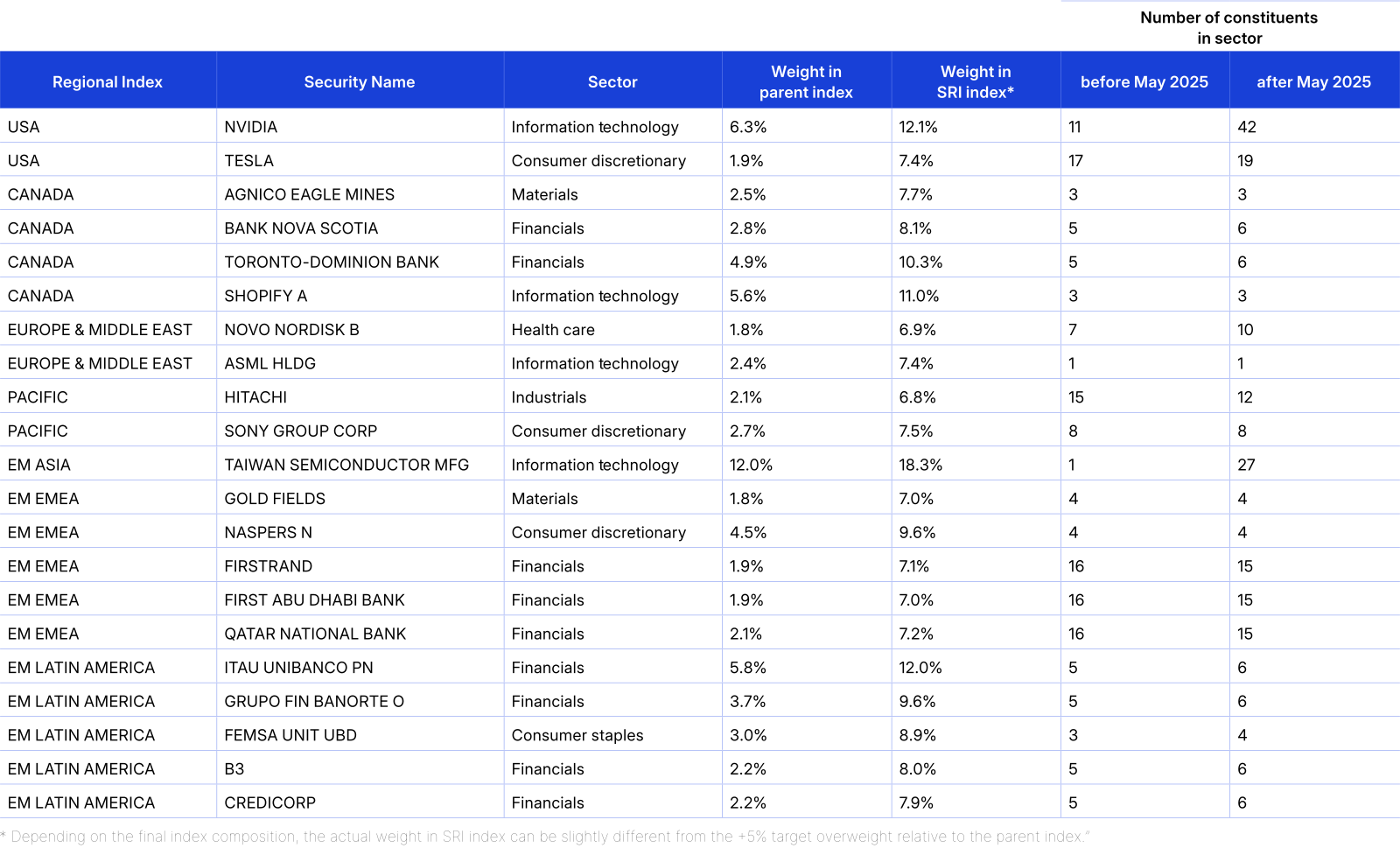
* The actual weight in the SRI index can be slightly higher or lower than the +5% target depending on the final index composition.
Broader application: Tailoring concentration control to investor needs
Investors may request MSCI to apply CCM in custom selection-based indexes, with the flexibility to specify the target value or the desired level of concentration based on index objectives.


Subscribe todayto have insights delivered to your inbox.
Climate Action: Performance and Decarbonization Insights
The MSCI Climate Action Indexes enable climate-aware investors to align their portfolios with real-world decarbonization without sacrificing strong returns.
Climate Indexes
MSCI builds equity and fixed income climate indexes to help investors seeking to measure and manage climate risk and identify additional investment opportunities.
Sustainability Indexes
MSCI Sustainability Indexes equip institutional investors with tools to integrate extra financial considerations into their investment process and portfolios.
1 Prior to Feb. 3, 2025, the MSCI Selection Indexes were known as the MSCI ESG Leaders Indexes.
2 Following wide support gathered from market participants during the consultation, the CCM was applied to the MSCI SRI Indexes for the first time as part of the May 2025 index review and will be applied at each quarterly index review going forward.
3 Sectors are defined according to the Global Industry Classification Standard (GICS®). GICS is the industry-classification standard jointly developed by MSCI and S&P Dow Jones Indices.
The content of this page is for informational purposes only and is intended for institutional professionals with the analytical resources and tools necessary to interpret any performance information. Nothing herein is intended to recommend any product, tool or service. For all references to laws, rules or regulations, please note that the information is provided “as is” and does not constitute legal advice or any binding interpretation. Any approach to comply with regulatory or policy initiatives should be discussed with your own legal counsel and/or the relevant competent authority, as needed.