
Climate Action: Performance and Decarbonization Insights
- Over the last few years, climate-aware investors have shifted their focus from net-zero portfolio targets to strategies that support the climate transition and real-world decarbonization.
- The MSCI Climate Action Indexes provide a practical, scalable way to align portfolios with the low-carbon transition, showing that meaningful decarbonization is possible without significant tracking error to the benchmark.
- A new performance-attribution approach quantifies how specific index-construction steps contributed to results, showing that both inclusion and exclusion criteria positively impacted the MSCI World Climate Action Index.
As asset owners recalibrate their investment strategies to align more effectively with the low-carbon transition, many investors have been adopting the “contribute-to-the-transition” approach. In this framework, high-emitting companies are not automatically divested. Instead, their portfolio inclusion depends on demonstrating credible transition progress through measurable emissions targets, robust climate governance and growing revenues from low-carbon solutions.
The MSCI Climate Action Indexes seek to translate these considerations within indexed practice. The index methodology is simple and transparent. Instead of excluding entire industries, the indexes maintain sector balance and aim to identify transition leaders within each sector. Companies are evaluated against their sector peers based on their emissions intensity, the adoption of science-based targets, the strength of their climate-risk-management practices and the share of revenues from green businesses. The top half of companies in each sector are eligible for selection in the index, ensuring broad participation while tilting portfolios toward those best positioned for the climate transition.
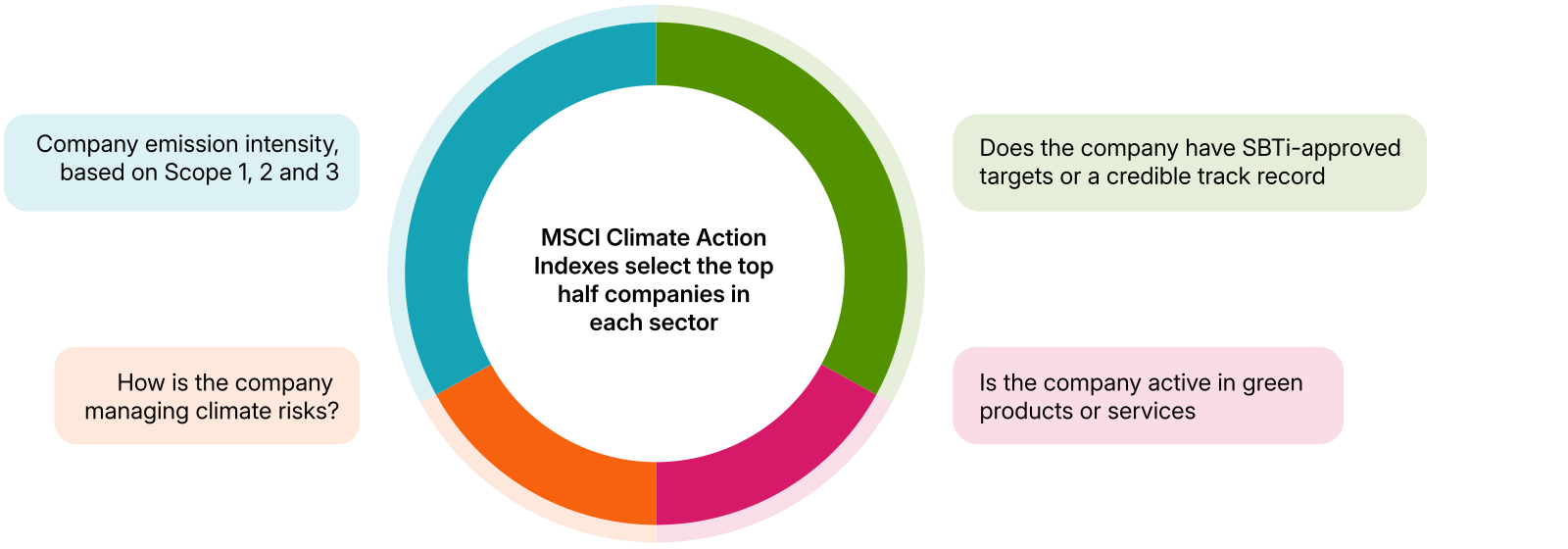
Metrics used in the MSCI Climate Action Indexes’ methodology. Sectors are defined according to the Global Industry Classification Standard (GICS®). GICS is the industry-classification standard jointly developed by MSCI and S&P Dow Jones Indices.
We analyzed the performance of the MSCI World Climate Action Index since its launch on Oct. 4, 2022, and compared it to the backtested results. Across both the simulated and live history periods, the MSCI World Climate Action Index outperformed the MSCI World Index. Using MSCI’s Global Equity Model for Long Term Investors (GEMLT), we can break down index returns into systematic and stock-specific drivers. Between November 2018 and September 2022, the MSCI World Climate Action Index outperformed its parent index by 0.4% annually, driven almost entirely by stock-specific contribution (0.6%). In the live index-history period, over the last three years the MSCI World Climate Action Index had higher active returns of 0.6% on an annualized basis, with the contribution from stock selection more than doubling to 1.4%. Systematic factors such as country, industry and style exposures played only a minor role. However, the recent outperformance of aerospace and defense companies, which have lower representation in the MSCI Climate Action Indexes due to the exclusion of controversial weapons, has detracted from performance.
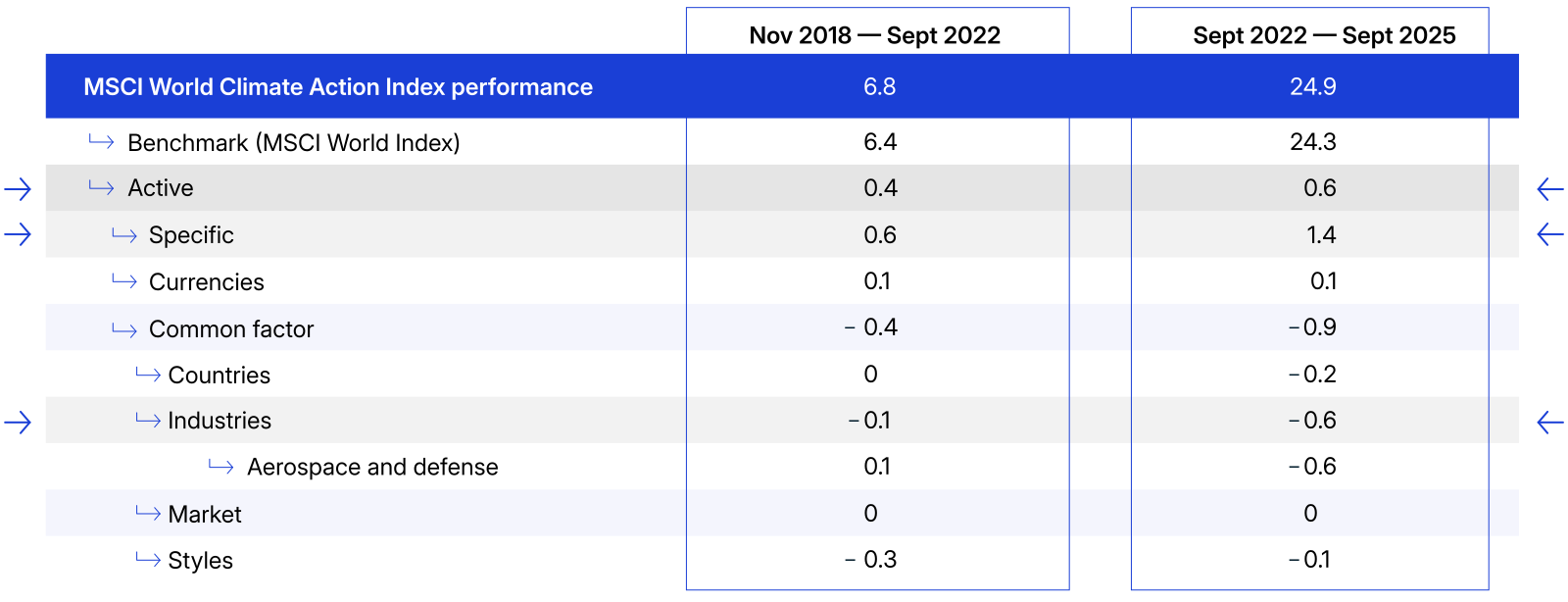
The risk and return metrics are calculated for two time periods: From Nov. 30, 2018, to Sept. 30, 2022, and from Sept. 30, 2022, to Sept. 30, 2025, using the MSCI GEMLT.
Stock-specific returns capture the portion of active performance that cannot be explained by systematic factors such as countries, industries or styles. They reflect, in part, outcomes driven by company-level characteristics and the selection process. However, this factor-based attribution based on the MSCI GEMLT doesn’t align the performance story with the choices made in the index design. Has the core sector-relative scoring of stocks on transition criteria been rewarded? The chart below provides a complementary view by linking active performance to the sequence of index-methodology rules that determine stock inclusion, exclusion and weighting in the final index. In this way, we can better understand the index performance and gain insights into factors supporting or challenging climate-transition investing.
We use a novel Brinson-style allocation- and selection-attribution framework to calculate the active return attributed to each group of stocks selected for or excluded from the MSCI Climate Action Index. Each stock belongs to only one group, determined by the methodology rules, and together these groups encompass all constituents of the MSCI World Index.
For example, one group includes stocks that pass all eligibility checks, fall within the second quartile of their respective sector based on emissions intensity, have set credible emission-reduction targets and are constituents of the MSCI World Climate Action Index. The overall impact of excluding companies that failed any of the eligibility checks in the MSCI World Climate Action Index methodology was positive for active performance. The exclusion criteria aimed at managing headline risks, such as avoiding high emitters and companies with ongoing very severe sustainability-related controversies, had a neutral effect.
However, exclusions aligned with the climate objectives — including business involvement and poor management of climate-related risks and opportunities (CRMS) — contributed positively to active returns. Within the eligible universe, the methodology allows only 50% of companies in each sector to be included in the index. The impact of this selection rule was also positive, as reflected in the attribution from both “eligible and excluded” and “eligible and included” stocks. The attribution effect was positive (0.15% annualized) for the group of stocks which were “eligible and included” and had their intensity quartiles adjusted upwards because of credible emission-reduction targets, higher green revenue or strong climate-risk-management practices.
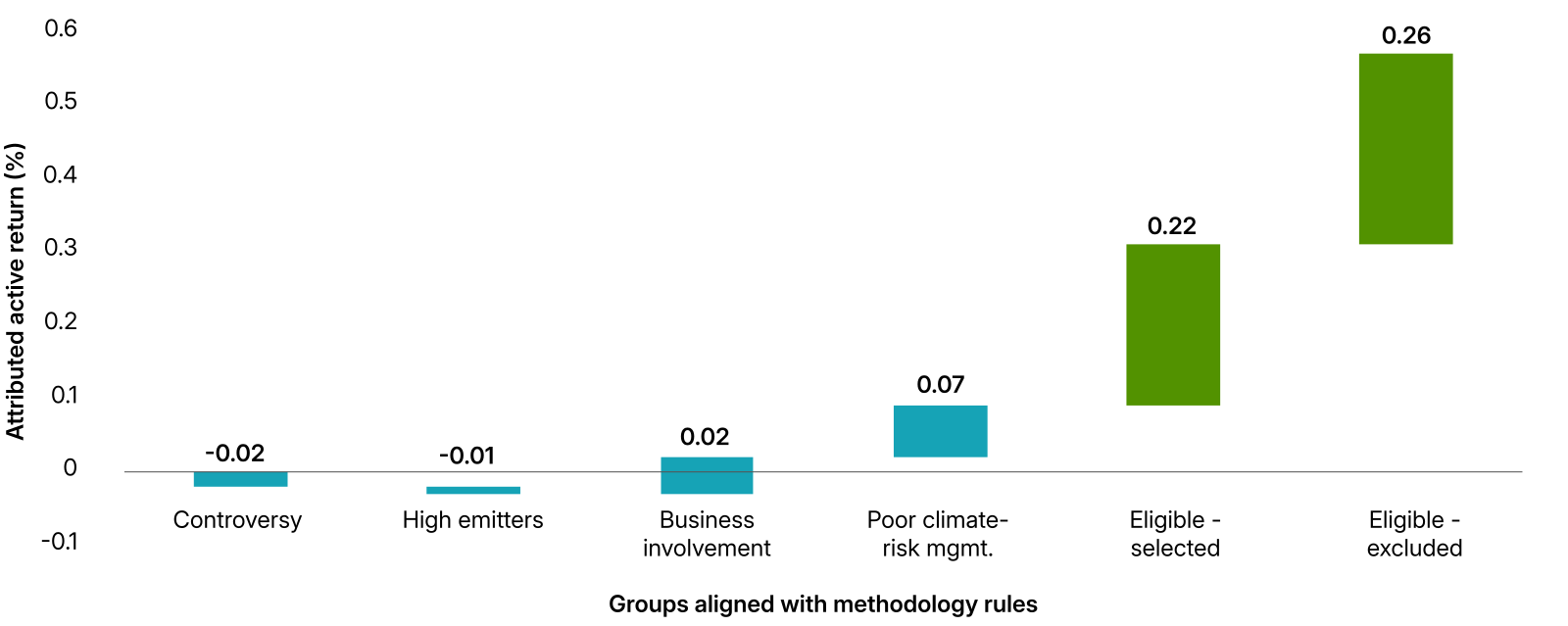
Brinson-style return attribution based on methodology-driven inclusion and exclusion rules for the period between Sept. 30, 2022, and Sept. 30, 2025. Constituent weights and group returns are calculated on a monthly basis. Blue bars represent the impact of methodology aligned screens. Green bars represent the impact of sector-relative selection.
MSCI Climate Action Indexes generally have a lower emissions intensity than the respective parent index but beyond this cross-sectional difference, it is also important to understand how the emissions intensity of these indexes evolves over time. Is it the result of genuine company actions, or does it reflect other portfolio dynamics? The total carbon footprint of an index can change over time for several reasons. Portfolios are rebalanced, market movements shift company weights and enterprise value including cash (EVIC) can rise, which mechanically lowers carbon intensity. To separate these effects, MSCI has developed an emissions-intensity attribution tool that helps investors understand how much of the change comes from rebalancing, shifts in weights or company-level fundamentals such as actual emissions and EVIC.
When applied to the MSCI World Climate Action Index, a larger share of decarbonization came from organic company-level emission reductions than in the MSCI World Index. The MSCI World Climate Action Index achieved a 7.5% reduction in company-level carbon emissions compared to a 4.7% reduction in the MSCI World Index, as shown in the green box. This improvement is significant given that the methodology selects only the top 50% of companies within each sector by count. On a market-cap basis, however, the MSCI World Climate Action Index still overlaps with its parent index by roughly 70–80% on average, underscoring that meaningful decarbonization can be achieved without significant deviation from the broader benchmark.
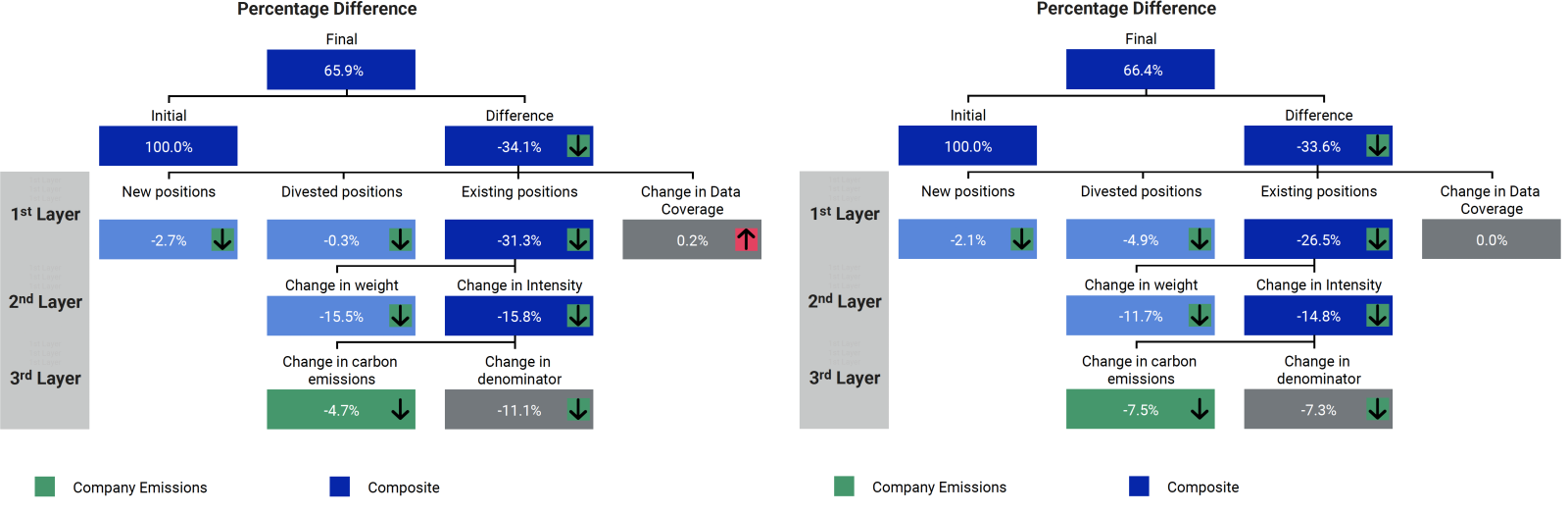
Source: MSCI, carbon-emissions-intensity change from Sept. 30, 2022, to Sept. 30, 2025.
The performance of the MSCI World Climate Action Index was primarily driven by company-specific factors and the methodology-step performance attribution shows that both inclusion- and exclusion-methodology rules contribute to returns. The index also demonstrated faster company-led decarbonization than its parent index while maintaining close benchmark alignment. As the global economy continues its transition toward lower emissions, MSCI Climate Action Index framework serves as a practical solution for investors seeking to align their portfolios with tangible climate progress, functioning as an index for replication, a benchmark or as the basis of a listed future.


Subscribe todayto have insights delivered to your inbox.
Sustainability and Climate in Focus: Trends to Watch for 2026
As governments pivot toward security and technology, markets are increasingly defining the sustainability agenda. We explore how capital, data and risk are driving the next phase of the transition.
From Sustainability and Climate Blind Spots to Actionable Insights
Small and private firms often lack sustainability and climate disclosures. Financial institutions can leverage modeled data to help bridge gaps, improve risk management and address regulatory needs.
Climate Action Indexes
MSCI Climate Action Indexes are built to help investors seeking to finance decarbonization by investing in companies prepared to drive their sector’s low-carbon transition.
The content of this page is for informational purposes only and is intended for institutional professionals with the analytical resources and tools necessary to interpret any performance information. Nothing herein is intended to recommend any product, tool or service. For all references to laws, rules or regulations, please note that the information is provided “as is” and does not constitute legal advice or any binding interpretation. Any approach to comply with regulatory or policy initiatives should be discussed with your own legal counsel and/or the relevant competent authority, as needed.