
Unraveling Summer 2025’s Quant Fund Wobble
- June and July saw some of the world’s most sophisticated long-short equity quant funds underperforming steadily but comprehensive explanations have been in short supply.
- We unravel what happened in US markets using MSCI equity factor models to look behind the large headline moves in the beta, profitability, momentum and liquidity factors, especially for highly-shorted names.
- We find that that these same factors showed unusual return correlations, even after accounting for the linear model residuals, with these interaction effects plausibly linked to an unwinding in crowded factor positions.
From June to late July, some of the most sophisticated long-short equity quantitative hedge funds experienced a steady run of negative daily performance in their U.S. portfolios, grabbing headlines in the financial press. Goldman Sachs’ prime services unit estimated that quant equity managers lost 4.2% over the period with some of the commentary ascribing losses to short positions.1 However, the true sources of the poor performance have remained unclear to most. Certainly, the losses cannot be attributed simply to volatility, as market conditions were benign during the period. U.S. equities were up by around 8%, setting new record highs. Moreover, fundamental equity managers did not face similar losses. To help investors understand what may have happened, with the benefit of hindsight, we use MSCI risk model data and factor model-based analysis to unravel some of the drivers of the underperformance.
Looking for clues in high factor returns
Our analysis focuses on the period from June 1 to July 25, 2025.2 We do not know the exact positions of each portfolio, of course, but we assess that, unlike in the so-called GameStop short-squeeze event of 2021, a strong rally of a few meme stocks was likely not the cause of the poor performance of highly-diversified quantitative portfolios. Instead, the apparent steadiness of the daily losses over the two-month period suggests that there were market-wide effects, reflecting a prevailing sentiment trend that gradually moved against these portfolios.
What were the key return drivers during the period? Given the bullish market, it isn’t surprising that the stocks with high beta, volatility, trading activity or large market-cap performed well. However, anomalously, momentum stocks did not do well. Heavily shorted stocks also outperformed, a clear headwind for the short leg of these systematic funds, and, consistent with the idea of a “junk” rally, profitable stocks also underperformed.
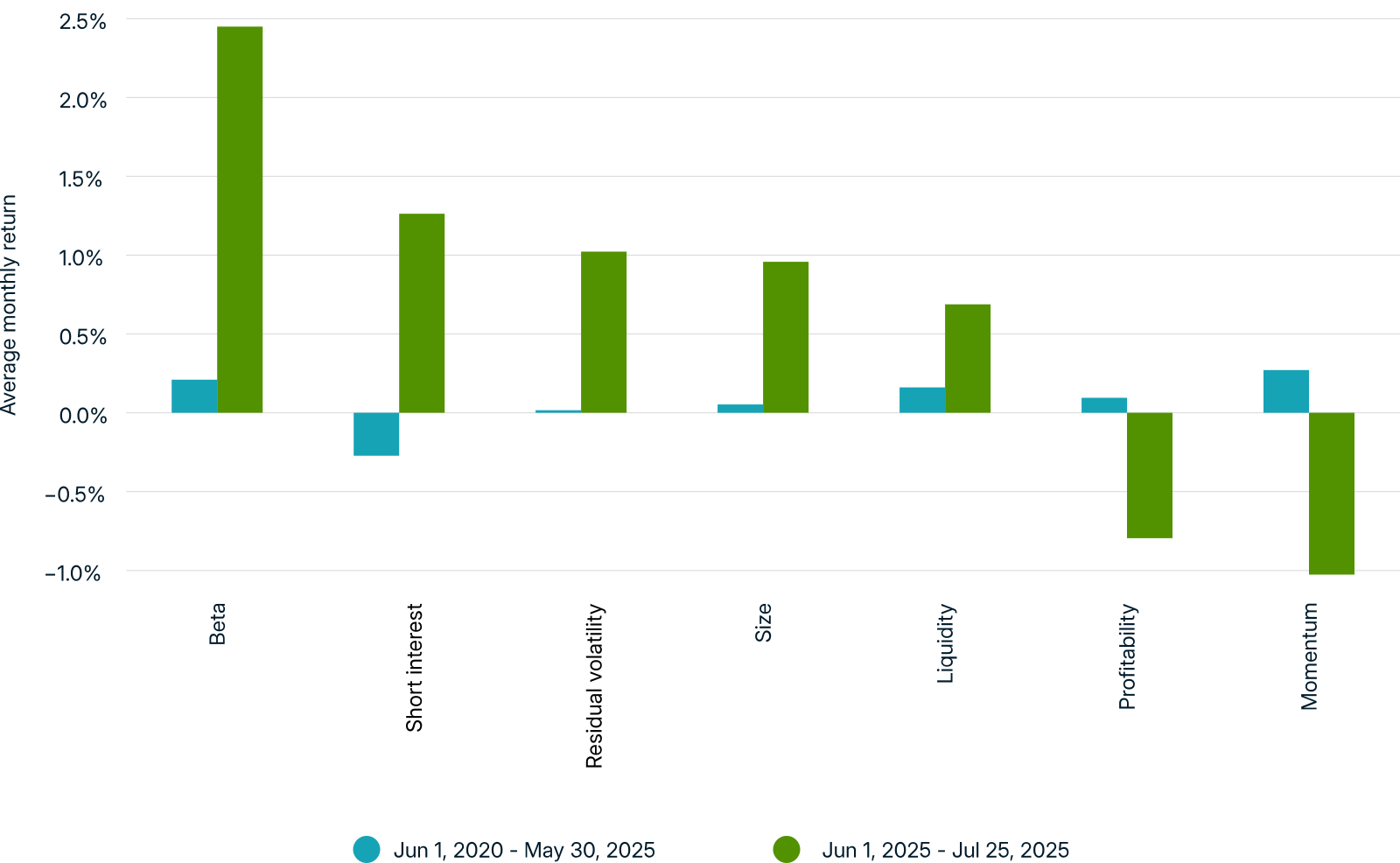
Returns to select factors in the MSCI USA Equity Factor Trading Model (EFMUSATR). The average monthly returns were calculated by multiplying the average daily returns over each period by 21.
The returns of many of these factors were not only large relative to their 5-year average to May 30, 2025, but also relative to the MSCI USA Equity Factor Trading Model risk estimate. The cumulative return over the summer was nearly double or more the model forecast. Interestingly, the return to short interest, profitability and size reversed in late July, just when quant equity funds reportedly recovered some of their losses.
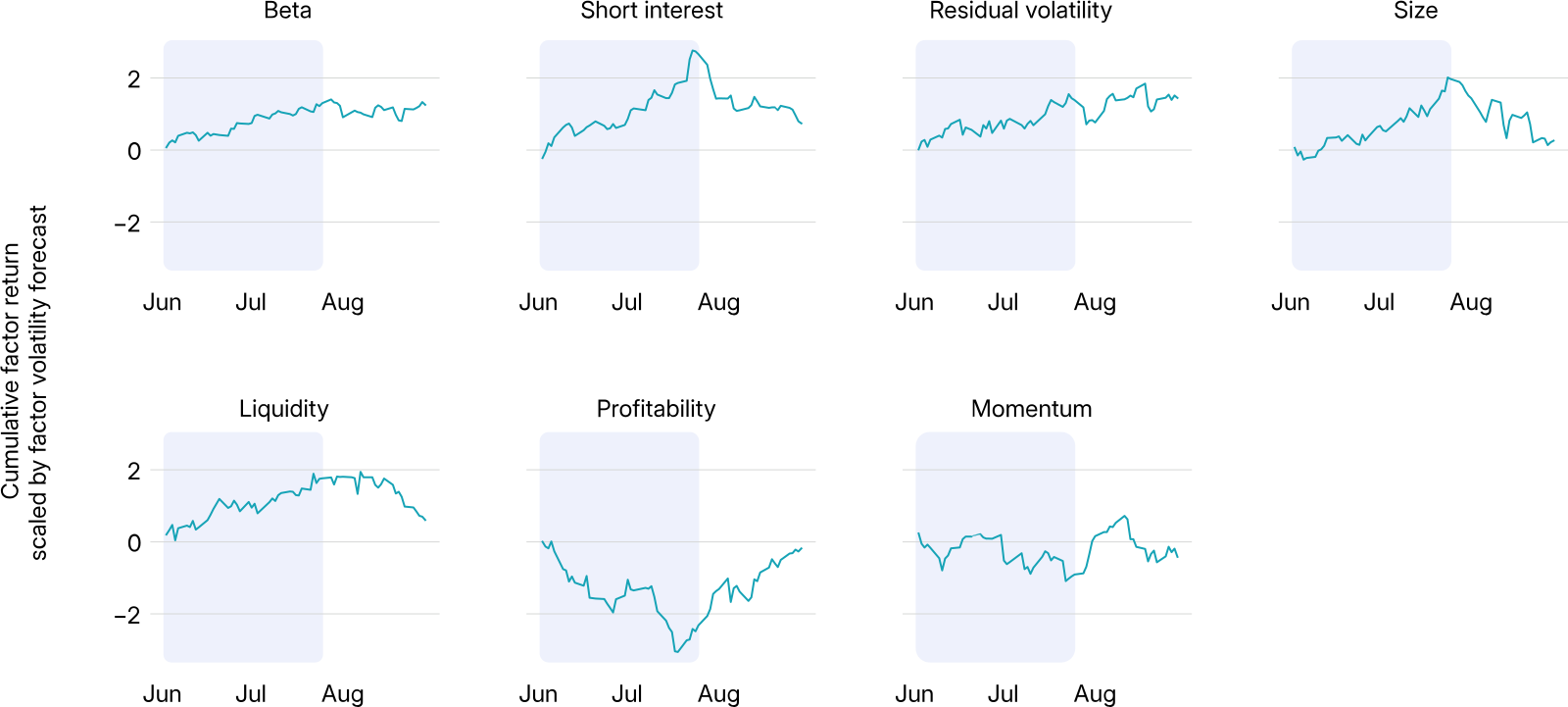
Cumulative factor returns to select factors of the MSCI USA Equity Factor Trading Model (EFMUSATR) divided by the corresponding factor volatility forecast, as of May 30, 2025. We scaled the volatility forecast for a prediction horizon of 38 trading days, the number of trading days between June 1, 2025, and July 25, 2025. The shaded regions indicate the period between June 1, 2025, and July 25, 2025.
The key insight is that the impact of these outsized factor returns went beyond the predictions of the usual linear calculation that says the portfolio effect is found by considering each factor contribution in turn. By focusing on the top 20% of stocks in the US market by short interest, we saw clear signs of interaction effects between short interest and each of the factors we examined.
Said simply, stocks with high short interest and high residual volatility, for example, systematically exceeded the prediction of a linear model. The average cumulative specific return to these stocks grew steadily during the period. If a portfolio were short these stocks, it would have suffered losses not just from the exposure to each factor but also from the contribution of the interaction effect. We established this by looking beyond the usual double-sort on the factors using total stock returns to see that the performance spread persisted when we used full risk model residual returns. Moreover, we observed the interaction effect, not just for residual volatility, but all the key drivers of portfolio returns during the quant wobble period.3
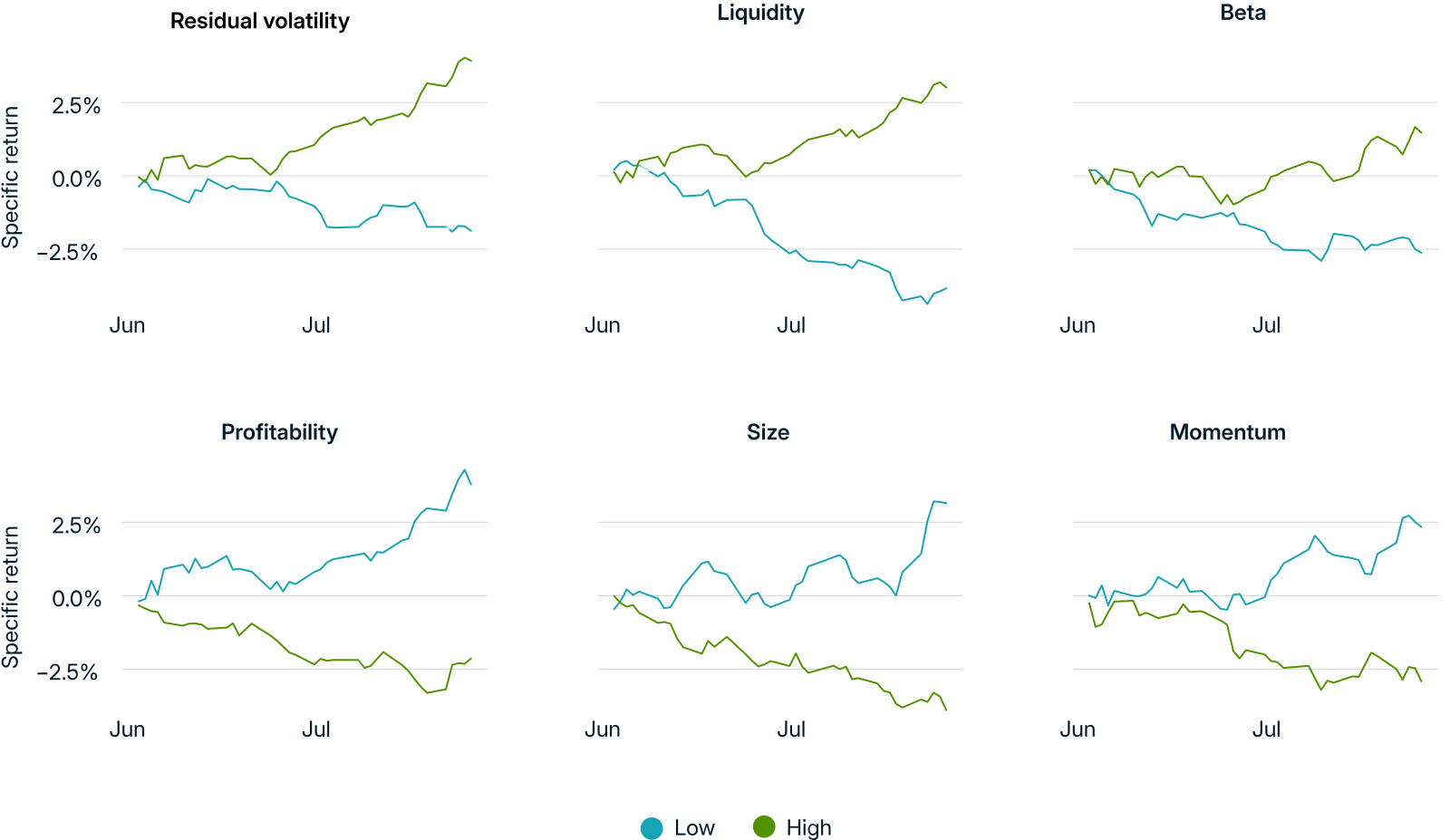
Cumulative specific return relative to the MSCI USA Equity Factor Trading Model for MSCI USA IMI stocks that have (a) high short interest (top 20% by short interest factor) and (b) “high” (top quartile) or “low” (bottom quartile) exposure to size, momentum, profitability, residual volatility, liquidity or beta, respectively. The quartile portfolios are square-root cap-weighted. All factor exposure data are as of May 30, 2025.
Without the holdings data of these quant funds, we can’t directly quantify the impact of this interaction effect. However, among the most heavily shorted stocks (the top 20% of stocks in the MSCI USA Investable Market Index (IMI) by short interest), nearly half of them had high exposure to residual volatility, as of May 30, 2025. When we widened the net to include stocks with high liquidity, high beta, low profitability, small market cap or low momentum, the fraction increased to 84%. Hence, any quantitative portfolio that had a meaningful exposure to these heavily shorted stocks was likely to suffer from the observed interaction effect.
We can further understand the potential source of this interaction effect when we review the residual correlation pillar of the MSCI Factor Crowding Score. Recall that one of the signals for the MSCI crowding metric that helps inform likely future factor rotation is the average level of pairwise correlation of stock returns in the tails of the factors.4 When we look at the traces for the factors in focus, we see a fall in the pairwise correlation during the period of study. This suggests that some of the pain arose from a systematic reduction in crowded positions. The fall in correlation would also raise the potential cost of stock selection in factor-proxy portfolios.
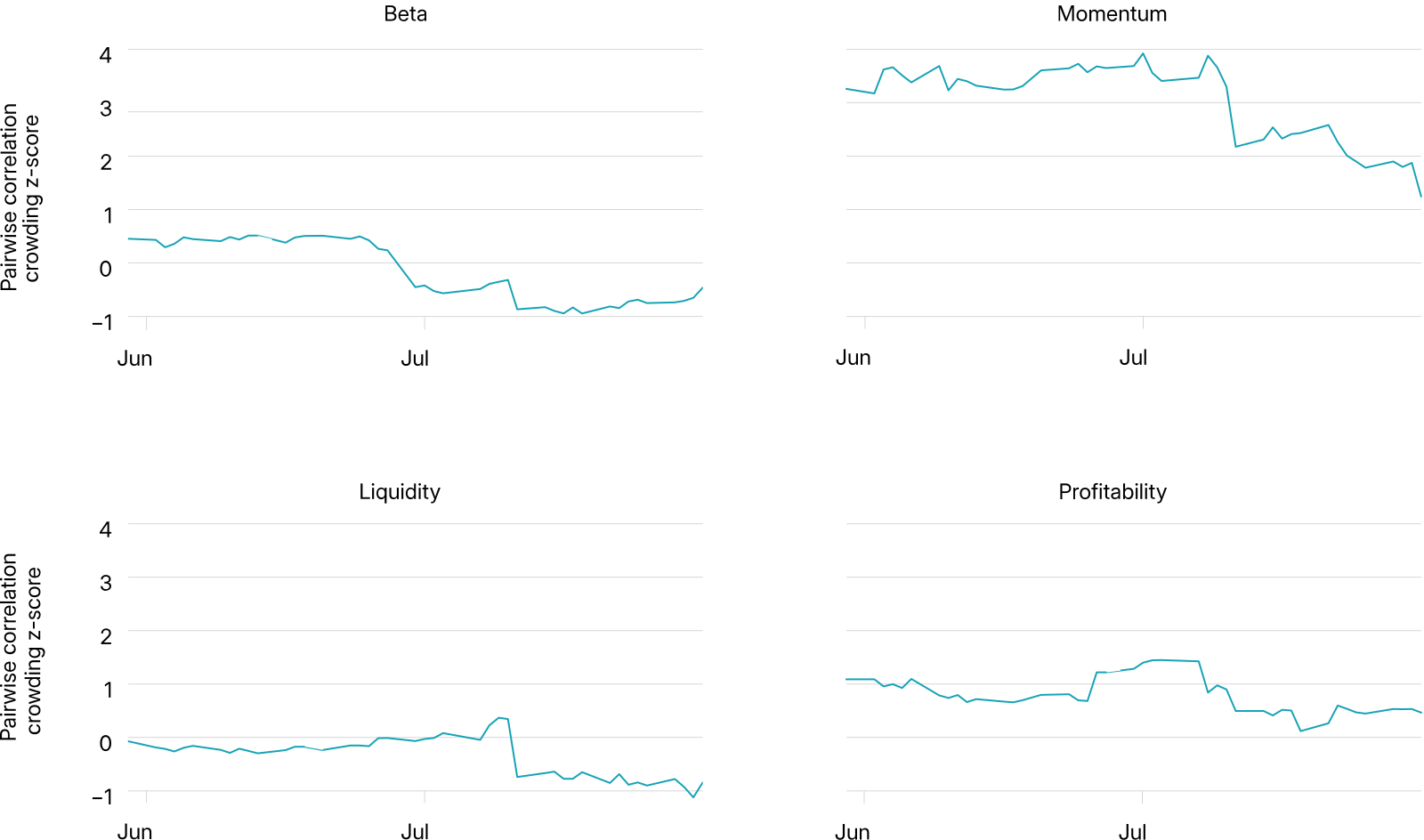
The pairwise correlation score in the MSCI Integrated Factor Crowding Model measures the average specific return correlation of stocks in the top and bottom quintiles of a factor over the trailing 63 trading days.
Systematic long-short strategies suffered sustained losses in mid-2025. We have used the MSCI USA Equity Factor Trading model and the MSCI Factor Crowding Score to build a plausible narrative to explain the challenges they faced. Key factors linked to alpha strategies had outsize returns and among highly shorted stocks, these would undermine typical strategies’ net returns. Moreover, we found clear evidence that this performance drag was greatly magnified by large interaction effects among these same factors and by a partial crowding unwind. Monitoring for these interaction effects and tracking the Factor Crowding signals could assist portfolio managers to better navigate similar episodes in the future.




Subscribe todayto have insights delivered to your inbox.
Equity Factor Models
Explore portfolio construction, risk management and factor investing tools designed to help you build resilient, data-driven portfolios.
Crowding Solutions
Helping institutional investors identify where crowding risks may be developing — at the security and factor level, and from the hedge fund community.
MSCI Integrated Factor Crowding Model
With the rise of factor investing, institutional investors increasingly have sought to understand whether their factor exposures are crowded.
1 Coverage in the FT, Bloomberg and Business Insider suggested affected funds included Qube, Point72 / Cubist, Man Group, Two Sigma and Renaissance Technologies. See, for, example, “Hedge funds and high-frequency traders are converging: Prop shops versus pod shops”, FT, Sept. 29 2025; “Hedge funds are hurting from a garbage rally. Who’s to blame?” Bloomberg.com, 4 Aug. 2025 and “A long slow bleed – Quant hedge funds getting slammed and scrambling for answers”, Business Insider, July 24, 2025
2 Press coverage and broker reports suggest that the funds experienced a reprieve in the final week of July.
3 As something of a cross-check on these results, we can also look at the aggregate portfolio of shorts from the MSCI Hedge Platform-driven Crowding dataset. That portfolio is a mix of strategies and of discretionary and systematic managers, but here too we see similar factors leading contributions to the portfolio’s performance.
4 The correlations are calculated from stock returns adjusted for market, size, beta and residual volatility factors. Crowded factors would be expected to show high correlations. See “MSCI Integrated Factor Crowding Model: Assessing Crowding Risks in Equity Factor Strategies”, June 2018, G. Bonne et al and “Lost in the Crowd?”, June 2015, Bayraktar et al for more details.
The content of this page is for informational purposes only and is intended for institutional professionals with the analytical resources and tools necessary to interpret any performance information. Nothing herein is intended to recommend any product, tool or service. For all references to laws, rules or regulations, please note that the information is provided “as is” and does not constitute legal advice or any binding interpretation. Any approach to comply with regulatory or policy initiatives should be discussed with your own legal counsel and/or the relevant competent authority, as needed.