
When Buyout Marks Meet the Market
- General partners in buyout generally mark companies conservatively before a sale. Nearly 75% of portfolio companies exited at prices above reported net asset value (NAV), making NAV a useful floor for asset owners’ assessments.
- Marking accuracy declines with holding period, and older portfolio companies are more likely to exit below their last quarterly valuation — a particular concern for investors with large allocations to mature funds.
- Winners tend to be marked below their eventual exit value, while weaker investments are more often marked above it. For asset owners considering secondary sales, this asymmetry in valuation bias is particularly relevant.
Quarterly reports on NAV are the primary signal limited partners (LPs) receive about the values of buyout portfolio companies. Those marks don't necessarily track with ultimate sale prices, however. Realized exits let us test how well the valuations from a fund’s general partner (GP) track actual transaction prices, and we see that the reliability varies by holding period, deal performance, deal size and when the valuation was set.
The MSCI Private Capital Universe captures the quarterly valuations GPs report for their portfolio companies. When a company is sold, the valuation reported at the start of the exit quarter can be compared with the eventual sale price. Across global buyout deals during 2012-2025, just under 75% of exits cleared above that mark.1 The pattern has persisted across market cycles.
Most deviations from the mark are modest. The median above-mark exit surpasses the valuation by just over 2%, while the median below-mark exit falls short by less than 80 basis points.
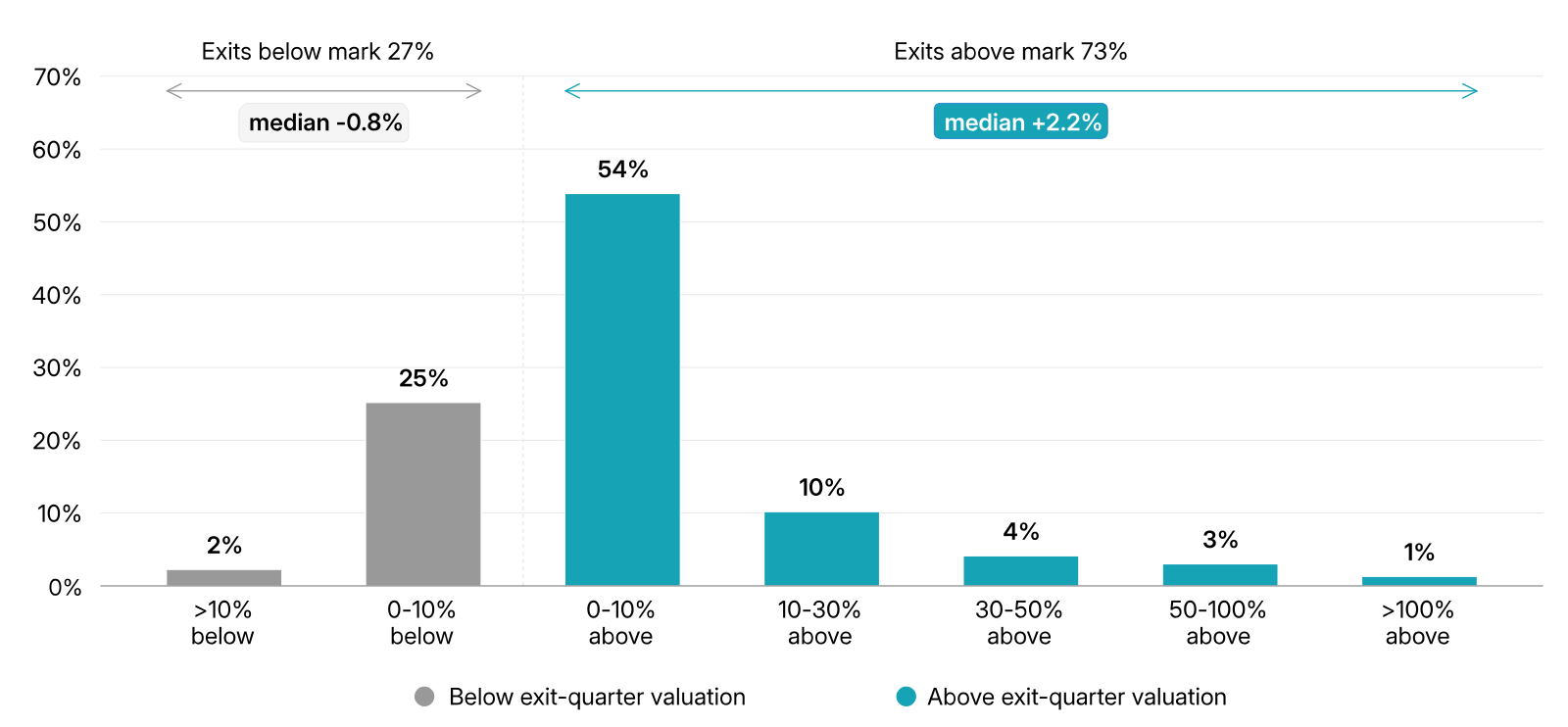
Distribution of buyout exits relative to the GP's exit-quarter valuation. Global buyout funds 2012–2025. Source: MSCI Private Capital Universe
By the exit quarter, the sale process is often already underway, and the GP's reported valuation may reflect information about the pending transaction. We therefore use the valuation reported one quarter earlier — the penultimate (Q−1) valuation — as a cleaner benchmark.
From that perspective, the picture looks markedly different. At Q−1, 82% of exits clear above the reported valuation, nearly 10 percentage points higher than at the exit quarter. The median above-valuation exit clears by roughly 26%, compared with just over 2% at the exit-quarter mark. The analysis that follows uses Q−1 as the reference point.
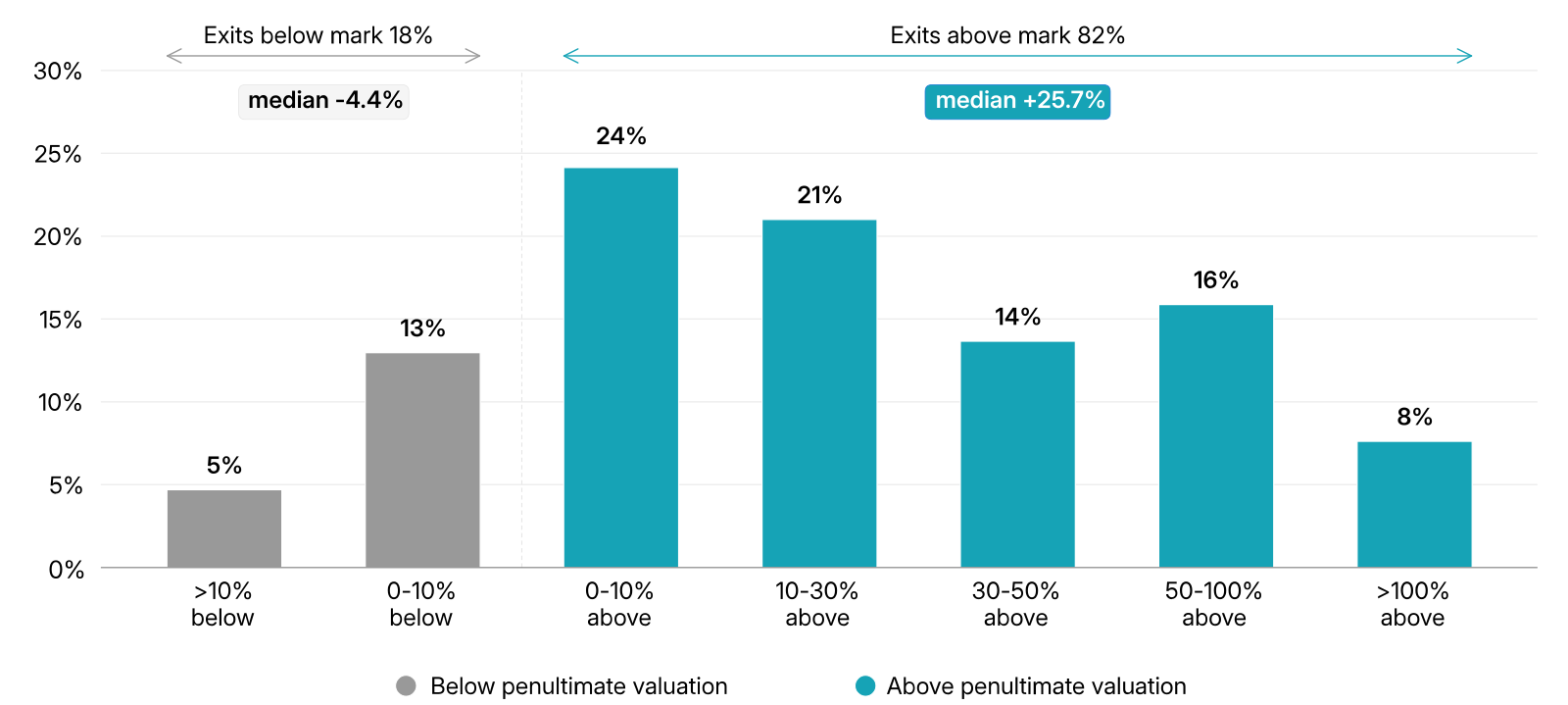
Distribution of buyout exits relative to the GP's penultimate valuation. Global buyout funds 2012–2025. Source: MSCI Private Capital Universe
Using the penultimate valuation, we find that marks are not uniformly conservative across holding periods. The above-valuation rate and the median uplift on above-mark exits both decline steadily with holding period.
This pattern may reflect two factors. The first relates to operations, as investments can underperform their original underwriting over time. The second relates to selection. Assets held for 10 years or longer are more likely to be those where the original investment thesis no longer holds. Older assets may also be subject to greater valuation uncertainty as business conditions, peer groups and the market environment evolve over time.
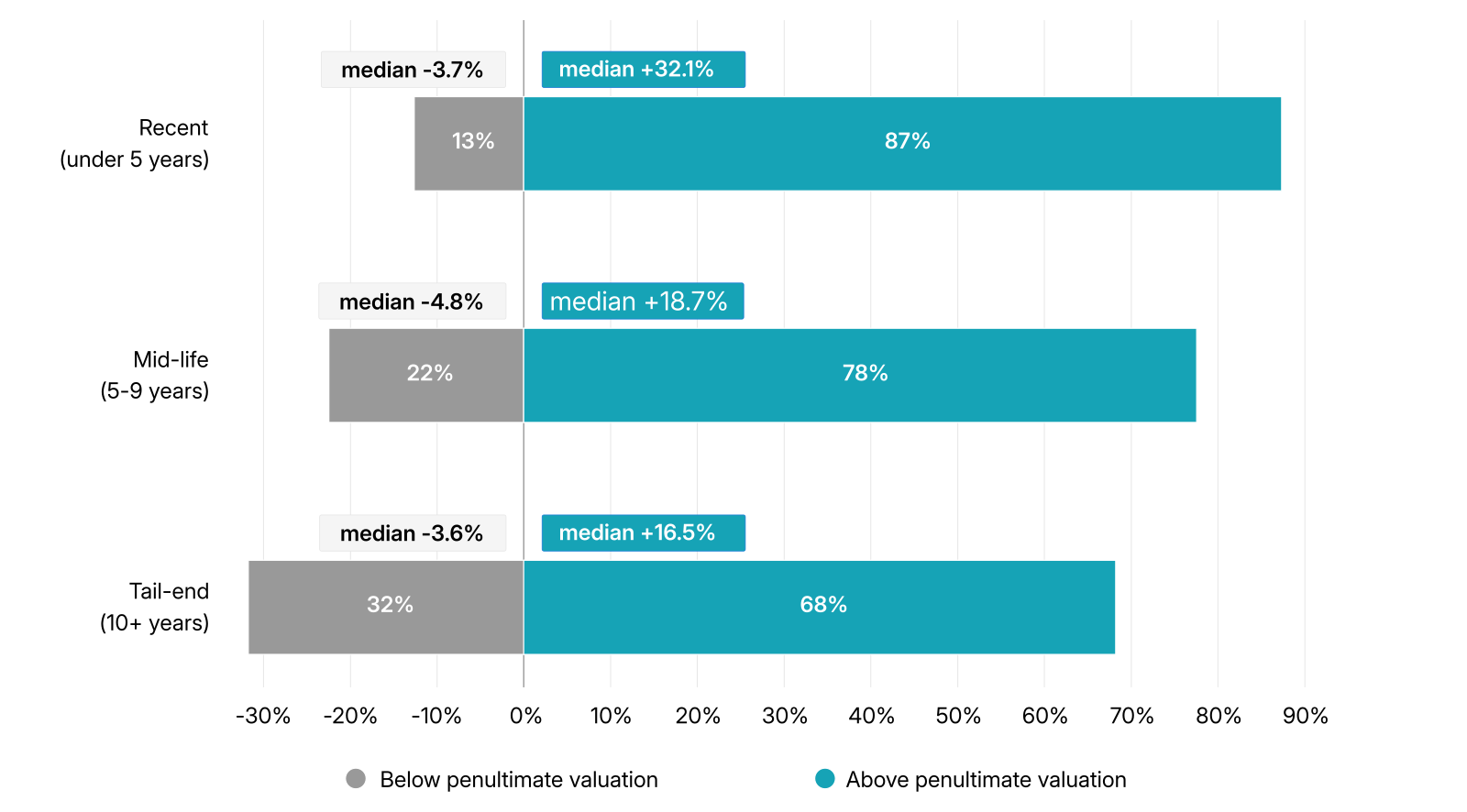
Buyout exits relative to the penultimate valuation, by holding period. Bars show the share of exits clearing above and below the GP's valuation. Medians are the median uplift on above-mark exits and the median shortfall on below-mark exits. Global buyout funds 2012–2025. Source: MSCI Private Capital Universe
At the penultimate quarter, the above-mark rate is broadly similar across all three size bands in our analysis — lower-middle-market deals (enterprise value below USD 100 million), mid-market deals (between USD 100 million and USD 1 billion) and large and megacap deals (greater than USD 1 billion). The picture changes sharply at the exit quarter, however. For large and megacap deals, 71% of exits land in the range of 0–10% above their marks. For lower-middle-market deals, only 47% hit that range.
If GPs were independently valuing holdings in the exit quarter, there is no reason deal size would affect the distribution shape. The concentration for larger deals and the dispersion for lower-middle-market deals together indicate that exit-quarter marks on larger deals are tracking the pending transaction more closely.
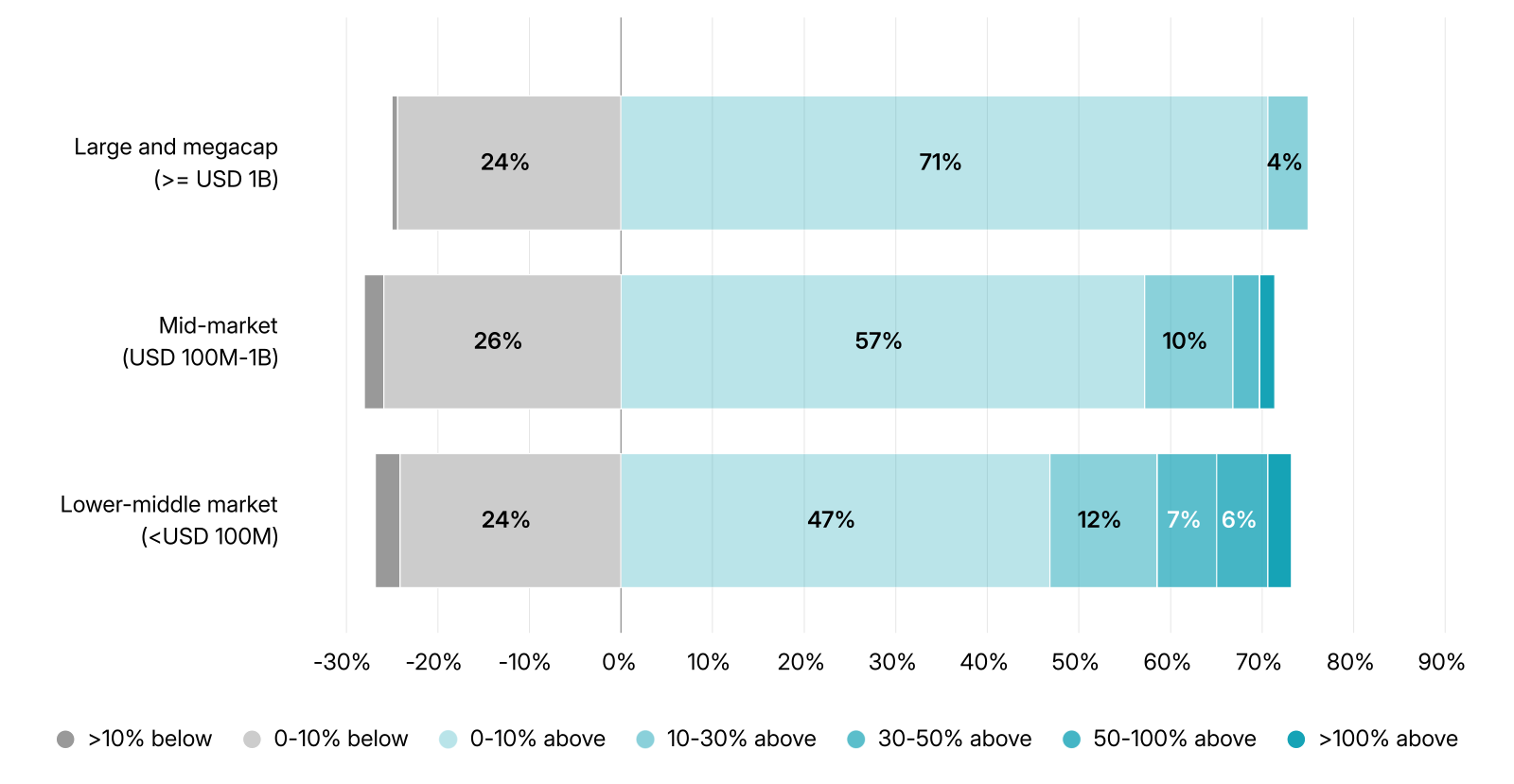
Distribution of buyout exits relative to the GP's exit-quarter valuation, by deal size. Global buyout funds 2012–2025. Source: MSCI Private Capital Universe
Valuation bias varies systematically with realized performance. Investments with higher total value to paid-in (TVPI) multiples are increasingly likely to exit above their penultimate valuation, while weaker investments are more likely to exit below it.
As a result, reported NAV compresses cross-sectional dispersion, that is, understating upside among winners and overstating value among laggards. The distortion is particularly relevant wherever NAV is used as a pricing reference or performance signal, including in secondary transactions, NAV-based financing, manager evaluations and LPs’ portfolio-construction decisions.
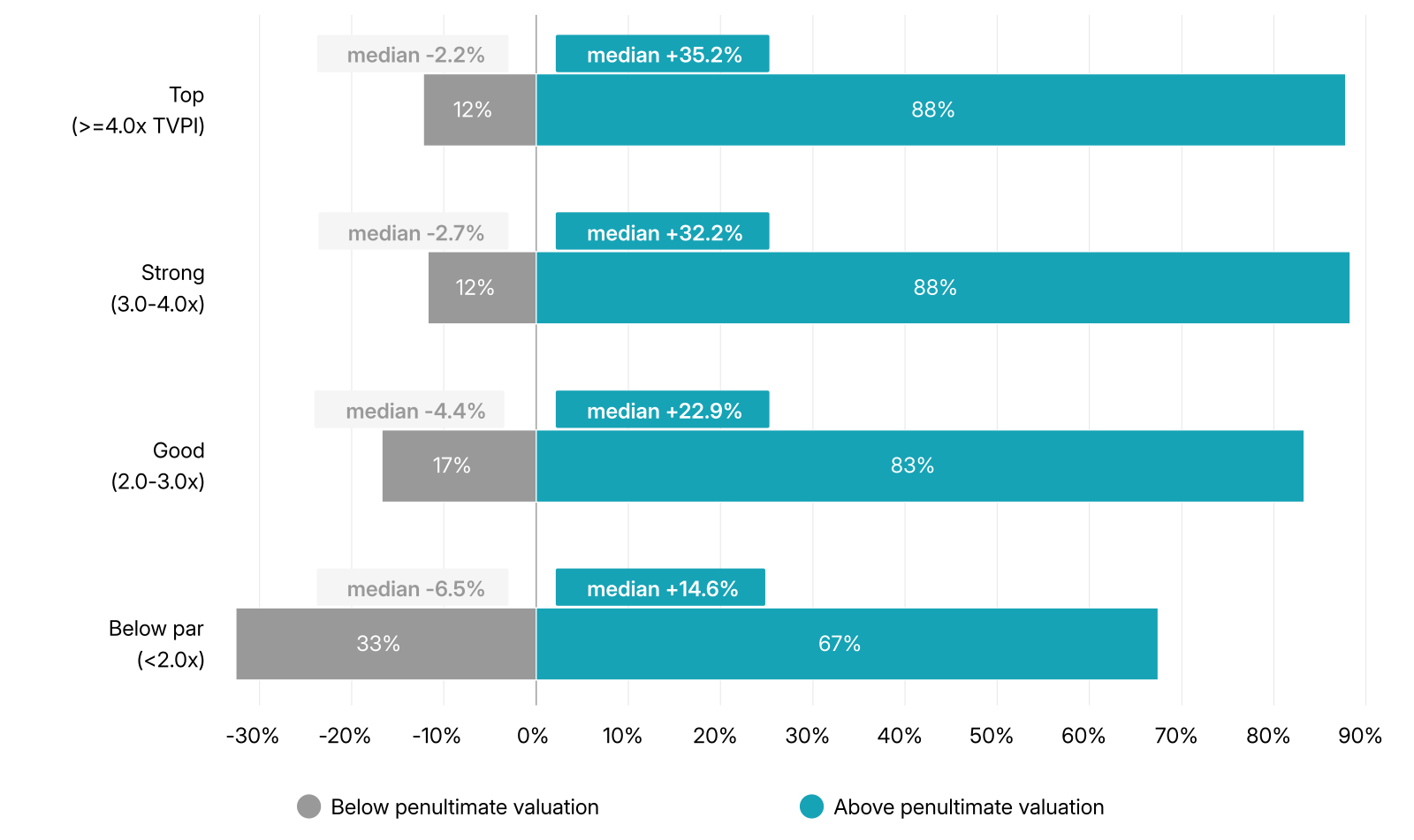
Buyout exits relative to the penultimate valuation, by bands of realized TVPI multiples. Bars show the share clearing above and below the GP's valuation. Medians show the median uplift on above-mark exits and the median shortfall on below-mark exits. Global buyout funds 2012–2025. Source: MSCI Private Capital Universe
The aggregate finding of our analysis should be reassuring for LPs in buyout. The NAV on a portfolio is, on average, a conservative estimate of realizable value, providing asset owners a useful reference point when assessing portfolio value.
The aggregate, however, masks characteristics that matter in specific situations. Marks are least reliable for aging assets, when LPs face secondary sales or continuation-fund decisions. The performance asymmetry between winners and laggards matters most for pricing transactions, manager selection and portfolio construction. For LPs, understanding these nuances of how reported valuations relate to eventual value is critical.

Subscribe todayto have insights delivered to your inbox.
The State of Private Markets 2026
MSCI's inaugural outlook report examines five forces reshaping private markets — with data and insight for asset owners, general partners and wealth investors.
MSCI Private Capital Benchmarks Summary Q4 2025
Drawing on data from more than 15,000 closed-end funds with USD 13.2 trillion in capitalization, this quarterly report examines key metrics on performance and capital flows in private markets.
Discover MSCI Private Assets
Private markets are evolving fast. What’s needed now isn’t just data but a modern toolkit that connects, clarifies and leverages independent insight to drive more informed investment decisions.
1 The analysis uses data on global buyout funds as of Q4 2025 from the MSCI Private Capital Universe. Holdings included where beginning-of-quarter valuation exceeds 5 percent of fund size. Exit quarter defined as the quarter in which distributions represent at least 75 percent of beginning-of-quarter valuation. Exit price includes residual escrow value, if any.
The content of this page is for informational purposes only and is intended for institutional professionals with the analytical resources and tools necessary to interpret any performance information. Nothing herein is intended to recommend any product, tool or service. For all references to laws, rules or regulations, please note that the information is provided “as is” and does not constitute legal advice or any binding interpretation. Any approach to comply with regulatory or policy initiatives should be discussed with your own legal counsel and/or the relevant competent authority, as needed.