
Why Japanese Asset Owners Should Rethink Their Currency Hedge
- While the historical allocation of a representative Japanese asset owner grew riskier as weights shifted toward equities and foreign assets, the equal-weighted portfolio held its risk level steady; yet even there, the composition shifted markedly.
- The USD share of currency risk has increased by about 1.9x over the past 15 years, rising from around 31% to 58% across foreign equities and bonds.
- Currency hedging consistently reduced risk but came at a cost to returns. Its net effect on portfolio outcomes varied across periods; there is no universally optimal hedge ratio.
The global investment landscape has shifted markedly. In a recent snapshot of the MSCI ACWI Index, U.S. equities comprised about 63%,1 highlighting the outsized influence of U.S. market dynamics in global investing. Against the backdrop of yen depreciation in recent years, currency moves have also become more salient for unhedged foreign assets. For Japanese asset owners, the question is how these shifts have reshaped portfolio risk and what role currency hedging may play in balancing risk, return and diversification, with the U.S. dollar as a key driver of currency risk.
To examine how portfolio risk composition has evolved, we compare two portfolios using roughly 15 years of data, rebalanced quarterly. One reflects the historical allocations of a representative Japanese asset owner. The other is an equal-weighted four-asset portfolio: 25% each in domestic equity (MSCI Japan Index), foreign equity (MSCI ACWI ex Japan Index) and domestic and foreign government bonds (Japan and ex-Japan components of the MSCI Developed Market Government Bond Index).
Over the period, total portfolio risk under the historical allocation generally rose as weights shifted from domestic bonds toward equities and foreign bonds, with a notable increase in the mid-2010s when allocation changes were larger. Risk decomposition shows that local equity-market risk remained the largest contributor, while currency risk became more material as foreign allocations increased.2
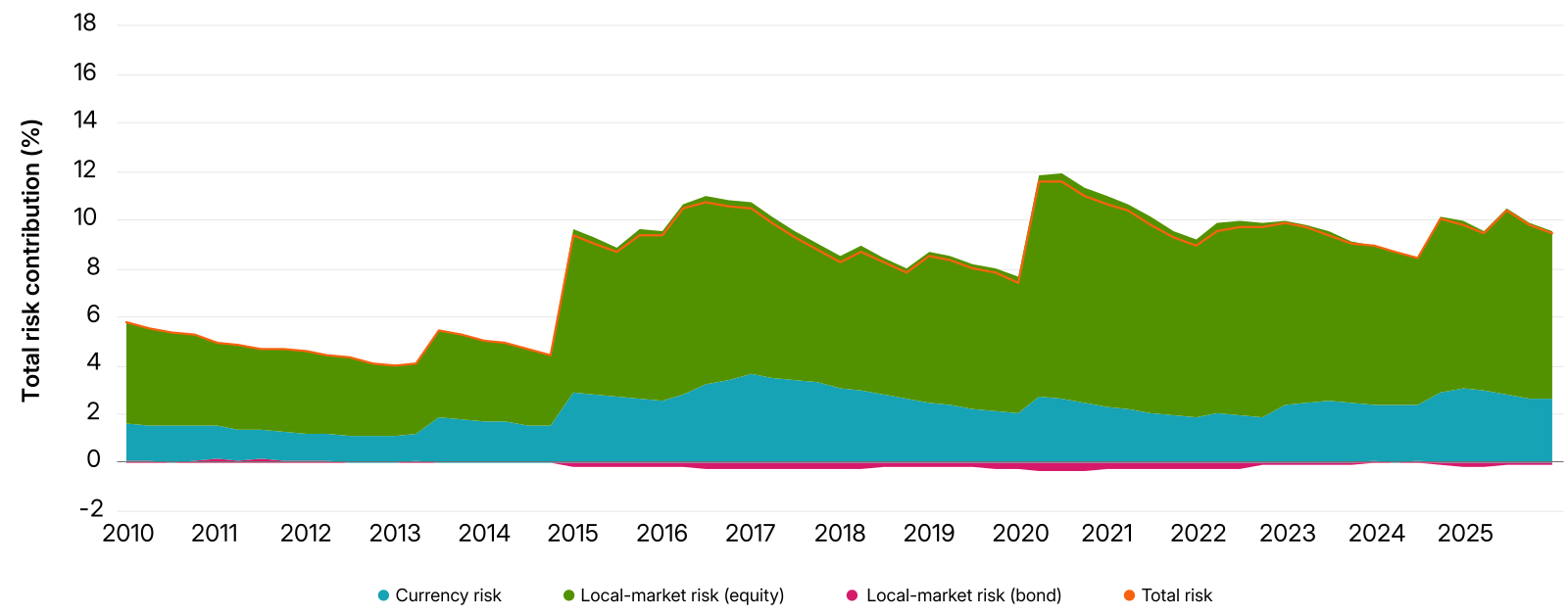
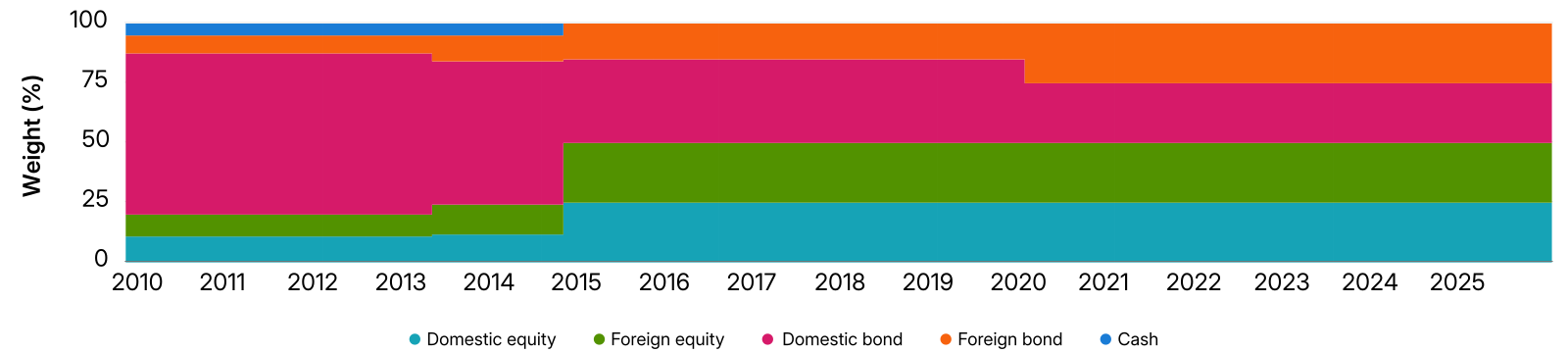
Data is based on quarterly time series from Dec. 31, 2009, to Dec. 31, 2025, with quarterly rebalancing and calculations using the MSCI Multi-Asset Class Model (MAC.L). The composite portfolio consists of domestic equity (MSCI Japan Index), foreign equity (MSCI ACWI ex Japan Index) and domestic and foreign bonds, with a small allocation to cash in earlier periods. For bonds, the Japan portion of the MSCI Developed Market Government Bond Index is extracted and treated as domestic bond, while the non-Japan portion is treated as foreign bond.
In the analysis that follows, we hold the equal-weighted four-asset allocation fixed and run it back through the same 15-year period. This isolates changes in the composition of portfolio risk from changes in portfolio weights.
Under the equal-weighted allocation, total risk sits slightly below its long-run average over the sample period. Local equity risk stayed near its long-term level, while currency risk eased modestly. While total portfolio risk has remained steady, have the underlying sources of risk shifted?
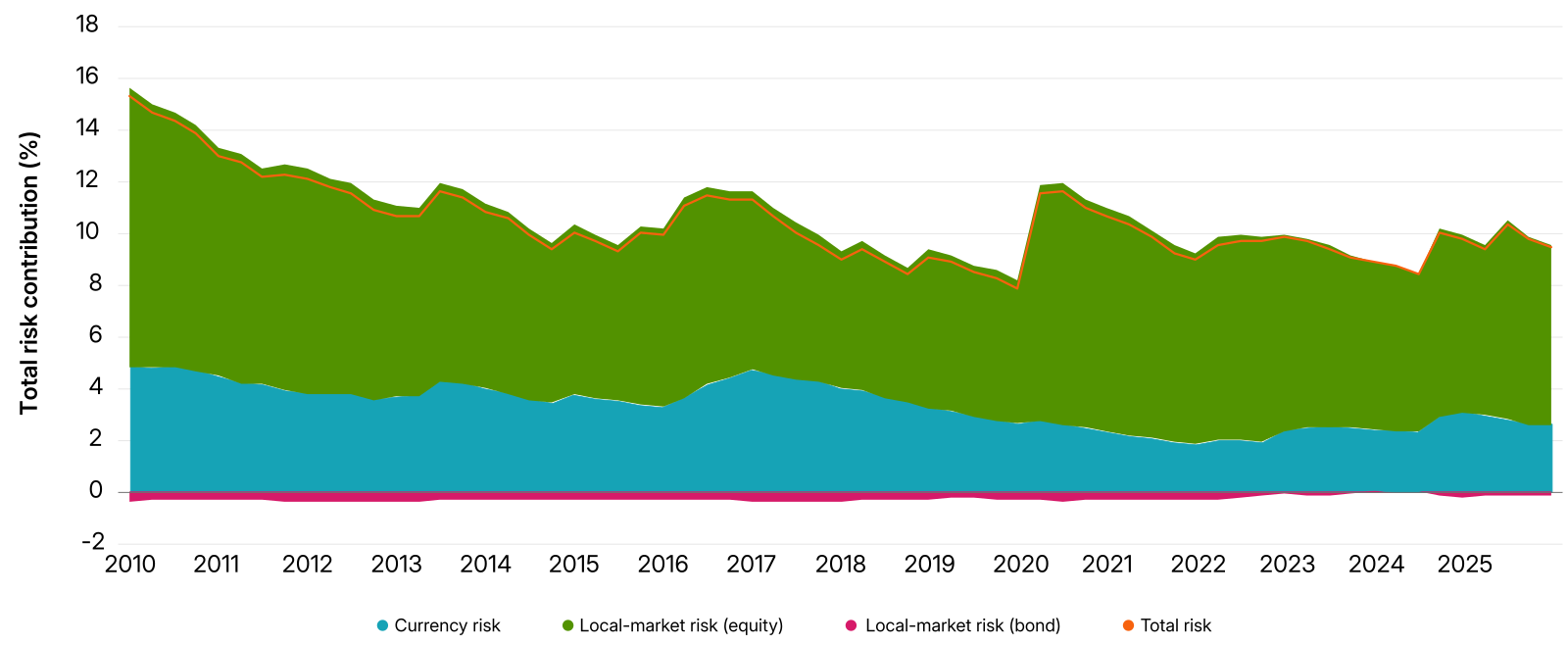
Data is based on quarterly time series from Dec. 31, 2009, to Dec. 31, 2025, with quarterly rebalancing and calculations using the MSCI Multi-Asset Class Model (MAC.L). The composite portfolio is 25% domestic equity (MSCI Japan Index), 25% foreign equity (MSCI ACWI ex Japan Index), 25% domestic bonds and 25% foreign bonds. For bonds, the Japan portion of the MSCI Developed Market Government Bond Index is extracted and treated as domestic bond, while the non-Japan portion is treated as foreign bond.
The equal-weighted four-asset allocation has become increasingly influenced by U.S. market and USD dynamics. Over the past 15 years, the combined USD share of currency risk across foreign equity and bond has increased by about 1.9x, from about 31% to 58%. This increase has been more evident in foreign equity, which has seen a stronger rise in USD-related currency risk than foreign bond. In local-market risk, the U.S. contribution has also exceeded its 15-year historical average.3
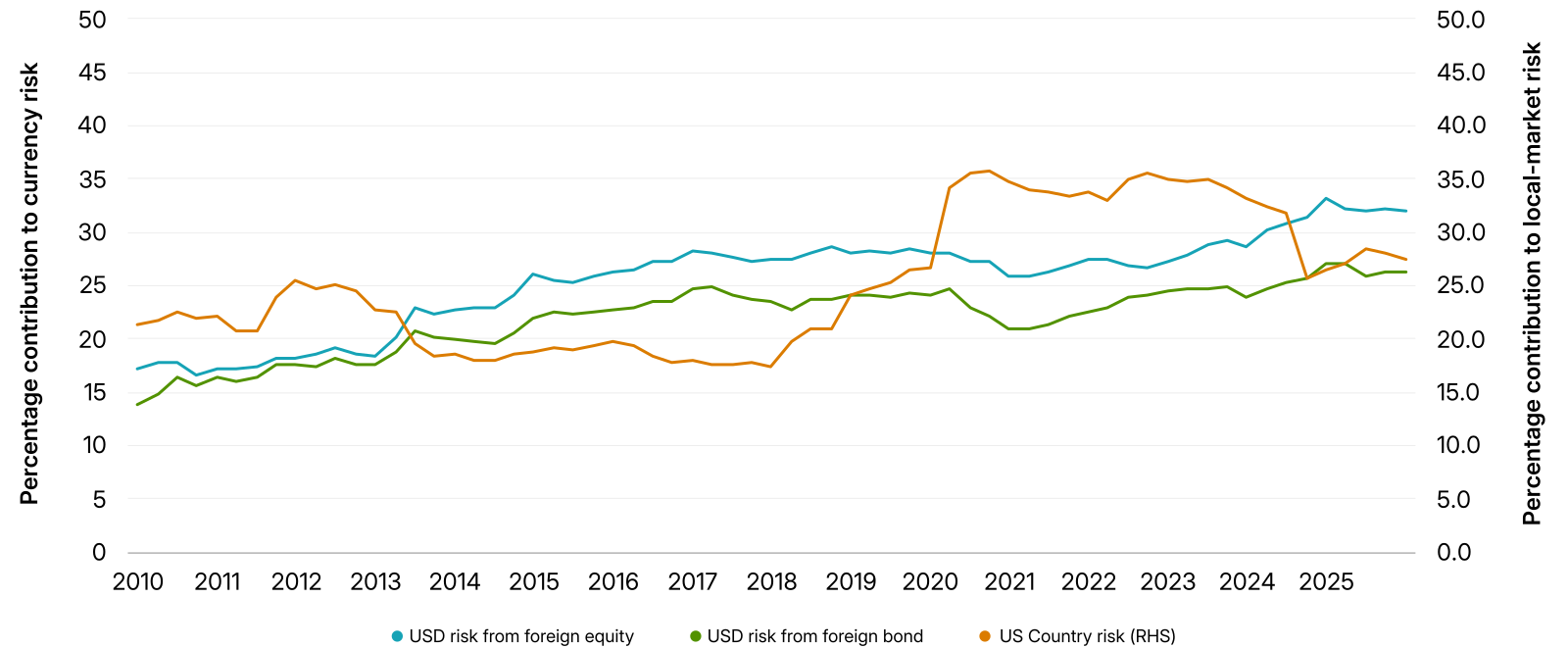
Data is based on quarterly time series from Dec. 31, 2009, to Dec. 31, 2025, with quarterly rebalancing and calculations using the MSCI Multi-Asset Class Model (MAC.L).
The U.S. dollar’s contribution to currency risk (percent contribution to risk, or USD PCTR) can be expressed as the product of USD exposure, the correlation between USD returns and the portfolio, and the ratio of USD volatility to currency risk. To understand what drove changes in USD PCTR over time, we decompose the cumulative log change from the starting date into the cumulative contributions of each component.4
USD exposure rose steadily over the period. Correlation contributed positively through mid-2020 but turned negative thereafter. Even so, USD PCTR continued to trend upward, supported after mid-2020 by a higher ratio of USD volatility to currency risk. Overall, USD’s contribution to currency risk increased, but the mix of drivers shifted across regimes.
Against this backdrop, we examine how currency hedging affects portfolio risk and return.
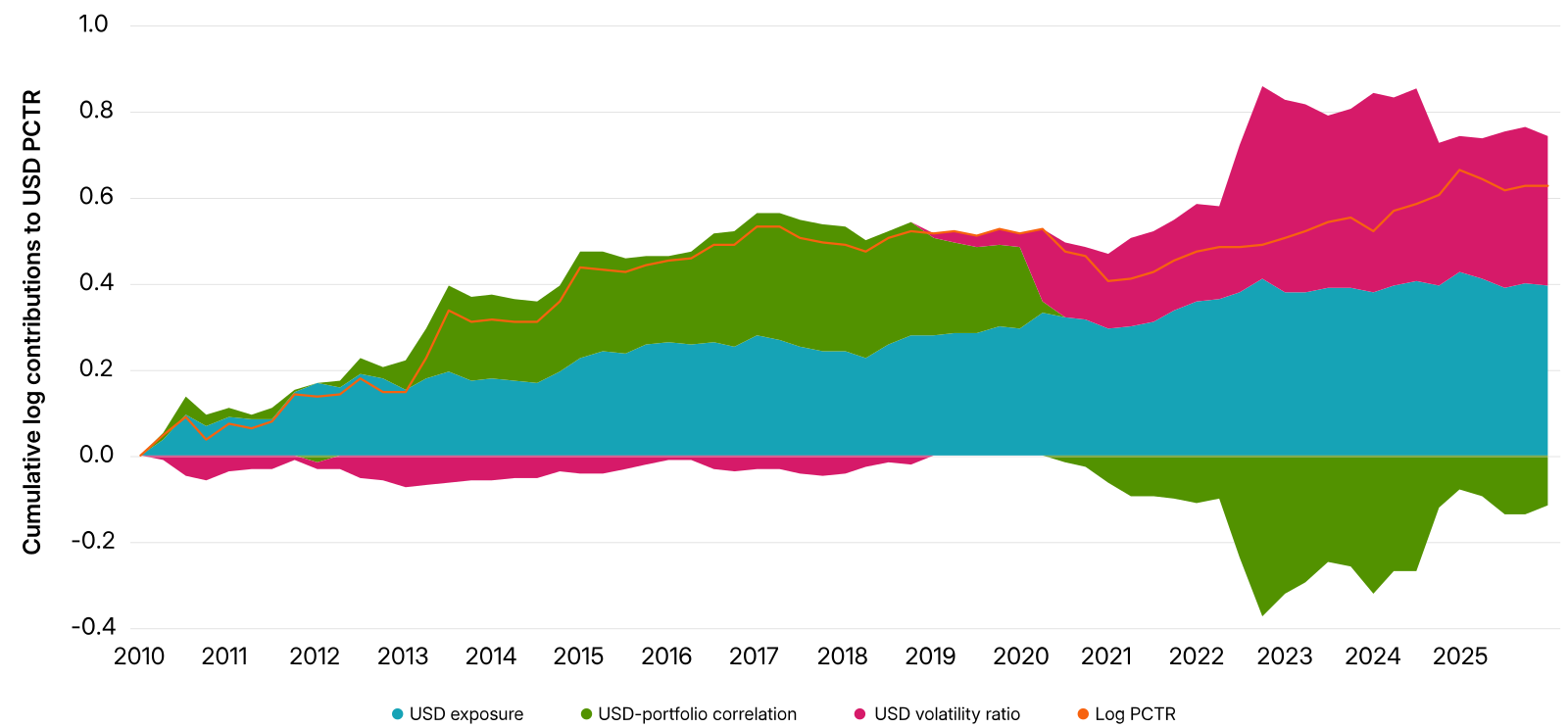
Data is based on quarterly time series from Dec. 31, 2009, to Dec. 31, 2025, with quarterly rebalancing and calculations using the MSCI Multi-Asset Class Model (MAC.L). Contributions are shown as the log decomposition of the cumulative log change in USD PCTR from the starting date. The USD Volatility Ratio is defined as USD volatility divided by currency risk.
To assess how currency hedging affects portfolio return and risk, we varied hedge ratios from 0% (unhedged) to 100% (fully hedged). We ran the analysis over three horizons: the full sample (about 15 years) as well as the periods before and after 2020. The results show that, across all horizons, higher hedge ratios were associated with lower volatility but also lower returns. However, the return-to-risk profile differed by period: A 75% hedge ratio resulted in the highest risk-adjusted returns before 2020, an unhedged stance after 2020, and a 50% hedge ratio over the full sample. This suggests that the most appropriate hedge ratio can vary across market regimes, and no single hedge ratio is universally optimal.
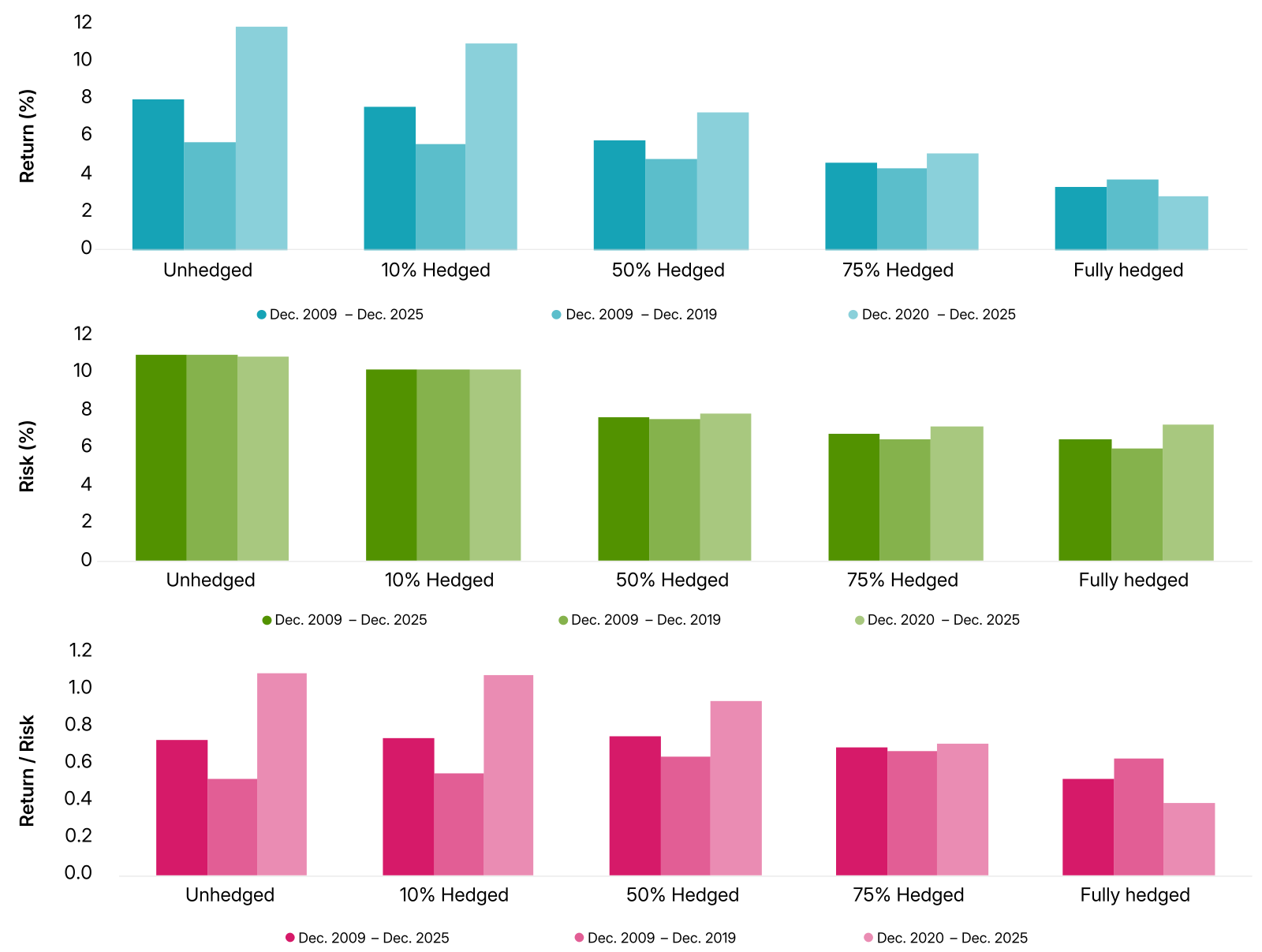
Data period: Dec. 31, 2009, to Dec. 31, 2025. Historical performance of the equal-weighted four-asset portfolio rebalanced quarterly. Returns and risks are annualized. Return/risk is defined as the ratio of return to risk, calculated by dividing the return by the risk.
For Japanese asset owners, the challenge is not the amount of risk, which has stayed broadly stable, but how it is composed across markets and currencies. As USD’s contribution to currency risk has risen and its underlying drivers have rotated across regimes, portfolio outcomes have become more sensitive to currency-related factors.
In this environment, managing currency exposure is a vital part of portfolio construction. Even modest levels of currency hedging can influence portfolio composition and diversification over the long term. Rather than targeting a specific hedge ratio, Japanese asset owners may focus on actively monitoring and managing currency exposure to maintain a balance between return and risk, positioning currency management as a strategic element of long-term portfolio resilience.

Subscribe todayto have insights delivered to your inbox.
To Hedge or Not to Hedge? Lessons from History for US Equity Investors
The USD has depreciated significantly this year. International investors wanting to reap the gains of the U.S. equity market may benefit from hedging their USD exposures.
Markets in Focus: Currency Risk Higher for Global Equity Investors
Currency relationships have been in flux since early 2022. We analyze how these changes have impacted global equities and outline the economic and political events that could influence fixed-income performance over the balance of 2024.
Multi-Asset Class Factor Model
An asset allocation model that informs systematic strategies with consistency across asset classes and enables you to identify key risk and return drivers.
1 As of Jan. 30, 2026.
2 Local-market risk for bonds shows a negative risk contribution because risk decomposition accounts for correlation across assets. Bonds' negative correlation with other asset classes reduced overall portfolio risk, resulting in a negative contribution.
3 In the MSCI Multi-Asset Class (MAC) model, the country-risk factor is a systematic risk factor that applies exclusively to the equity portion of the portfolio. Another major factor is Japan country risk driven by home bias. Additionally, foreign-bond risk is almost entirely driven by currency risk.
4 Here, log denotes the natural logarithm (ln). log(USD PCTR) can be decomposed as log(w) + log(ρ) + log(σ_USD/σ_p), where w is the USD exposure, ρ is the correlation between USD returns and the portfolio and σ_USD/σ_p is the ratio of USD volatility to currency risk. The time series of cumulative log contributions to USD PCTR is computed at each point t as log(PCTR_t/PCTR_0), i.e., a decomposition of the relative change. Over the full period, log(0.58/0.31) ≈ 0.63, implying exp(0.63) ≈ 1.9x.
The content of this page is for informational purposes only and is intended for institutional professionals with the analytical resources and tools necessary to interpret any performance information. Nothing herein is intended to recommend any product, tool or service. For all references to laws, rules or regulations, please note that the information is provided “as is” and does not constitute legal advice or any binding interpretation. Any approach to comply with regulatory or policy initiatives should be discussed with your own legal counsel and/or the relevant competent authority, as needed.