
A Practical Approach for Analyzing Fund Capacity
Preview
How large can a fund grow before operational and implementational inefficiencies become too significant and the fund’s investment style and performance outcomes can no longer be maintained?
MSCI previously proposed an approach for analyzing the capacity of factor-index strategies based on index-level factor exposures and a set of liquidity and ownership, which does not require making direct assumptions about the expected return of a strategy.
In our latest study, we follow the above approach and propose a practical framework to analyze capacity of active funds based on selected measures. We take actual position data of sample funds as examples and showcase how capacity can be estimated, considering factors that differentiate active investing from index investing, by running three studies.
For example, if the focus of the manager of any of our hypothetical funds was based on responding to slower and less volatile signals such as industry trends, then they may be able to sell out of asset positions on a much longer horizon and gradually invest in new positions. Applying our approach we were able to determine that all three funds would allow for such a strategy, as their illiquid holdings (positions that take longer than 20 business days to sell) make up a relatively small percentage (<30%).
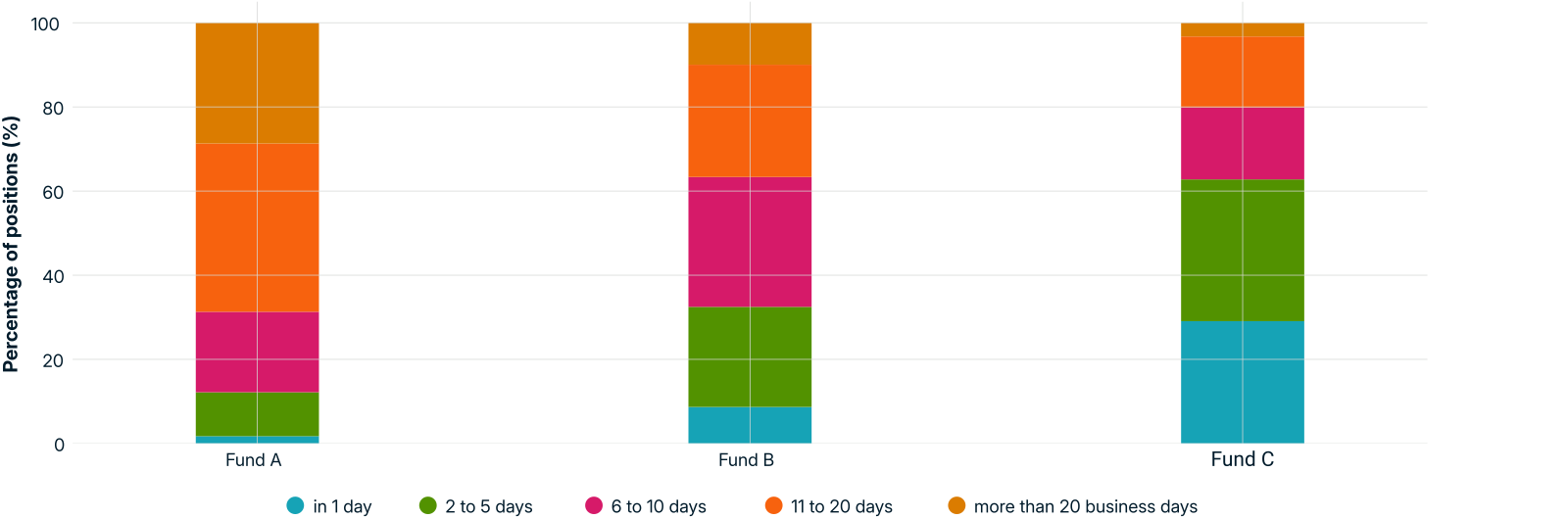
Data as of Dec. 31, 2024.


Read the full paper
Provide your information for instant access to our research papers.
Demystifying Liquidity Risk for Informed Decision Making
In this virtual event, MSCI experts discussed how MSCI’s solutions and best-in-class methodology are designed to help perform portfolio liquidity capacity checks and assess the underlying time horizon required for asset liquidation.
MSCI IndexMetrics® An Analytical Framework for Factor, ESG and Thematic Investing
MSCI introduced IndexMetrics® as a lingua franca to provide a multiperspective analysis of indexes. The framework is designed to provide quantitative measures for key metrics, performance, exposure and investability. This research insight, updated for 2020, details the IndexMetrics analytical framework for factor, ESG and thematic indexes.
Lessons from Woodford: Shutting the barn door after the horses have bolted
The suspension of the U.K.’s Woodford Equity Income Fund highlights the value of regularly reviewing a portfolio’s factor exposures and liquidity characteristics for signs of style drift or deteriorating ability to redeem shares.
The content of this page is for informational purposes only and is intended for institutional professionals with the analytical resources and tools necessary to interpret any performance information. Nothing herein is intended to recommend any product, tool or service. For all references to laws, rules or regulations, please note that the information is provided “as is” and does not constitute legal advice or any binding interpretation. Any approach to comply with regulatory or policy initiatives should be discussed with your own legal counsel and/or the relevant competent authority, as needed.