
Assessing the MSCI Energy Transition Framework in Credit Markets
Mentioned in this paper:
Preview
Investors continue to seek ways to assess which companies are best positioned to navigate the energy transition and whether those characteristics are reflected in credit markets. Using the MSCI Energy Transition Framework, we examined whether companies’ transition profiles were associated with subsequent decarbonization, credit risk and cost of debt capital.
We found that transition readiness — a measure of a company’s preparedness to manage risks and opportunities arising from the energy transition — was associated with faster decarbonization, tighter credit spreads and lower residual risk. Companies with higher Transition Readiness scores also tended to have flatter credit curves, suggesting that investors perceived lower long-term risk. By contrast, transition pressure, which measures exposure to external transition-related risks, showed limited explanatory power on its own.
The chart illustrates the distribution of corporate-bond issuers across the Energy Transition Framework, highlighting the range of transition profiles represented in the study universe.
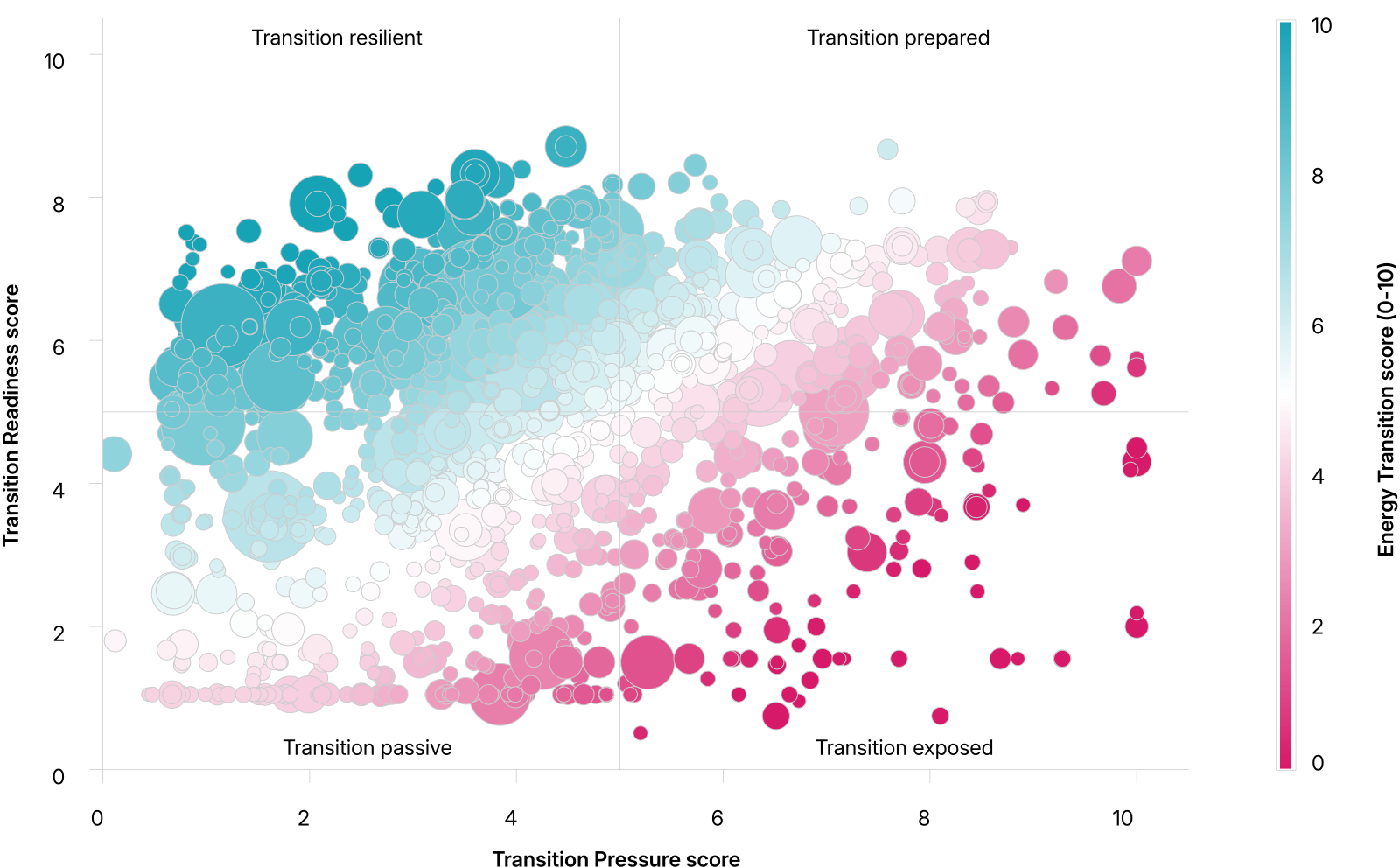
Data as of Dec. 31, 2025. The chart plots all issuers covered by our transition assessment with outstanding bonds in our study universe. Bubble sizes are proportional to the sum of market value (in USD) of outstanding bonds and bubble colors correspond to the Energy Transition score. Source: MSCI Sustainability & Climate






Read the full paper
Provide your information for instant access to our research papers.
MSCI Energy Transition Score: A New Dimension of Risk
How can investors better gauge transition readiness? The MSCI Energy Transition Score provides new insights beyond existing metrics and shows limited market sensitivity across asset classes.
Setting Expectations Amid a Bumpy Energy Transition
Using MSCI’s Energy Transition Framework, we examine how technological, financial and policy factors drive corporate decarbonization — and what that means for investors assessing transition risk.
The content of this page is for informational purposes only and is intended for institutional professionals with the analytical resources and tools necessary to interpret any performance information. Nothing herein is intended to recommend any product, tool or service. For all references to laws, rules or regulations, please note that the information is provided “as is” and does not constitute legal advice or any binding interpretation. Any approach to comply with regulatory or policy initiatives should be discussed with your own legal counsel and/or the relevant competent authority, as needed.