
Sustainability and Climate Integration in Fixed-Income Portfolios: Part 2
Mentioned in this paper:
MSCI USD IG Core Climate Paris Aligned Corporate Bond Index | BarraOne® | MSCI Implied Temperature Rise
Preview
This paper applies the theoretical framework from Part 1 of this guide to two concrete corporate bond mandates — one passive (core) and one active (satellite) — over a simulated holding period using real data from January to December 2025. By tracing both mandates through the full investment process, from objective setting and portfolio construction to risk management and reporting, the paper demonstrates how sustainability and climate data can serve different investment strategies and how index-based approaches and active security selection can each deliver on both financial and climate objectives.
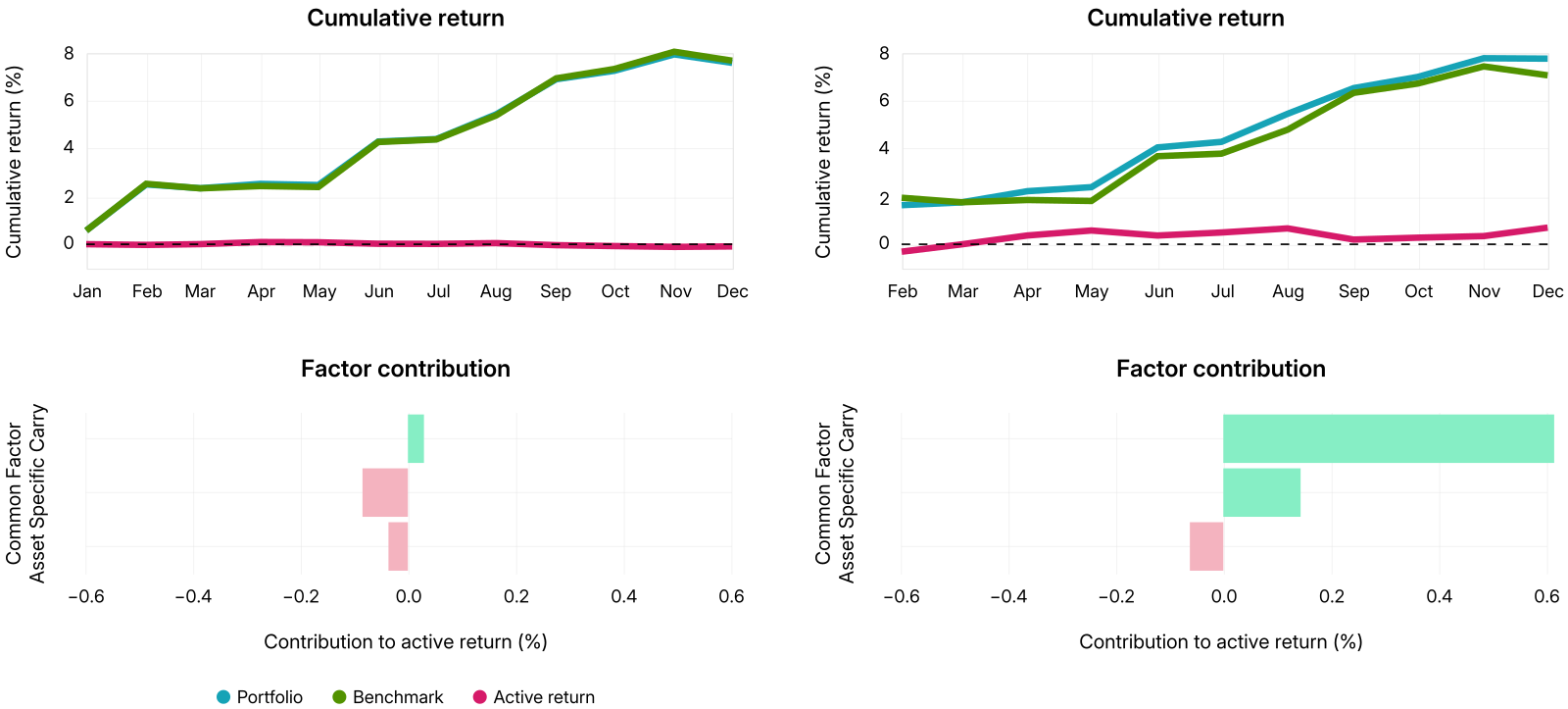
Data as of April 30, 2026. Data generated using BarraOne® performance attribution report using MSCI Multi-Asset Class (MAC) Factor Model over a simulated 12-month holding period between January and December 2025. “Common Factor” represents the portion of the total return attributable to changes in market-wide fixed-income risk and return drivers, such as changes in interest rates. “Asset Specific” is the portion of the total return that cannot be explained by the common factors. “Carry” is the return from holding the securities over the period. Past performance does not indicate future returns.


Read the full paper
Provide your information for instant access to our research papers.
Fixed Income Indexes
Access broad fixed income coverage in developed and emerging markets, with frameworks built to align with sustainability and climate goals across equities and bonds.
Sustainability and Climate Integration in Fixed-Income Portfolios: Part I
The first in a two-part guide on integrating sustainability and climate data across every stage of the fixed-income investment process — from objectives to reporting.
Assessing the MSCI Energy Transition Framework in Credit Markets
Does the energy transition affect credit risk? We find that transition-ready issuers decarbonized faster, traded at tighter spreads and benefited from lower long-term borrowing costs.
The content of this page is for informational purposes only and is intended for institutional professionals with the analytical resources and tools necessary to interpret any performance information. Nothing herein is intended to recommend any product, tool or service. For all references to laws, rules or regulations, please note that the information is provided “as is” and does not constitute legal advice or any binding interpretation. Any approach to comply with regulatory or policy initiatives should be discussed with your own legal counsel and/or the relevant competent authority, as needed.