
Transition Finance Tracker
Preview
While the share of the world’s listed companies with a climate target approved by the Science Based Targets initiative (SBTi) rose to 18.5% as of June 30, 2025, up 6.2 percentage points year over year, companies would drive a rise in global temperatures of 2.7°C (4.9°F) above preindustrial levels based on their emissions trajectories.
Those are among the findings in the latest quarterly edition of the MSCI Institute’s Transition Finance Tracker. The report offers a snapshot of the transition in charts and analysis covering emissions, physical risk, targets, disclosure and financial flows.
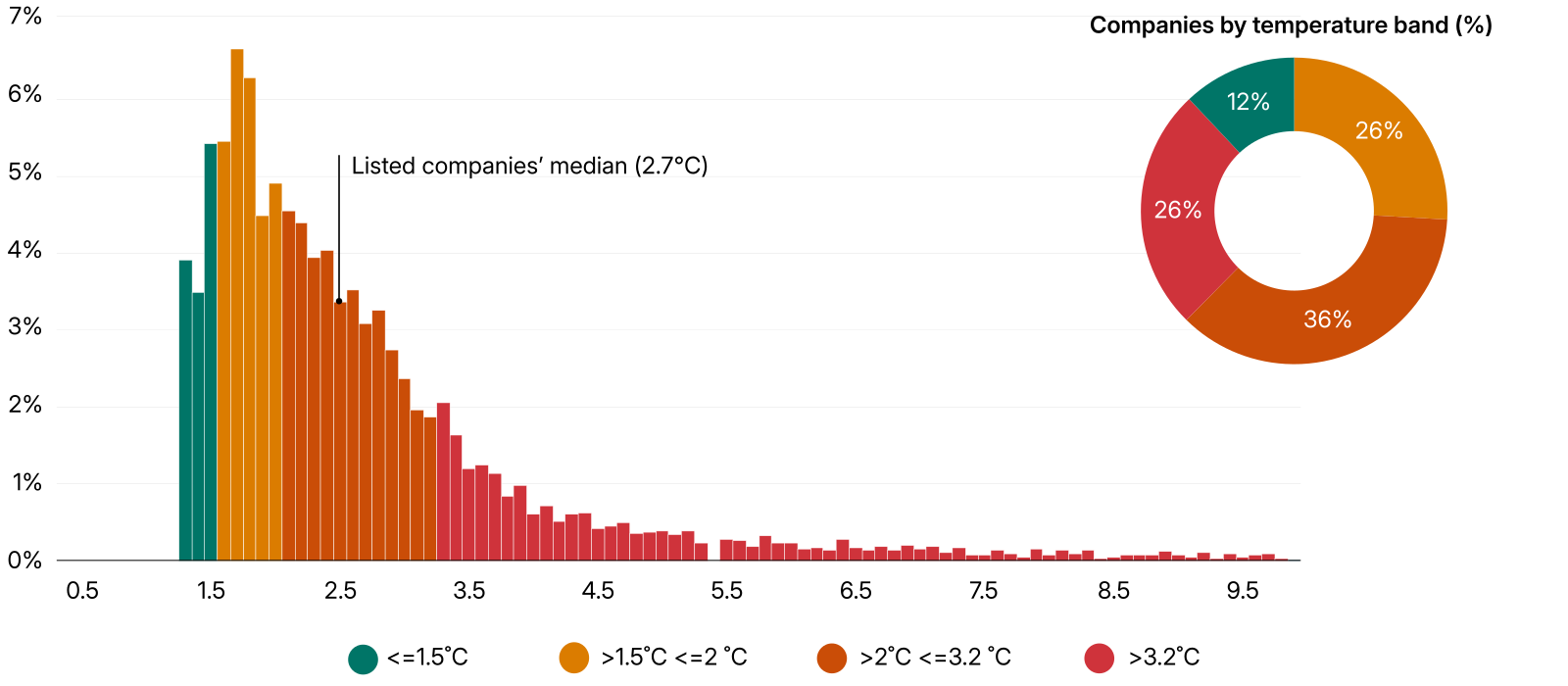
Data as of June 30, 2025. Not index weighted. The dataset used in calculating implied temperature rise comprises roughly 95% of ACWI IMI constituents, as roughly 5% of companies lack sufficient data to compute the relevant measures. Source: MSCI ESG Research



Materiality-Weighted Portfolio Carbon Footprint
We found that, over the past decade, emissions-based transition risk had a stronger relationship with corporate earnings, stock performance and credit risk than previous academic studies suggested.
Energy Transition Framework
Assess how the energy transition may impact your portfolio and see which companies are positioned to lead with MSCI’s Energy Transition Framework
Does the Mortgage Market Price in Physical Risk?
How has increased physical risk from natural disasters affected residential mortgage and residential mortgage-backed securities? To find out, we turned to MSCI GeoSpatial Asset Intelligence.
The content of this page is for informational purposes only and is intended for institutional professionals with the analytical resources and tools necessary to interpret any performance information. Nothing herein is intended to recommend any product, tool or service. For all references to laws, rules or regulations, please note that the information is provided “as is” and does not constitute legal advice or any binding interpretation. Any approach to comply with regulatory or policy initiatives should be discussed with your own legal counsel and/or the relevant competent authority, as needed.