
Article 6 Readiness Gains Momentum Ahead of COP31
Mentioned in this quick take:
MSCI Carbon Credit Price Indexes | MSCI Carbon Project Ratings
Buyers looking for carbon credits that can count toward national climate targets and airline obligations have more countries progressing toward participation. Our October 2026 update of Article 6 readiness covers 103 countries, scoring how prepared each is to authorize, transfer and account for credits traded under the Paris Agreement. Two-thirds improved in just six months, and only three slipped. For buyers and investors at COP31, that means a wider pool of potentially ready sellers, more authorized supply and a market that is already paying for eligibility.
Thirty-four countries now score high or very high on readiness, up from 20 in April. Peru joined Ghana and Thailand at the top. The 13 newcomers to the high band, including Vietnam and Zambia, already host more than 840 registered carbon-credit projects.
Thirty countries have now authorized credits for corresponding adjustments, up from 22.1 Five countries have so far recorded corresponding adjustments in their national accounts. Biennial transparency reports due by Dec. 31, 2026, give more governments the chance to show they are honoring the authorizations they have issued by applying the corresponding adjustments.
Buyers are already rewarding authorization and quality. In September 2026, the MSCI Global CORSIA Phase I Carbon Credit Price Index, which tracks credits eligible under the Carbon Offsetting and Reduction Scheme for International Aviation (CORSIA), stood at roughly four times the index for credits in scope but not yet eligible.2
A ready country may be better placed to authorize credits, but readiness alone does not make that credit high quality. Of the 110 projects authorized or applying for corresponding adjustments, 11 authorized projects are rated B or CCC. Ambition matters too: with 2030 close, the countries with credits to sell are likely to be those with surpluses against their nationally determined contribution (NDC) targets, so the strength of that target shapes the integrity of the credit.
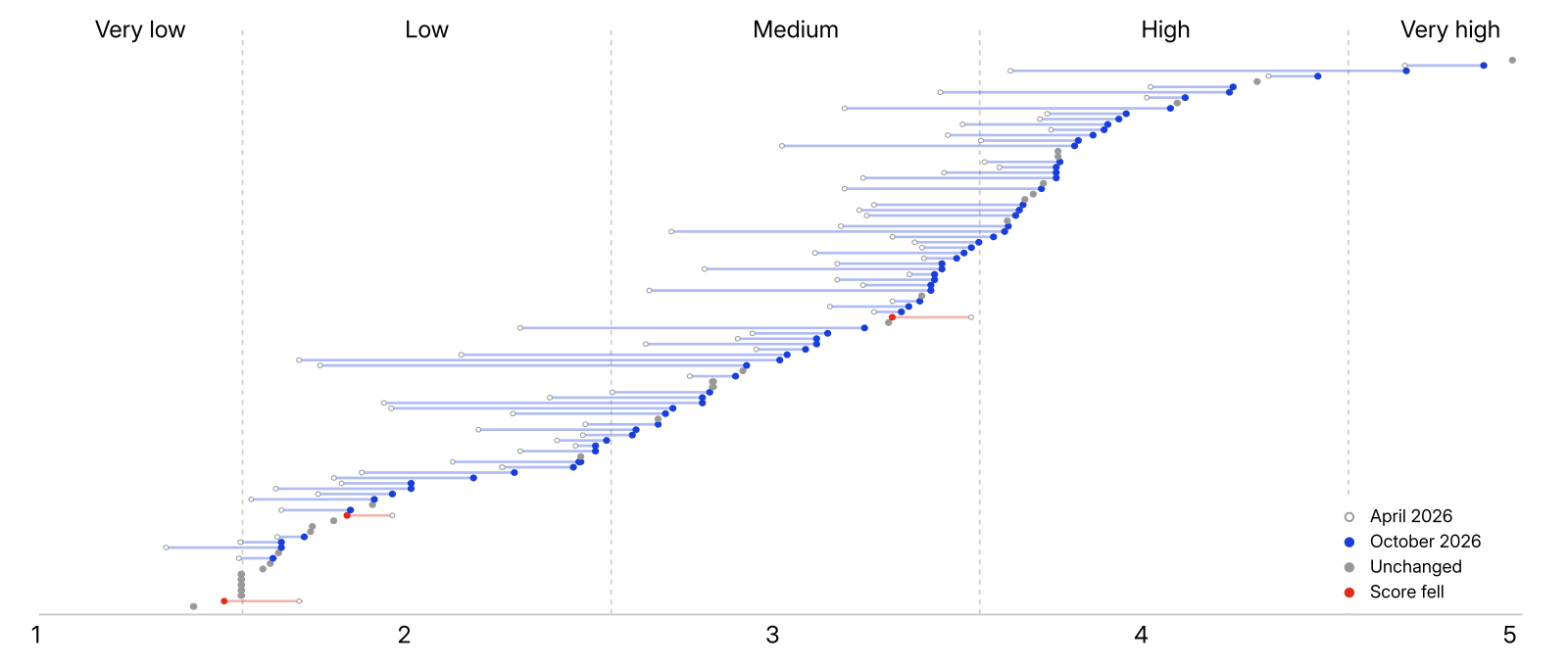
Chart shows change in Article 6 readiness scores between April and October 2026 (1 = lowest, 5 = highest). Each row is one country, ranked by its October 2026 score; countries are not named. Dashed lines mark the readiness bands. Source: MSCI Carbon Markets, Article 6 readiness scores.


Subscribe todayto have insights delivered to your inbox.
Project and Country Risk — New Bedfellows of the Article 6 Market
We review the new MSCI Article 6 Integrity Framework, designed to help investors and buyers assess risks and opportunities specific to Article 6, an important part of the global credit market.
2025 State of Integrity in the Global Carbon-Credit Market
Our 2025 report on the global carbon-credit market shows rising demand for high-integrity credits with stronger ratings, higher prices and new risk frameworks are shaping a more credible market.
1 A corresponding adjustment moves the emissions reduction from the seller’s national tally to the buyer’s, so the credit is counted only once.
2 Price index data: MSCI Carbon Markets, MSCI Carbon Credit Price Indexes, data as of September 2026. Past performance, whether actual, backtested or simulated, is no indication or guarantee of future performance.
The content of this page is for informational purposes only and is intended for institutional professionals with the analytical resources and tools necessary to interpret any performance information. Nothing herein is intended to recommend any product, tool or service. For all references to laws, rules or regulations, please note that the information is provided “as is” and does not constitute legal advice or any binding interpretation. Any approach to comply with regulatory or policy initiatives should be discussed with your own legal counsel and/or the relevant competent authority, as needed.