
Before the Write-Off: Fundamental Signals and Valuation Lags in Buyout
In private equity, buyout valuations in eventual write-offs have responded more slowly to deteriorating fundamentals than profitable exits have reacted to improving fundamentals. The asymmetry is a key consideration in a market characterized by extended holding periods and delayed exits.
Among buyout holdings that ultimately ended in write-offs, EBITDA declined early and persistently, falling by a median of 18% below entry levels by the start of year three of the investment. Yet valuations remained largely unchanged over this period, with the total value to paid-in multiple (TVPI) anchored at 1x, implying a lag of roughly eight quarters between the start of the sustained EBITDA decline and the first valuation markdown.1 By contrast, profitable exits showed a much faster transmission from fundamentals to valuation. Valuations began to rise after only three quarters of sustained EBITDA growth, by which point EBITDA was already 10% above entry levels.
Connecting value loss to fundamentals
Examining the value bridge — the movement in equity value between acquisition and exit — we see most of the value loss in write-offs was attributable to the erosion of EBITDA margins. By the time of write-off, EBITDA had declined by 59%, while revenue had fallen by about 3%, compressing margins further. By comparison, profitable exits generated a TVPI of 3.03x, with revenue growth (up 77%) and margin expansion (EBITDA up 73%) accounting for most of the incremental gain. Monitoring operational fundamentals may offer earlier identification of write-down risk, enabling more proactive portfolio management by limited partners.
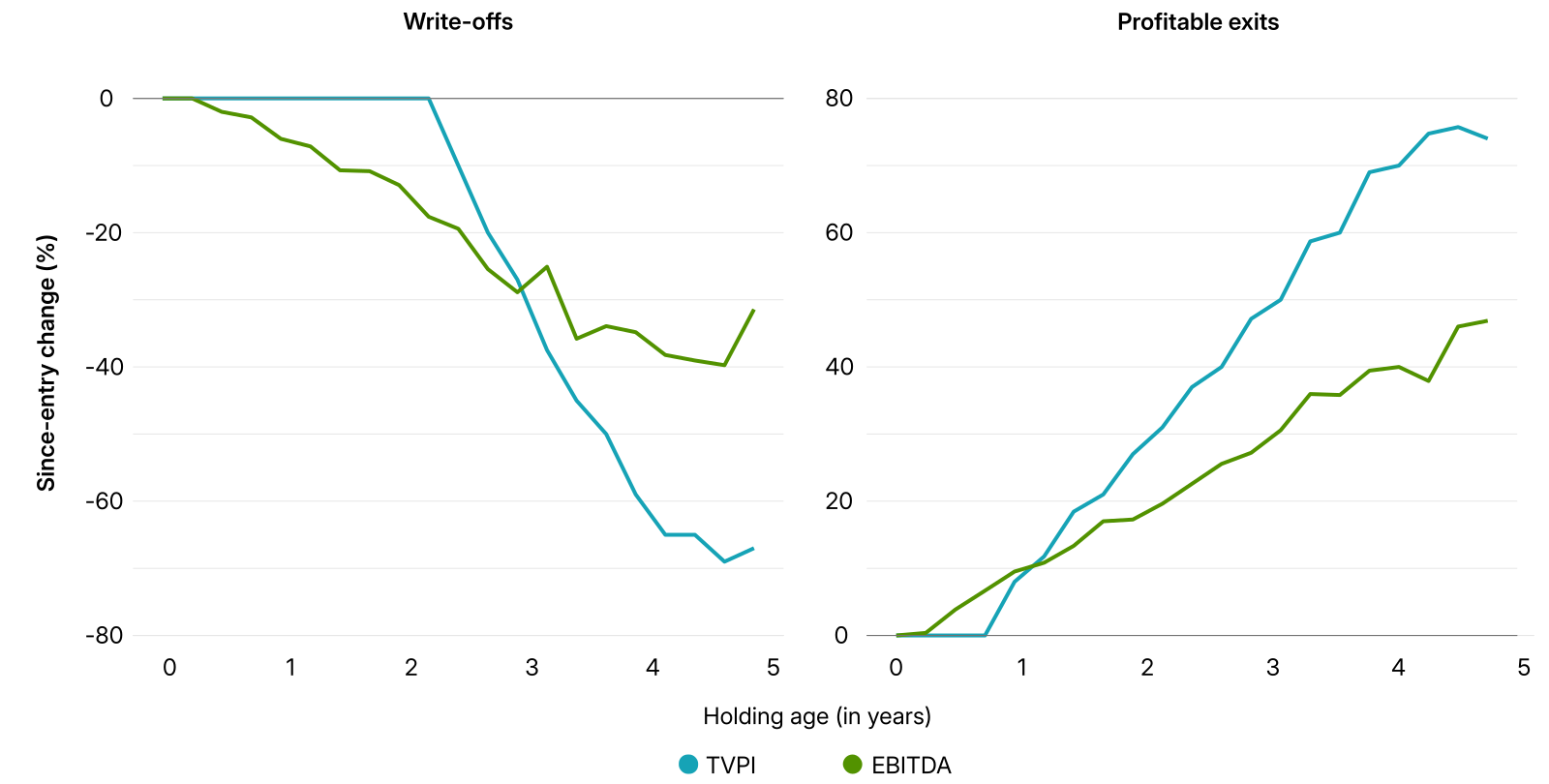
Data as of Q3 2025 for exits across history of MSCI databases. Lines represent medians. Source: MSCI Private Capital Universe, MSCI Private Asset and Deal Metrics
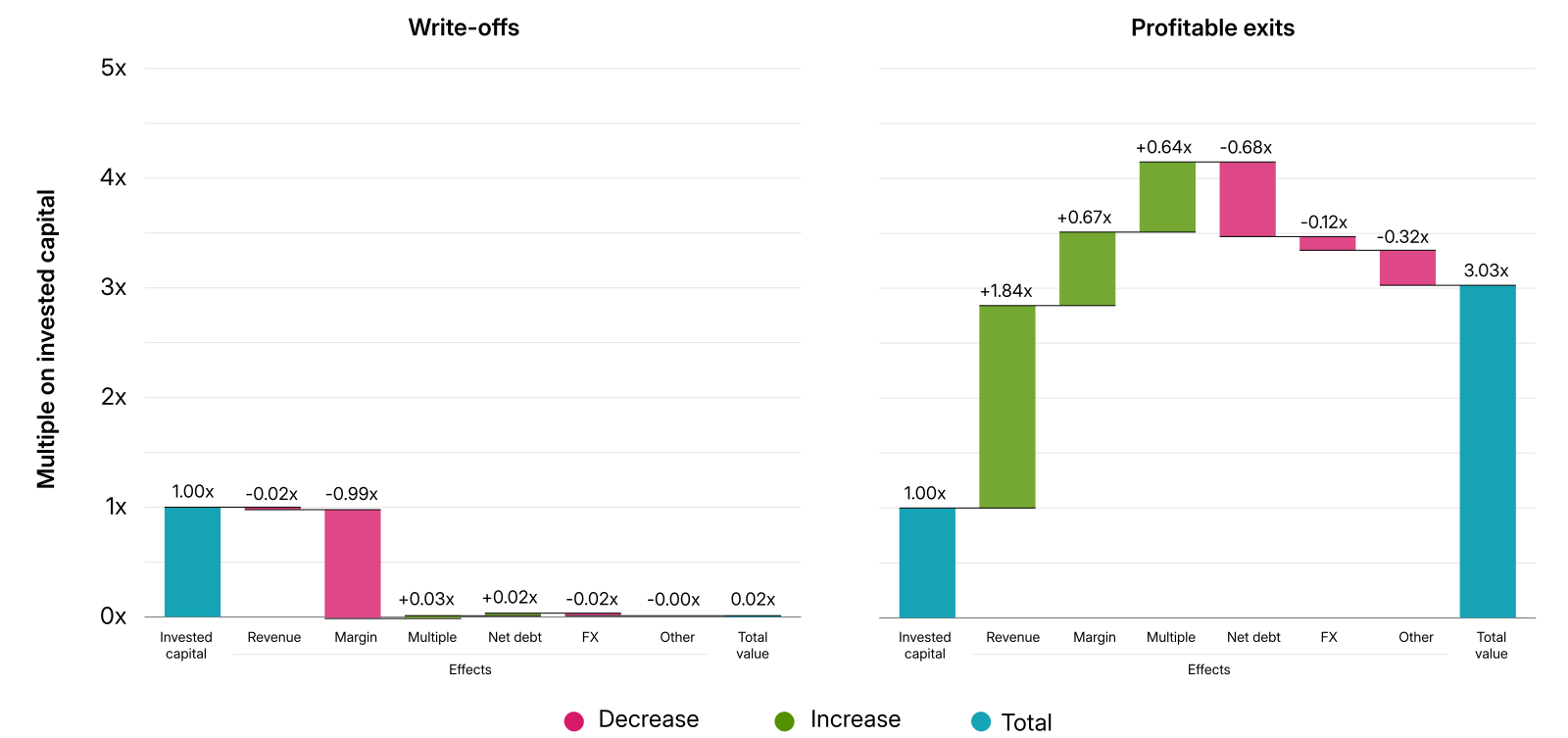
Data as of Q3 2025. Pooled value bridge across a subset of exited buyout holdings across history of MSCI databases. Source: MSCI Private Capital Universe, MSCI Private Asset and Deal Metrics

Subscribe todayto have insights delivered to your inbox.
Decent Exposure? Rethinking Private-Equity and Credit Cross-Investment
Private-credit and private-equity positions in the same company may be more diversifying than investors concerned about dual exposure think. We examine the strategies’ overlap and performance.
Private Capital in Focus: Trends to Watch for 2026
Satisfying investors’ unquenched thirst for liquidity, the rise — and risks — of private credit, and the hard work of buyout value creation shape private markets at the start of the year.
Private Asset and Deal Metrics
Evaluate opportunities, benchmark with precision and engage LPs with confidence.
1 Minimum holding period for exited holdings is four years. Write-offs are defined as exits with TVPI below 0.05, while profitable exits are defined as those with TVPI above 1. All figures represent median values unless otherwise noted.
The content of this page is for informational purposes only and is intended for institutional professionals with the analytical resources and tools necessary to interpret any performance information. Nothing herein is intended to recommend any product, tool or service. For all references to laws, rules or regulations, please note that the information is provided “as is” and does not constitute legal advice or any binding interpretation. Any approach to comply with regulatory or policy initiatives should be discussed with your own legal counsel and/or the relevant competent authority, as needed.