
Do Mangrove Credits Reflect Real Biomass Growth?
Mangrove carbon projects are frequently characterized by their substantial belowground carbon stocks, which are typically up to four times that of terrestrial forests and inherently difficult to measure with precision.1 Quantification approaches often rely on fixed parameters, such as literature values, modeled assumptions or infrequent sampling campaigns.
Measuring what is observable: The role of AGB
Aboveground biomass (AGB) may offer a more transparent and observable indicator of carbon accumulation for market participants seeking more regular updates on quantified carbon outcomes. AGB estimates provide a clearer linkage between vegetation growth and issued volumes, particularly for afforestation-focused mangrove projects. This approach is embedded in the MSCI Carbon Markets Mangrove methodology, which assesses AGB growth in the project area against AGB-adjusted issuances.2
Observed AGB growth relative to credit issuance
Geospatial analysis reveals wide dispersion across projects between AGB-adjusted issuances and observed AGB growth. As shown in the first chart, when comparing issuance data with Chloris Geospatial’s analysis, nearly one-third of assessed projects appear to underestimate AGB relative to credit issuances, suggesting conservative accounting.3 More than 20% of projects show indications of declining aboveground carbon stocks since inception, however, raising questions about baseline assumptions or disturbance risk.
As shown in the second chart, geospatial analysis enables a clear comparison of AGB change from the project start date to the present. This can be used to track AGB growth or loss over a project’s lifetime.
For market participants, these findings reinforce the importance of pairing protocol compliance with independent geospatial validation. Where soil carbon remains less transparent, AGB trajectories may provide a practical benchmark for assessing whether issuances align with ecological outcomes and whether credits reflect durable climate impact.
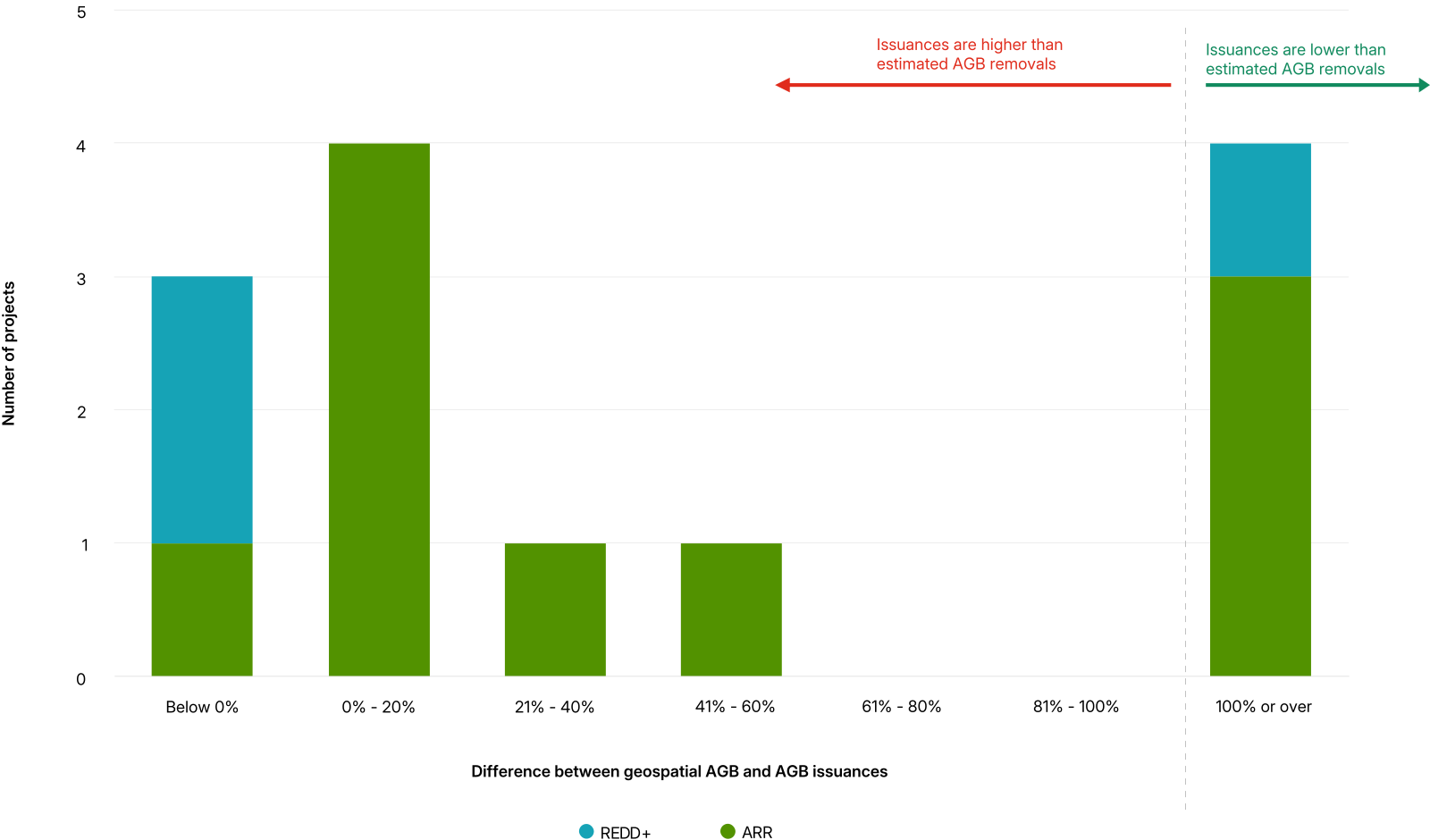
Data as of Feb. 18, 2026. REDD+ (reducing emissions from deforestation and forest degradation in developing countries) refers to projects that avoid carbon-dioxide emissions by preventing deforestation, either planned or unplanned, at the individual project level. ARR (afforestation/reforestation/revegetation) refers to projects that increase forest carbon stocks by establishing or restoring woody vegetation through planting, sowing or assisted natural regeneration on previously non-forested or degraded lands. Source: MSCI Carbon Markets, Chloris Geospatial
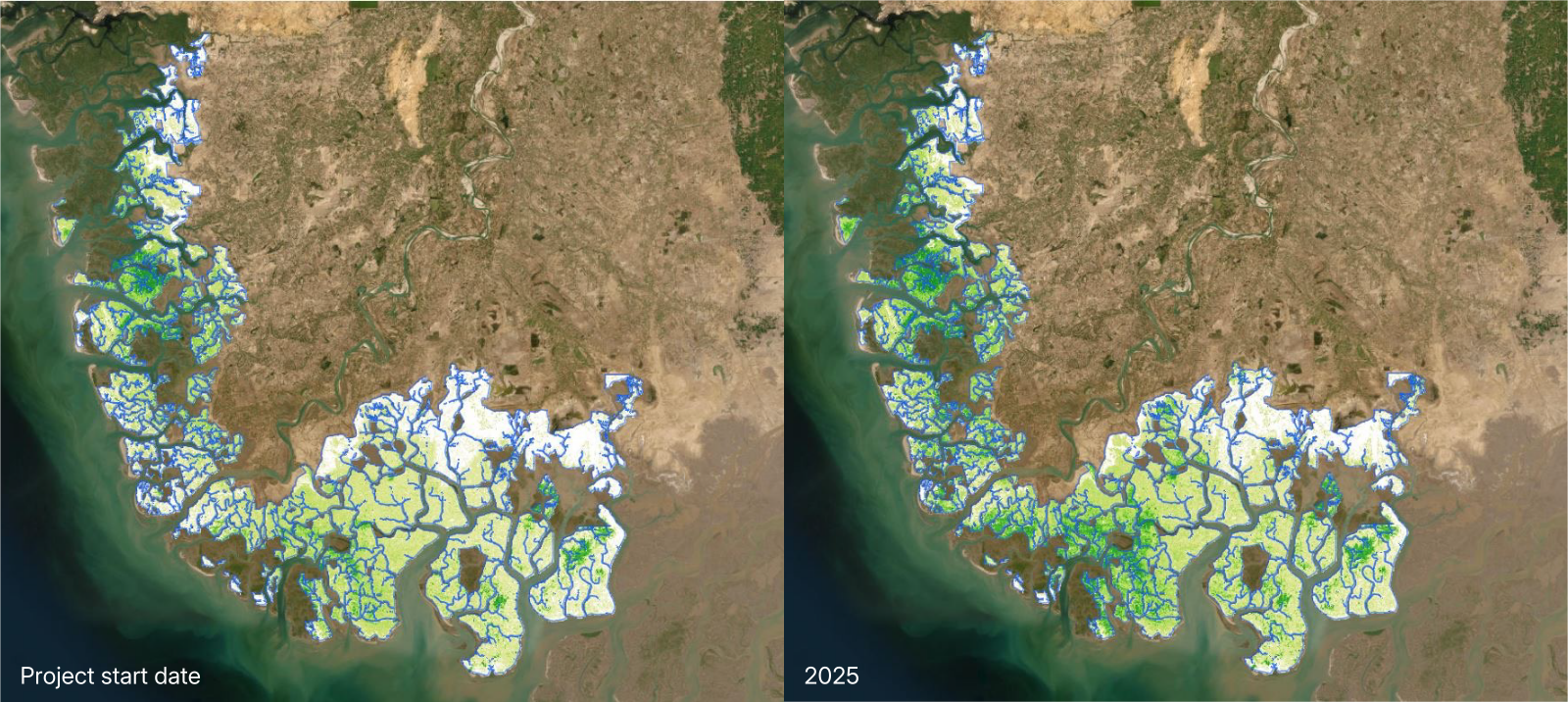
Source: Chloris Geospatial

Subscribe todayto have insights delivered to your inbox.
2025 State of Integrity in the Global Carbon-Credit Market
Our 2025 report on the global carbon-credit market shows rising demand for high-integrity credits with stronger ratings, higher prices and new risk frameworks are shaping a more credible market.
Planting for Quality: The Shift to Native Species
Can native species in ARR projects deliver the dual promise of stronger carbon storage and biodiversity gains, while positioning investors for higher-quality, premium credits?
1 Daniel M. Alongi, “Global Significance of Mangrove Blue Carbon in Climate Change Mitigation,” Sci 2 (3): 67, August 2020.
2 AGB-adjusted issuances refer to the estimated share of credited removals attributed to AGB, based on literature estimates or project-level data where available, and assessed relative to soil carbon components.
3 Chloris Geospatial is a cloud-based platform that directly measures AGB and related carbon stocks and changes using high-resolution satellite data, providing spatially explicit estimates for carbon monitoring and analysis.
The content of this page is for informational purposes only and is intended for institutional professionals with the analytical resources and tools necessary to interpret any performance information. Nothing herein is intended to recommend any product, tool or service. For all references to laws, rules or regulations, please note that the information is provided “as is” and does not constitute legal advice or any binding interpretation. Any approach to comply with regulatory or policy initiatives should be discussed with your own legal counsel and/or the relevant competent authority, as needed.