
Factoring in Earnings-Call Sentiment in Real Time
Global equity investors, challenged as they were by record market concentration and elevated valuations, approached the Q3 2025 U.S. earnings season with some trepidation. Would the market-leading AI companies deliver on the continued heady growth in revenues and profits priced into their stock multiples?
Overall, the earnings season was a disappointment to tech optimists as the economic burden of AI capex mounted. We can see this clearly through a factor lens. Using MSCI’s USA EFM Trading Model, we saw between Nov. 10 and Nov. 25 sharply negative returns to the beta and residual volatility factors, with a performance rotation into value and small-cap stocks (negative size exposure). The short-interest factor also weakened (hedge funds’ short positions underperformed) while liquidity posted the most significant negative return in risk-adjusted terms.
It was left to NVIDIA Corp. to improve the market mood with its consensus-beating earnings. But this relief was short-lived once investors recognized that NVIDIA’s stronger numbers pointed to the very same excess capex concerns that had punished other tech names. Moreover, this was combined with signs of inventory build. Yet such rapid shifts in market sentiment are not captured by daily factor returns. Instead, we use the MSCI Real-Time Factor Returns dataset to dig deeper.
In the chart below, we track the tick-by-tick market reaction through the performance of the beta, residual volatility and momentum factors. The euphoric open on Nov. 20 following NVIDIA’s earnings call the evening before is reflected in the leap in the cumulative return to high beta names. That evaporated within two hours, leading all three factors into negative territory by close of day.
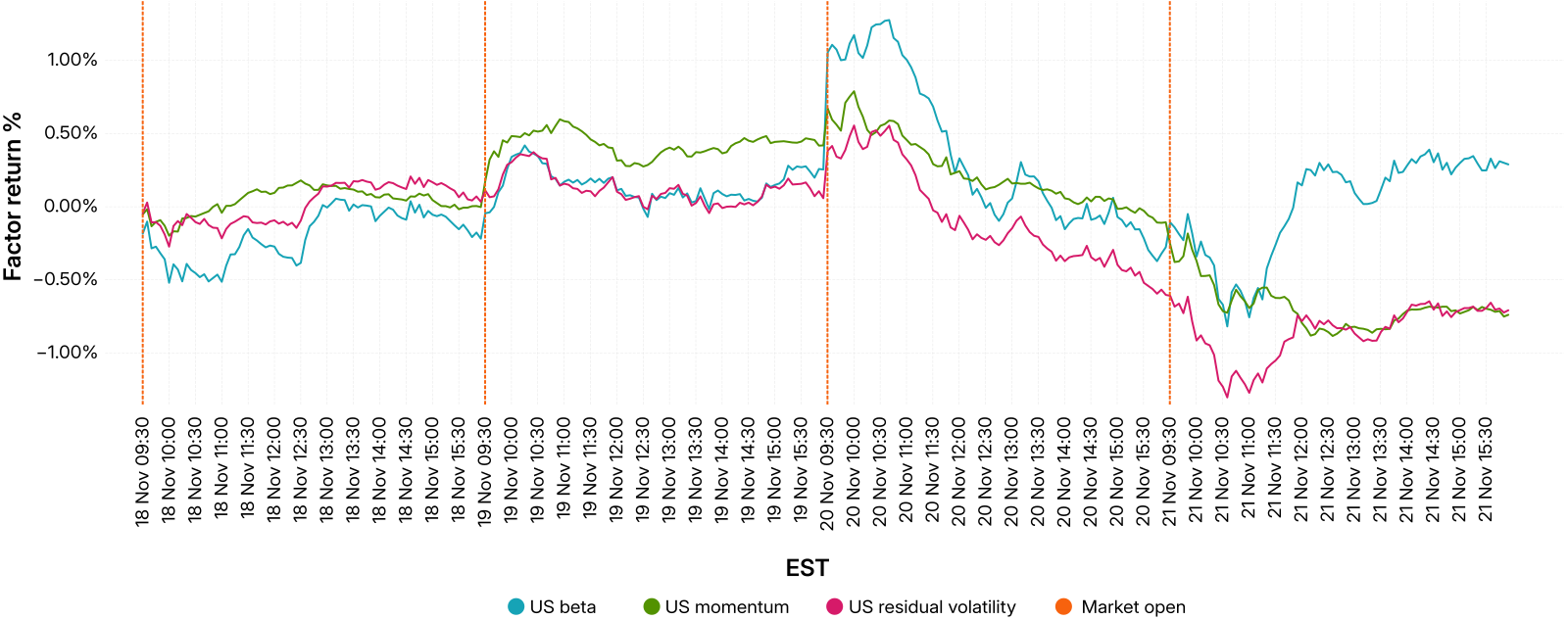
MSCI cumulative intraday factor returns re-based as of the U.S. market open on Nov. 18, 2025 through to end of day Nov. 21, 2025. Factor returns drawn from MSCI USA Equity Factor Trading Model (EFMUSATR).
These real-time factor returns help provide new insights into market moves and sentiment, and their core drivers. Equally, they illuminate the real-life equity investor experience of intra-day range volatility in their portfolios with much greater clarity and enable real-time attribution.


Subscribe todayto have insights delivered to your inbox.
Equity Factor Models
Explore portfolio construction, risk management and factor investing tools designed to help you build resilient, data-driven portfolios.
Unraveling Summer 2025’s Quant Fund Wobble
Using MSCI equity factor models, we expose how unusual factor correlations and crowded trades drove this summer’s losses in long-short quantitative hedge funds.
Fast-moving Markets: Revisiting the August 2007 Quant Crunch in Real Time
When markets get volatile, stock prices can move very quickly in a short period. As we saw in the August 2007 “quant liquidity crunch”— now about to mark its 10-year anniversary — many quantitative equity managers could have benefitted from getting market insights in real time as they found themselves in crowded trades.
The content of this page is for informational purposes only and is intended for institutional professionals with the analytical resources and tools necessary to interpret any performance information. Nothing herein is intended to recommend any product, tool or service. For all references to laws, rules or regulations, please note that the information is provided “as is” and does not constitute legal advice or any binding interpretation. Any approach to comply with regulatory or policy initiatives should be discussed with your own legal counsel and/or the relevant competent authority, as needed.