
Tariff Pain Drives EPS Downgrades in Europe
As European companies face the real impact of higher and volatile tariff measures from the Trump administration, analysts have revised their forecast earnings. Firms with higher U.S. revenue dependence have seen the sharpest downgrades, while those with lower U.S. revenue dependence have seen positive revisions. The sharper downgrades for firms with high U.S. revenue dependence underscore the importance of geographic exposure in helping investors make decisions during policy-driven disruptions.
We analyzed changes in 12-month forward consensus EPS estimates between the end of March 2025 (just before the initial April 2 U.S. tariff announcement for EU companies) and the end of July 2025, following the July 27 agreement between the U.S. and the EU based around a core 15% tariff framework. We segmented companies from the MSCI EMU Index into four quartiles based on their U.S. economic exposure, with Q4 representing the highest exposure and Q1 the lowest.
The charts below show that companies with high U.S. exposure experienced the largest declines in earnings estimates, driven by increased downgrades and fewer upgrades. In contrast, low-exposure companies benefited from modest upgrades and fewer downgrades, leading to the strongest median-earnings-estimate improvements. This suggests that analysts viewed tariffs as the key risk for firms that depend more heavily on U.S. revenues. These findings held even after excluding companies whose earnings had already been trending downward over the past year. The pattern held for companies in the MSCI World ex USA Index as well, though the relationship appeared milder.
With investors increasingly focused on policy-driven shocks such as tariffs, economic exposure can serve as a useful prism for understanding changes in EPS forecasts and evaluating the earnings resilience of their portfolios during such disruptions.
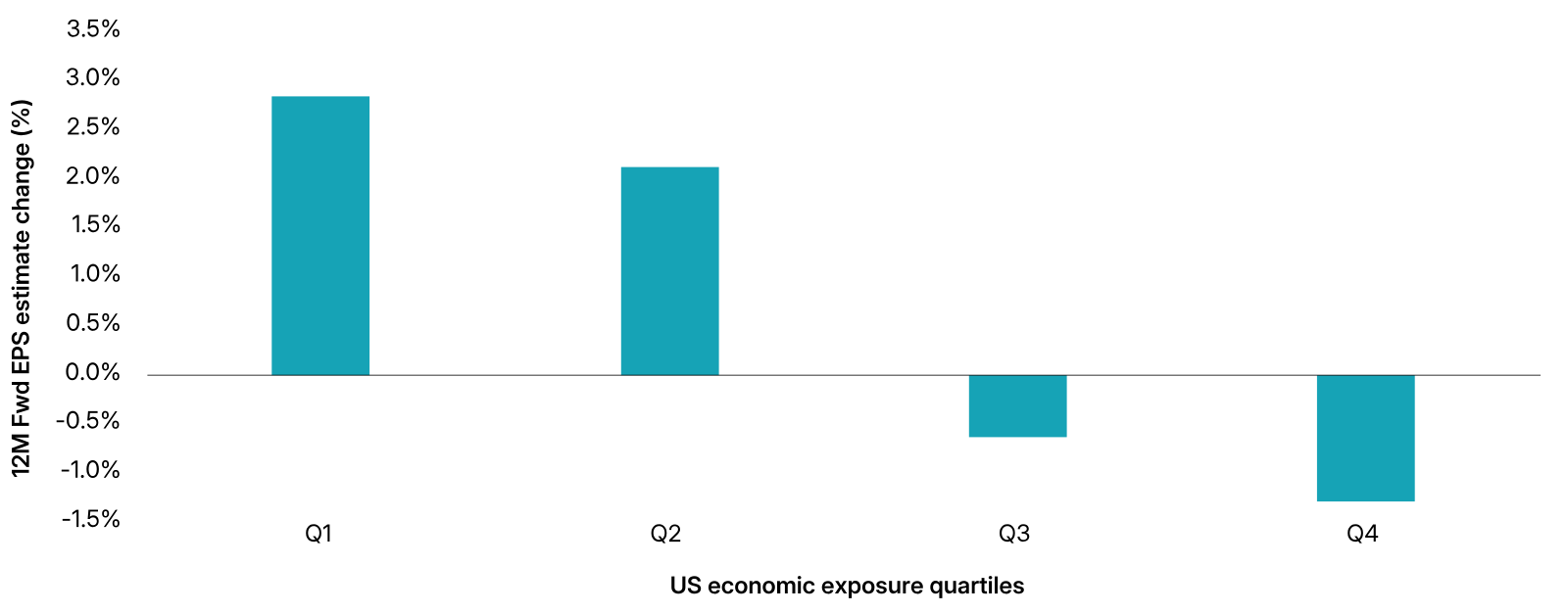
Median 12-month forward EPS estimate change (%) across stocks grouped into quartiles based on their U.S. economic exposure. EPS estimate change (%) is calculated between March 31, 2025 and July 31, 2025. Analysis covers constituents of the MSCI EMU Index as of July 31, 2025.
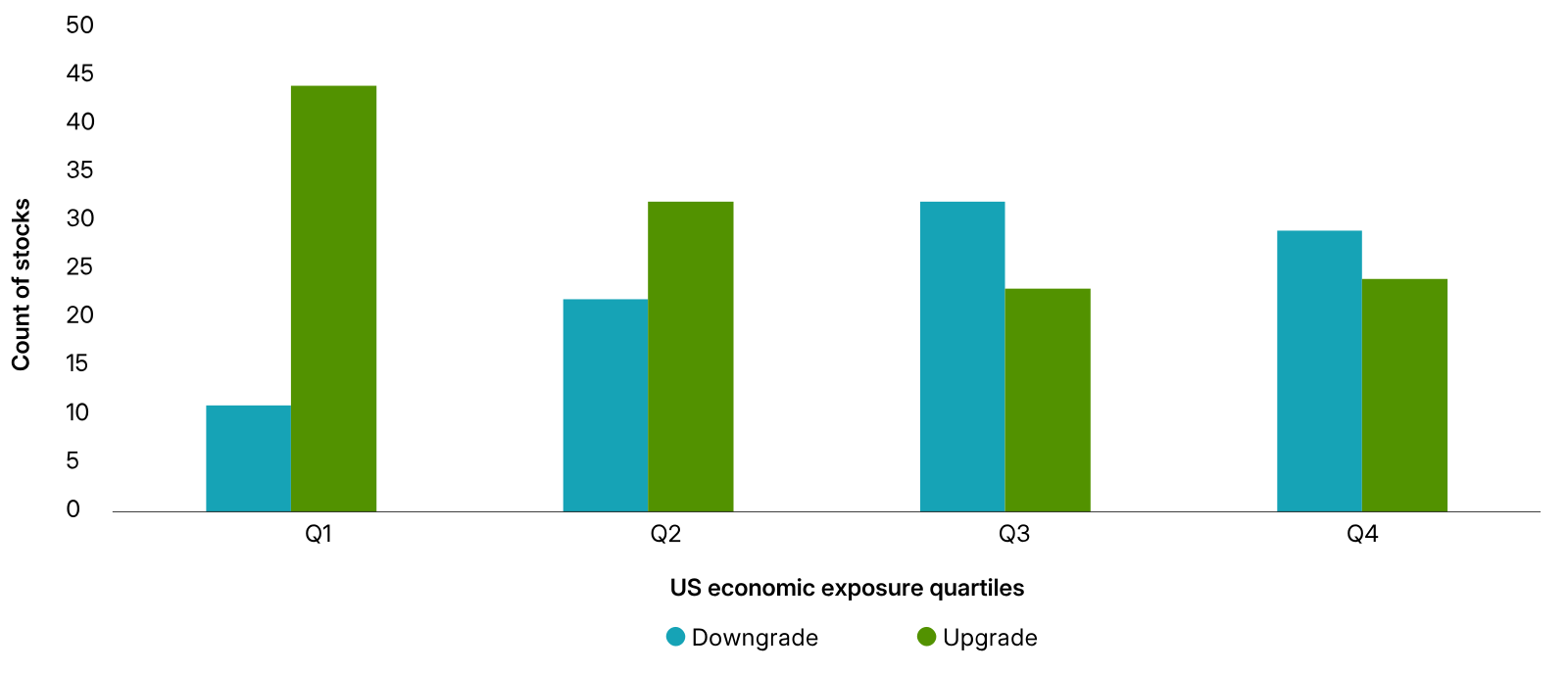
Count of 12-month forward EPS estimate upgrades and downgrades across stocks grouped into quartiles based on their U.S. economic exposure. EPS estimate revisions are calculated between March 31, 2025 and July 31, 2025. Analysis covers constituents of the MSCI EMU Index as of July 31, 2025.


Subscribe todayto have insights delivered to your inbox.
Some See a Renaissance for European Equities
European equities are gaining investors’ interest because of their lower valuations, higher dividend yields and better insulation from tariff risks than their U.S. counterparts.
Emerging Markets in a World Beyond US Exceptionalism
Emerging markets outperformed in early 2025 amid economic uncertainty. Falling correlations with developed markets and a weaker USD aided their diversification appeal, along with low valuations.
Aerospace, Defense and Tariff Turbulence
Tariffs and tangled supply chains: This week, we explore how commercial aerospace and defense companies are navigating a new wave of trade restrictions. From Boeing to Lockheed Martin, what do transparency and oversight mean when the stakes — and the sky —are high?
The content of this page is for informational purposes only and is intended for institutional professionals with the analytical resources and tools necessary to interpret any performance information. Nothing herein is intended to recommend any product, tool or service. For all references to laws, rules or regulations, please note that the information is provided “as is” and does not constitute legal advice or any binding interpretation. Any approach to comply with regulatory or policy initiatives should be discussed with your own legal counsel and/or the relevant competent authority, as needed.