
Why the Energy Transition Is Core to Corporate Strategy
Mentioned in this quick take:
For corporate leaders, the energy transition is not only a climate challenge — it is a question of long-term competitiveness and growth. The transition is reshaping competition, capital allocation and corporate strategy. With global-warming trajectories still pointing toward 3°C this century, investors are moving beyond emissions data alone to assess climate risk.1 For corporates, the key question is how exposed their business model is to the financial impacts of transition-related risks and opportunities, and how they signal preparedness to investors.
The MSCI Energy Transition Framework captures these dynamics through two dimensions. Transition pressure reflects the external forces disrupting a business, from climate policy and technological change to shifting demand and cost structures. Transition readiness measures how well a company has built the strategy and operational capabilities to adapt.
MSCI research found that equity funds invested in companies with stronger transition characteristics were linked to stronger financial performance. In credit markets, companies with higher transition readiness benefitted from lower costs of capital (tighter spreads) and lower volatility, suggesting creditors may view readiness as a signal of resilience and downside-risk management. Transition readiness was also associated with emissions reduction, consistent with our research showing Science Based Targets initiative targets, green capex and climate-governance data were leading indicators for decarbonization.
The quadrant framework below highlights four corporate profiles, allowing companies to benchmark against peers and identify areas for improvement. For investors, it can inform due diligence and capital-allocation decisions. For example, companies categorized as transition prepared may be better positioned to attract capital from investors seeking transition-related opportunities.
For companies in high-pressure sectors, investor differentiation may depend less on emissions data and more on the credibility of transition readiness — board oversight, capital-allocation discipline and exposure to commercial technology solutions. In low-pressure sectors, a low carbon footprint does not necessarily indicate strategic preparedness. As investor frameworks evolve beyond climate alignment, corporates may want to ask: Is our transition strategy sufficiently visible to investors, and where can we improve transparency?
Companies that understand their transition exposures and build capabilities to respond may be better positioned to strengthen investor perception and support access to capital.
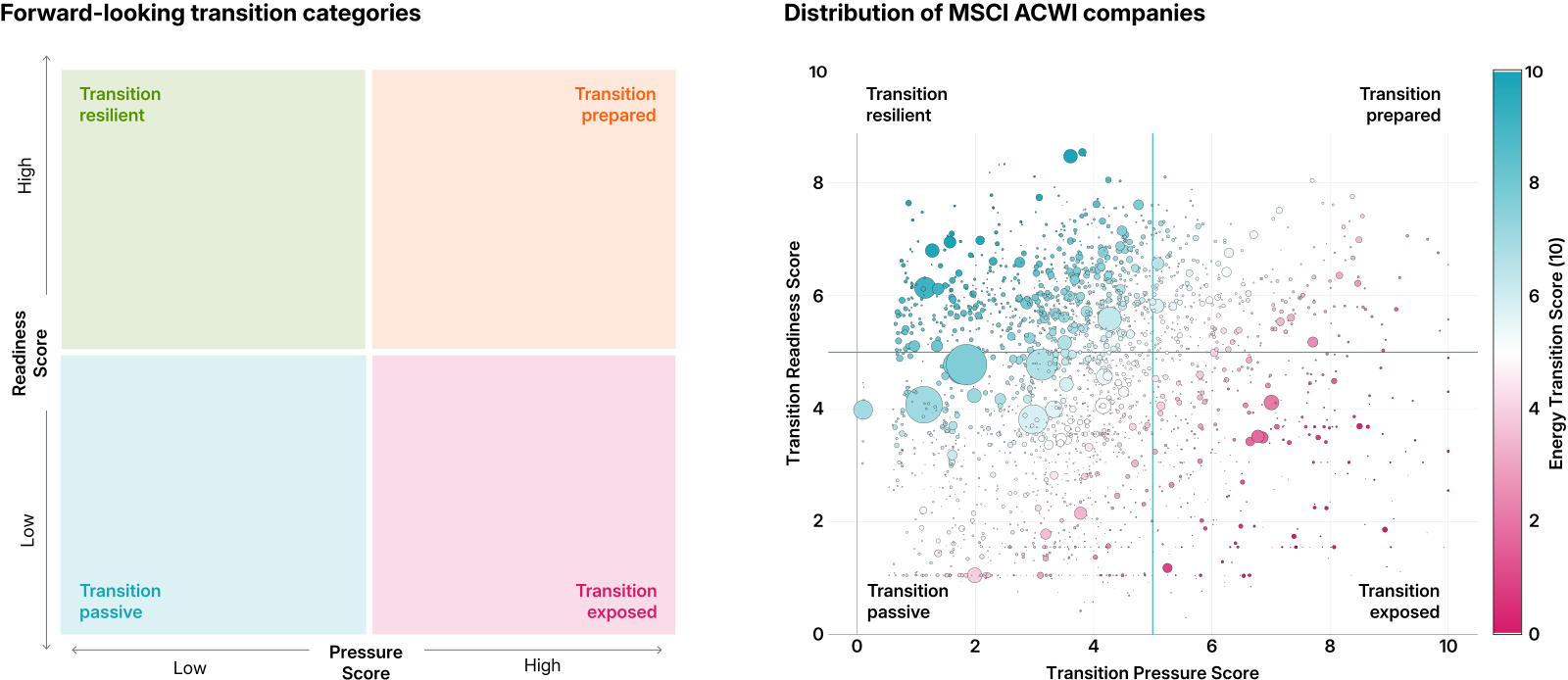
Distribution of companies in the MSCI ACWI Index as of April 2026. Bubble sizes are proportional to the company’s market capitalization. Source: MSCI Sustainability & Climate. MSCI Sustainability & Climate products and services are provided by MSCI Solutions LLC in the United States and MSCI Solutions (UK) Limited in the United Kingdom and certain other related entities.
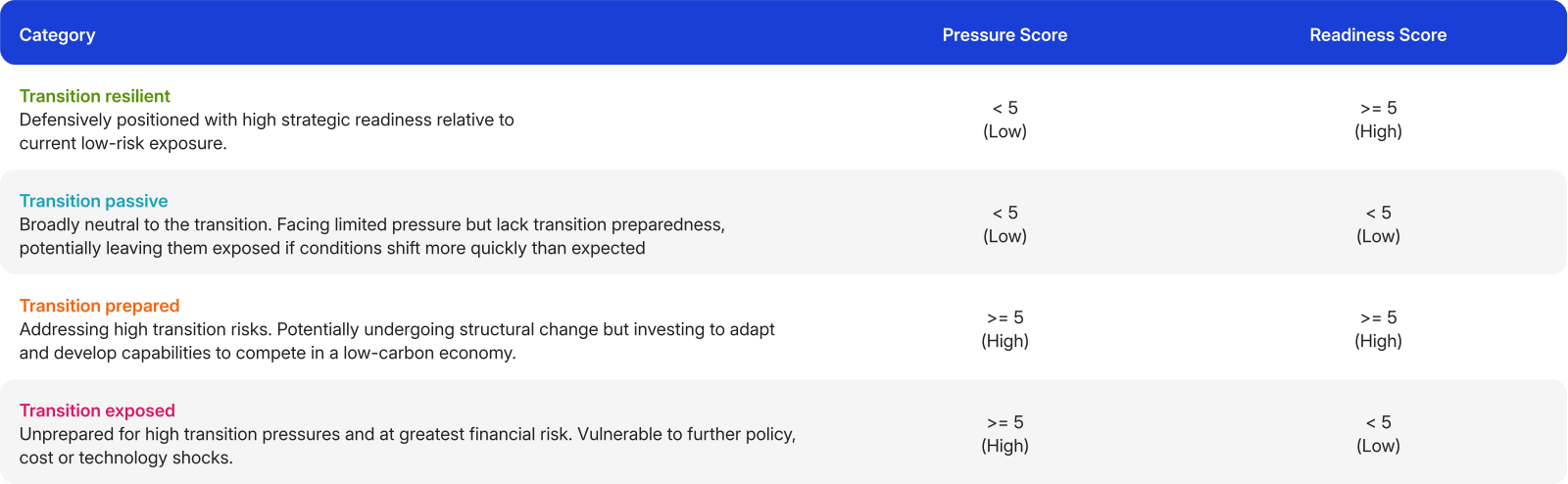
Source: MSCI Sustainability & Climate as of July 2026.

Subscribe todayto have insights delivered to your inbox.
Positioning Portfolios for the Energy Transition
Do funds better positioned for the energy transition outperform? We introduce a forward-looking quadrant framework to assess transition risk and readiness — and their portfolio implications.
Assessing the MSCI Energy Transition Framework in Credit Markets
Does the energy transition affect credit risk? We find that transition-ready issuers decarbonized faster, traded at tighter spreads and benefited from lower long-term borrowing costs.
Positioning Portfolios for the Energy Transition
Do funds better positioned for the energy transition outperform? We introduce a forward-looking quadrant framework to assess transition risk and readiness — and their portfolio implications.
1 “Transition Finance Tracker, Q1 2026,” MSCI Institute. Based on corporates’ emissions, sector-specific carbon budgets and climate targets, as of March 31, 2026, for all listed companies globally.
The content of this page is for informational purposes only and is intended for institutional professionals with the analytical resources and tools necessary to interpret any performance information. Nothing herein is intended to recommend any product, tool or service. For all references to laws, rules or regulations, please note that the information is provided “as is” and does not constitute legal advice or any binding interpretation. Any approach to comply with regulatory or policy initiatives should be discussed with your own legal counsel and/or the relevant competent authority, as needed.