
Wealth Trends 2026How Advisers Are Repositioning for a Volatile World
January 2026
How are wealth managers responding to global change? New data from our latest Wealth Monitor survey1 shows advisers worldwide are rethinking strategy — shifting allocations, accelerating AI investment, expanding private market exposure and making personalization the norm. Our Wealth Trends 2026 report combines peer insights and data from the survey to help advisers benchmark their market position and plan their next strategic move.
What you’ll learn
Read the report to learn how wealth managers are:
- Reframing global risk and adjusting regional allocations.
- Sharing differing perceptions of AI adoption rates.
- Moving private markets closer to the core of portfolios.
- Declaring personalization a baseline expectation.
- Tentatively embracing direct indexing.
What does this mean for your clients?
We believe these megatrends are giving birth to three broad trends capable of completely altering the wealth management industry:
86%
report clients are more concerned about tariffs and global uncertainty.
61%
plan to increase allocations to developed non-U.S. markets.
95%
expect to raise AI investment in the next three years.
Global uncertainty redefines risk lens
Most advisers reporting elevated concern over tariffs and global uncertainty say they plan to reduce U.S. equity exposure.
What does “diversification” really mean in a world of persistent volatility? This year’s survey signals a decisive move away from concentrated domestic allocations and toward broader global diversification — a shift we see as more than a tactical response to recent headlines. It suggests advisers increasingly view geopolitical risk and policy uncertainty as enduring features of the investment landscape rather than temporary disruptions and, consequently, are reassessing risk as a structural feature of today’s markets.
Choosing the right yardstick for AI
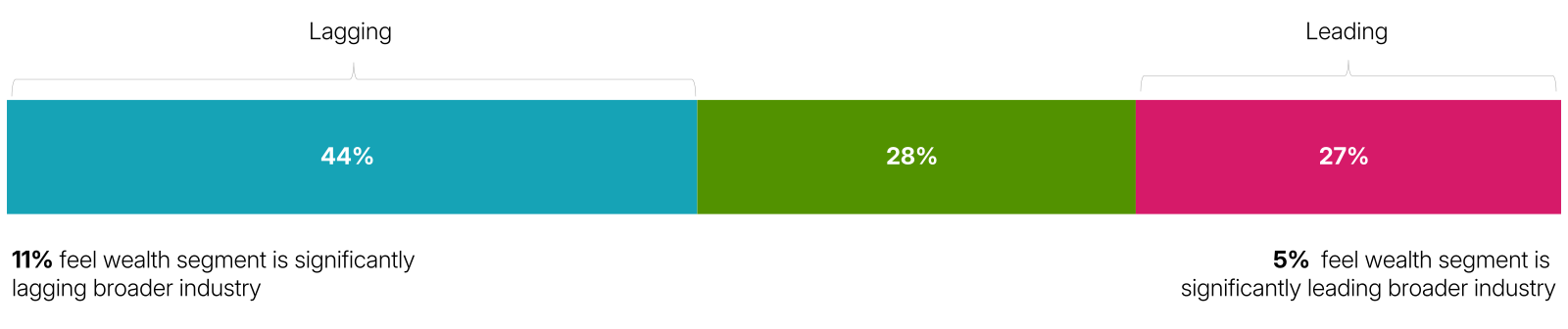
While 95% of firms expect to increase AI investment, only 27% believe the wealth segment is leading other financial services segments in AI adoption.
If AI is a priority, why do advisers still feel behind? We examine what’s behind this perceived “AI gap” and whether advisers could be measuring AI with the wrong yardstick. The wealth management business model could help explain this apparent contradiction: Advisers measure progress differently than asset managers, prioritizing scale, efficiency, personalization and client engagement. They grow their business by attracting new clients and creating proposals that reflect each client’s unique circumstances and preferences, rather than focusing on alpha generation.
Moving private markets closer to core
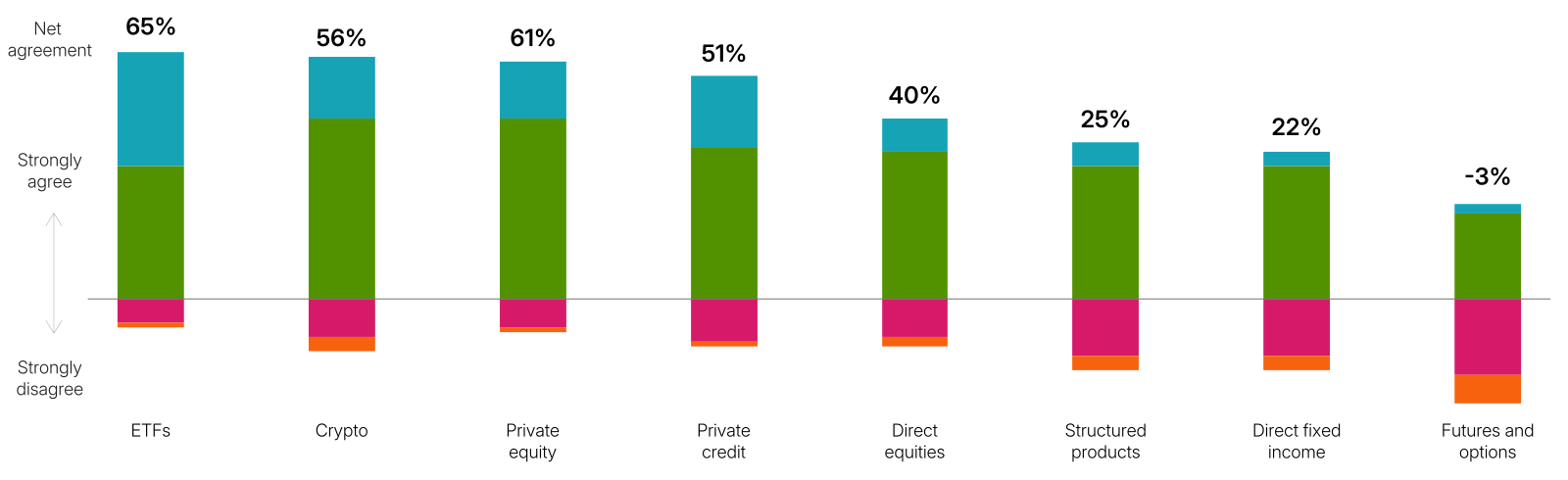
About 83% of advisers say a robust suite of private asset offerings is becoming essential. They also expect private, digital and other alternative asset classes to grow most among other asset classes.
Are private markets playing a new role in client portfolios? We look at how liquidity and diversification goals tie into a growing interest in private markets. Our data reflects a broader shift in how portfolios are constructed: Private credit and private equity are increasingly viewed as essential components, potentially offering diversification benefits and lower correlation to public equities. As market volatility persists, turning to private assets is one way to seek enhanced income, reduced reliance on public markets and more resilient, long-term portfolios.
Making personalization the norm
About 98% of advisers say new high-net-worth portfolios now include some level of customization.
When customization is expected, how do firms deliver it consistently? What was once a premium feature has become a baseline expectation. Personalization is increasingly used not just to reflect client values, but to create portfolios that feel resilient, intentional and aligned with long-term goals. Our data reveals the top drivers of personalization and the complexity that comes with this rising demand.
Evaluating the next phase of direct indexing
About 62% of advisers expect direct indexing usage to increase over the next three years.
Is direct indexing moving into the next phase of adoption? Our data shows momentum with direct indexing, with advisers increasingly seeing it as critical for tax efficiency and for serving HNW clients seeking customization beyond what pooled vehicles can offer. But while many firms expect usage to increase, many also cite operational complexity and client education as barriers. We examine where this trend is heading.
Ready to turn these insights into action?MSCI Wealth can help.
Why Wealth Managers Should Think Differently About AI
How do wealth managers measure their success with AI adoption? A new MSCI survey suggests they may use a different yardstick than the rest of the financial services industry.
An Emerging Approach to Accessing Emerging Markets
Using the MSCI ACWI ADR Index, wealth managers can implement tax-efficient strategies while gaining global equity exposure and broad diversification.
MSCI Wealth
Unlock portfolio personalization at scale. Establish a modern, rules-based approach to help you build, personalize and monitor portfolios.
1 The survey of 250 wealth management professionals was conducted in August across the United States, Europe and Asia. It reflects the opinions of the professionals themselves, not their clients, although the opinions of financial advisers may be strongly influenced by past conversations with clients.
The content of this page is for informational purposes only and is intended for institutional professionals with the analytical resources and tools necessary to interpret any performance information. Nothing herein is intended to recommend any product, tool or service. For all references to laws, rules or regulations, please note that the information is provided “as is” and does not constitute legal advice or any binding interpretation. Any approach to comply with regulatory or policy initiatives should be discussed with your own legal counsel and/or the relevant competent authority, as needed.