
Explore how carbon credits drive real emissions impact
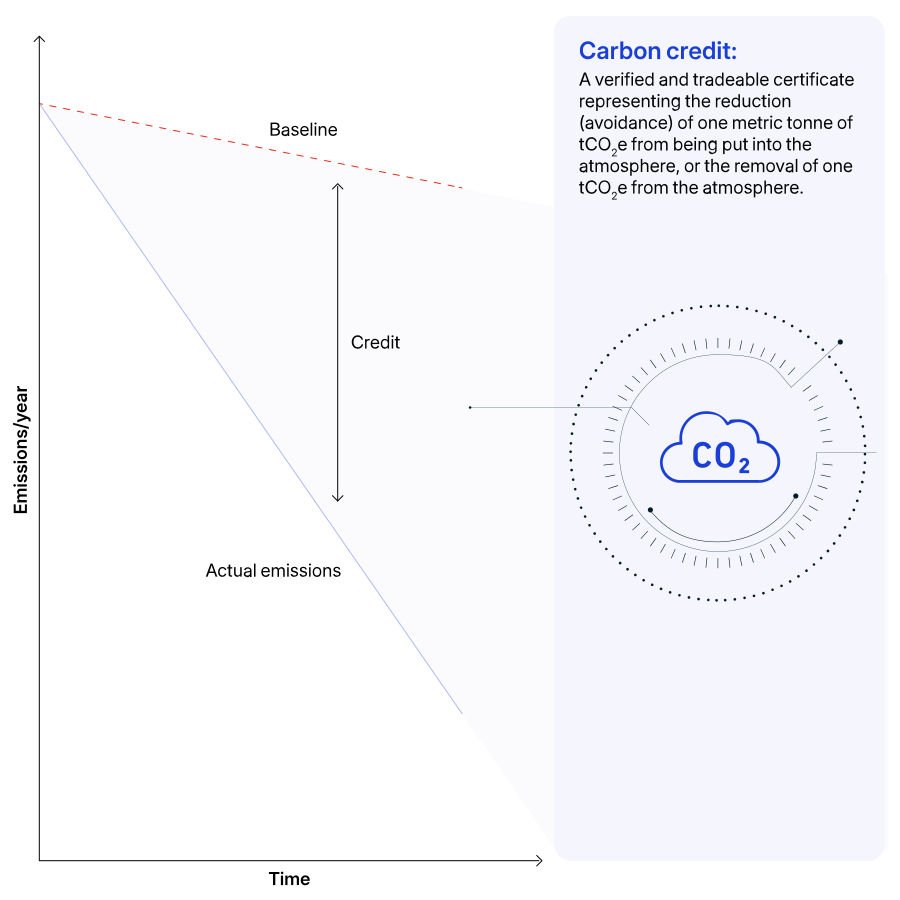
What is a carbon credit?
At its core, a carbon credit is a verified unit of climate impact. Each one is a tradeable certificate representing the reduction or removal of one metric tonne of CO2 or other greenhouse gas emissions (GHG) from the atmosphere. Carbon credits are tied to specific projects — and each project must show that its climate benefit is real, measurable and independently verified.
Carbon credits exist because emissions are fungible. A tonne of CO₂ reduced in one place has the same atmospheric effect as a tonne reduced anywhere else. This principle allows organizations to fund emission reductions beyond their own operations, channeling capital to where it can have the greatest impact.
How are carbon credits created?
Carbon credits are created by projects that follow approved crediting program methodologies. These set the rules for:
- Defining the baseline emissions scenario
- Estimating the project’s impact
- Monitoring results over time
- Verifying performance through independent auditors
Once verified, credits are issued to a registry — a centralized system that tracks each credit from issuance through to retirement. More than 250 project types can generate carbon credits today, from methane capture and clean cooking to reforestation, soil carbon enhancement and engineered carbon removals.
Where carbon credits are used?
Carbon credits work across two types of market: voluntary and compliance.
In voluntary markets, organizations buy credits to compensate for their emissions or to help them meet climate goals.
In certain compliance markets, eligible credits may be used by regulated entities in accordance with applicable program rules to help meet defined obligations — for example, airlines offsetting emissions under CORSIA.
In both cases, the value of a credit depends on the integrity of the underlying climate benefit. Not all credits are equal, so it’s important to understand how quality and integrity are assessed.
Conclusion
A carbon credit translates a verified reduction or removal of GHGs into a standardized, tradeable unit. Its integrity is shaped by how that credit is created, what type of project and methodology it uses — and its value to buyers.
Carbon Market Solutions
Gain clarity in fast-evolving carbon markets with investor-grade data, analytics and insights.

Projects and Transactions
Access roughly 30,000 projects spanning more than 15 registries and 1 million transactions.1

1 Data and coverage as of December 2024.