
Understand how carbon credits differ — and what each type represents
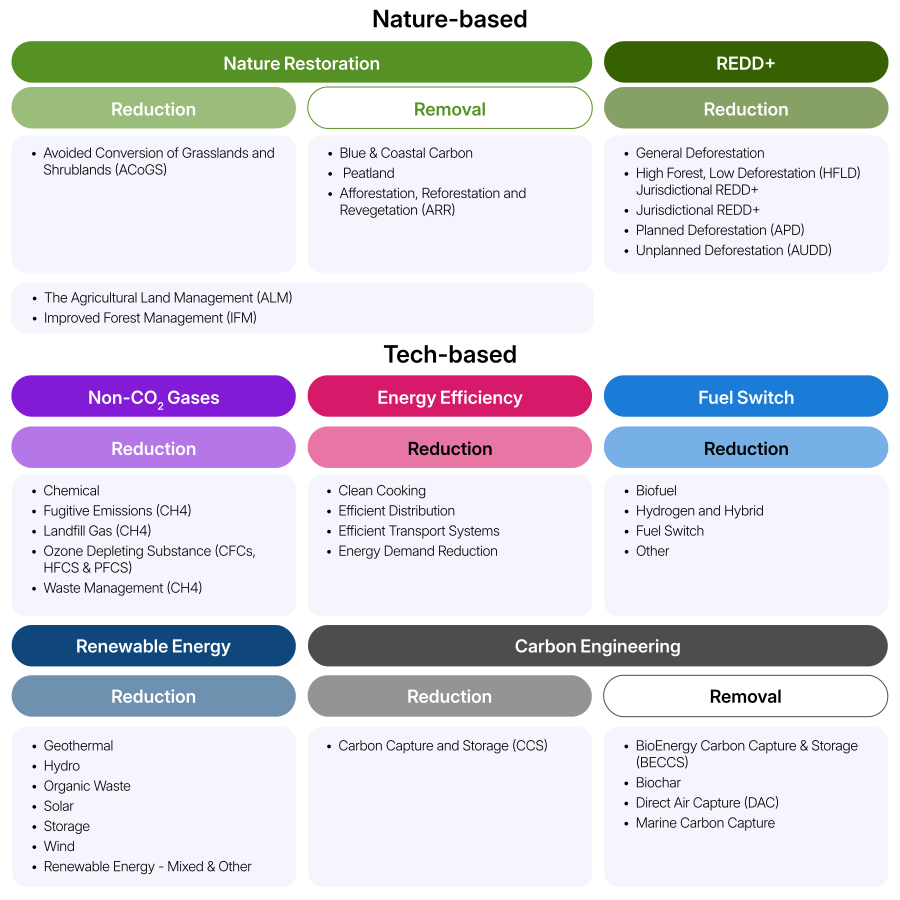
What are the types of carbon credit?
Carbon credits are not all the same. Some involve projects that reduce emissions, and others involve projects that actively remove carbon from the atmosphere. These two types of carbon credit differ in how the benefit is delivered, how long it lasts and what risks are involved.
Emissions reductions
Emission reductions happen when a project lowers or avoids emissions relative to a baseline, which estimates what would have happened without the project. This might involve preventing deforestation, capturing methane that would otherwise be released, or replacing high-emission technologies with cleaner alternatives. The credit represents emissions that would have occurred but did not.
Historically, emissions-reduction credits have accounted for the majority of credits issued, though proportions may vary over time. They draw on well-established approaches, but their integrity depends on the accuracy of that baseline.
Carbon removals
Carbon removals take CO₂ out of the atmosphere and store it. Nature-based approaches such as reforestation and soil carbon sequestration can remove carbon, as ewll as technology-based processes such as biochar production and direct air capture. The credit represents carbon that has been actively drawn down and stored.
Removal credits may offer more durable climate benefits, but they can involve newer technologies and face different measurement challenges, particularly around how long the carbon stays stored.
Project types
Projects generating carbon credits span a wide range of activities, from forest conservation and clean cooking to landfill gas capture, soil carbon enhancement, renewable energy and engineered removals. More than 250 distinct project types can generate credits today.
Each project type follows specific crediting program methodologies, which define how emissions impact is calculated, monitored and verified. Because these methodologies differ, credits from different project types can vary significantly in their climate impact and integrity.
Conclusion
Carbon credits can be distinguished by whether they reduce emissions or remove carbon from the atmosphere, and by the type of project used to generate them. These distinctions shape each credit’s climate benefit as well as its integrity.
Projects and Transactions
Access roughly 30,000 projects spanning more than 15 registries and 1 million transactions.

Carbon Project Ratings
Assess the integrity of more than 4,000 carbon projects with independent, in-depth assessments across six key criteria.