
What is carbon credit integrity?
The concept of integrity
Carbon credits and the projects that generate them can vary in quality — a term most market participants use interchangeably with integrity. This variation is not by design. Crediting frameworks were designed on the assumption that issued credits would reflect equivalent climate benefits and therefore be interchangeable within a program. The principle dates back to the Clean Development Mechanism (CDM) under the Kyoto Protocol and continues through today’s voluntary standards.In practice, differences in methodologies, project design and implementation have resulted in variation in credit quality across the market.
Why integrity matters
Buyers of credits want confidence that their investment will have a genuine impact on emissions. Companies that use credits to make climate claims risk understating their net climate impact if those credits overstate the actual benefit. And all market participants want assurance that the projects they support do not cause harm or contravene ethical standards.
Two dimensions of integrity
While there are many aspects to the quality of a carbon credit, there is growing alignment on how integrity should be assessed. Integrity is typically understood across two areas. Together, these two dimensions provide the foundation for evaluating carbon credit integrity:
- Emissions-impact integrity
This considers how much emissions have been reduced or removed, how accurate these estimates are, and how likely they are to be maintained over time. The central challenge is quantifying the counterfactual — estimating what would have happened without the project going ahead. Because this baseline scenario cannot be directly observed, it introduces uncertainty into every credit issues. - Implementation integrity
This relates to how the project delivers that impact, including its safeguards, legal and ethical practices, and the conditions that influence whether credits will be issued as expected.
Who is working to improve integrity?
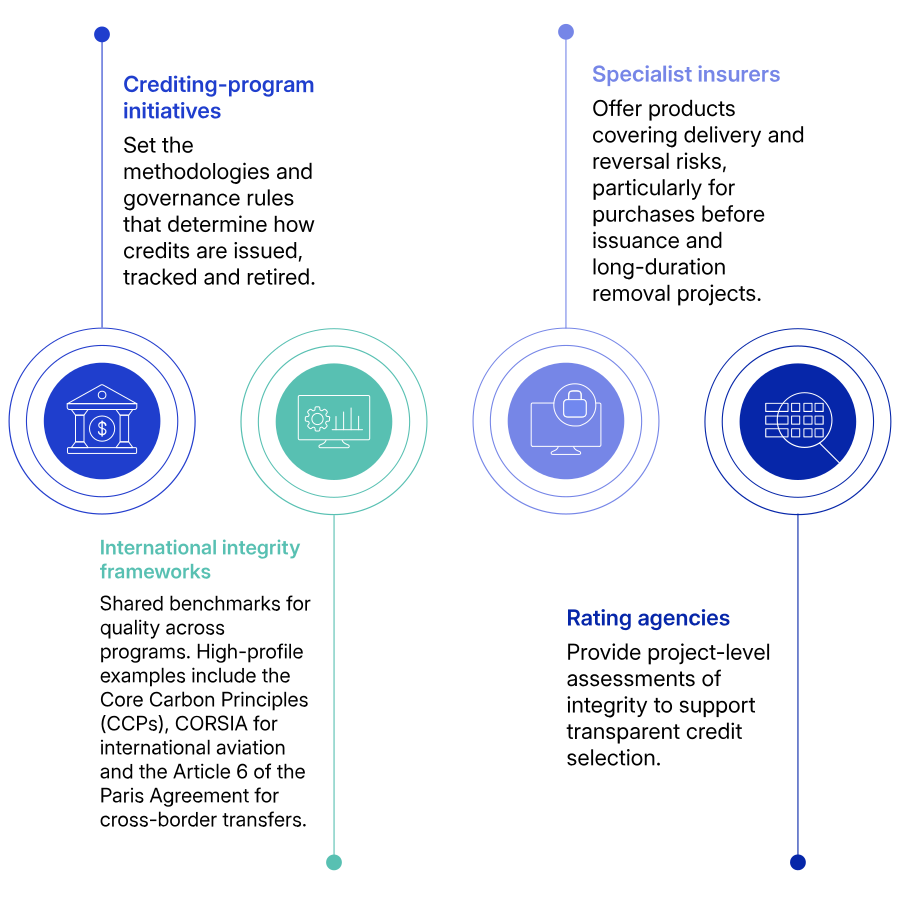
A growing number of organizations help define and reinforce integrity across the carbon market. These include registries that set methodologies and governance rules, international frameworks that establish shared benchmarks for quality, as well as rating agencies and insurers that provide independent assessments and risk coverage.
- Crediting-program initiatives: Set the methodologies and governance rules that determine how credits are issued, tracked and retired.
- International integrity frameworks: Shared benchmarks for quality across programs. High-profile examples include the Core Carbon Principles (CCPs), CORSIA for international aviation and the Article 6 of the Paris Agreement for cross-border transfers.
- Specialist insurers: Offer products covering delivery and reversal risks, particularly for purchases before issuance and long-duration removal projects.
- Rating agencies: Provide project-level assessments of integrity to support transparent credit selection.
Conclusion
Carbon credit integrity reflects how closely a credit corresponds to a real tonne of emissions avoided or removed, and how responsibly that outcome was delivered. Assessing it means looking at both the emissions impact and the way a project is implemented. A growing ecosystem of institutions, frameworks and tools make these assessments more consistent and transparent.
Carbon Project Ratings
Assess the integrity of more than 4,000 carbon projects with independent, in-depth assessments across six key criteria.

Carbon Market Solutions
Gain clarity in fast-evolving carbon markets with investor-grade data, analytics and insights.