
Distress Hit Differently in this Cycle and Debt Funds May Be the Reason
- The increased role of debt funds since the 2008 global financial crisis requires new approaches for analyzing commercial property distress.
- Asset owners trying to understand the performance of their investments in debt funds need to think about the legal protections in each slice of the debt portion of the capital stack.
- Managers looking for repriced assets may find value by focusing on the debt funds targeting the mezzanine slice of the capital stack.
Despite hopes that the repricing in the market since 2022 would result in the same sort of opportunities seen following the 2008 global financial crisis (GFC), distressed asset sales represent only a minimal share of overall sales activity in this current downturn. Distressed assets reached 20% of total sales by late 2010, three years after the GFC began. In contrast, through mid-2025, distressed transactions have only reached 3% of market share. Prices fell sharply in the GFC, dropping 23% year over year by the third quarter of 2009. This time, the maximum decline was about 10% by the second quarter of 2023 following the 2022 interest rate shock.
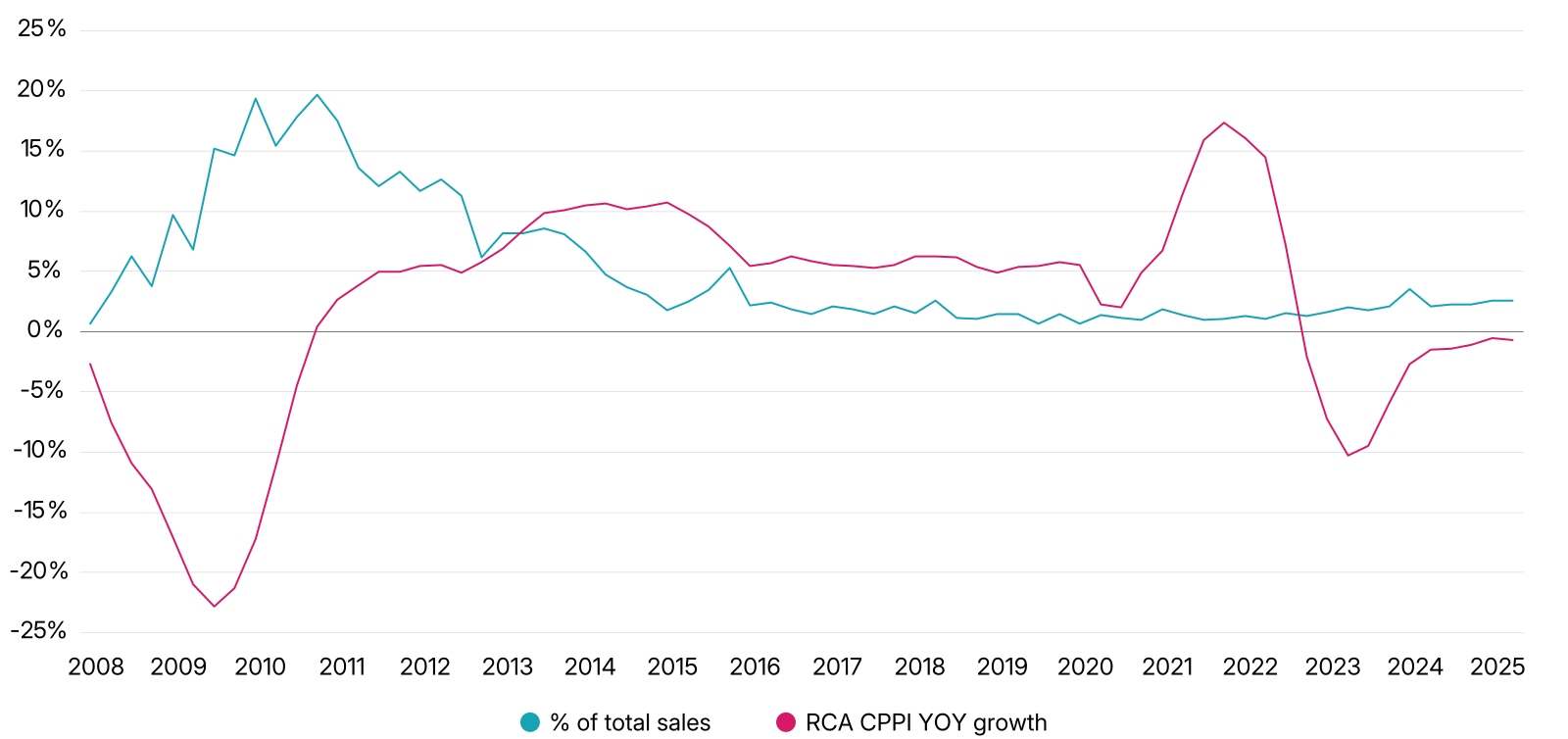
MSCI Real Capital Analytics data for asset sales and pricing
Our semi-annual look at the composition of lending in the first mortgage market has focused on investor driven lenders since 2016, given the way this category has evolved. What was once a collection of hard money lenders and mortgage real-estate investment trusts (REITs) has come to be dominated by institutional capital rolling into private credit vehicles, or debt funds, which are less regulated than banks and other lenders.
Some of the recent rises and falls in the lending share for these groups were a function of capital availability.1 As dry powder surged, so too did lending share as these groups then put money to work.
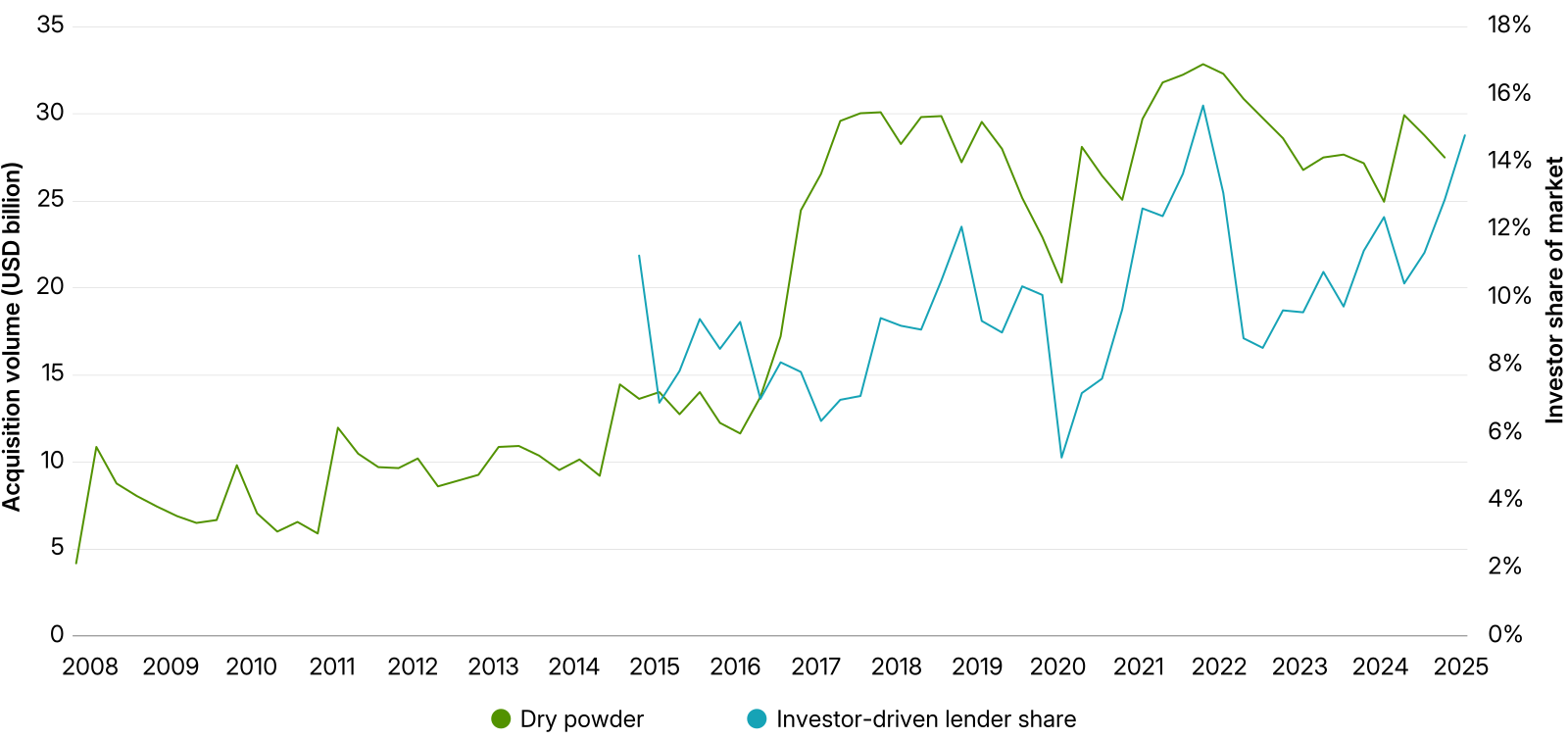
Dry powder of U.S. real estate debt funds. Source: MSCI Private Capital Solutions.
Changing market structures also helped push the market share of investor driven lenders upward with tighter oversight of bank lending, especially around the High Volatility Commercial Real Estate (HVCRE) regulations that took effect in 2018. These lenders were able to step in and provide solutions needed when traditional lenders had to retain more risk capital when originating mortgages.
Just how well that capital performed though is a problematic question for the industry without widely used benchmarks of private debt performance. MSCI does have data on the performance of closed end debt funds within our PCS platform however and examining different risk profiles, one can see evidence of distress in this cycle. The figures are gross, levered returns, so not easily compared to our MSCI/PREA U.S. ACOE Quarterly Property Fund Index, for example. Our annual Trends to Watch piece, however, summarizes how these debt indexes perform on a net basis versus real estate equity. Here though, exploring the relative composition of these returns on a gross basis helps provide perspective on where problems exist in the commercial real estate market.
Risk in the commercial mortgage world is not treated the same as in private equity real estate where participants talk about core, value add or opportunistic funds as a shorthand for the risks and returns an investor may face. For debt, risk is all about the position in the capital stack and how the legal structures surrounding that position protect the capital put to work.
In a typical first mortgage loan — the senior debt — there is little upside to growth, with performance reflecting the coupon rate less losses. Indeed, looking at the composition of returns for closed end debt funds active in the senior space, income returns accounted for 98% of the return from 2015 to 2019. This figure jumped to 113% from 2020 to 2025 due to high losses around the COVID-19 market turmoil.
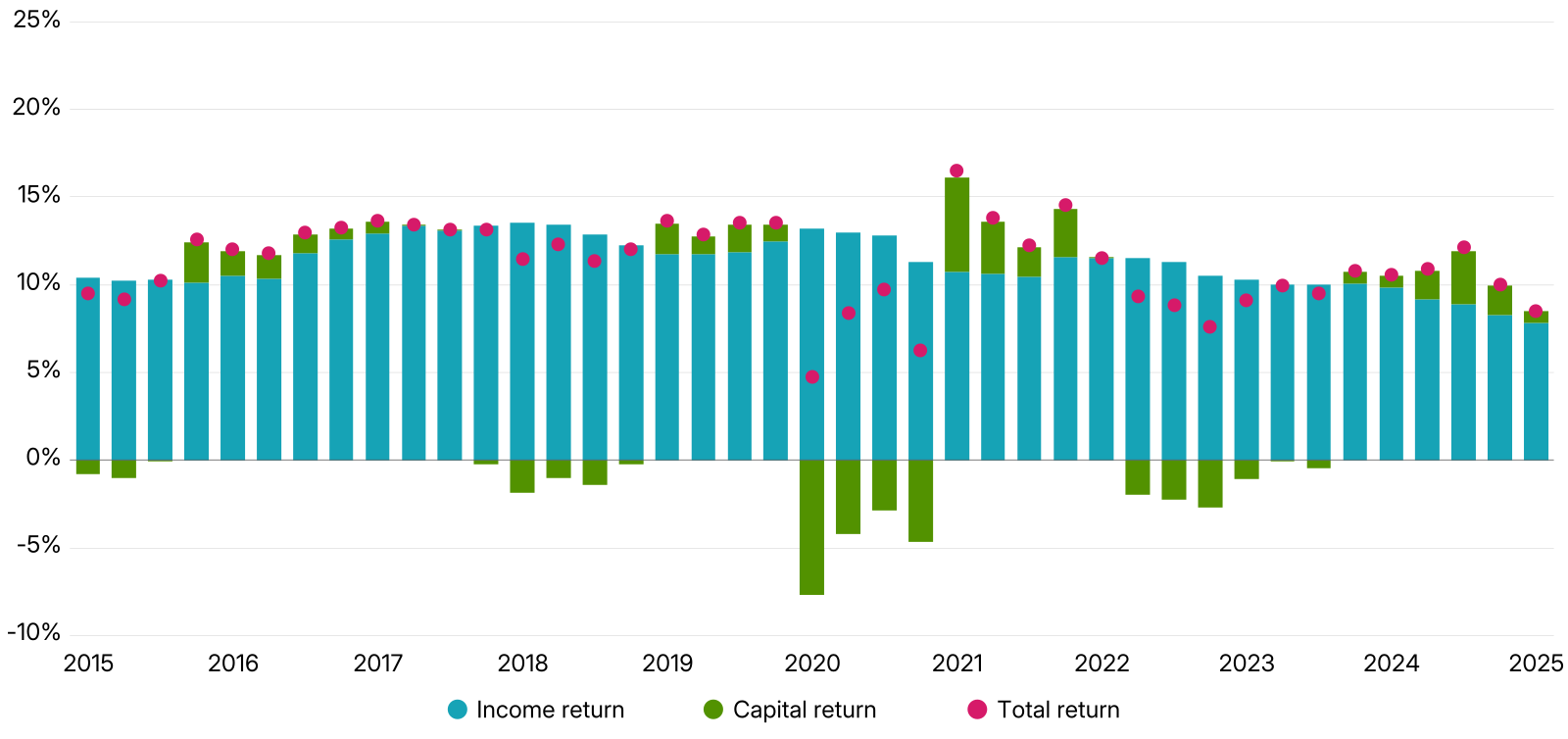
Fund-level gross returns, MSCI USA Quarterly Private Real Estate Debt Fund dataset.
The mezzanine slice is more complicated, however, with 48% of the return driven by income returns from 2015 to 2019. From 2020 to 2025, however, this figure jumps to 210% given the loan losses experienced in this riskier portion of the capital stack. These loan losses by debt funds may indicate where the distress opportunity can be found in this cycle.
In the aftermath of the GFC, lenders with bad loans were often in conflict with borrowers who wanted to hang on for a better future. A borrower who truly believed that the property would turn the corner would pursue costly legal venues to forestall foreclosure. Some might wonder, why fight when a steady stream of debt funds have been willing to step up to provide capital?
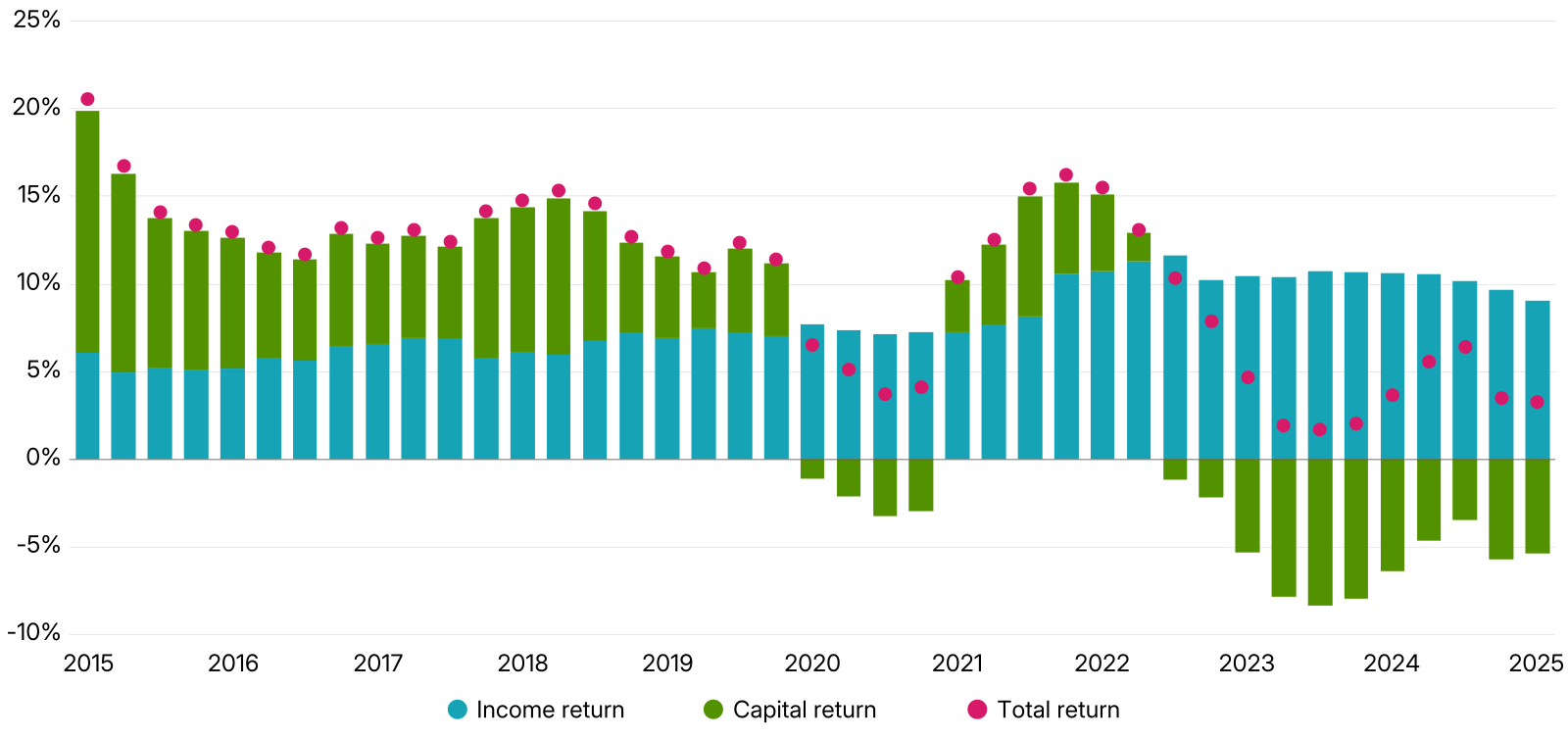
Fund-level gross returns, MSCI USA Quarterly Private Real Estate Debt Fund dataset.
Given the severity of price declines since 2022, some borrowers have been willing to take on additional debt to delay foreclosure. Rather than accept immediate loss, they add a new layer to the capital stack in hopes that future price appreciation restores value. If the effort fails, the outcome is no worse than foreclosure; in the meantime, the mezzanine financing provides time, fees and a chance — however slim — of recovery. The recent performance of the mezzanine-focused debt funds shows consistent declines in capital returns. These declines accelerated into 2022 as financial stress gained ground and are a combination of realized losses as some loans go bad and unrealized losses as loan values change.
To the extent that recent price declines translate into realized losses, they are less likely to result in the protracted, contested foreclosures that followed the GFC. Mezzanine lenders, through their interests in the LLCs that control a property, gain meaningful control rights upon default, allowing them to influence outcomes more directly. For investors seeking distressed opportunities, these mezzanine positions may be a primary point of entry into impaired assets.

Subscribe todayto have insights delivered to your inbox.
The MSCI Private Real Estate Factor Model
Growing private-asset allocations and global real-estate diversification are driving demand for a broad, cross-asset, cross-region risk-modeling framework.
Europe Capital Trends: A Stalled Rebound in Commercial Property
The hoped-for recovery in European commercial real estate failed to gather steam in the third quarter, though some bright spots in deal activity and pricing emerged.
Game-changing data for investing in commercial real estate
Get game-changing data, analytics and research on global commercial real estate and infrastructure to help inform your investment decisions.
1 Data taken from MSCI Private Capital Universe.
The content of this page is for informational purposes only and is intended for institutional professionals with the analytical resources and tools necessary to interpret any performance information. Nothing herein is intended to recommend any product, tool or service. For all references to laws, rules or regulations, please note that the information is provided “as is” and does not constitute legal advice or any binding interpretation. Any approach to comply with regulatory or policy initiatives should be discussed with your own legal counsel and/or the relevant competent authority, as needed.