
Managing Benchmark Concentration: A Framework for Asset Allocators
- Global equity markets have become highly concentrated, with a growing share of risk driven by a small set of stocks, sectors and geographies. Investors need to decide whether to accept concentration in their benchmarks or manage it.
- We present a structured three-step approach to identify the type of concentration, assess benchmark flexibility and evaluate a concentration management solution.
- Institutional investors and asset allocators can use this framework to navigate policy benchmarks and enhance their strategic asset allocation and portfolio implementation.
Equity markets are more concentrated than at any point over the past five decades, and market-cap-weighted benchmarks reflect that reality. The top 10 constituents of the MSCI World Index make up more than a quarter of its total weight — a fourfold increase in 15 years. The U.S. now represents over 70% of the index, while information technology alone accounts for more than a quarter.1
Institutional and wealth investors will see concentration risk surface in policy discussions, risk reports and allocation reviews — but there is no single right answer to managing it. The appropriate response depends on the investor's objectives, risk budget, governance structure and implementation practices. While market-cap-weighted benchmarks are typically anchored by policy, strategic allocation and implementation layers may offer greater flexibility to deviate.
Data from June 1992 to January 2026. Risk contribution calculated using the MSCI Global Equity Factor Model (EFMGEMLT). The growing gap between earnings contribution and both index weight and risk contribution likely reflects higher valuations and increased risk concentration, including higher correlations, among the top 10 stocks.
Concentration reflects a tradeoff between absolute and active risk
Market-cap-weighted indexes reflect the market's collective view of value across the investable opportunity set. They are liquid, low-turnover and scalable and, importantly, all investors can hold them simultaneously. These characteristics make cap-weighting the default for most benchmarks.
When benchmarks become concentrated, so too can absolute risk. As shown in the chart above, the largest stocks now account for a disproportionate share of both index weight and portfolio risk relative to their earnings contribution, with this gap widening since 2022. Investors must choose whether to accept that concentrated absolute risk or to deliberately move toward alternative weighting. That move can diversify the absolute risk profile but it comes at a cost: active risk, which needs to be budgeted and governed.
In practice, most CIO offices operate with a defined tracking-error budget relative to a cap-weighted policy benchmark. Any move toward alternative weighting consumes part of that budget. So, where then does that active risk sit? Active managers may be reluctant to give up risk budget to a benchmark decision, while passive teams are typically not mandated to take it on. As a result, managing concentration is often as much a governance decision as it is a portfolio construction choice.
A three-step framework for managing concentration risk
Step 1: Diagnose the concentration concern
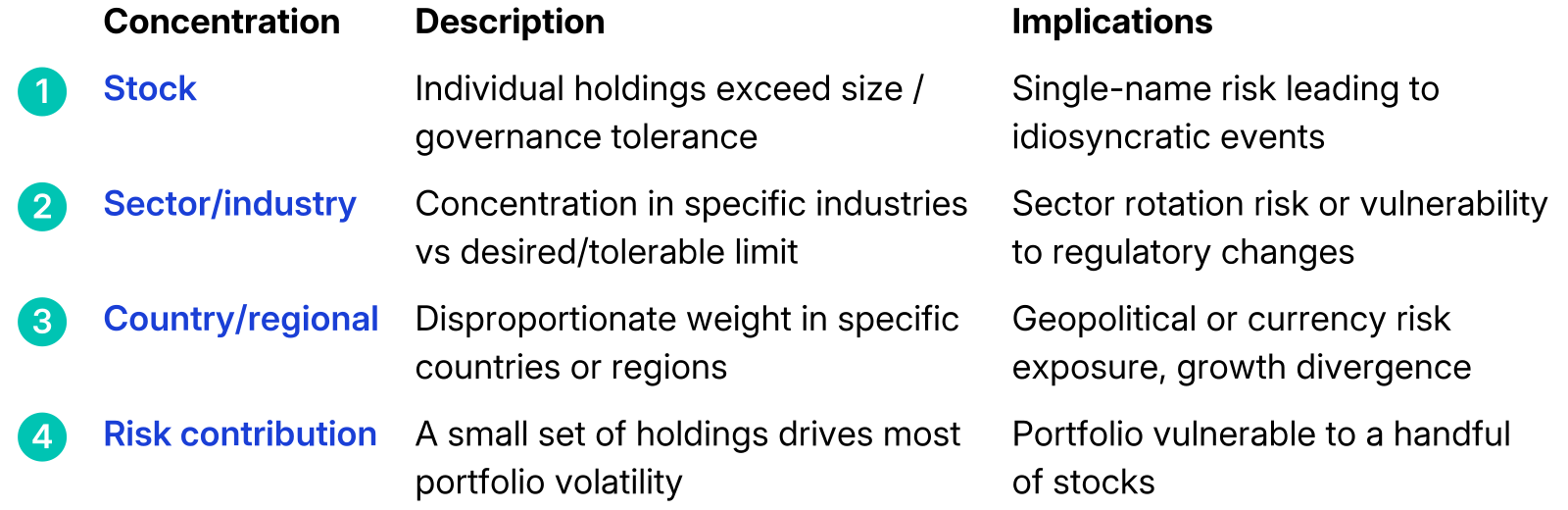
Concentration can take several forms: single-name weight can breach governance thresholds and expose portfolios to idiosyncratic events, sector concentration raises questions around cyclical vulnerability, and country concentration can diverge from an investor's economic outlook. Risk concentration — where a small subset of holdings drives most volatility — adds another layer that weight-based reporting often obscures. These dimensions do not always move together: Prior to the recent mega-cap surge, for example, U.S. country weights were already elevated without the same degree of single-name concentration.
Today, country, sector and single-name concentration are more aligned, reflecting the appetite for U.S. megacap tech stocks. Addressing one can partially address others but can also create unintended tilts elsewhere.
Step 2: Determine the flexibility available to decision makers
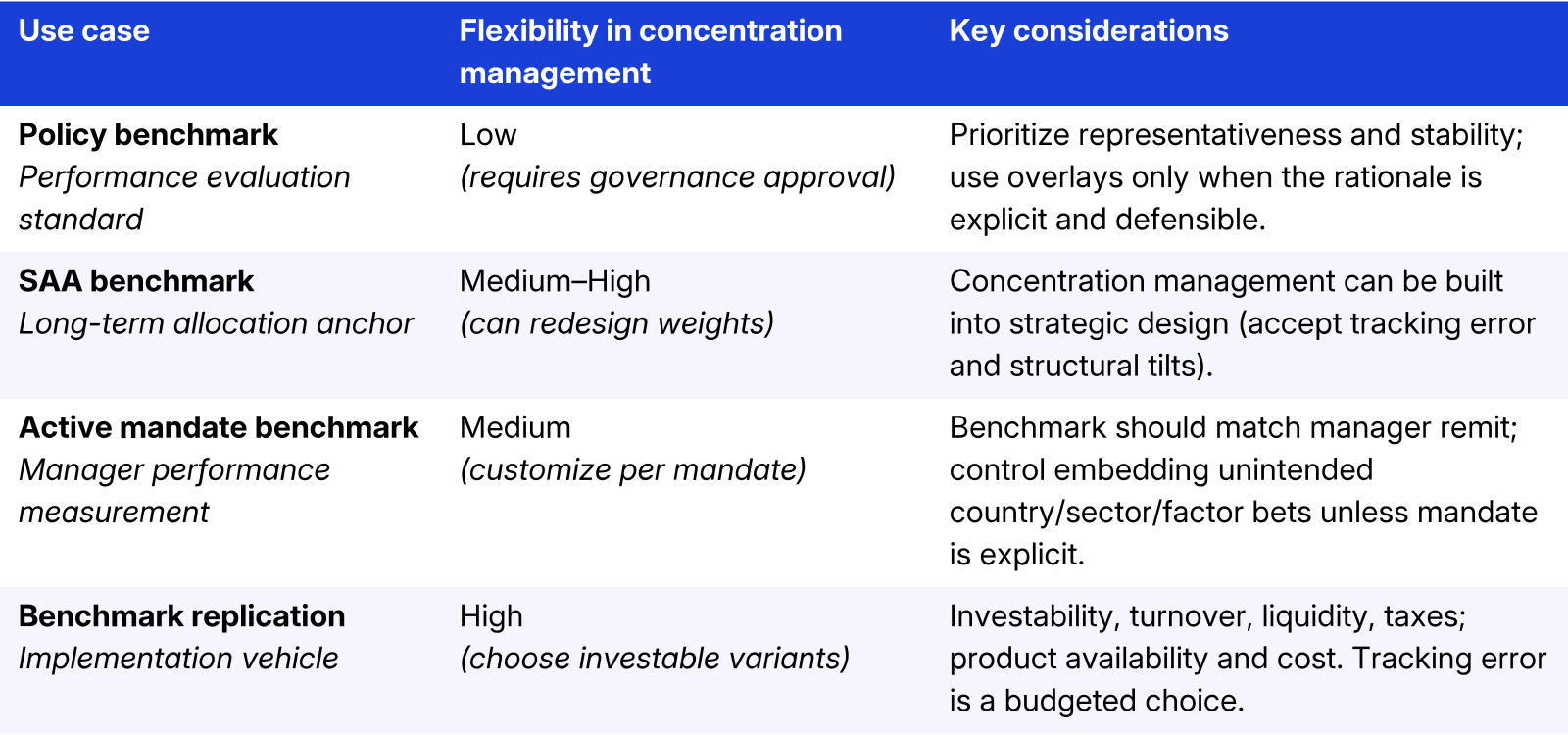
Investors typically have the least flexibility in their policy benchmark. It serves as the strategic reference for overall investments, and changing it has cascading consequences for asset allocation, mandates, attribution and reporting, often requiring board-level approval.
Strategic asset allocation (SAA) benchmarks offer more flexibility. Concentration can be managed through strategic weight-setting, though investors must accept the resulting tracking error and structural tilts.
Active mandate benchmarks must align to the manager's remit, but there may be room to tailor concentration guardrails within that scope.
Benchmark replication offers the most flexibility in principle. Investors can choose from alternatively weighted index variants, such as capped strategies, though practical constraints around product availability, liquidity, turnover and implementation costs apply.
Step 3: Choose a concentration management approach
Once an investor diagnoses the concern and understands the flexibility available, they can evaluate which approach to managing concentration would work, based on the underlying philosophy and mechanism of each:
These approaches can be applied individually or combined, depending on the nature of the concentration concern and the flexibility available within the benchmark.
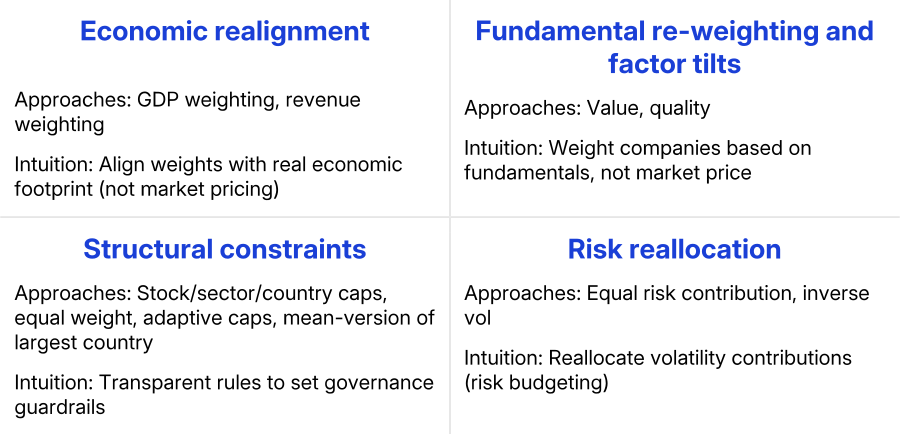
Approaches highlighted within each class is meant to be illustrative and not comprehensive.
Synthesizing the concern, the objective and the approach
Each concentration management approach addresses some concerns directly and others indirectly. GDP weighting, for example, re-anchors country weights to economic output, but may have limited effect on stock-level concentration within a given market. In a global context this reduces U.S. dominance, but in emerging markets it can amplify concentration in China. Risk reallocation approaches target volatility contributions rather than index weights — and while they will typically reduce the dominance of high-risk names as a practical outcome, the mechanism does not explicitly solve for sector or country concentration.
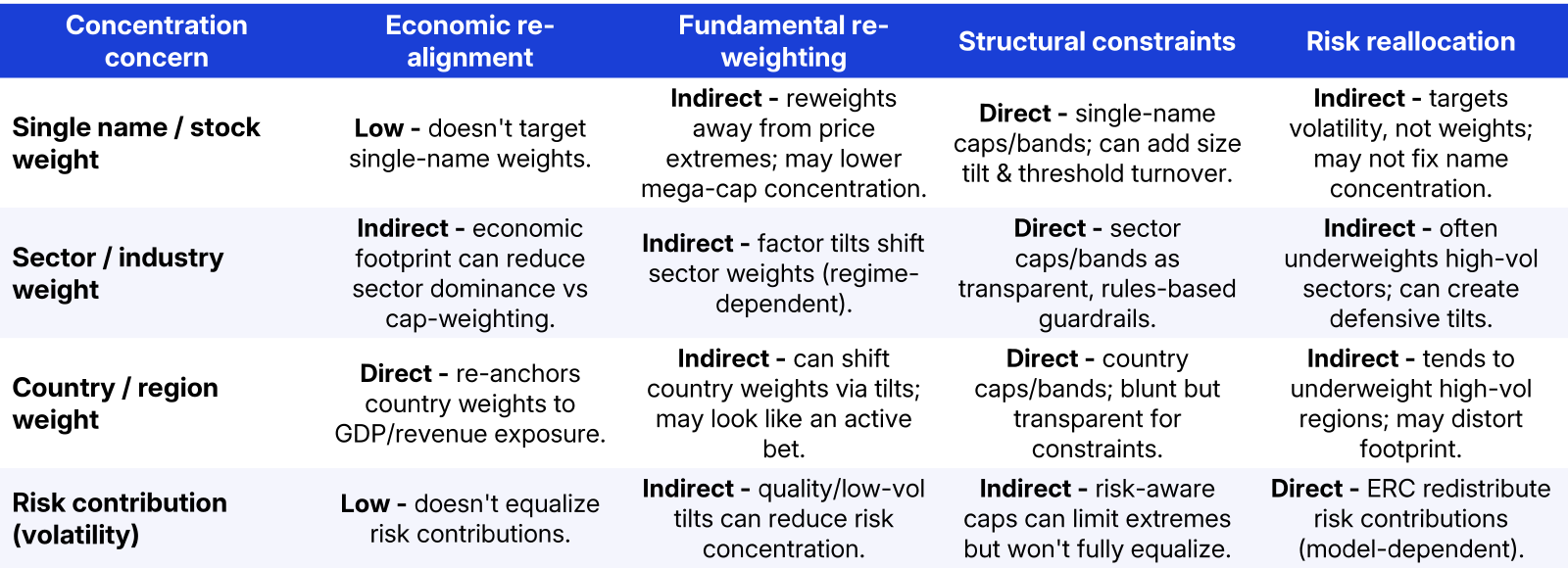
"Direct" means the approach targets the concern by design. "Indirect" means it may help, though not explicitly addressed by design. "Low" means limited structural connection.
The fit between approach and benchmark objective also matters. In a policy context, approaches grounded in economic rationale — such as GDP or revenue weighting — tend to be more governance-defensible than structural constraints like stock-level caps, which can be harder to justify without an underlying investment thesis. For SAA benchmarks, investors may have flexibility to apply country or regional caps at the allocation level. For active mandates, the approach needs to complement the manager's remit rather than conflict with it. For replication benchmarks, there is ample scope for managing a range of concentration issues through benchmark customization.
The trade-offs of departing from market cap
Managing concentration is a structural decision rooted in risk tolerance, not a tactical call on how index heavyweights will perform. A lot of investors who have underweighted megacaps in recent years likely underperformed the cap-weighted benchmark. This framework does not eliminate that regret risk. Any departure from cap-weighting must be defensible across full market cycles, including extended periods of megacap outperformance.
Every such departure also carries practical costs. Tracking error relative to cap-weighted benchmarks is the most visible, and therefore clarity on how it is budgeted and owned across the portfolio is crucial. Alternative weighting schemes can also embed unintended factor tilts (value bias in value-weighting, a small-cap tilt in equal-weight strategies, defensive positioning in risk-based methods). Turnover, rebalancing costs and capacity constraints may all rise with the degree of departure from cap-weighting. Further, solving for the concentrated end of a portfolio can have unintended consequences for the remainder.
Finally, the right philosophy still requires a vehicle to act on — whether an existing ETF, a custom index or a derivative overlay. For investors, the question is not whether concentration exists, but whether the cost of managing it is worth bearing — and who owns that decision.


Subscribe todayto have insights delivered to your inbox.
Market Cap Indexes
MSCI Market Cap Indexes include large-, mid- and small-cap indexes designed to represent and measure global equity markets as they evolve.
1 A potential wave of megacap IPOs in 2026 could further increase U.S. and tech dominance in global equities.
The content of this page is for informational purposes only and is intended for institutional professionals with the analytical resources and tools necessary to interpret any performance information. Nothing herein is intended to recommend any product, tool or service. For all references to laws, rules or regulations, please note that the information is provided “as is” and does not constitute legal advice or any binding interpretation. Any approach to comply with regulatory or policy initiatives should be discussed with your own legal counsel and/or the relevant competent authority, as needed.